Just got a fresh tattoo and already thinking about peeling that second skin off? You are not alone.
The clear film might look simple, but removing it at the wrong time can mess with healing and affect how your tattoo settles.
Many first-timers and even seasoned tattoo lovers feel confused about how long to keep the second skin on the tattoo.
Some people remove it too early because it feels tight, while others leave it on longer than recommended. Both situations can affect the healing process.
Second skin is designed to protect new ink during the most sensitive stage after getting tattooed. Knowing the right timing makes a big difference.
This blog explains how long to keep second skin on a tattoo, how it helps healing, and how long to leave it on to keep your tattoo looking clean and healthy.
What is Second Skin for Tattoo Aftercare
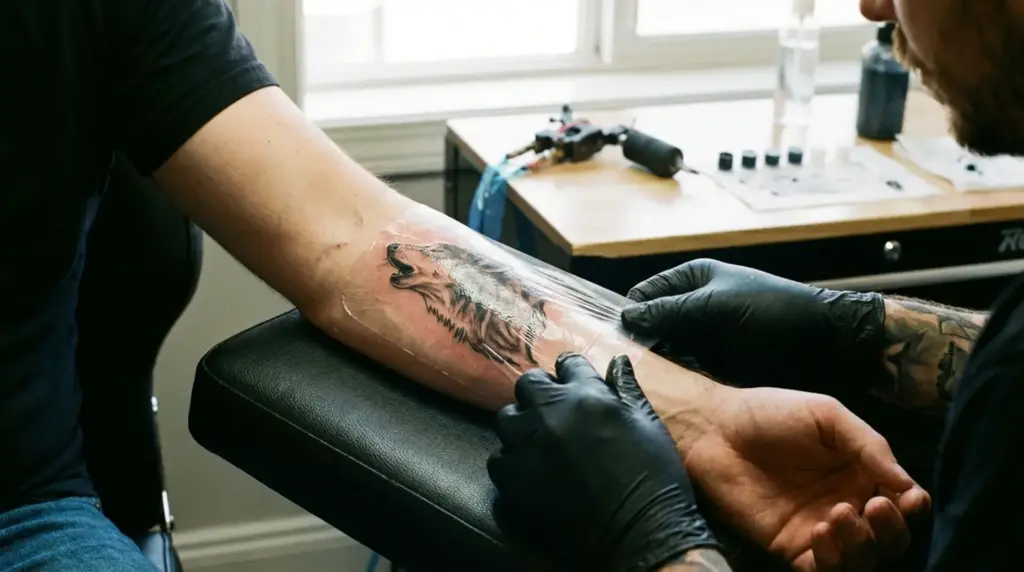
Second skin is a thin, transparent adhesive film placed over a fresh tattoo to support early healing. Tattoo artists often apply it right after finishing the tattoo.
The film acts like a protective barrier while still allowing the skin to breathe.
Most second-skin products are made from medical-grade adhesive bandages designed to remain flexible and comfortable on the skin.
Common brand names include Saniderm, Tegaderm, and SecondSkin.
While these are different products, they function in a similar way and are often used interchangeably by tattoo artists during aftercare.
The material gently seals over the tattoo while remaining breathable. This helps keep the tattooed area protected without trapping excessive moisture.
The main purpose of a second skin is to shield a new tattoo from bacteria, dirt, friction from clothing, and outside irritation.
A fresh tattoo is essentially an open wound, so protection during the first few days is important.
Many tattoo artists recommend second skin during the early healing stage because it helps maintain a clean environment as the skin begins to repair itself.
How Long to Keep Second Skin on a Tattoo
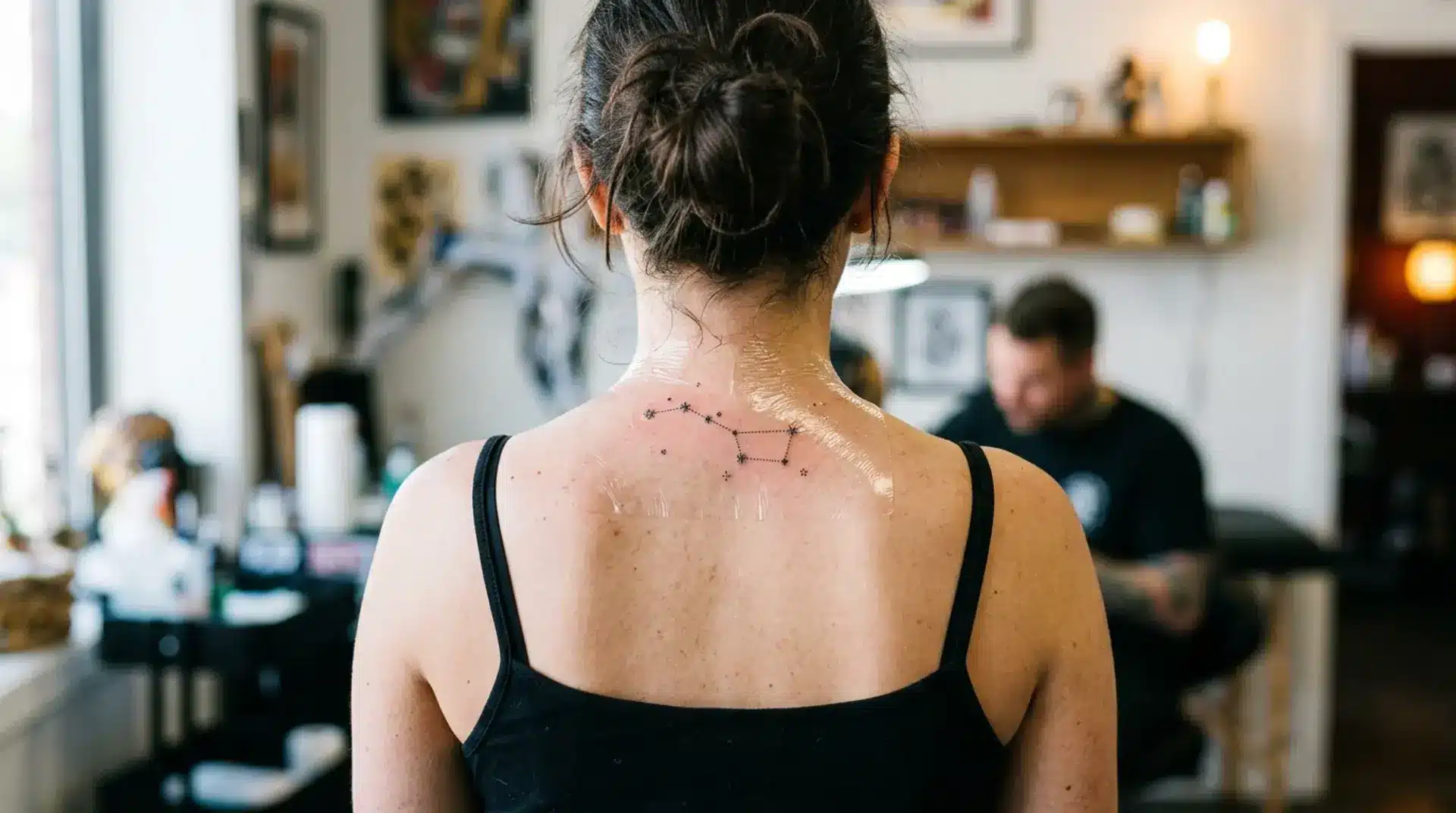
The typical recommendation for how long to keep second skin on a tattoo is about 24 to 72 hours for the first application. 24 hours for the first application.
This is a point where many people misread their artist’s instructions. The first piece of second skin should always come off at or before the 24-hour mark, regardless of how the tattoo looks underneath.
This is because fluid builds up under the film during the first day, and changing it after 24 hours allows you to clean the area and apply a fresh piece that will adhere properly and provide continued protection.
Saniderm, one of the leading product manufacturers, specifically confirms in their official guidance that the initial film should always be changed at the 24-hour mark.
Depending on the advice given by the tattoo artist and the amount of fluid the tattoo releases during early healing.
Right after the tattoo session, the artist usually applies the first layer of second skin to protect the area during the most sensitive stage.
This initial bandage is removed after one day, or once fluid buildup becomes noticeable under the film. 24 hours. Even if fluid buildup is minimal, changing the first piece at this mark and applying a clean second piece is always the recommended approach.
In many cases, artists suggest applying a fresh layer after removing the first one. The second bandage may remain on for 3 to 5 days, helping maintain a clean, protected healing environment.
Total second skin wear time across all applications should not exceed 7 days, per Saniderm’s official guidelines, as the skin can begin to react to the adhesive after extended periods.
Two Common Second Skin Methods: Which One Is Right for You?
Artists use two slightly different approaches depending on their preference and the tattoo’s needs. Both are valid.
| Method | How It Works | Best For |
|---|---|---|
| Two-Piece Method (most common) | First piece worn up to 24 hours, then removed and replaced with a second piece worn for 3 to 5 days. Total: up to 7 days. | Tattoos that weep heavily on the first day; standard aftercare protocol for most artists |
| Single-Application Method | One piece applied immediately after tattooing, worn for 3 to 5 days total without changing, removed only if it leaks or lifts | Tattoos with lighter weeping are used by artists who prefer minimal handling of the fresh tattoo |
When in doubt, follow your artist’s specific instructions. They will know which method suits your tattoo’s size, placement, and ink density.
Two Common Second Skin Methods: Which One Is Right for You?
Artists use two slightly different approaches depending on their preference and the tattoo’s needs. Both are valid.
| Method | How It Works | Best For |
|---|---|---|
| Two-Piece Method (most common) | First piece worn up to 24 hours, then removed and replaced with a second piece worn for 3 to 5 days. Total: up to 7 days. | Tattoos that weep heavily in the first day; standard aftercare protocol for most artists |
| Single-Application Method | One piece applied immediately after tattooing, worn for 3 to 5 days total without changing, removed only if it leaks or lifts | Tattoos with lighter weeping; used by artists who prefer minimal handling of the fresh tattoo |
When in doubt, follow your artist’s specific instructions. They will know which method suits your tattoo’s size, placement, and ink density.
Why Tattoo Artists Recommend Second Skin
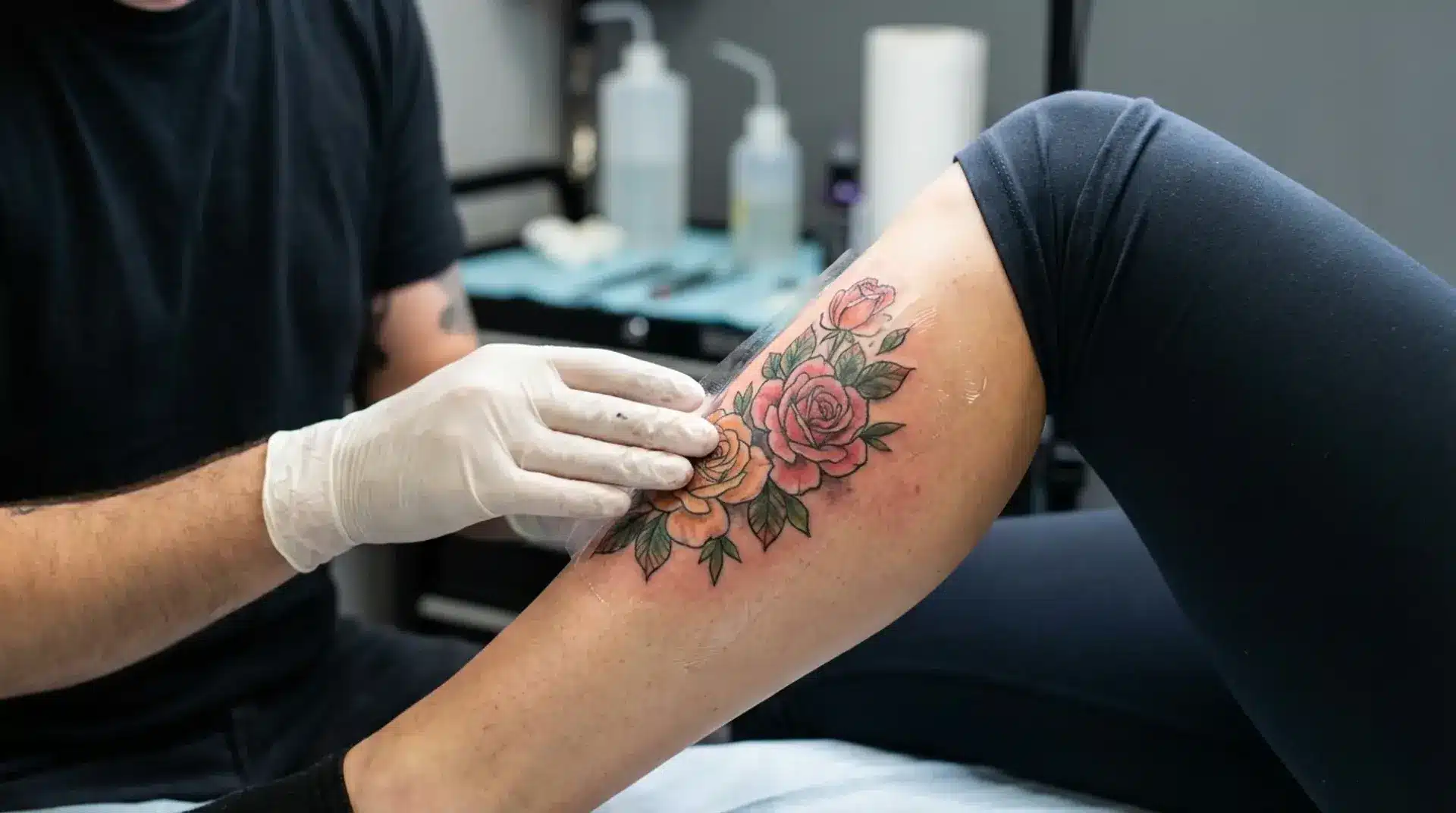
Tattoo artists often recommend second skin because it helps protect a fresh tattoo during the early healing stage.
The thin medical-grade film creates a barrier that keeps bacteria, dirt, and friction away from the tattooed area.
Second skin also helps maintain a balanced moisture level. Natural fluids stay around the tattoo, which can reduce dryness and limit heavy scabbing. When scabbing is minimized, the tattoo often heals more evenly.
Another advantage is convenience. Unlike traditional plastic wrap, second skin stays securely in place for longer periods.
This reduces constant rewrapping and helps keep the tattoo protected while the skin begins its natural healing process.
Easy Steps for Applying Second Skin on a New Tattoo
Applying second skin correctly helps protect a fresh tattoo from irritation and supports a cleaner healing process during the first few days.
- Step 1: Wash the tattoo gently with lukewarm water and a mild fragrance-free soap. Remove any excess ink, plasma, or residue from the skin.
- Step 2: Pat the area dry with a clean paper towel. Make sure the skin is fully dry before applying the film.
- Step 3: Trim the second skin so it extends slightly beyond the tattoo on every side. This helps protect the full area.
- Step 4: Peel off the backing and place the film slowly over the tattoo. Try not to trap air bubbles underneath.
- Step 5: Smooth the film down gently from the center outward. Press around the edges to keep it in place.
- Step 6: Look for leaks, peeling edges, or irritation. If the skin reacts badly, remove it and follow the aftercare advice.
How to Replace Second Skin if your Artist Recommends it
Sometimes, tattoo artists suggest replacing the first layer of second skin, especially if the film fills with fluid, starts peeling at the edges, or is removed within the first day.
A fresh layer can help protect the tattoo as healing continues.
To replace it safely, begin by washing your hands and gently peeling off the first film. It helps to remove the bandage slowly under warm running water to reduce discomfort and avoid pulling the skin.
Once the film is removed, wash the tattoo gently with mild soap and lukewarm water. Pat the area completely dry with a clean paper towel.
After the skin is dry, apply a new piece of second skin that fully covers the tattoo and extends slightly beyond the edges.
This replacement layer helps maintain protection as the tattoo continues to heal.
Signs it is Time to Remove Second Skin

During the first few days of healing, it is normal for a fresh tattoo to release plasma, ink, and small amounts of blood.
This fluid can collect under the second skin and may appear like a small bubble or pocket. When the buildup becomes noticeable, it is usually a sign that the bandage should be removed or replaced.
In the first 24 hours, the fluid under the film may look dark or murky due to the mix of plasma, blood, and ink.
This appearance is completely normal and does not indicate infection. The fluid typically looks clearer after a fresh layer is applied.
Another common sign is when the edges of the film start to peel or lift. Once the seal breaks, bacteria and dirt can enter, which reduces the protection the film provides.
Reaching the timeframe recommended by the tattoo artist is also an important indicator. Most second skin bandages are meant to stay on for a limited number of days.
If the skin around the film becomes increasingly red, warm, or swollen beyond the first day or two, or if an unusual odor develops under the film, these may be signs of a developing infection rather than normal healing.
Remove the second skin, clean the tattoo gently with mild soap and lukewarm water, and consult your tattoo artist or a medical professional if the symptoms do not improve.
Understanding these signs helps ensure the tattoo continues to heal in a clean, safe environment.
When to Remove Second Skin: At a Glance
| Situation | Action |
|---|---|
| 24 hours have passed (first piece) | Always remove and replace with a clean second piece |
| Edges are peeling or lifting | Remove, clean the tattoo, replace, or begin open aftercare |
| The film is leaking fluid | Remove, clean, replace |
| Ink sack/tattoo goo visible but contained | Normal, leave on until the 24-hour mark or when edges lift |
| Skin is red, hot, or unusually swollen after day 2 | Remove, clean, monitor, consult an artist or a doctor if worsening |
| Total wear time has reached 7 days across all pieces | Remove and transition fully to open aftercare |
| Severe itching, burning, or rash under the film | Remove immediately and contact the artist or a medical professional |
How to Remove Second Skin Without Damaging Your Tattoo
Removing second skin the right way helps protect the healing tattoo and prevents unnecessary irritation.
- Step 1: Wash your hands thoroughly with soap and water. Clean hands help prevent bacteria from reaching the fresh tattoo.
- Step 2: Begin peeling the film back gently from one corner. Pull it slowly in the direction of your skin rather than straight upward.
- Step 3: If the adhesive feels tight, remove the film under warm running water. The water helps loosen the adhesive, making removal easier.
- Step 4: Do not rip the film off quickly. Slow removal reduces irritation and protects the tattooed skin as it continues to heal.
If the adhesive is still very tight after warm water, a small amount of baby oil, coconut oil, or olive oil applied around the edges can help break down the adhesive bond further without affecting the tattoo itself. This is particularly useful for pieces that have been on for several days and have adhered firmly to the skin.
What to do After Removing Second Skin
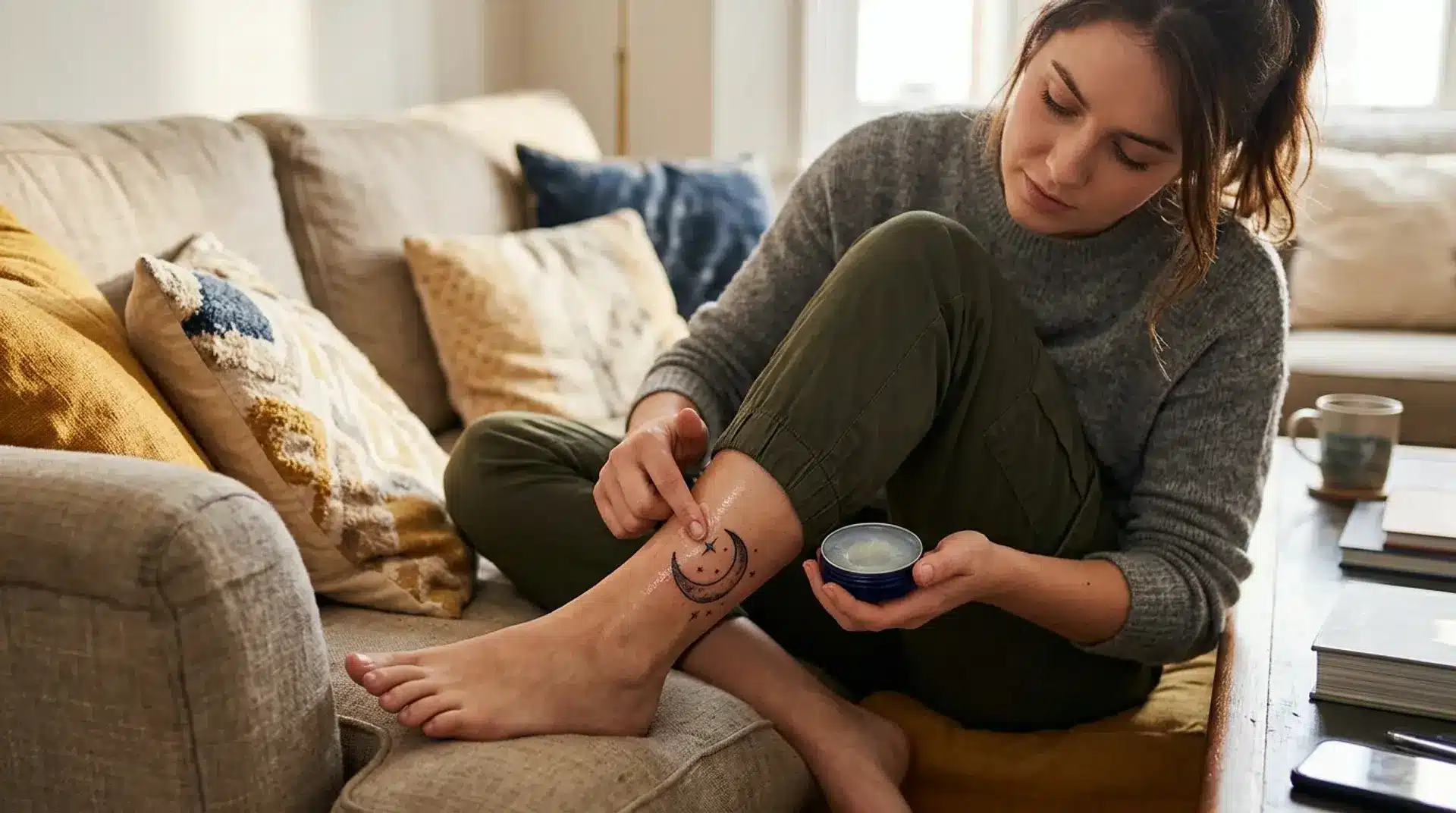
Once the second skin is removed, the tattoo enters the next stage of healing. Proper aftercare becomes important to keep the area clean and support healthy skin recovery.
Start by gently washing the tattoo with lukewarm water and a mild fragrance-free soap. This helps remove leftover adhesive, plasma, and any surface buildup.
Pat the area dry with a clean paper towel rather than rubbing the skin.
After cleaning, apply a thin layer of a fragrance-free moisturizer or tattoo aftercare lotion. Keeping the skin lightly moisturized helps reduce dryness and itching.
Avoid tight clothing, excessive touching, and direct sun exposure during this stage. Even though the bandage is gone, the tattoo is still healing and needs gentle care until the skin fully recovers.
It is also important to hold off on activities that cause heavy sweating. Most tattoo artists recommend waiting at least one to two weeks after second skin removal before returning to the gym, using a sauna, or swimming.
Sweat and prolonged water exposure can interfere with the healing skin and raise the risk of irritation or infection.
Common Mistakes People Make With Second Skin
Many healing issues happen because the second skin is used incorrectly. Avoiding these common mistakes helps protect the tattoo and supports smoother healing.
- Removing it Too Early: Removing the second skin too early exposes the fresh tattoo to bacteria, friction, and dirt before healing begins.
- Leaving it on Too Long: Keeping the film on longer than recommended can trap excess moisture and irritate the skin.
- Applying it on Damp Skin: Second skin should only be placed on clean, fully dry skin. Moisture can weaken the seal.
- Trapping Air Bubbles: Air pockets reduce the protective barrier and may cause the film to lift early.
- Ignoring Peeling Edges or Leaks: If the edges start lifting or fluid leaks out, the protection is compromised, and the film should be removed or replaced.
- Sweating Under the Film: Intense physical activity while wearing second skin can cause sweat to pool under the adhesive.
Conclusion
A fresh tattoo deserves the right care from the very beginning, and timing plays a big role in that process.
Knowing how long to keep the second skin on the tattoo helps protect the new ink during the most sensitive stage of healing.
When used correctly, second skin creates a protective barrier that keeps bacteria out, reduces irritation, and supports smoother healing.
Keeping total wear time under seven days, watching for fluid buildup or edge lifting, and following your artist’s specific guidance give your tattoo the best conditions for a clean, even heal.
Removing it too early or leaving it on longer than recommended can affect how the tattoo settles in the skin.
Following the right steps for applying, replacing, and removing second skin helps maintain a clean healing environment.
A little patience during these first few days can make a big difference in how your tattoo looks long term.
Got a fresh tattoo healing right now? Drop a comment and share how your second skin experience went. Let the tattoo community know what worked for you.
Frequently Asked Questions
Can You Shower While Wearing Second Skin on a Tattoo?
Yes, showering is usually safe while wearing second skin because the film is waterproof. However, avoid very hot water and long showers, as heat and steam can weaken the adhesive.
Is it Normal for Second Skin to Fill with Ink or Fluid?
Yes, it is normal to see a mixture of plasma, ink, and small amounts of blood collecting under the film during the first day. This is part of the natural healing process.
Can Second Skin Cause an Allergic Reaction?
Some people may experience mild irritation or redness from the adhesive. If itching, burning, or rash appears around the film, it should be removed and the tattoo cleaned gently.
How Long Should You Leave Second Skin on a Tattoo Before Changing It?
The first layer is typically replaced after 24 hours or when noticeable fluid collects under the film. The second layer can stay on for 3 to 5 days. Total second skin wear time across all layers should not exceed seven days.
What If I Don’t Have a Second Piece of Second Skin?
If a replacement piece is not available after removing the first one, do not use plastic wrap or cling film as a substitute. Move directly to standard open-healing aftercare: wash the tattoo gently twice daily with fragrance-free soap, pat dry, and apply a thin layer of fragrance-free moisturizer. This is a completely valid healing method and many tattoos heal well without any second-skin film at all.
Can I Exercise While Wearing Second Skin?
It is best to avoid intense exercise for the first 48 hours while the first piece is on. Heavy sweating can cause fluid to pool under the adhesive and weaken the seal. If light activity is necessary, clean the area immediately afterward and check the film edges to make sure the seal is still intact. If sweat has compromised the adhesive, remove, clean, and replace.