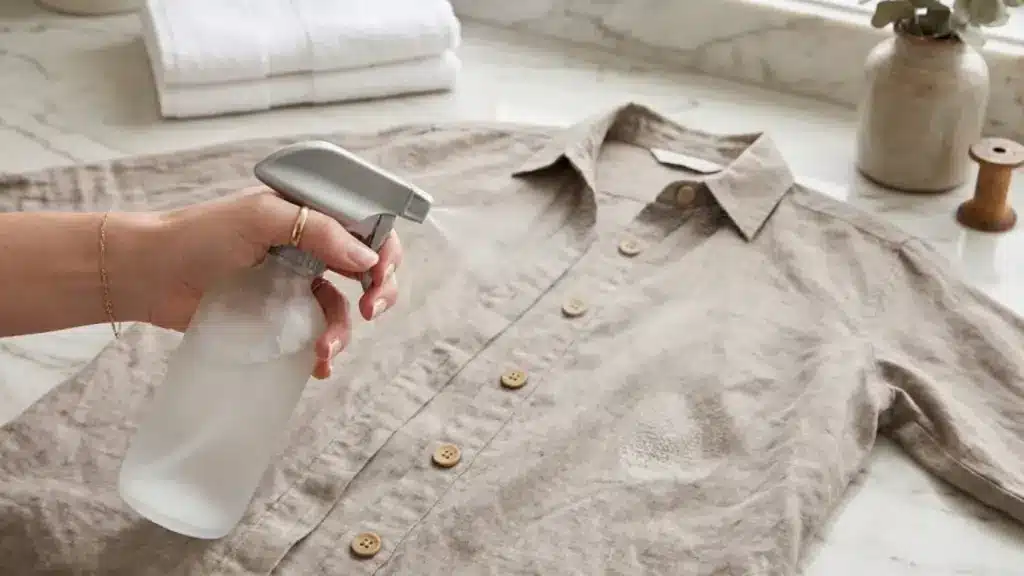
Wrinkled clothes at the worst possible moment can feel frustrating, especially when there is no iron or steamer in sight.
That last-minute outfit check before heading out, only to notice creases that ruin the look, is something most people know too well. This is where homemade wrinkle release spray becomes a simple fix that actually works.
That situation is familiar enough that I keep a spray bottle on my shelf. Working with fabrics across climates and occasions, I have tested quick-fix approaches.
With a few common ingredients already at home, it is possible to smooth fabrics in minutes with minimal effort.
DIY wrinkle release spray is not just about saving time; it is about having control over what goes onto clothes while keeping things quick and practical.
What is Homemade Wrinkle Release Spray?
A homemade wrinkle-release spray is a liquid mist applied directly to wrinkled fabric to relax the fibers and smooth the surface without ironing.
Store-bought versions use similar core ingredients: water, fabric softener or slip agents, and sometimes alcohol, but cost significantly more per bottle than a DIY version made at home.
In this homemade formula, water is the primary agent. It temporarily swells the fabric fibers, reducing the tension that holds wrinkles in place.
Fabric softener adds a slip coating that helps fibers slide back into alignment.
Alcohol (rubbing alcohol or vodka) speeds up evaporation, so the garment dries faster and the fibers set in a smoother position as the moisture leaves.
White vinegar acts as a mild relaxant and deodorizer.
The ingredient ratio matters more than the brand of softener you choose. It determines how fast the spray works, how long the fabric stays damp, and whether the formula is safe on delicate materials.
Easy Homemade Wrinkle Release Spray Recipes
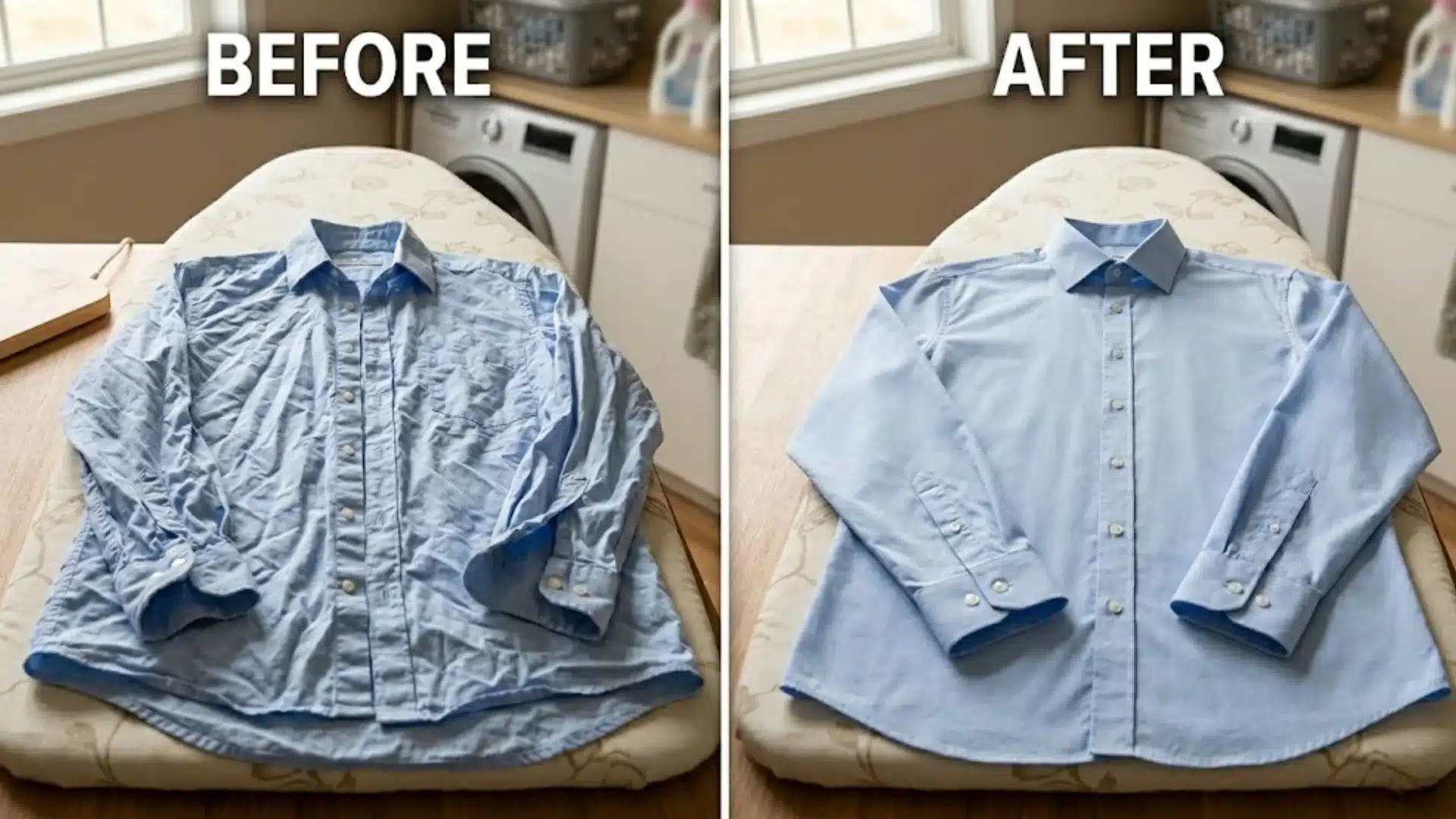
Homemade wrinkle release spray offers a simple, quick fix using ingredients already sitting at home. These easy recipes help smooth out fabric, freshen clothes, and save time during busy mornings.
1. Basic Fabric Softener Spray
This is the closest match to commercial wrinkle releasers and works on most everyday fabrics.
Ingredients:
- 2 cups distilled water
- 1 teaspoon liquid fabric softener
Mix both in a spray bottle and shake gently before each use. Mist the garment from about 6 inches away, tug the fabric lightly downward, and hang to dry for 3 to 5 minutes.
Distilled water prevents mineral buildup in the bottle and lowers the risk of watermarks on light fabrics. Tap water works in a pinch, but can leave faint white residue on darker pieces over repeated use.
2. White Vinegar Spray
White vinegar relaxes fibers and neutralizes odors without synthetic fragrance.
The vinegar smell fades completely as the fabric dries, making it a fragrance-free option that is good for sensitive skin.
Ingredients:
- 1 cup distilled water
- 1 cup white vinegar
Mix and pour into a spray bottle. This formula works well for gym clothes, bedding, and anyone who reacts to scented fabric products.
The 50/50 ratio is the effective range; going heavier on vinegar does not improve results and can leave a sharper smell that takes longer to clear.
3. Vodka Spray
Vodka has a high alcohol content and no scent, which makes it a practical, fast-drying option when you need the garment ready quickly.
Ingredients:
- 1 cup distilled water
- 1/2 cup plain vodka (the cheapest unflavored option works)
Mix in a spray bottle. The alcohol content speeds evaporation, so this formula typically dries in 1 to 2 minutes on most synthetic fabrics.
I have recommended this one to clients before photo shoots or events when time is tight, and the steamer is not an option. It handles polyester blends and structured pieces well without leaving any scent or residue.
Avoid using it on dry-clean-only garments or very delicate weaves without spot-testing a hidden seam first.
4. Rubbing Alcohol and Hair Conditioner Spray
This formula works well on slightly heavier fabrics, such as denim, twill, and thick cotton blends. The conditioner adds a light coating that holds the smooth finish longer after the fabric dries.
Ingredients:
- 1 cup distilled water
- 2 tablespoons rubbing alcohol (70%)
- 1 teaspoon hair conditioner (avoid heavy creams)
Stir until the conditioner dissolves, then pour into a spray bottle and shake before each use.
This formula holds up particularly well on structured outfits and heavier cotton pieces, the kind of clothes worth presenting well when dressing for smart casual occasions where the fit needs to look intentional.
5. Essential Oil and Water Spray
This is the gentlest option, no alcohol, no synthetic softener. Just water and a small amount of essential oil to reduce fiber tension and add a light scent.
Ingredients:
- 2 cups distilled water
- 5 to 8 drops lavender or eucalyptus essential oil
Shake well before each use since the oil separates. This formula works for silk, rayon, and lightweight knits where alcohol would be too harsh.
Results take a bit longer than the other recipes; plan an extra few minutes for the fabric to fully relax after misting.
One thing worth noting: citrus essential oils can leave faint staining on light-colored fabrics.
Test on a hidden seam before misting broadly, especially on heirloom or vintage textiles.
Fabrics to Approach Carefully When Using Wrinkle Release Spray
Not every fabric reacts the same way to moisture-based wrinkle sprays. While most everyday materials respond well, certain fabrics require a more cautious approach to avoid damage.
- Dry-clean-only garments: Water and alcohol can cause shrinkage, color bleeding, or fiber distortion. If you choose to try the essential oil formula, spot-test a hidden seam first, and accept that there is always some risk with home treatment.
- Wool: Wool fibers are sensitive to water saturation. A very light mist of the fabric softener formula on light wool blends is generally fine, but heavy wools and structured wool suiting should go to a professional if they need a proper refresh.
- Silk: The essential oil-and-water recipe is the safest choice. Avoid any formula with rubbing alcohol or high vinegar concentration on silk, as both can weaken the fiber over repeated use.
- Embellished or beaded fabric: Moisture can loosen adhesive on heat-set embellishments. Spray the base fabric only, avoiding any decorated panels.
How Long Does Homemade Wrinkle Release Spray Last
Shelf life varies by formula; the basic fabric softener spray stays effective for 2 to 3 weeks at room temperature.
The white vinegar and vodka versions last slightly longer, up to 4 weeks, because the acid and alcohol content slow bacterial growth.
The essential oil formula is the shortest-lived; use it within 1 to 2 weeks since the oil can go rancid without a preservative.
Store all versions in a cool, dark place with the cap tightly sealed. A labeled spray bottle kept out of direct sunlight will hold its potency longer.
If the solution smells off or separates and does not resolve after shaking, discard and mix a fresh batch. Small batches are faster to make and always perform better than old ones sitting on a shelf.
Tips for Using Homemade Wrinkle Release Spray
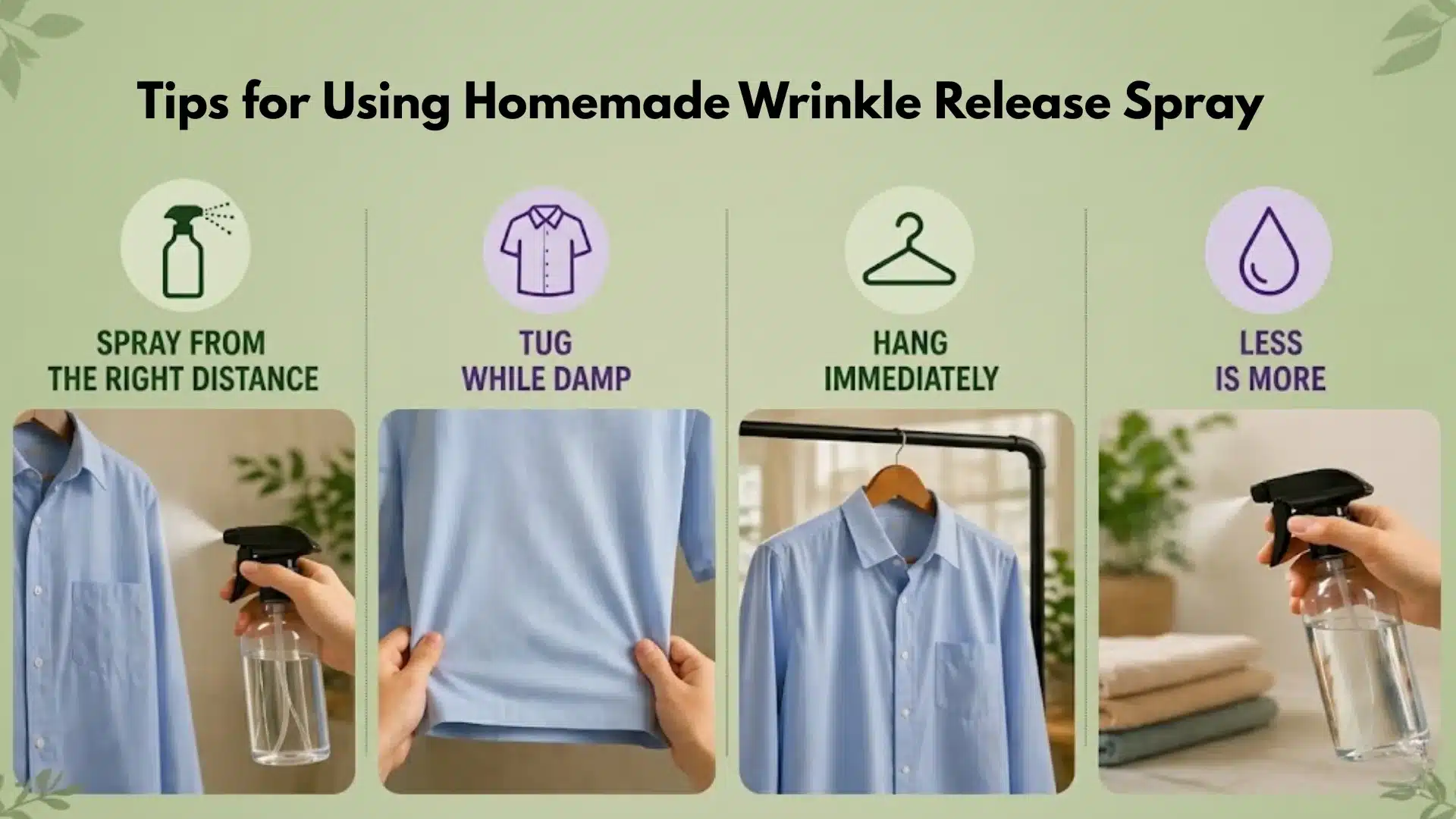
Getting the best results from a homemade wrinkle-release spray is not just about the recipe, but also about how it is used. A few simple habits can make a noticeable difference in how well the fabric smooths out and how quickly it dries.
- Spray from the right distance: Hold the bottle 6 to 8 inches from the fabric. Too close and you get wet patches that take longer to dry and can leave marks. Too far, and the mist distributes unevenly, leaving some areas creased.
- Tug while damp: Right after misting, pull the fabric gently downward and smooth it with your palm. This step is what actually repositions the fibers. The spray relaxes them; your hands set them. Skipping the tug usually means the wrinkles reform as the fabric dries.
- Hang immediately: Lay the garment flat or hang it straight after spraying and tugging. Draping it over a chair arm or folding it while still damp creates new creases as it dries.
- Less is more: The fabric should feel lightly damp, not wet. Oversaturating slows drying time and can cause watermarks, especially on silk and wool. One or 2 passes are almost always enough for everyday fabrics.
DIY vs Store-Bought Wrinkle Release Spray
Choosing between a homemade wrinkle release spray and a store-bought option often comes down to cost and practicality. Both options can smooth out wrinkles effectively, but differences in pricing and flexibility can influence which one fits better into a routine.
| Factor | DIY Wrinkle Release Spray | Store-Bought Wrinkle Release Spray |
|---|---|---|
| Average Cost | $0.20 – $0.50 per bottle | $5 – $12 per bottle |
| Ingredients | Basic household items, customizable | Pre-mixed with added chemicals |
| Convenience | Requires quick preparation | Ready to use instantly |
| Effectiveness | Works well for light to medium wrinkles | Slightly stronger on stubborn wrinkles |
| Shelf Life | 2-4 weeks | Several months to a year |
Conclusion
A homemade wrinkle release spray is one of the more practical things you can mix at home.
Once you find the one that fits your most-used pieces, it becomes a fast, reliable part of your dressing routine, without friction.
With a few simple ingredients, it becomes easy to smooth out wrinkles, handle last-minute outfit fixes, and stay prepared for busy days.
DIY wrinkle release spray offers flexibility, whether the need is a quick touch-up before heading out or a reliable solution during travel.
Over time, this simple habit can replace the need for frequent ironing on many fabrics.
Have you tried one of these recipes? Tell us which formula worked best for you in the comments, or share a fabric tip we missed.
Frequently Asked Questions
Can I Use a Homemade Wrinkle Spray in a Steam Iron’s Water Tank?
No, fabric softener and essential oils can clog iron steam vents and damage the internal valve. Use plain distilled water in your iron tank only.
Will the Spray Leave a Scent on My Clothes After It Dries?
No, the vinegar and vodka formulas dry completely odor-free. The fabric softener formula leaves a faint fresh scent. The essential oil version leaves the lightest detectable fragrance.
Is Homemade Wrinkle Spray Safe to Use Around Babies or Pets?
Yes, the essential oil and water formula is the safest option. Avoid spraying alcohol or vinegar formulas near pets or infants, and allow full drying before contact with treated fabric.
Frequently Asked Questions
Can I Use a Homemade Wrinkle Spray in a Steam Iron’s Water Tank?
No, fabric softener and essential oils can clog iron steam vents and damage the internal valve. Use plain distilled water in your iron tank only.
Will the Spray Leave a Scent on My Clothes After It Dries?
No, the vinegar and vodka formulas dry completely odor-free. The fabric softener formula leaves a faint fresh scent. The essential oil version leaves the lightest detectable fragrance.
Is Homemade Wrinkle Spray Safe to Use Around Babies or Pets?
Yes, the essential oil and water formula is the safest option. Avoid spraying alcohol or vinegar formulas near pets or infants, and allow full drying before contact with treated fabric.