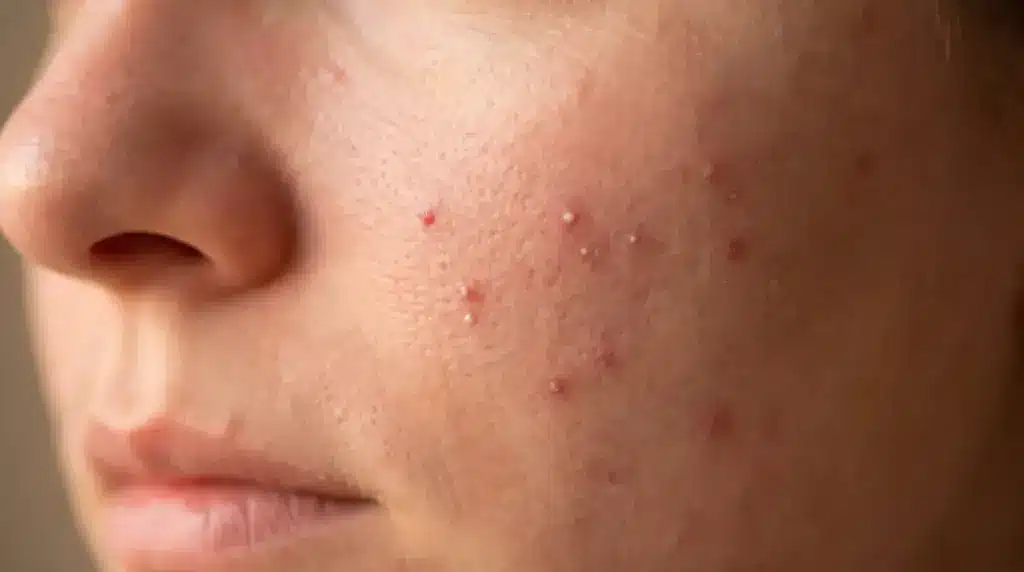
You start using a moisturizer to help your skin, and within days or weeks, you notice new bumps, whiteheads, or a greasy, congested feeling. That can be frustrating, especially when the product is supposed to support your skin.
In many cases, the problem is not hydration itself. It is theformula, the texture, the ingredients, or simply the fact that the moisturizer does not suit your skin type.
A heavy, pore-clogging, or irritating moisturizer can lead to breakouts, especially if you already have oily, acne-prone, or sensitive skin.
So if you’re wondering whether moisturizer causes acne, the short answer is: some formulas can, and knowing why helps you make a smarter switch.
Products that trap excess oil, bacteria, sweat, and debris on the skin can make congestion worse and trigger pimples, whiteheads, or closed comedones.
Can Moisturizer Cause Acne?
Yes, a moisturizer can cause acne, but not because hydration itself is harmful. The problem comes down to formula and fit.
When a moisturizer contains comedogenic ingredients, sits too heavily on the skin, or is simply too rich for your skin type, it can clog pores, trap bacteria, and trigger breakouts.
Acne-prone skin is especially vulnerable because its pores are already more prone to congestion. A moisturizer that works well for dry skin may cause consistent breakouts on oily or combination skin.
The good news is that moisturizer-related acne is usually identifiable by its pattern and location, and switching to the right formula tends to resolve it fairly quickly.
Signs Your Moisturizer is Breaking You Out
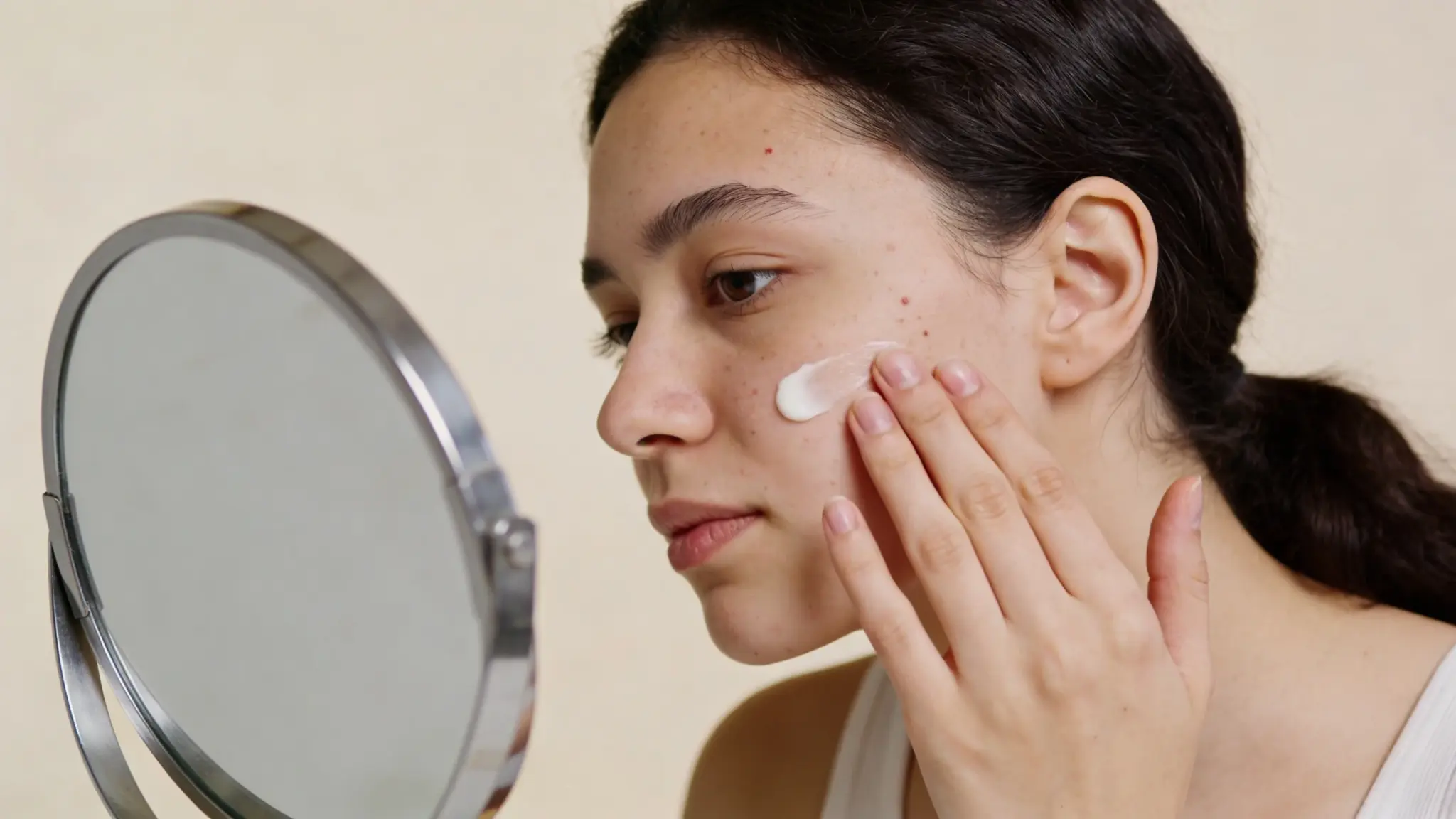
If your moisturizer is causing acne, the signs usually become noticeable after starting a new product. Paying attention to where and how breakouts appear can help identify whether the moisturizer is the trigger.
- New clogged pores or bumps: You may see new whiteheads, clogged pores, or tiny skin-colored bumps soon after starting a new product.
- Breakouts in application areas: Breakouts may appear in the same areas where you apply moisturizer, such as the cheeks, forehead, or chin. Your skin may also feel greasy, coated, or unusually heavy after application.
- Acne in unusual areas: Another common sign is breaking out in places where you normally don’t. For example, if your acne usually stays in your T-zone but suddenly starts appearing on your cheeks after a product switch, that can be a clue.
- Redness or irritation: Redness, itching, or stinging after application may indicate an irritating formula rather than a skin-friendly one.
- Try the moisturizer test: If you suspect your moisturizer is the trigger, try stopping it for one to two weeks while keeping the rest of your routine the same.
- Reintroduce carefully: If breakouts decrease, reintroduce the product sparingly. If symptoms return, it is likely the moisturizer. This process is sometimes called the moisturizer test, and it is one of the most reliable ways to isolate a problem product without guessing.
Ingredients That May Trigger Breakouts
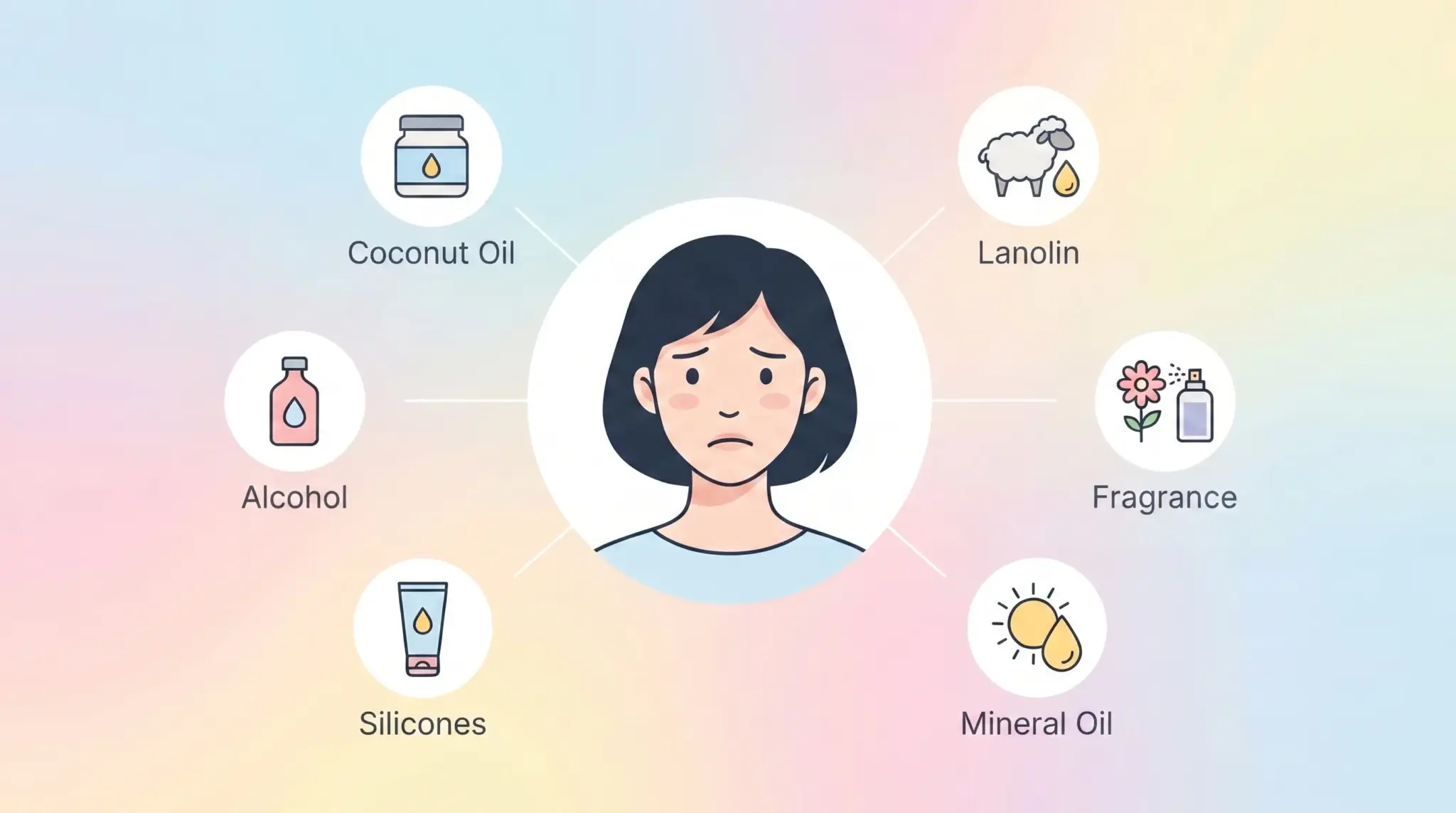
Not every ingredient will cause breakouts for everyone, but some common moisturizer ingredients tend to feel heavy on the skin, clog pores more easily, or trigger irritation.
1. Coconut Oil
Coconut oil is one of the most talked-about moisturizer ingredients to avoid for acne-prone skin. While it can feel nourishing on dry areas, it may be too rich for skin that already clogs easily.
Coconut oil can sit heavily on the skin, mix with excess sebum, and make pores feel more congested, though it does not break everyone out.
Still, if your skin is oily, acne-prone, or prone to closed comedones, it is usually safer to choose a lighter, non-comedogenic moisturizer instead.
2. Mineral Oil
Mineral oil is often used in moisturizers because it helps reduce water loss from the skin. For some people, especially those with dry or damaged skin barriers, it can be helpful.
The issue starts when mineral oil appears in thick, greasy formulas that do not suit acne-prone skin.
If your skin already produces excess oil, a heavy mineral oil-based moisturizer may feel suffocating and lead to buildup. Look for lightweight, oil-free, or gel-based formulas if your skin tends to get shiny or congested easily.
3. Lanolin
Lanolin is a waxy, moisturizing ingredient derived from sheep’s wool. It is commonly added to rich creams because it helps soften rough, dry skin.
However, for acne-prone skin, lanolin can feel too thick and may increase the chance of clogged pores or small bumps.
It can also bother sensitive skin in some cases. If your moisturizer feels sticky or waxy, or leaves a heavy film, lanolin may be one ingredient to check on the label.
4. Fragrance
Fragrance does not directly clog pores, but it can still be a problem for acne-prone skin. Added fragrance may irritate sensitive skin, trigger redness, or make active breakouts look more inflamed.
This includes both synthetic fragrance and natural fragrance from essential oils. If your skin stings, burns, or turns red after applying moisturizer, switching to a fragrance-free formula is usually a smart move.
The U.S. Food and Drug Administration notes that fragrances in cosmetics are among the leading causes of skin reactions, which is worth keeping in mind when reading moisturizer labels.
5. Silicones
Silicones are common in moisturizers because they create a smooth, silky finish. Ingredients like dimethicone can help the skin feel soft and reduce moisture loss.
However, some silicone-heavy formulas may feel too occlusive for acne-prone skin, especially when layered with sunscreen, makeup, or facial oils.
The ingredient itself is not always the problem. The full formula matters. If a moisturizer feels like it sits on your skin and leads to buildup, try a lighter, water-based option.
6. Denatured Alcohol
Denatured alcohol is often added to skincare products to make formulas feel lightweight or quick-drying. The problem is that it can strip moisture from the skin, especially when used often.
When your skin becomes too dry, it may feel tight, irritated, and more reactive. In some cases, the skin may produce more oil to compensate, which can make clogged pores and breakouts more likely.
For daily use, acne-prone skin usually does better with moisturizers that support the barrier function rather than drying it out.
7. Heavy Butters and Waxes
Ingredients like cocoa butter, shea butter, and beeswax are deeply emollient and work well for very dry or eczema-prone skin.
On oily or acne-prone skin, they tend to sit on the surface rather than absorbing cleanly, which can lead to congestion and closed comedones over time.
If you notice small, flesh-colored bumps forming gradually after starting a new rich cream, these ingredients are worth checking on the label.
The Smart Way to Choose a Moisturizer for Acne-Prone Skin
The best option for acne-prone skin is usually a lightweight moisturizer that hydrates without leaving a greasy layer behind.
Gel-based formulas, oil-free lotions, and non-comedogenic moisturizers are often a better fit for oily and breakout-prone skin.
Choose formulas designed specifically for acne-prone or oily skin rather than using a heavy cream meant for dry skin.
It also helps to look for ingredients that support hydration without leaving the skin feeling overwhelmed. Hyaluronic acid is useful because it helps pull water into the skin without adding oil.
Niacinamide is another strong option because it can help balance sebum and support the skin barrier. Ceramides can also be helpful, especially if your skin feels weak or irritated from acne treatments.
If you are unsure which formula is right for you, start by patch-testing any new moisturizer on a small area of skin, such as the inner forearm or behind the ear, for 3 to 5 days before applying it to your face.
This is a step that rarely gets mentioned but makes a real difference for reactive skin.
How to Use Moisturizer Without Causing Breakouts
Moisturizer works best when applied to clean skin, in small amounts, using lightweight formulas that support acne-prone skin without clogging pores.
- Start with clean skin: Avoid applying moisturizer over sweat, makeup, sunscreen buildup, or excess oil to reduce clogged pores
- Use a gentle cleanser: Dermatologists recommend using only a pea-sized amount to cover the face and neck. Using more product than the skin can absorb means the excess sits on top of the surface, where it can gather debris and clog pores.
- Apply on damp skin: Lightly pat your skin dry and apply moisturizer while it is still slightly damp
- Use a small amount: A pea-sized amount is enough for the entire face
- Keep your routine simple: If you are building from scratch, a structured oily skin care routine can help you understand which steps to prioritize and in what order.
- Let products settle: Give each product time to absorb before applying the next
- Apply twice daily at most: Once in the morning and once at night, after cleansing, is typically enough for acne-prone skin. Applying more often can add unnecessary product to the skin without added benefit.
- Pair well with treatments: If using salicylic acid, benzoyl peroxide, or retinoids, choose a moisturizer that soothes and supports your skin
- Avoid competing formulas: Be mindful of how your moisturizer interacts with sunscreen and other layered products. A silicone-heavy moisturizer under a thick SPF, for example, can create a heavy film that overwhelms oily skin.
When to Stop Using A Moisturizer
If your skin starts breaking out more, feels unusually heavy, or shows signs of irritation after introducing a moisturizer, it is worth pausing its use.
Give your skin about one to two weeks without the product and observe any changes.
If your skin begins to calm down, the moisturizer was likely not the right match. If there is no improvement, the issue may be coming from another product or a deeper skin concern.
Pay close attention to warning signs like stinging, ongoing redness, itching, or worsening inflammation.
These reactions often point to irritation rather than typical acne. In such cases, getting advice from a dermatologist can help identify the exact cause and guide you toward a better routine.
Skin Care Mistakes That Can Make Acne Worse
Small daily habits can quietly trigger breakouts. Fixing these mistakes can help your skin stay balanced, calm, and less prone to acne.
- Skipping moisturizer: Use a lightweight, oil-free, noncomedogenic moisturizer to help acne-prone skin stay hydrated and less irritated.
- Using heavy moisturizer: Avoid thick, greasy creams that can clog pores or make breakouts look worse.
- Washing your face too often: Overwashing can strip your skin and make irritation more visible.
- Scrubbing your skin harshly: Use your fingertips instead of rough towels or scrubs.
- Picking or popping pimples: Picking can increase inflammation, marks, and scarring.
- Using fragranced products: Choose fragrance-free cleansers, toners, serums, and moisturizers.
- Layering too many acne treatments: Too many actives can cause peeling, burning, and dryness. NIH MedlinePlus, a resource from the U.S. National Library of Medicine, covers how acne treatments work and the risks associated with using them incorrectly.
- Sleeping with makeup on: Cleanse at night to remove makeup, sunscreen, sweat, and oil.
- Using greasy sunscreen: Pick a noncomedogenic sunscreen or a light moisturizer with SPF.
- Ignore sweat after workouts: Cleanse afterward and reapply a lightweight moisturizer.
- Skipping patch tests on new products: Always test a new moisturizer on a small area before applying it to your full face, especially if your skin is sensitive or reactive.
Conclusion
Moisturizer choice plays a bigger role in breakouts than most people expect. The difference often comes down to texture, ingredients, and how well the formula matches your skin’s needs.
A product that feels fine at first can still lead to buildup over time if it does not absorb properly or layers poorly with other products.
Instead of avoiding moisturizers altogether, focus on how your skin responds day by day. Small changes like switching to a lighter formula or adjusting how much you apply can make a noticeable difference.
Consistency matters more than constantly trying new products.
Healthy skin balance comes from using products that support, not overwhelm. If something feels off, trust that signal and adjust early.
Have you ever had a moisturizer break you out? Drop a comment below and share your experience.
Frequently Asked Questions
Why Does My Moisturizer Make My Skin Look Worse?
If your skin looks worse after applying moisturizer, the formula may be too heavy, irritating, or not suitable for your skin type. It can sit on the surface, trap oil and debris, or cause mild irritation, making breakouts or texture more noticeable.
Should You Moisturize Acne-Prone Skin Daily?
Yes, acne-prone skin still needs daily hydration. Skipping moisturizer can lead to dryness, which may trigger more oil production and worsen breakouts. The key is choosing a lightweight formula that suits your skin type.
Can Switching Moisturizers Suddenly Cause Breakouts?
Yes, changing to a new moisturizer can sometimes lead to breakouts if the formula does not suit your skin. It may also take time for your skin to adjust, so monitoring changes for a couple of weeks helps identify if the product is the cause.