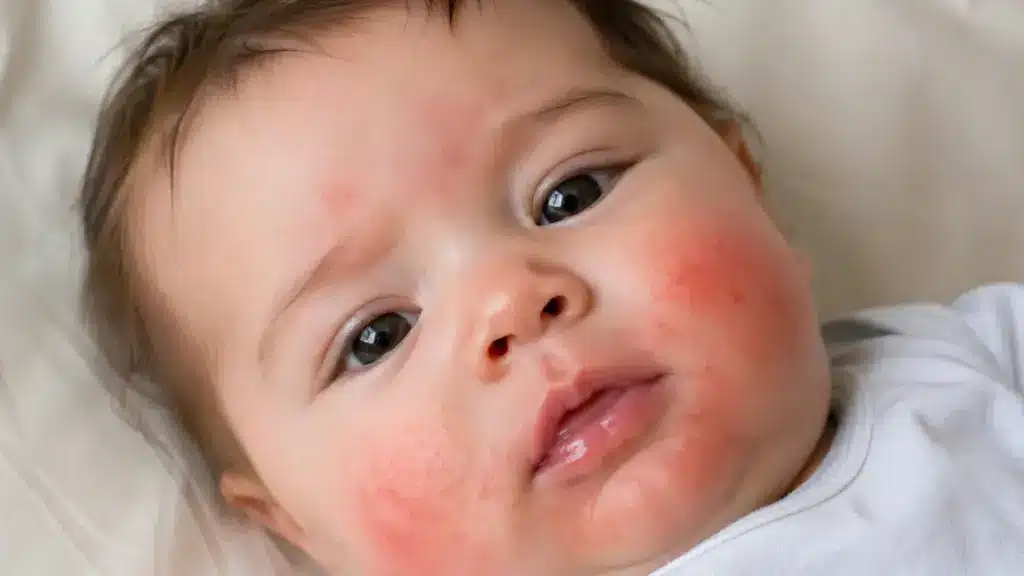
A baby’s skin can change faster than expected on the face. One day it looks clear, and the next there are small bumps, redness, or dry patches that weren’t there before
Most of these rashes are harmless, linked to immature skin adjusting to life outside the womb, and they often clear with simple, consistent care.
But if your baby’s skin suddenly looks different, with new bumps, spreading redness, or patches that weren’t there yesterday, it’s hard not to worry. What seems like a small change can feel bigger because a baby’s skin reacts so quickly.
I’ve worked closely with reactive skin, and one pattern is constant: fast changes don’t always mean serious problems, but they do need attention. With babies, that effect is even more noticeable.
This blog breaks down the most common types, how to tell them apart, and when simple care is enough and when it’s time to call a doctor.
What is Baby Rash on the Face
A baby rash on the face is any visible change to a newborn’s or infant’s facial skin, including redness, bumps, dryness, scaling, or irritation.
Most cases are harmless and short-lived, caused by hormonal shifts after birth, heat, drooling, or sensitivity to products and fabrics.
Common types include baby acne, milia, eczema, heat rash, cradle cap, allergic reactions, and drool rash.
In most cases, they are harmless and temporary, often linked to normal processes like hormonal shifts after birth, heat, drooling, or mild irritation from products or fabrics.
Some rashes, such as baby acne or milia, resolve without treatment. Others, such as eczema or allergic reactions, require gentle care and monitoring. Knowing the type is the first step; it changes everything about how you respond.
Common Types of Baby Rash on the Face
Baby facial rashes fall into several distinct categories. Knowing the type shapes everything that follows, from what you apply to whether you call the doctor.
1. Baby Acne (Neonatal Acne)
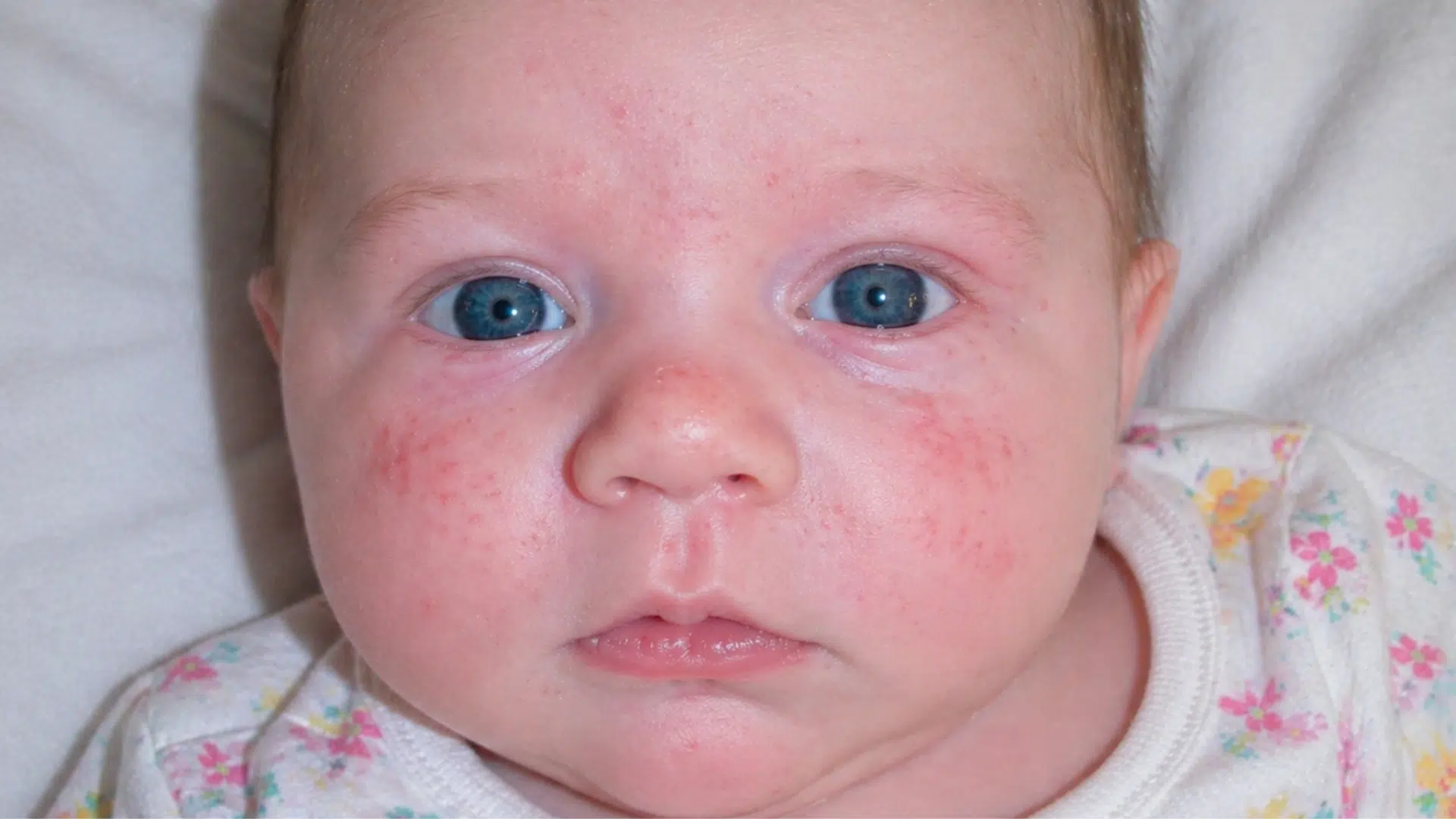
Baby acne appears as small red or white pimple-like bumps, most commonly on a newborn’s cheeks, nose, and forehead.
It typically develops between 2 and 4 weeks after birth and is very common, affecting over 30% of infants.
The condition is linked to maternal hormones that persist in the baby’s body after birth and stimulate the oil glands.
It is harmless, causes no discomfort, and usually clears on its own within 4 to 6 months without treatment. A separate condition called infantile acne can appear after 6 weeks and sometimes needs medical evaluation.
If bumps persist past the 3-month mark, it’s worth a pediatrician check rather than assuming it’s still neonatal acne
2. Milia
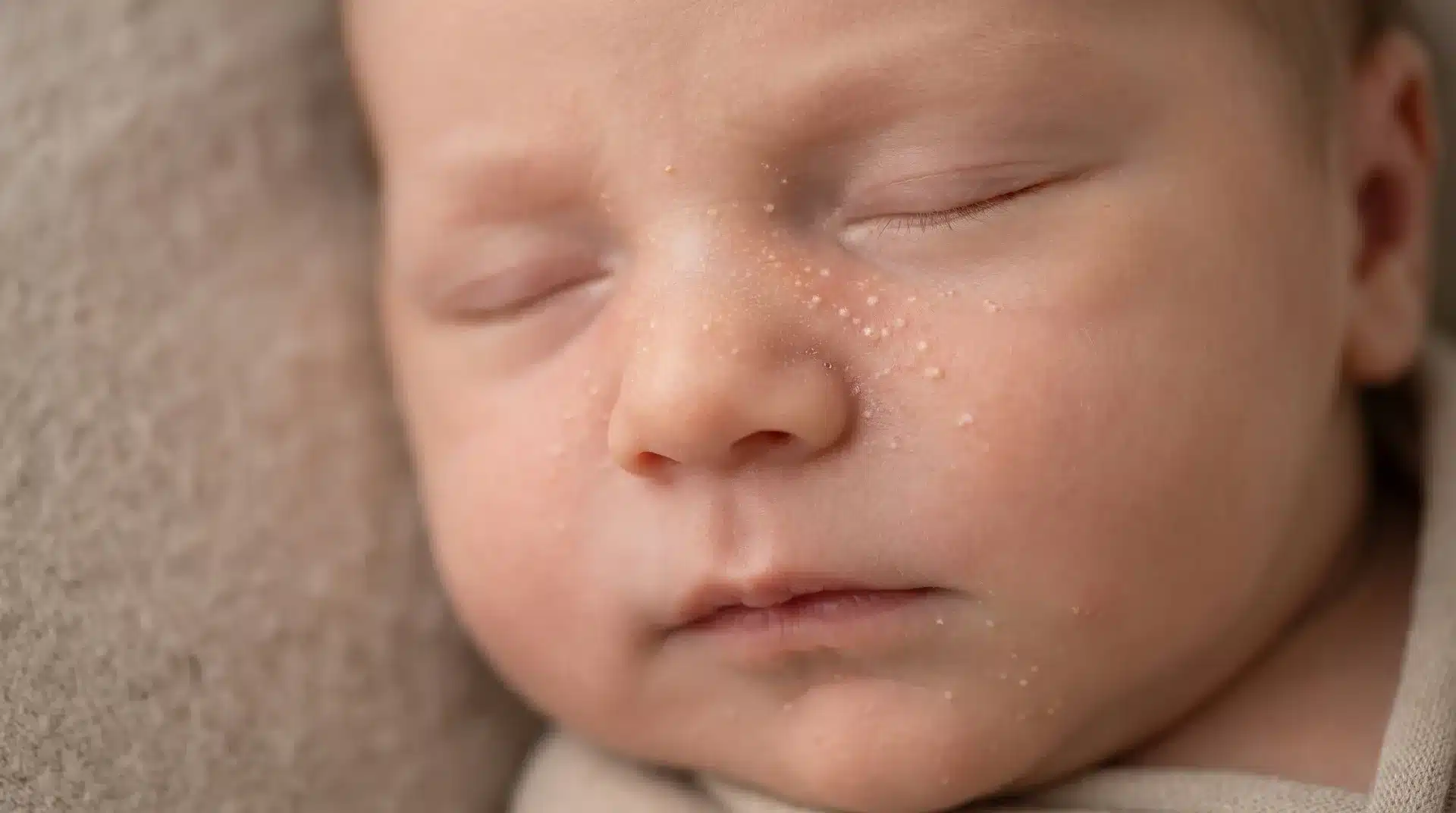
Milia are tiny white or yellow pinpoint bumps that are often present at birth. They usually appear on a baby’s nose, chin, cheeks, or sometimes the forehead.
These spots form when dead skin cells become trapped beneath the surface of the skin rather than shedding naturally. Milia are completely harmless, painless, and not a sign of infection or irritation.
In most cases, they don’t need treatment and clear within 2–3 weeks as the skin naturally exfoliates, a natural process noted by the MedlinePlus (NIH). Avoid squeezing or scrubbing, as this can irritate delicate newborn skin.
3. Eczema (atopic Dermatitis)
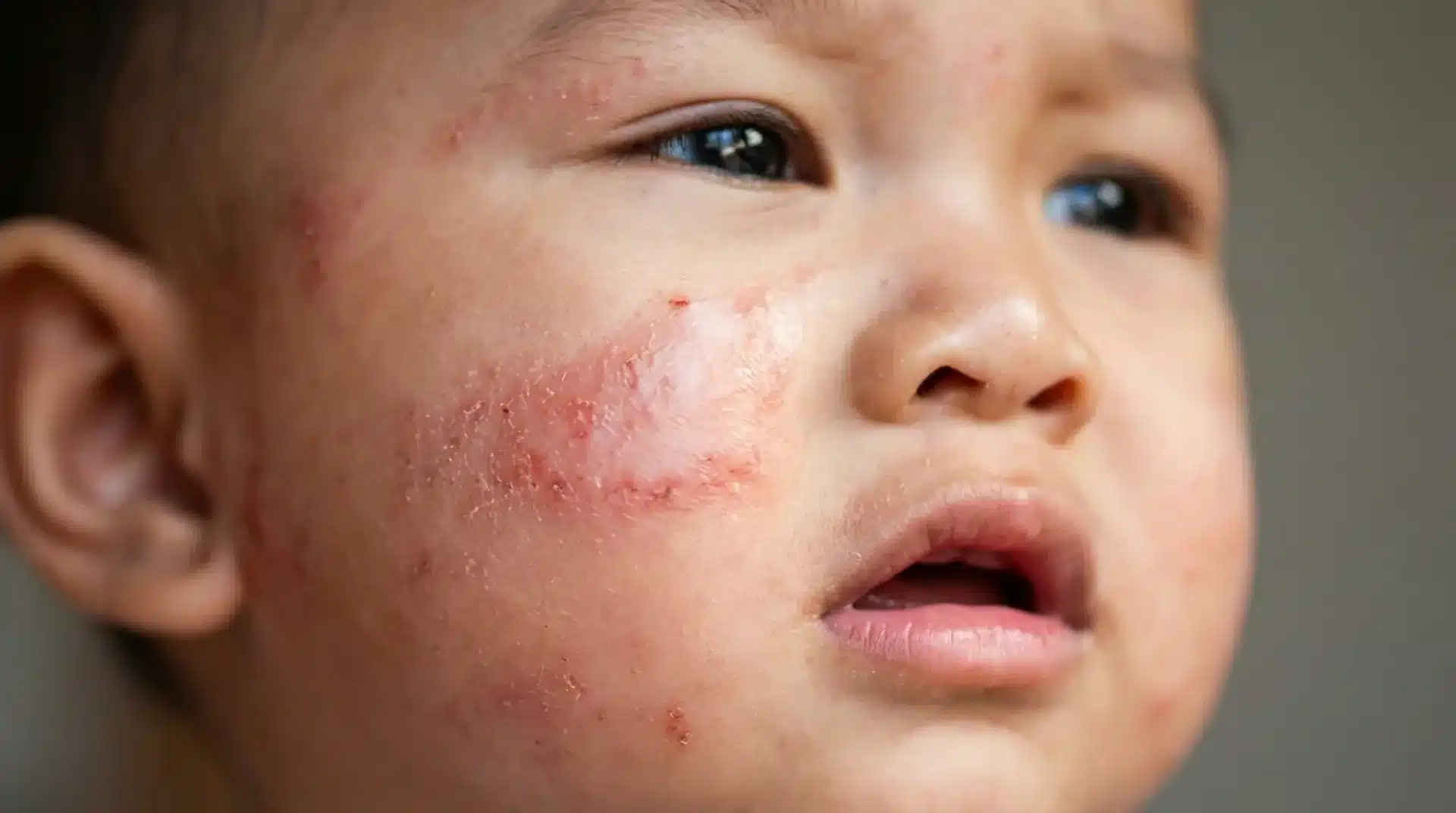
Eczema, or atopic dermatitis, appears as dry, rough, and sometimes itchy patches on a baby’s face, especially on the cheeks, chin, and forehead.
On lighter skin, these patches often look red, while on darker skin, they may appear purple, gray, or brownish, making them harder to notice.
It commonly develops within the first 6 months of life and tends to flare up and then settle in cycles. Eczema can be triggered by dryness, irritants, or environmental factors.
While it is a chronic condition, it can be managed with gentle skincare, moisturizers, and avoiding triggers. In some cases, a doctor may recommend medicated creams.
4.Heat Rash (Miliaria Rubra)
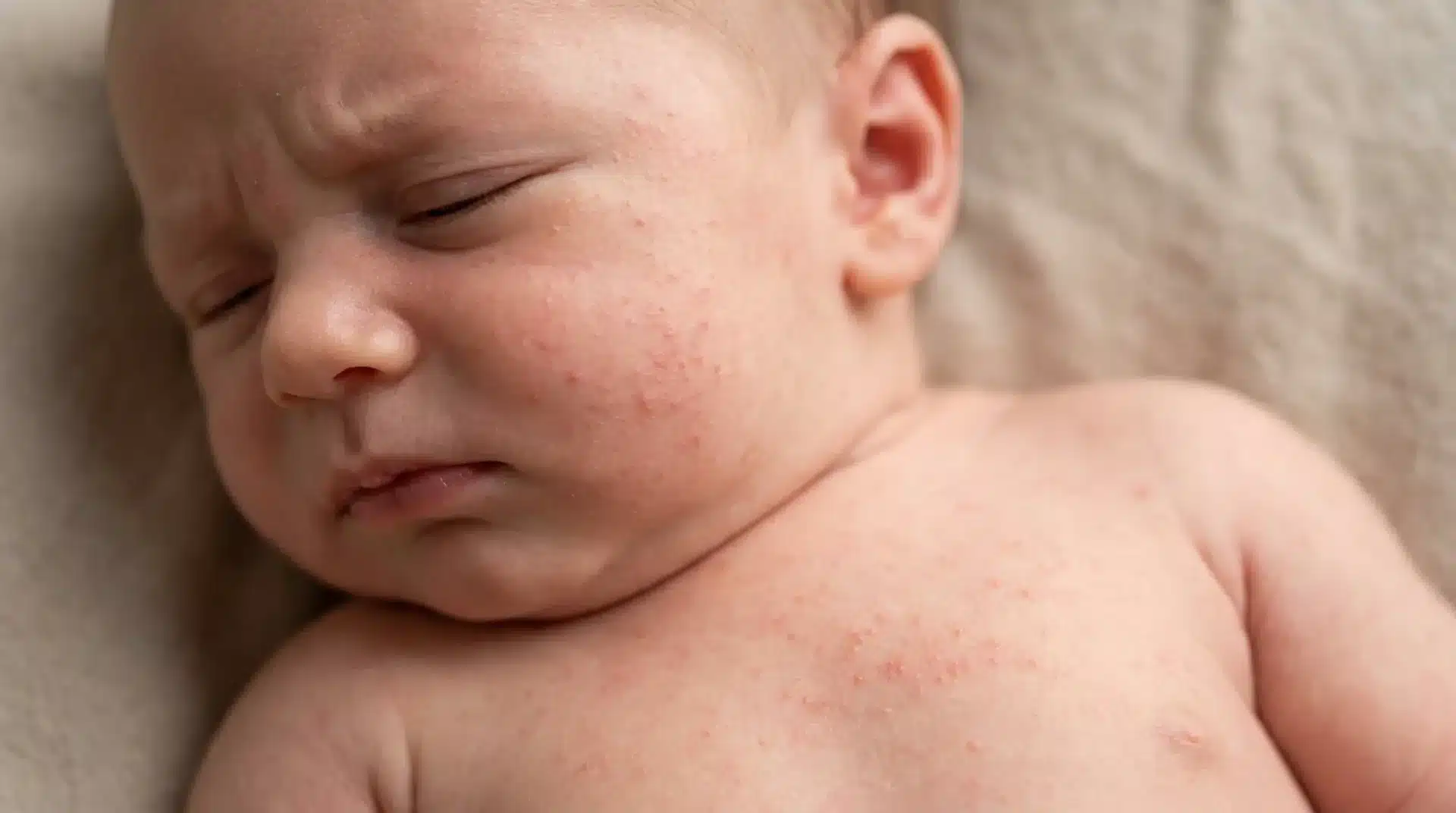
Heat rash, also called miliaria rubra, appears as pink or red blotchy patches with tiny raised bumps. It develops when a baby’s sweat glands become blocked, trapping sweat under the skin.
This condition is more likely to occur in warm weather or when a baby is overdressed. It commonly affects areas like the face, neck, and chest.
Heat rash can make the skin feel slightly prickly or irritated, but it is generally not serious. Keeping the baby cool, dressing them in lightweight clothing, and ensuring proper ventilation usually helps the rash clear up quickly without medical treatment.
5. Cradle Cap (Facial Seborrheic Dermatitis)
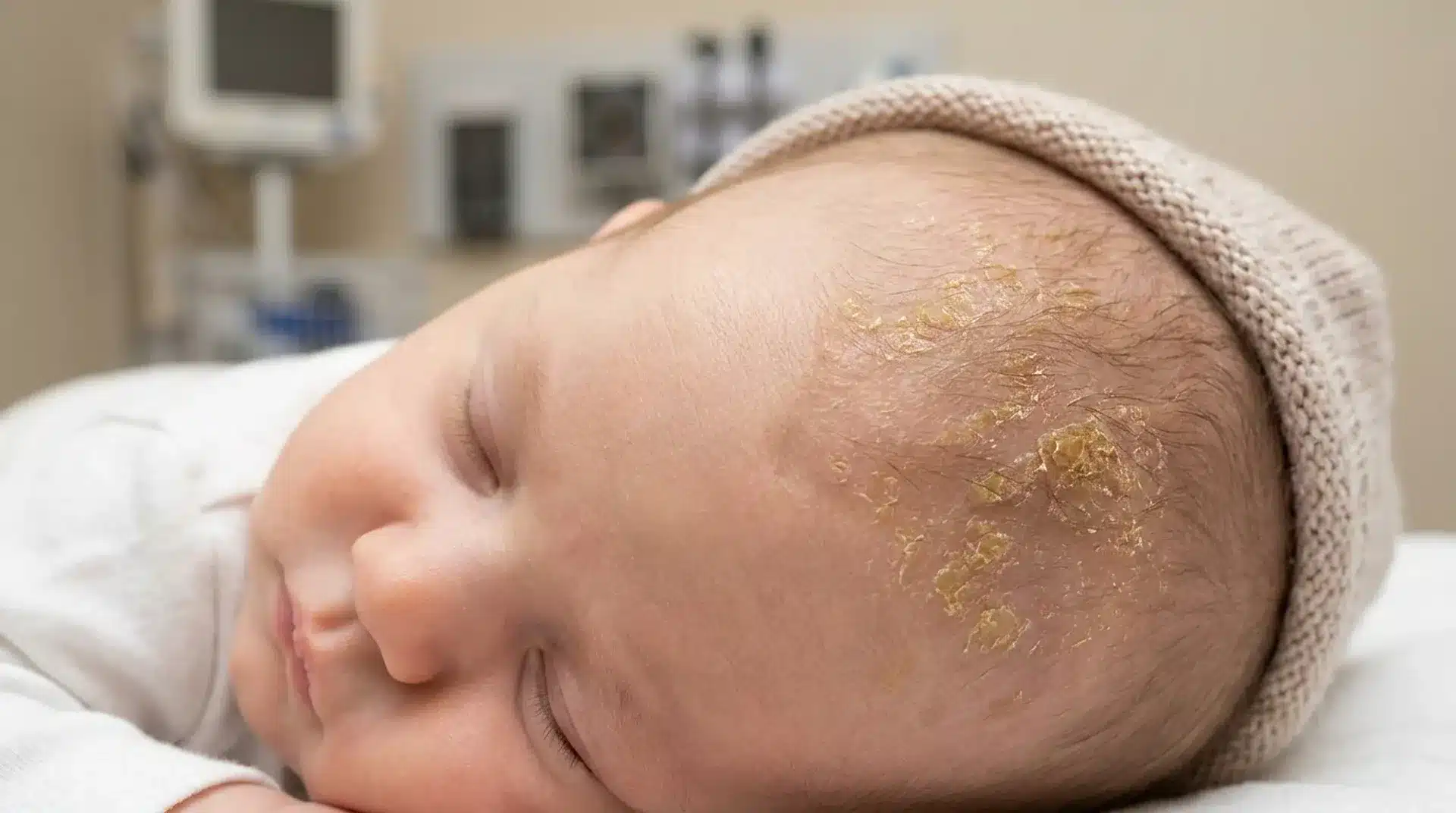
Cradle cap on the face is a form of seborrheic dermatitis that extends from the scalp to areas like the eyebrows, eyelids, and sides of the nose.
It appears as greasy, yellowish, or flaky patches on the skin. This condition is caused by overactive oil (sebaceous) glands and a naturally occurring yeast on the skin.
It is not harmful, itchy, or contagious. Most babies develop cradle cap within the first few months of life, and it typically improves on its own by the time they reach 12 months. Gentle cleansing and soft brushing can help manage the flakes, but aggressive scrubbing should be avoided.
6. Allergic Reactions
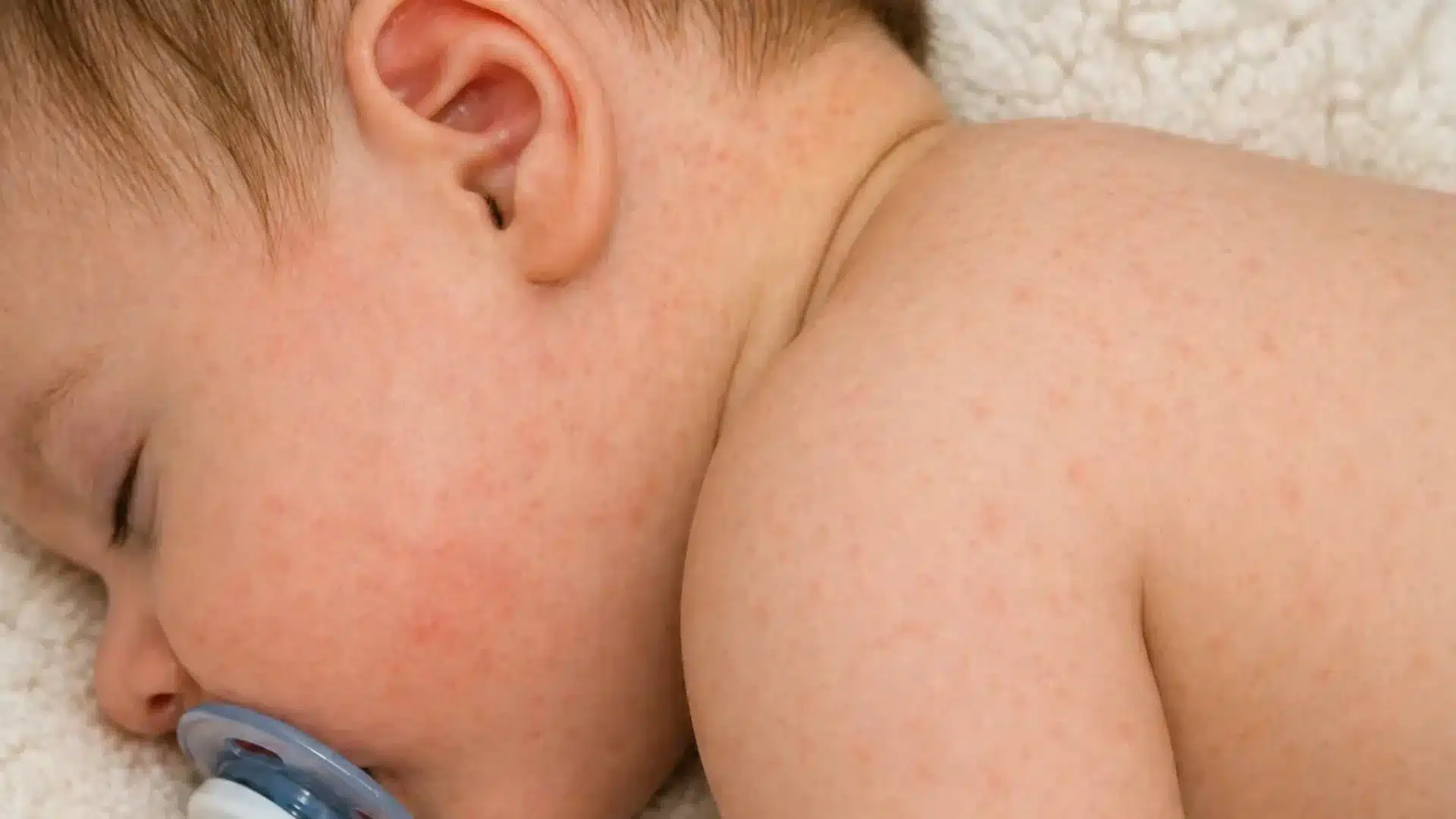
Allergic reactions on a baby’s face can occur in two main forms: contact dermatitis and food-related reactions.
Contact dermatitis happens when something directly touches the baby’s skin, such as certain fabrics, wipes, or skincare products, leading to redness and irritation.
Food-related reactions often appear as red, blotchy skin around the mouth and cheeks and may sometimes include hives.
These reactions usually develop suddenly after exposure to a new substance or food. Identifying and removing the trigger is key to managing the reaction.
If symptoms are severe, persistent, or accompanied by swelling or breathing difficulties, seek medical attention promptly.
7. Drool Rash
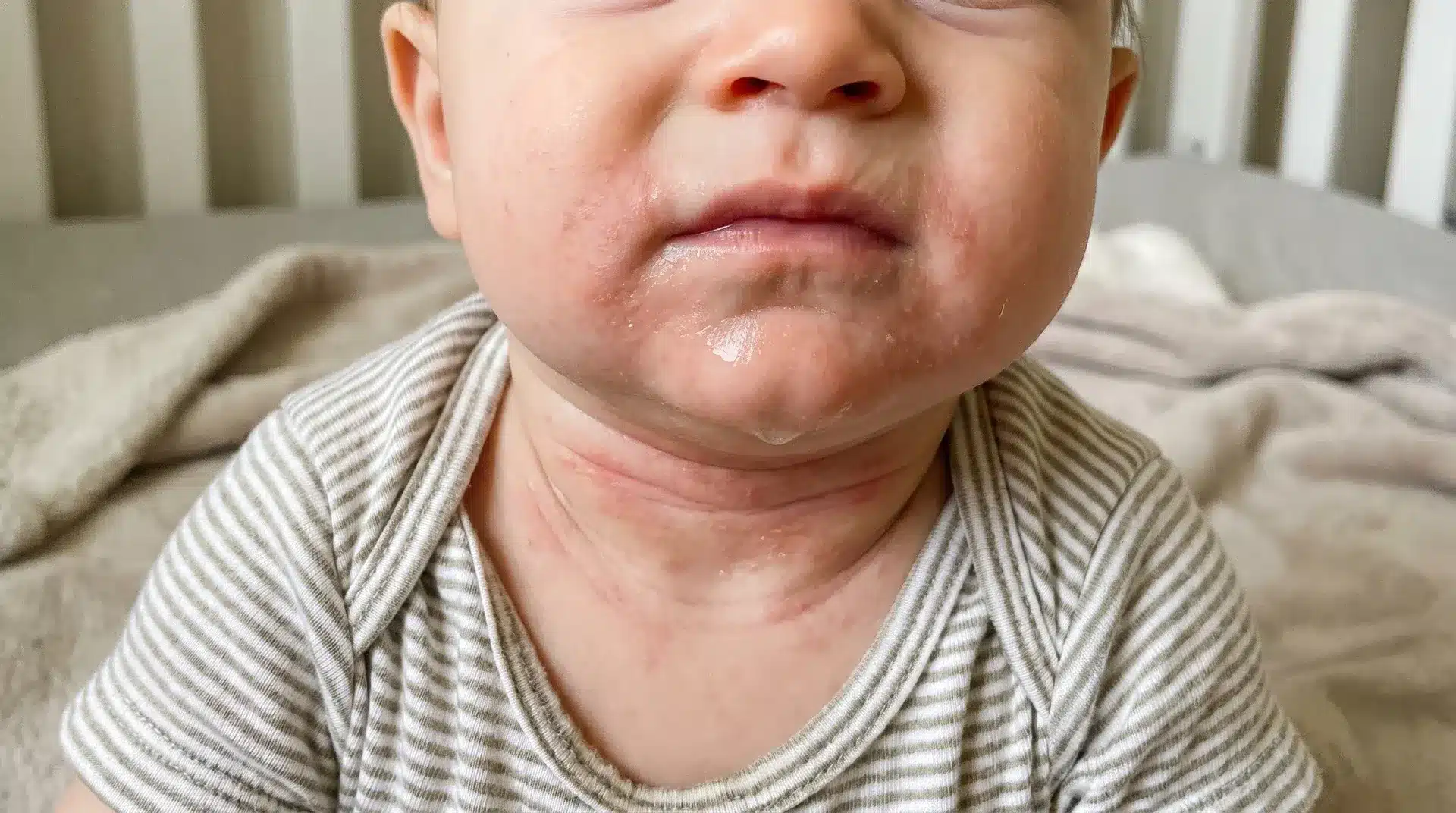
Drool rash develops due to prolonged contact of a baby’s skin with saliva, especially during teething.
It commonly appears around the mouth, chin, and cheeks as red, slightly irritated, or raw-looking skin. In some cases, small bumps may form along the edges of the rash.
Constant moisture from drooling can weaken the skin barrier, making it more sensitive and prone to irritation. This type of rash often comes and goes depending on how much the baby drools.
Keeping the area clean and dry, gently wiping away saliva, and using a protective barrier cream can help soothe the rash and prevent it from worsening.
What Causes Facial Rashes in Babies
Baby skin is structurally thinner than adult skin. A study published in Pharmaceutics found that the outer layer of infant skin is roughly 20% thinner than an adult’s, with a skin barrier that provides significantly less protection against irritants and moisture loss. That structural gap is the root of most cases of facial rash.
- Hormonal changes after birth: Trigger baby acne and milia. Maternal hormones passed to the baby before delivery stimulate oil glands and affect how the skin sheds dead cells in the first weeks of life.
- Sensitive skin and environmental triggers: Drive eczema. Dry air, temperature shifts, pollen, pet dander, and dust can all provoke a flare in babies with atopic skin. Family history plays a role, too.
- Heat and sweating: Block sweat glands, leading to heat rash. Overdressing, humid weather, or a warm sleeping environment are the most common culprits.
- Irritants, including soaps, fabrics, and saliva, Cause contact dermatitis and drool rash. Fragrances, dyes, rough fabrics like wool or synthetics, and certain wipes can trigger redness on a baby’s face.
- Allergies: Food proteins or topical ingredients can cause skin reactions ranging from mild redness to hives. Common food triggers in infants include dairy, eggs, and soy, though any new food introduced during weaning can be a factor.
- Dry skin and weather changes: Strip the face’s natural moisture barrier, especially in cold or low-humidity environments. Without that barrier, the skin becomes more reactive to everything else on this list.
- Viral infections: Certain viral illnesses, such as roseola and fifth disease (slapped cheek syndrome), can cause a visible facial rash. These differ from the rashes above because they are typically accompanied by fever or other systemic symptoms and require medical evaluation.
How to Identify Different Types of Baby Face Rashes
Location, texture, and timing together narrow most baby-face rashes quickly without requiring a clinical diagnosis.
Location tells you a lot. Rashes on the cheeks and nose in a newborn are often baby acne or milia. Redness around the mouth during teething may indicate a drool rash. Dry patches after 2 months may be eczema, while greasy scales near the eyebrows point to cradle cap.
Texture is the next clue. Eczema feels dry and rough. Baby acne and milia show clear bumps. Heat rash feels prickly, while drool rash looks smooth and red.
Timing matters. Baby acne appears at 2 to 4 weeks. Drool rash flares during teething. Heat rash follows warmth. Eczema comes and goes.
Treatment and Home Care for Baby’s Rash on the Face
Most baby facial rashes respond well to gentle, consistent home skin care. The goal is to reduce irritation, support the skin barrier, and avoid worsening the condition.
- Build a gentle skincare routine: Wash your baby’s face once daily with lukewarm water and a mild, fragrance-free cleanser. Gently pat the skin dry with a soft cloth, avoiding rubbing. Apply moisturizer immediately, within three minutes, to lock hydration.
- Keep skin clean and dry: Gently wipe your baby’s face throughout the day, especially after drooling, and replace wet bibs promptly. For heat rash, keep the baby cool, avoid overdressing, and allow the skin to air-dry naturally.
- Use fragrance-free products only: Choose baby products that are fragrance-free, dye-free, and alcohol-free, and check labels for hidden fragrances. If you have reactive skin, use fragrance-free, sensitive-skin brands to avoid irritation.
- Moisturize consistently: Apply a thick, fragrance-free cream or ointment twice daily to protect and repair your baby’s skin barrier. Creams and ointments work better than lotions, as they provide longer-lasting hydration and stronger protection against dryness.
Disclaimer: A baby’s facial rash should be checked by a pediatrician if it spreads quickly, forms blisters, causes swelling, develops yellow crusting, or comes with fever, trouble feeding, or unusual fussiness. Skin that does not improve with gentle care or keeps returning may need medical evaluation to rule out allergies, eczema, infection, or other underlying conditions.
When to See a Doctor About Baby Rash on the Face
Most baby facial rashes are harmless and clear on their own, so they usually don’t need a doctor’s visit. Still, watch for warning signs.
Contact your pediatrician if the rash spreads quickly, oozes, forms yellow crusts, or is accompanied by a fever above 38°C.
Seek help if your baby is unusually fussy, feeding poorly, seems unwell, or if the rash hasn’t improved after two weeks of consistent care.
Blisters, open sores, or noticeable swelling also need attention. Get emergency care if a rash appears after eating a new food and is accompanied by swelling, hives, breathing trouble, or unusual drowsiness.
Go to emergency care immediately if a rash appears after eating a new food and is accompanied by swelling of the lips or face, hives spreading rapidly, breathing difficulty, or unusual drowsiness.
These are signs of a serious allergic reaction (anaphylaxis) that requires urgent medical treatment, not a wait-and-see approach.
Trust your instincts and act early if something feels wrong, and contact your doctor promptly if symptoms worsen or do not improve.
Best Tips to Treat Baby Rash on the Face
Prevention is about maintaining simple habits that protect delicate skin before a rash develops.
- Daily skin care habits: Wash the face once daily with a gentle, fragrance-free wash. Pat dry and moisturize if needed. Keep the routine short because fewer products mean fewer chances for irritation.
- Choosing safe products: Use fragrance-free, dye-free products made for sensitive skin. Patch-test new products before using them on the face.
- Managing heat and humidity: Dress your baby in light layers, use breathable cotton, and keep rooms cool with airflow.
- Early detection: Check the skin daily for redness, dryness, or bumps.
Most baby facial rashes are temporary and improve with simple care. Gentle washing, fragrance-free moisturizer, breathable fabrics, and daily observation often prevent problems. If a rash worsens or is accompanied by other symptoms, contact your pediatrician promptly.
Conclusion
Baby rash on the face is something I see parents worry about quickly, but most cases follow predictable patterns once you understand them.
After going through the types, causes, and care methods, what stands out to me is how effective simple, consistent routines can be in managing and preventing flare-ups.
This matters because it helps you respond calmly rather than react to every sudden skin change.
With gentle care, awareness of triggers, and early observation, handling baby facial rashes becomes much more manageable over time.
Have you noticed a pattern in your baby’s skin changes or found a routine that works well?
Frequently Asked Questions
Can a Baby Rash on the Face Appear from Breastfeeding?
Yes, sometimes. A breastfed baby may react to proteins (like dairy or eggs) in the mother’s diet, causing facial redness or rash after feeds, sometimes with digestive symptoms. Consult a pediatrician before changing the diet.
How Long Do Most Baby Facial Rashes Last?
Most baby facial rashes depend on the type: acne/milia clear in 4–6 weeks, erythema toxicum in ~1 week, heat rash in a few days, drool rash comes and goes, and eczema is long-term with flare-ups.
Is It Safe to Use Coconut Oil on a Baby’s Facial Rash?
Coconut oil can moisturize dry baby skin, but it may clog pores and worsen acne or milia. For eczema-prone skin, fragrance-free creams or ointments are preferred. Always check with your pediatrician before using it on your baby’s face.