Most people treat a hair trim like a dentist appointment, something they put off until they absolutely can’t ignore the signs anymore. By then, the damage has usually traveled further up the shaft than you’d want.
The tricky part is that trimming too often can cost you length, and trimming too rarely can cost you even more.
There’s a sweet spot, and it lands in a different place for everyone depending on hair type, length, and how hard your daily routine is on your ends.
If you have a short style that loses shape fast, thick hair that hides damage until it’s serious, or you’re deep in a grow-out phase, the schedule that works for you isn’t the same as everyone else’s.
This guide breaks it all down so you can stop guessing and start trimming on your own terms.
Hair Trim Schedule by Hair Type
There’s no single rule that works for everyone. The right trim schedule depends on what your hair is doing right now, its length, and how you treat it. Look at this straightforward guide:
| Hair type/length | Recommended trim frequency |
|---|---|
| Short | Every 4 to 6 weeks |
| Fine or thin hair | Every 4 to 6 weeks |
| Medium-length hair | Every 6 to 8 weeks |
| Long hair | Every 8 to 10 weeks |
| Thick or coarse hair | Every 8 to 10 weeks |
| Curly or coily hair | Every 8 to 12 weeks |
| Chemically treated or color-treated | Every 4 to 8 weeks |
| Growing out your hair | Every 10 to 16 weeks |
Short hairstyles lose shape quickly. A pixie cut or layered bob can look messy within a month. Fine hair also needs regular trims because thin ends can look stringy or uneven fast.
Longer, thicker hair can go longer between trims because the ends are less noticeable, and the weight helps it hold its shape.
If you color, bleach, or relax your hair, your ends may break more easily, so you may need trims more often.
For men with thick hair or precision fade style, the edges and lines can lose their shape in as little as three weeks, even if the overall length still looks fine.
How Often to Trim Hair for Growth?

Trimming does not make your hair grow faster.
Hair grows from the scalp, not the ends. The average growth rate is about half an inch per month, whether you trim it or not.
What trims really do is help you keep your length.
If split ends are left alone, the damage can move up the hair shaft. This can make the strand break higher, causing you to lose more length later.
If you are growing your hair out, ask for a dusting. It removes only the damaged tips, usually around a quarter inch, without changing your haircut.
For most people, trimming every 10 to 12 weeks is a good balance. You may lose a little length, but your hair can still grow around one to one and a quarter inches in that time.
Signs Your Hair is Telling You It Needs a Trim
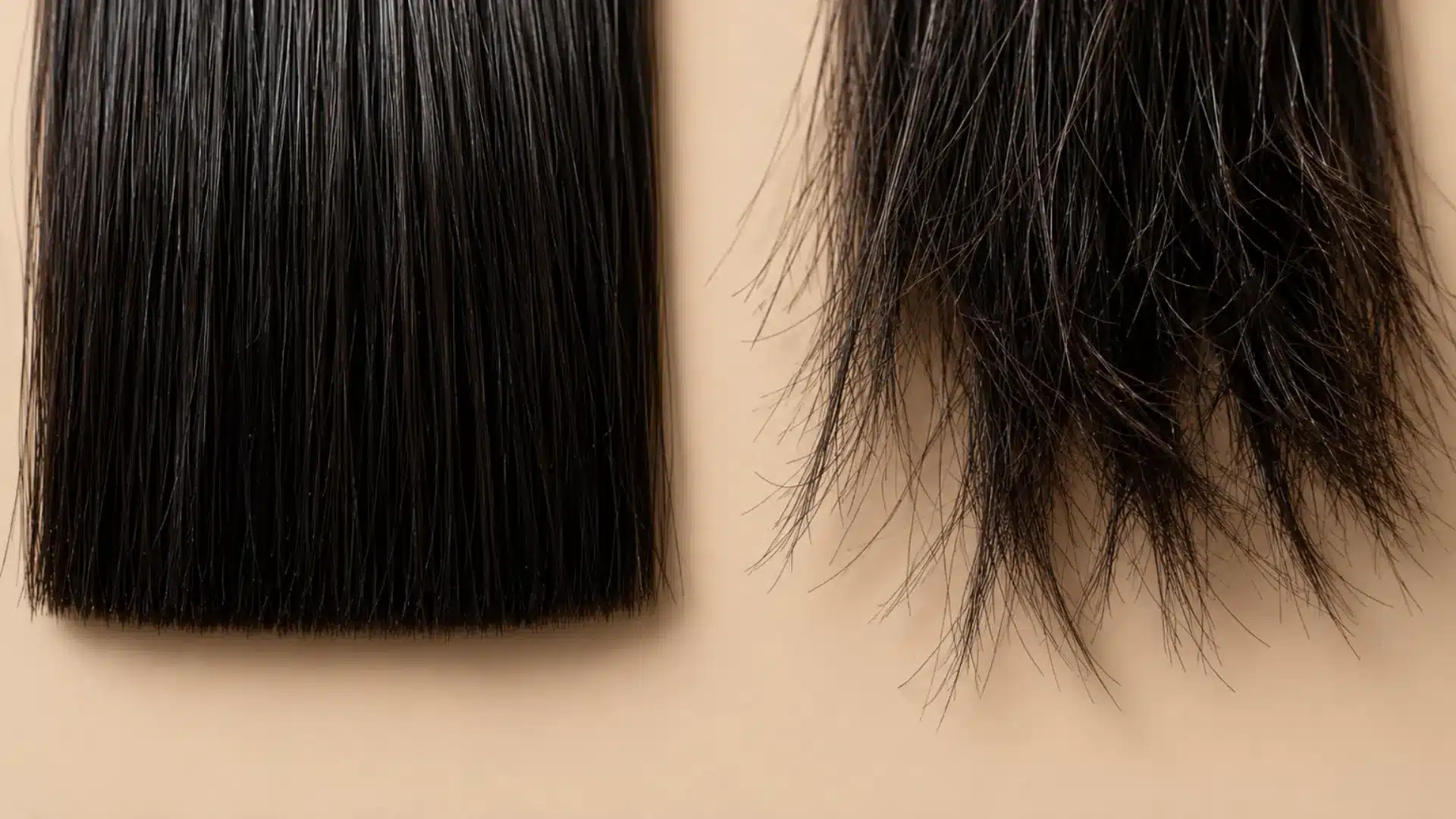
You don’t always need a calendar reminder. Your hair sends signals, and most of us ignore them until the damage is already well along.
I used to think dry ends were just a product problem. They weren’t. Once I started checking my ends every few weeks under natural light, I stopped losing length to breakage I didn’t see coming.
A good habit is to check your ends every few weeks under natural light.
- Visible split ends. Hold a strand up to the light. If the tip has separated into a Y-shape or looks frayed like a frayed rope end, it’s time. Once a split forms, no product can permanently close it. The only fix is cutting it off.
- More tangles than usual. Damaged ends create friction against each other and against other strands. If your hair suddenly feels harder to detangle, especially at the ends, it’s a sign that the ends have deteriorated.
- Frizzy or rough ends. If the ends of your hair feel dry and look fuzzy even after conditioning, the cuticle layer has worn down. This texture change appears before visible splits.
- Your style won’t hold. Hair that’s lost its shape, falls flat, or looks uneven at the ends is past due for a trim. Damaged ends resist styling because they’ve lost elasticity.
- Dullness at the tips. Healthy hair reflects light consistently. When ends split, they scatter light, making the tips look dull while the roots remain shiny. If you notice the difference, it’s a clear indicator.
What Affects How Often You Should Trim Your Hair?

Your trim timeline depends on your hair habits. If you use heat tools often, your ends may dry out faster.
Daily flat ironing, curling, or blow-drying can mean you need a trim every 6 weeks or so.
Chemical treatments can also speed up damage. Color, bleach, perms, and relaxers affect hair structure, and the ends are usually the first to show it.
Over time, repeated chemical stress can reach the hair follicle itself, not just the ends.
Weather and brushing matter too. Sun, dryness, rough detangling, and brushing wet hair too hard can all lead to split ends.
To protect your ends, use a wide-tooth comb on damp hair and a soft-bristle brush on dry hair.
Simple Habits that Buy You More Time Between Trims
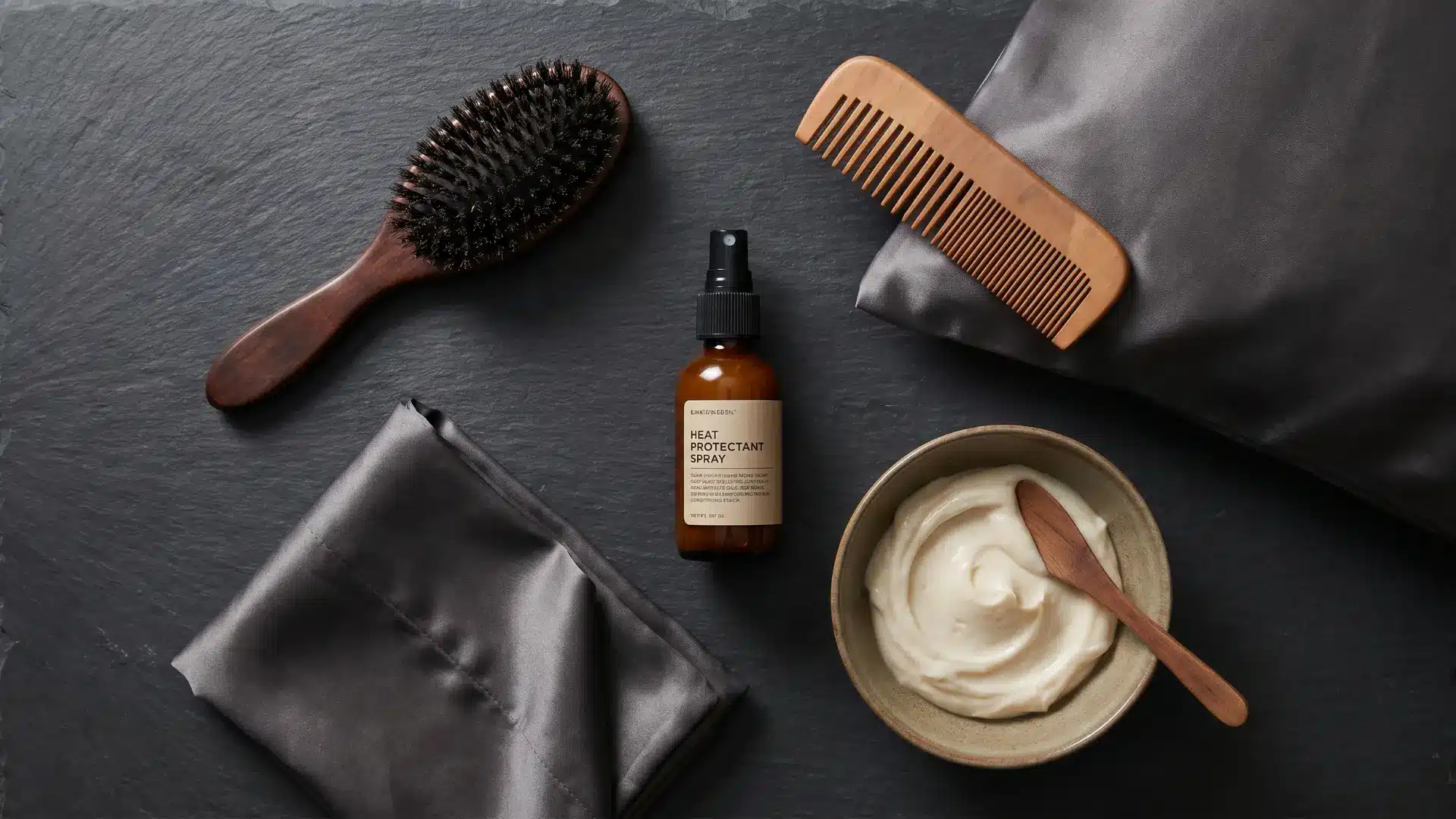
If you want to stretch your salon schedule without paying for it with your ends, the approach is mostly about reducing damage at the source.
- Use a heat protectant every time you heat style. No exceptions. It’s not just about preventing split ends; it slows the overall drying out of the cuticle.
- Sleep on a silk or satin pillowcase. Cotton creates friction against your hair as you move during sleep. That friction builds up over time and contributes to breakage at the ends.
- Deep condition regularly. Once a week for dry or chemically treated hair, once every two weeks for healthier hair. Well-hydrated strands are more flexible and less likely to snap.
- Detangle gently. Always start from the ends and work your way up. Never rip through a knot from the root down.
- Protect your ends. Loose braids, low buns, or protective styles keep the ends from rubbing against your clothing and drying throughout the day.
These habits will not completely replace trims. But they can help you stretch your trim schedule from every 6 weeks to every 8 or 10 weeks. Over a year, that can save you real time and money.
Conclusion
Your ends will always tell you the truth, even when your calendar doesn’t. The moment you notice fraying, extra tangles, or dullness creeping in, that’s your cue.
Short styles may need a trim every month. Long or thick hair can often last 2 to 3 months. If you are growing your hair out, you can wait longer as long as your ends still look healthy.
The real sign is not the calendar. It is your ends. If they start to fray, tangle easily, or look dull, it is time for a trim. Small trims help you stay ahead of damage, so you do not have to cut off a lot later.
What trim schedule works for your hair type? Drop your routine in the comments.
Frequently Asked Questions
Is There a Difference Between a Trim and a Haircut?
A trim removes a small amount of hair, typically a quarter to half an inch, without changing the overall shape or length. A haircut takes off more and reshapes the style. If you’re just maintaining healthy ends, you want a trim, not a full cut.
Can I Trim My Own Hair at Home?
You can, especially for minor maintenance between salon visits. Use sharp hair scissors (not regular scissors), work on dry hair in good lighting, and cut small sections at a time. For precise styles or significant length, a professional will give a cleaner result.
Does Hair Texture Affect How Quickly It Gets Damaged?
Yes. Fine Hair Shows Damage Faster Because Each Strand is Thinner and More Fragile, so Split Ends Become Visible Sooner. Coarser and Curlier Textures Can Hide Damage Longer, but They’re Also More Prone to Dryness, Which Means the Damage is Still Accumulating Even when It’s Less Obvious.
Should I Trim My Hair More Often in Summer?
Not necessarily more often, but it’s worth checking your ends more frequently. Sun exposure, saltwater, chlorine, and heat all dry out the cuticle faster in the summer months. If you spend a lot of time outdoors or swim regularly, you may find you need a trim slightly sooner than your usual schedule.