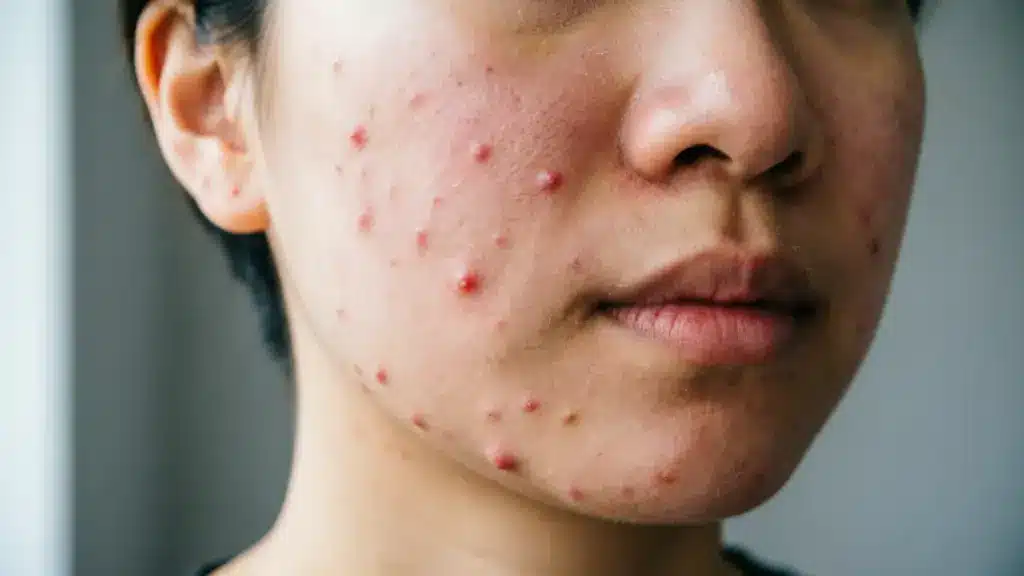
Dry skin and acne seem like they shouldn’t go together, but I see this combination all the time.
A lot of people deal with flaky patches, tight skin, and breakouts at the same time, especially after using strong acne treatments too often.
I have also noticed that once the skin barrier becomes irritated, the cycle gets harder to control. The skin starts feeling dry on the surface while clogged pores continue to form underneath.
This guide breaks down why that happens, what usually makes it worse, and how to care for dry, acne-prone skin without making the irritation or breakouts even more difficult to manage.
Can Dry Skin Cause Acne?
Dry skin does not directly cause acne the way excess sebum does, but it creates the conditions that make breakouts more likely and harder to heal.
A damaged skin barrier, dead cell buildup, and compensatory oil production can all turn dry skin into a breakout-prone environment.
Supporting the barrier first, and treating acne second, is the most effective approach for dry, acne-prone skin.
The key takeaway is that dry skin acts as a major aggravator rather than the root cause. It turns small issues into bigger ones and slows healing.
Understanding this helps you shift from fighting your skin to working with it, something I always emphasize with clients who track their routines patiently and adjust gently.
Signs That Dry Skin May Be Worsening Your Acne
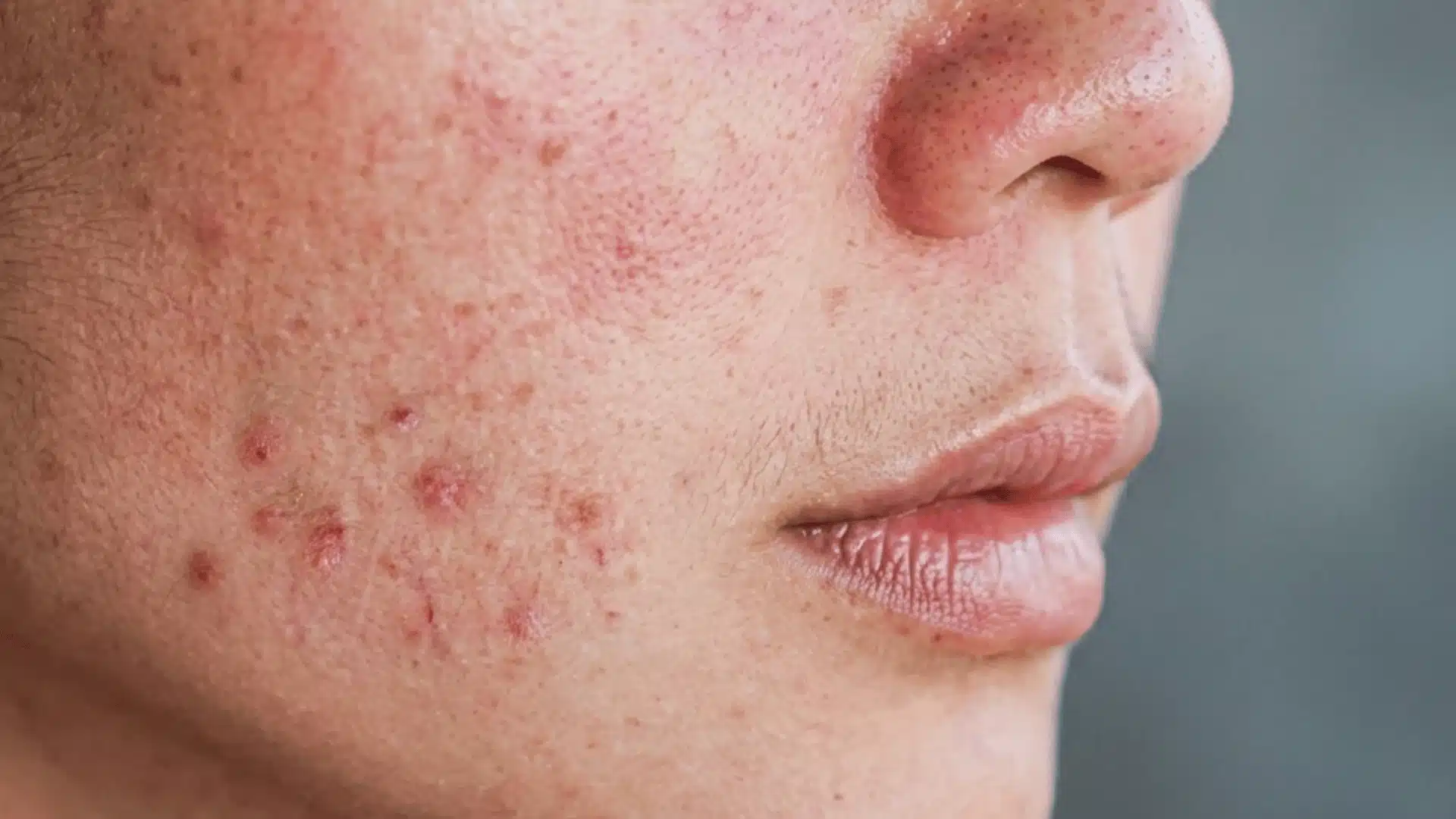
If you are unsure whether dryness is driving your breakouts, these patterns can help you identify what is actually happening with your skin before you reach for stronger treatment.
Not every breakout on dry skin has the same trigger. Look for these signs before assuming your acne needs a more aggressive approach:
- Pimples appear alongside visible flaking, tightness, or rough texture in the same areas
- Breakouts feel more sore or inflamed than usual and take noticeably longer to heal
- New spots show up or worsen shortly after starting an acne treatment
- Skin flares after seasonal changes, air travel, chlorine exposure, or time spent in dry indoor heat
- Your routine consistently leaves skin feeling stripped rather than balanced
Some bumps that appear on dry skin are not standard acne at all, and knowing whether it is fungal or bacterial acne can save you from treating the wrong thing entirely.
If several of these sound familiar, the skin barrier likely needs attention before active acne treatment can work properly. Reaching for stronger activities at this point usually makes things worse, not better.
Dry Skin vs. Dehydrated Skin vs Purging
One of the biggest sources of confusion I see among clients is the mixing up of dry skin, dehydrated skin, and purging
Knowing the difference matters because treating the wrong one can make your breakouts worse.
In my work with sensitive skin from years of pool training and client routines, I have learned that a clear understanding prevents unnecessary frustration and helps you choose the right steps.
- Dry skin is your actual skin type. It lacks natural oils and lipids, often feeling tight, flaky, and rough all the time.
- Dehydrated skin is a temporary condition that can happen to any skin type, even oily skin. It simply lacks water in the upper layers, so the skin may look dull, show fine lines, and feel tight even if it still produces oil.
- Purging is a short-term increase in breakouts when you introduce an active ingredient like a retinoid or acid.
Getting this right helps you stop guessing and start supporting your barrier properly. Many people blame dryness for acne when dehydration or early purging is actually at play.
Why Dry Skin and Acne Often Show Up Together
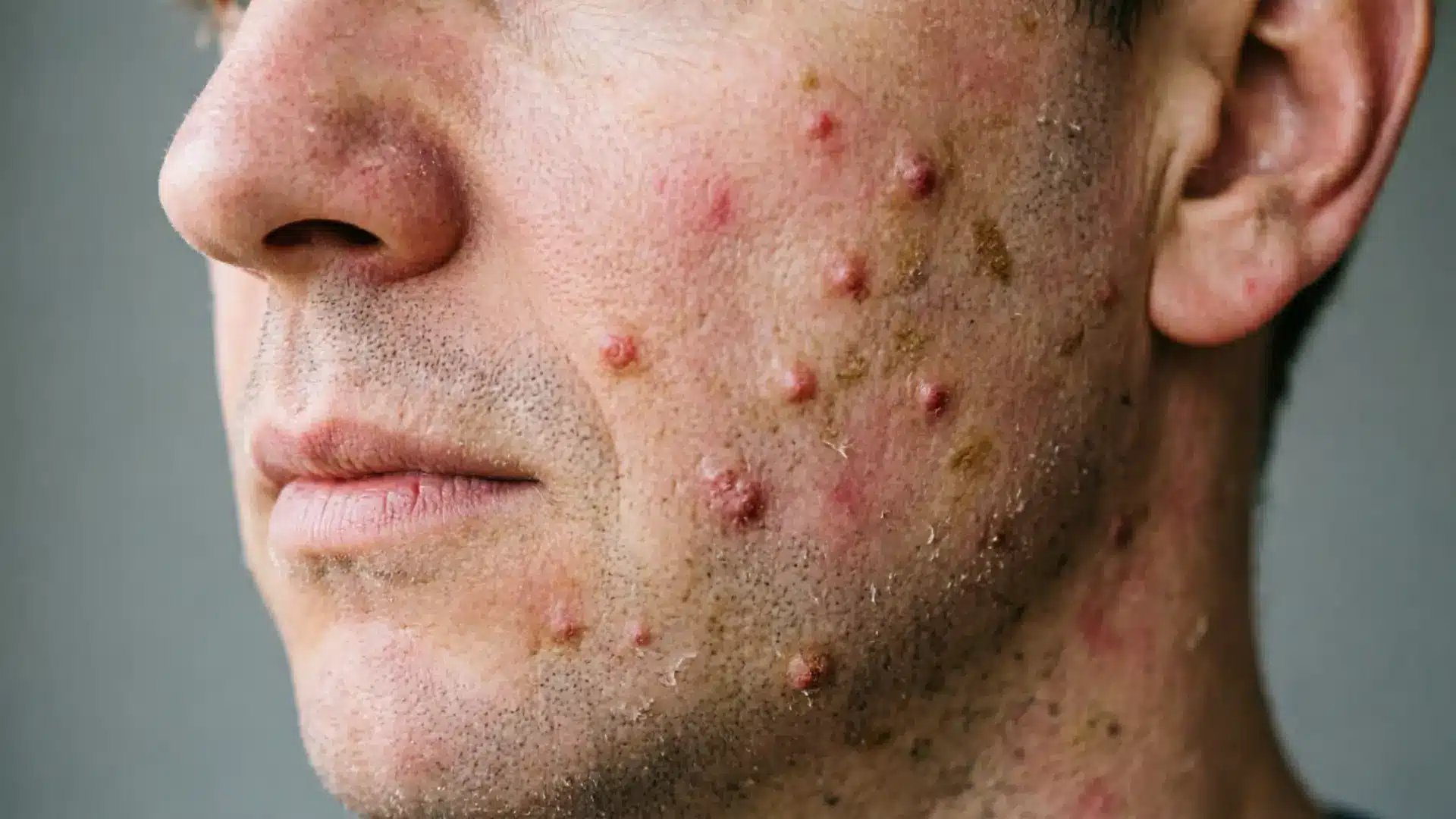
Dryness and acne are closely linked, with an imbalance in oil production, buildup, and barrier damage creating conditions that make breakouts more likely even on dry skin.
1. The Sebum Overproduction Loop
When your skin gets too dry, it tries to defend itself by producing more oil. That extra oil mixes with dead skin cells sitting on the surface, which can clog pores and trigger breakouts.
This is why a face can feel tight, flaky, and still break out at the same time. Many people make it worse by using harsh cleansers or strong acne products to remove shine.
Instead of calming the skin, that stripping pushes it into survival mode. The better fix is gentle hydration, which helps stop the cycle instead of feeding it.
2. Dead Skin Cell Buildup Blocks Pores Directly
Dry skin does not shed dead cells as smoothly as healthy skin. Instead, those cells stick together and collect on the surface or around pore openings.
Once they mix with oil, dirt, or product residue, they can form plugs that lead to blackheads, whiteheads, and inflamed pimples. This can happen even if skin does not look oily, which is why dry-skin acne often feels rough and congested rather than greasy.
A gentle routine that supports natural skin turnover can help clear this buildup without causing further irritation or worsening dryness.
3. A Weakened Barrier Lets Breakouts Take Hold
A healthy skin barrier keeps moisture in and helps block outside irritants. When dryness weakens that barrier, skin becomes more vulnerable to irritation and inflammation. This can make breakouts look redder, feel sorer, and take longer to heal.
Research published in the International Journal of Women’s Health also links impaired barrier function with acne-prone skin, helping explain why overly-dried skin often struggles more.
In real life, this shows up after over-exfoliation, chlorine exposure, or using too many strong products at once. Repairing the barrier first usually helps skin calm down and makes acne care work more smoothly.
4. Acne Treatments Can Also Make Dryness Worse
Many acne treatments work well, but they can also dry the skin out. Ingredients like benzoyl peroxide, salicylic acid, and retinoids often increase cell turnover or reduce bacteria, yet they may also strip away moisture and weaken the barrier.
That can leave skin tight, flaky, and more reactive, which sometimes leads to more breakouts instead of fewer.
This problem is common in adults with naturally drier skin, since there is less oil to cushion the effects. The best approach is to start slowly, use barrier-friendly products, and watch how skin responds over time.
Common Habits That Make Dry Skin Acne Worse
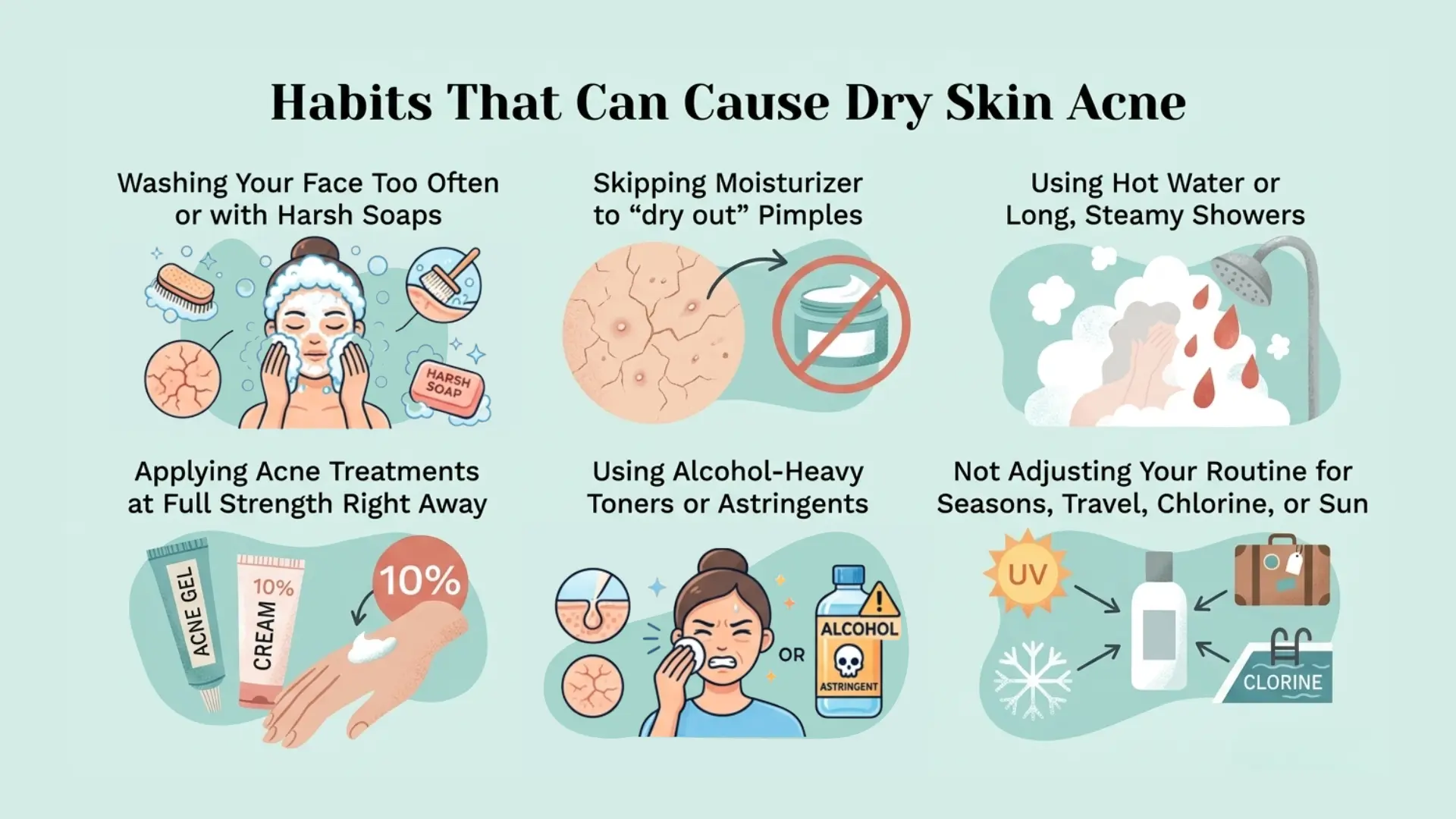
Everyday habits can quietly worsen dry skin and acne, making breakouts harder to manage by damaging the skin barrier and disrupting its natural balance.
1. Washing Your Face Too Often or with Harsh Soaps
Cleansing more than twice a day or using sulfate-heavy, fragranced, or high-pH foaming cleansers removes essential lipids and ceramides.
This leaves the barrier weaker, increases tightness, and prompts rebound oil that clogs pores.
From my pool days, I saw how chlorine combined with aggressive washing made skin flaky and more prone to breakouts. Switch to a gentle, non-foaming cleanser and limit face washing to morning and night.
2. Skipping Moisturizer to “dry out” Pimples
It is one of the most common mistakes I hear. It is tempting to leave breakouts bare, believing moisture feeds acne.
Skipping moisturizer causes dehydrated skin, which simply ramps up oil production and holds onto dead cells even more. The result is more clogged pores and slower healing.
Non-comedogenic, barrier-supporting moisturizers actually help regulate oil and support healing. Apply a lightweight, ceramide-rich formula after every cleanse.
If you rely on spot treatments for individual bumps, it is also worth understanding how pimple patches work on dry skin so you are not pulling hydration from the surrounding barrier in the process.
3. Using Hot Water or Long, Steamy Showers
Hot water dissolves the skin’s natural oils quickly, leaving the barrier thin and reactive. This is especially tough in dry indoor heating during winter or after swim sessions.
Keep showers lukewarm, limit face washing time to under a minute, and pat dry gently.
A cool-mist humidifier in your bedroom can make a noticeable difference in maintaining ambient moisture.
4. Applying Acne Treatments at Full Strength Right Away
Starting benzoyl peroxide, salicylic acid, retinoids, or glycolic acid daily on already dry skin often causes peeling, redness, and a compromised barrier that invites more breakouts.
Combining scrubs, acids, and strong treatments at the same time makes this even worse.
Begin with the lowest available concentration, use every other night, and apply moisturizer first to buffer the skin before treatment.
Dermatologists commonly recommend introducing one new active skincare product at a time, patch-testing it first, and waiting 1-2 weeks before adding another to identify potential irritants
5. Using Alcohol-Heavy Toners or Astringents
Products with alcohol or witch hazel remove surface oil but also damage the protective layer, making pores more prone to clogging and inflammation.
This habit often feels productive at first because the skin feels “clean,” yet it backfires within days.
Choose alcohol-free, soothing options and avoid physical scrubs that create micro-tears. Skip them entirely if your skin already feels dry or flaky.
6. Not Adjusting Your Routine for Seasons, Travel, Chlorine, or Sun
Winter heating, airplane air, pool chlorine, or sun exposure all pull moisture from the skin, intensifying dryness-related breakouts.
I remember how, in my coaching years, post-swim routines without extra hydration always led to more bumps.
Add extra hydration layers in dry conditions, rinse thoroughly after swimming, and always use a non-comedogenic sunscreen. Small seasonal tweaks prevent the dryness from snowballing into worse acne.
The Right Skincare Routine When Your Skin is Dry and Acne-Prone
A balanced routine focuses on gentle cleansing, targeted treatment, proper hydration, and daily sun protection to manage breakouts while protecting dry, sensitive skin from further irritation.
- Cleanse Without Stripping: Use a hydrating gel cleanser with a skin-friendly pH of 4.5 to 5.5 and ingredients like glycerin, panthenol, niacinamide, or ceramides. Wash no more than twice daily with lukewarm water, and avoid stripping foaming or deep-clean formulas.
- Treat Strategically, Not Aggressively: A common mistake with dry, acne-prone skin is starting with the strongest treatment. Dry skin responds better to precision than intensity. The American Academy of Dermatology recommends starting with the lowest effective strength to limit irritation, which can worsen breakouts on already compromised skin. For compromised skin, azelaic acid 10 to 15 percent is often a gentler option.
Note of caution: Benzoyl peroxide at 2.5 percent used every other day is a reasonable entry point. Move to daily use only once your skin has shown it can tolerate it. Tretinoin, when needed, works better with what is called the buffer method: apply a layer of moisturizer first to slow absorption and reduce early irritation noticeably.
- Moisturize Before and After Actives: For dry, acne-prone skin, moisturizer is not just the last step. Before stronger actives like tretinoin or benzoyl peroxide, apply a light layer first to reduce irritation, then moisturize again after treatment. Choose non-comedogenic formulas with ceramides, hyaluronic acid, squalane, or glycerin, and avoid heavy oils.
- Finish with SPF: Daily sunscreen matters because acne ingredients like salicylic acid, retinoids, and azelaic acid can increase UV sensitivity. Choose a fragrance-free, hydrating SPF 30 or higher, ideally a mineral formula with zinc oxide or titanium dioxide. Avoid mattifying or alcohol-based sunscreens, which can dry out already sensitized, acne-prone skin.
The Right Ingredients for Dry Skin That Breaks Out
Choosing the right ingredients helps manage breakouts while protecting dry skin, supporting hydration, calming irritation, and keeping the skin barrier balanced during acne treatment.
| Ingredient | Benefit for Dry, Acne-Prone Skin | Tip |
|---|---|---|
| Ceramides | Repair skin barrier and reduce dryness | Best night moisturizers |
| Glycerin | Hydrates without feeling greasy | Good for daily use |
| Hyaluronic Acid | Keeps skin smooth and hydrated | Apply to damp skin |
| Squalane | Softens skin with a lightweight feel | Ideal for non-heavy moisture |
| Niacinamide | Calms redness and supports barrier | Lower strengths suit sensitive skin |
When to See a Dermatologist for Dry Skin and Acne
Persistent breakouts on dry skin sometimes signal issues that go beyond what a simplified at-home routine can resolve on its own.
- Painful cysts or nodules: Deep, inflamed breakouts that feel hard or tender under the skin typically require prescription treatment and should not be managed with over-the-counter actives alone.
- Worsening scarring or dark marks: If post-breakout marks are deepening or spreading despite a gentle routine, a dermatologist can recommend targeted treatments before permanent damage sets in.
- Skin that cracks, bleeds, or stings: Reacting this way even to basic, fragrance-free products suggests significant barrier compromise that may overlap with eczema or rosacea and needs clinical assessment.
- No improvement after 8 to 12 weeks: A consistently followed, simplified routine that still produces no visible change is a clear sign the underlying trigger has not been identified yet.
- Sudden adult-onset dryness paired with acne: Dramatic seasonal flares or new breakouts appearing alongside unexpected dryness in adulthood can point to hormonal shifts or internal triggers worth investigating with a professional.
Conclusion
Dry skin and acne are not opposites. They feed off each other in a frustrating loop that gets worse when you treat one while ignoring the other.
The real shift happens when you stop punishing your skin for breaking out and start rebuilding what is broken underneath.
A healthy barrier does not guarantee zero pimples, but it makes every product work better, every breakout heals faster, and every morning a little less stressful.
If you have been wondering whether dry skin can cause acne, the answer is that dryness alone is not the root cause, but it is a powerful driver.
Support your barrier first, treat your acne second, and give your skin the time it needs to respond. Many clients I have worked with saw clearer skin simply by swapping one or two habits and committing to moisturizer.
If this helped you make sense of what your skin has been doing, drop a comment below and tell us which habit you are changing first
Frequently Asked Questions
Can Diet Make Dry Skin Acne Worse?
High-sugar or dairy-heavy diets can increase inflammation in some people, which then worsens dryness-related breakouts. Focus on omega-3s and consistent hydration while tracking your own triggers.
Should I Avoid All Facial Oils if My Skin is Dry and Acne-Prone?
Not at all. Lightweight, non-comedogenic oils like squalane actually support the barrier without clogging pores. Test one at a time and always layer under your usual moisturizer.
Is Dry Skin Acne Different from Hormonal Acne?
They can overlap, especially in adults. Dry skin acne usually shows more flaking and slower healing, while hormonal breakouts tend to cluster around the jaw. A dermatologist can help tell the two apart.