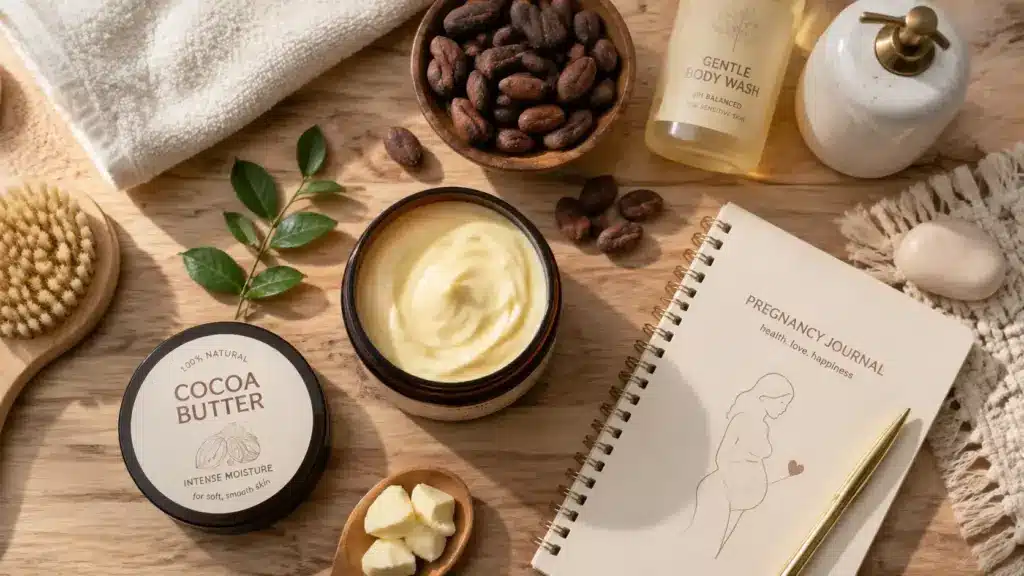
If you’ve ever stood in a drugstore aisle holding a tub of cocoa butter, wondering if it’s really going to do what the label promises, you’re not alone.
Somewhere between your grandmother’s advice and the glowing reviews online, the truth about cocoa butter got a little fuzzy, and it’s often compared to another skincare favorite, since shea butter benefits come up in almost the same breath whenever stretch marks are the topic.
So let’s clear things up. Cocoa butter is genuinely good for your skin; it’s rich, deeply moisturizing, and comforting when your Skin feels tight or itchy.
Does Cocoa Butter Help with Stretch Marks?
Cocoa butter can help moisturize dry skin and make areas with stretch marks feel softer and smoother, but research has not shown that it can reliably prevent stretch marks or remove existing ones.
Stretch marks form when the skin changes quickly, and deeper structures such as collagen and elastin are affected, so a surface moisturizer cannot fully reverse them.
Stretch marks are considered a common dermatological concern in clinical literature, even though the condition itself is harmless.
Cocoa butter may still be useful during pregnancy, weight changes, or growth because it can reduce dryness, tightness, and rough texture. However, softer skin should not be mistaken for actual scar removal.
For regular use, the most realistic benefit of cocoa butter is skin hydration and comfort. If reducing the visible appearance of stretch marks is the main goal, other treatments may have stronger supporting evidence and can be discussed with a dermatologist.
What are Stretch Marks and Why Do they Form?
Stretch marks are common skin changes that appear when the body grows or changes quickly. According to the National Library of Medicine, they’re medically known as striae, and typically shift from reddish streaks to a whitish, scar-like appearance as they age.
- Rapid skin stretching: Stretch marks often develop when the skin expands or contracts quickly during pregnancy, puberty, weight changes, or muscle growth.
- Collagen and elastin changes: Fast body changes can affectcollagen and elastin, the proteins that help keep skin strong, flexible, and supported.
- Hormonal influence: Changes in certain hormones may affect skin elasticity and make some people more likely to develop stretch marks.
- Genetics: A family history of stretch marks may increase the likelihood of developing them during periods of rapid body change.
- Changing appearance: New stretch marks may appear red, pink, purple, or dark brown before gradually becoming lighter and less noticeable over time.
Stretch marks are usually harmless, and their appearance often fades with time. Because several internal factors influence them, no moisturizer can guarantee complete prevention or removal.
How Does Cocoa Butter for Stretch Marks Work?
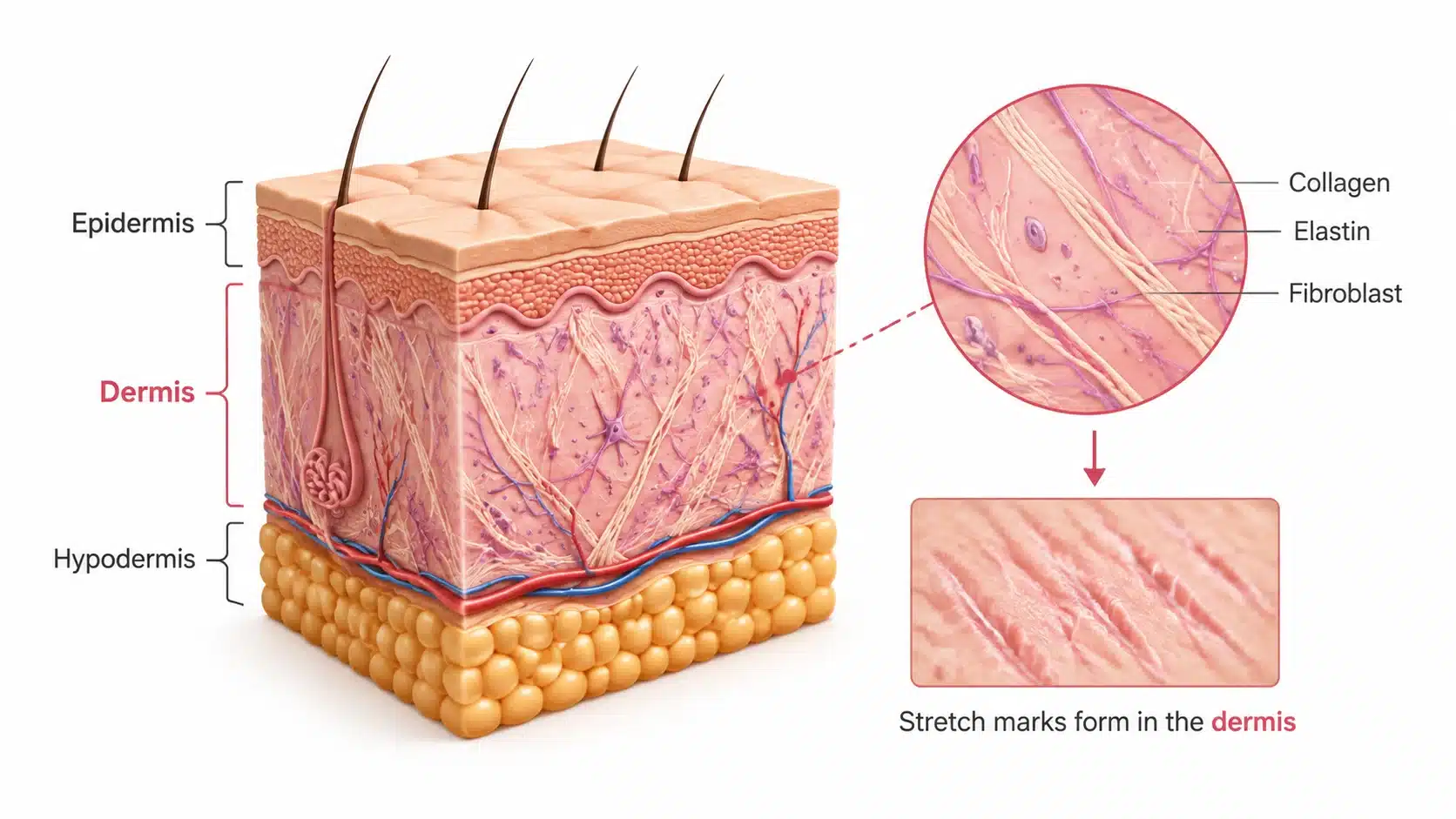
Cocoa butter cannot remove stretch marks, but itsmoisturizing and skin-conditioning properties can still support areas affected by rapid stretching, dryness, and changing skin texture.
1. Helps Keep Skin Moisturized
Cocoa butter works as a rich emollient that helps reduce moisture loss from the skin. Regular application can keep areas affected by stretching feeling softer and less dry. This same fatty-acid profile is one reason it shows up in routines meant for different skin types, beyond just stretch-mark-prone areas.
This can be especially useful during pregnancy or weight changes, when skin may feel tight or uncomfortable. However, hydration should not be confused with actual stretch-mark removal.
2. Softens Rough Skin Texture
Stretch-mark-prone areas can sometimes feel rough or uneven, especially when the surrounding skin becomes dry. Cocoa butter helps soften the skin surface and creates a smoother feel by supporting moisture retention.
While this may temporarily make the area appear more even, it does not repair the larger structural changes responsible for stretch marks. Shea butter is often reached for similar texture concerns, though what it actually delivers tends to feel lighter than cocoa butter’s heavier finish.
3. Reduces Dryness and Tightness
Rapid skin expansion may leave areas such as the abdomen, thighs, hips, or breasts feeling dry and tight. Applying cocoa butter can help improve comfort by creating a moisturizing layer over the skin.
This makes it useful as part of regular body care, even though research does not support it as guaranteed stretch-mark prevention.
4. Supports the Skin Barrier
A healthy skin barrier helps limit water loss and protects the skin from external irritants. Cocoa butter contains fatty components that help reinforce this protective surface and keep dry skin conditioned.
Supporting the skin barrier may improve overall comfort and softness, particularly when frequent stretching or environmental dryness makes the skin feel more sensitive.
Shea butter is sometimes used for the same barrier-support purpose, and weighing shea against cocoa often comes down to how rich or light a texture someone prefers.
5. Makes Skin Feel Smoother
Consistent moisturization can make skin feel smoother and more supple, which may improve the overall appearance of areas with stretch marks.
Cocoa butter does not erase scar tissue, but hydrated surrounding skin may make texture differences feel less noticeable.
The benefit is mainly cosmetic and comfort-focused rather than a permanent change in the stretch marks. This same smoothing effect is one reason some people also use it above the neck, even though it comes with its own upsides and downsides there.
Cocoa Butter During Pregnancy: What Should Be Considered?

Cocoa butter won’t stop stretch marks from forming, since that depends largely on genetics and how quickly skin stretches, factors it can’t influence.
That’s why people often wonder whether cocoa butter helps prevent or reduce stretch marks, especially during pregnancy or times of rapid weight change.
Older, silvery stretch marks are essentially scar tissue, and topical moisturizers can’t reach deep enough to change that. Newer, reddish marks may respond slightly better since the skin is still healing, but for real fading, you’ll need options like retinoids, microneedling, or laser treatments.
The same goes for prevention during pregnancy; studies show little difference in stretch mark rates with or without cocoa butter, since genetics and skin elasticity matter more. It’s still worth using for comfort, just not as a fix.
How to Use Cocoa Butter on Stretch Marks?
Using cocoa butter correctly can make daily application easier and help keep stretching skin moisturized, soft, and comfortable. Follow these simple steps for consistent use.
Step 1: Apply After Showering: Apply cocoa butter after a shower or bath, when the skin is clean and slightly warm. This makes it easier to spread the product evenly.
Step 2: Use on Slightly Damp Skin: Gently pat the skin dry and leave a little moisture behind. Applying cocoa butter to slightly damp skin helps seal in hydration more effectively.
Step 3: Massage Gently: Use small circular motions to spread cocoa butter across the area. Gentle massage helps distribute the product evenly without putting unnecessary pressure on sensitive skin.
Step 4: Apply Consistently: Use cocoa butter regularly instead of applying a large amount occasionally. Consistent moisturization helps maintain softness and comfort.
Step 5: Focus on Stretch-Prone Areas: Apply it to areas commonly affected by stretching, including theabdomen, hips, thighs, breasts, buttocks, and upper arms.
A simple, consistent routine is enough. Regular application can support skin hydration and comfort, but don’t expect cocoa butter to remove stretch marks.
Cocoa Butter vs. Other Stretch Mark Products
Cocoa butter isn’t the only option out there; oils, butters, and specialized creams all promise similar benefits, and it’s easy to feel overwhelmed by the choices. Here’s a quick side-by-side look at how cocoa butter compares, so you can pick what actually suits your skin and routine.
| Product | Texture & Feel | Best For | Stretch Mark Evidence |
| Cocoa Butter | Firm, thick, noticeable cocoa scent | Overnight use, sealing in moisture | No proven prevention power |
| Shea Butter | Softer, absorbs more easily, gentler on Skin | Sensitive or reactive Skin | No proven prevention power |
| Coconut Oil | Light, fast-absorbing, non-greasy feel | Daytime use, layering under clothes | No proven prevention power |
| Stretch Mark Creams | Varies, often lighter, formulated with actives (hyaluronic acid, peptides, centella asiatica) | Targeted elasticity support | Slightly more research, though results remain modest |
If your Skin is sensitive, shea butter tends to feel more soothing. If you want a thicker, more occlusive barrier, cocoa butter wins that round. For daytime wear without the greasy feeling, coconut oil is the more practical pick; save cocoa butter for bedtime.
What Treatments May Work Better for Existing Stretch Marks?
Stretch marks are scars, so no treatment can promise complete removal. Dermatology care aims to make them less noticeable, with choices depending on mark age, skin, health, and pregnancy status.
1. At-Home Options
Early stretch marks may respond better to treatment than mature marks. AAD notes potential benefit from hyaluronic acid and tretinoin for some early marks, although results vary.
Daily use may take weeks before change becomes visible. Pregnancy and breastfeeding can rule out certain active ingredients, so choose products carefully.
2. Prescription Treatment
A dermatologist may prescribe tretinoin for suitable patients with early stretch marks. It can cause irritation and is not appropriate for everyone. Medical history, current medications, pregnancy plans, and breastfeeding status matter.
Prescription treatment should therefore follow professional assessment rather than copying an online routine or using medication prescribed for somebody else.
3. Dermatology Procedures
Dermatologists may use laser treatment, radiofrequency, microdermabrasion, or chemical peels to make stretch marks less noticeable. Results vary, and side effects can occur.
A dermatologist can match treatment to skin tone, mark age, health history, and desired outcome, rather than relying on the same cosmetic procedure for everyone.
The next step depends on the goal. Moisturizers support comfort, while prescriptions and procedures focus more directly on appearance and deserve proper screening before use.
Tips to Support Healthy Skin During Body Changes
A few habits can make cocoa butter easier to use without turning routine moisturization into an unrealistic stretch-mark treatment. Keep the focus on comfort, consistency, and skin response.
- Apply after bathing while skin still feels slightly damp.
- Warm firm cocoa butter between the palms before spreading it.
- Use a thin, even layer instead of repeatedly adding more.
- Choose fragrance-free formulas if scented products often irritate skin.
- Patch test unfamiliar multi-ingredient products on a small area.
- Apply gently if new marks feel itchy or sensitive.
- Read the full ingredient label during pregnancy or breastfeeding.
Simple habits make daily use more pleasant and can reduce avoidable irritation. If the skin stays comfortable and the formula suits it, cocoa butter can remain a reasonable moisturizer without complicating an otherwise simple body routine.
Final Thoughts
At the end of the day, cocoa butter is a lovely, comforting addition to your skincare routine, just not a miracle stretch mark cure.
It hydrates, soothes, and softens Skin beautifully, and pairing it with ingredients like shea butter, which benefit from added vitamins and a gentler texture, can round out a well-balanced routine for stretch mark-prone Skin.
If you’re chasing visible fading of existing marks, treatments like retinoids or professional procedures are better bets. However, for everyday comfort during pregnancy or body changes, cocoa butter still deserves its spot on your shelf.
Ready to build a skincare routine that actually works for your Skin? Explore our full guide to pregnancy-safe moisturizers and find the products that best fit your needs.
Frequently Asked Questions
Does Cocoa Butter Work on Scars Other than Stretch Marks?
It can help soften and hydrate the Skin around scars, making them feel less tight, but it doesn’t significantly change scar tissue’s appearance any more than it does with stretch marks.
How Should I Store Cocoa Butter to Keep It Fresh?
Store it in a cool, dry place away from direct sunlight. Heat can cause it to melt and separate, and prolonged sun exposure can degrade its natural antioxidants over time.
Can Cocoa Butter Help with Cellulite?
There’s no strong evidence that cocoa butter reduces the appearance of cellulite. It can make Skin feel smoother and more hydrated, but it doesn’t affect the underlying fat structure that causes cellulite’s dimpled look.