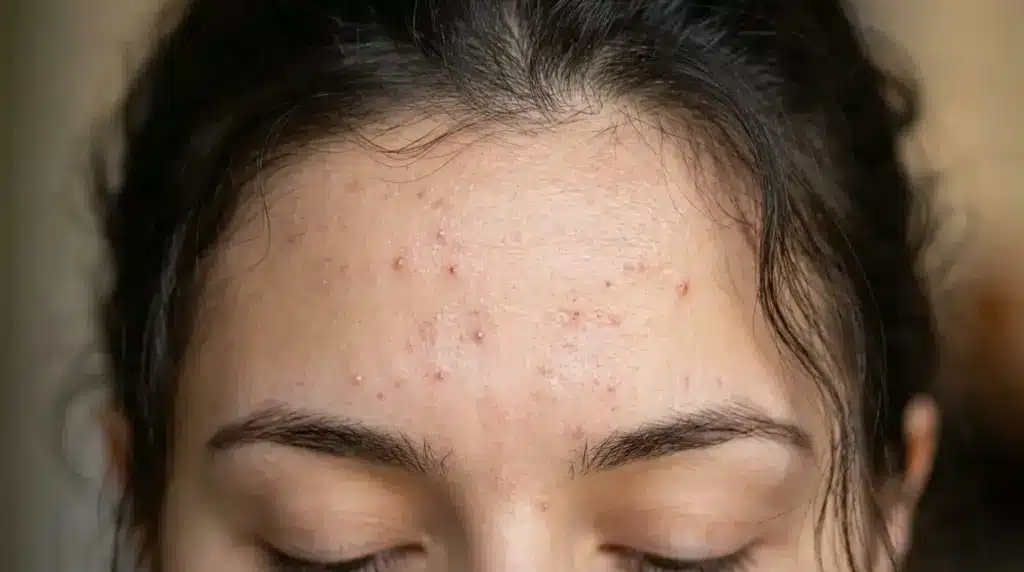
A pimple on the forehead has a way of showing up the morning of something important. Job interview, first date, family photo, the forehead announces itself.
And what makes it worse is that reaching for random products usually makes things worse, not better.
The forehead is part of the T-zone, which means it already produces more oil than most areas of the face.
Add hair products migrating down from the scalp, workout sweat sitting too long, or a hat worn through a long day, and the conditions for a breakout are already set up.
This blog explains why pimples on the forehead keep appearing and what different bumps mean. It also covers what helps clear them and habits that may be making them worse
Why Pimples Commonly Appear on the Forehead
One pimple on the forehead does not automatically signal a serious skin issue.
In most cases, it is a clogged pore that became inflamed from a build-up of oil, sweat, a product that sat too long, or skin that was not cleansed after a hot day or workout.
The forehead sits in the T-zone, an area with a high concentration of sebaceous glands. These glands produce sebum to keep skin protected and hydrated.
When production increases triggered by hormones, heat, stress, or external products, the excess oil can mix with dead skin cells and block pores.
A single pimple here is common. The concern is when it keeps coming back in the same spot or pattern.
The Most Common Causes of a Pimple on the Forehead
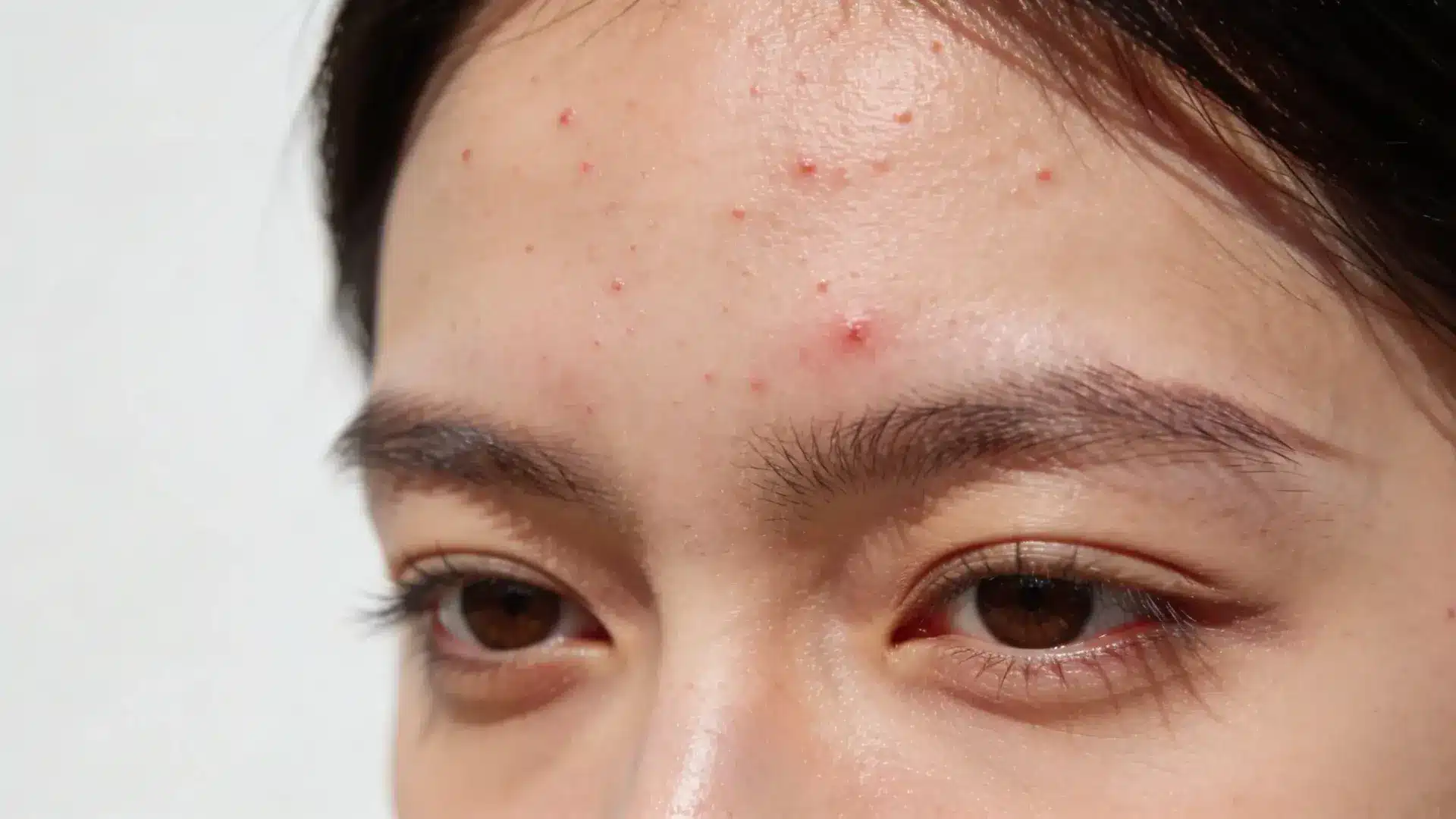
This section covers the main triggers and the ones most people don’t connect to their forehead breakouts until they’ve been dealing with them for months.
1. Oil and Sweat Build Up
The forehead contains more oil glands than most areas of the face. Throughout the day, sebum builds up on the surface.
When sweat is produced by heat, humidity, or exercise, the two combine and can quickly clog pores, especially if the skin is not cleansed shortly after.
2. Hair Products Touching the Skin
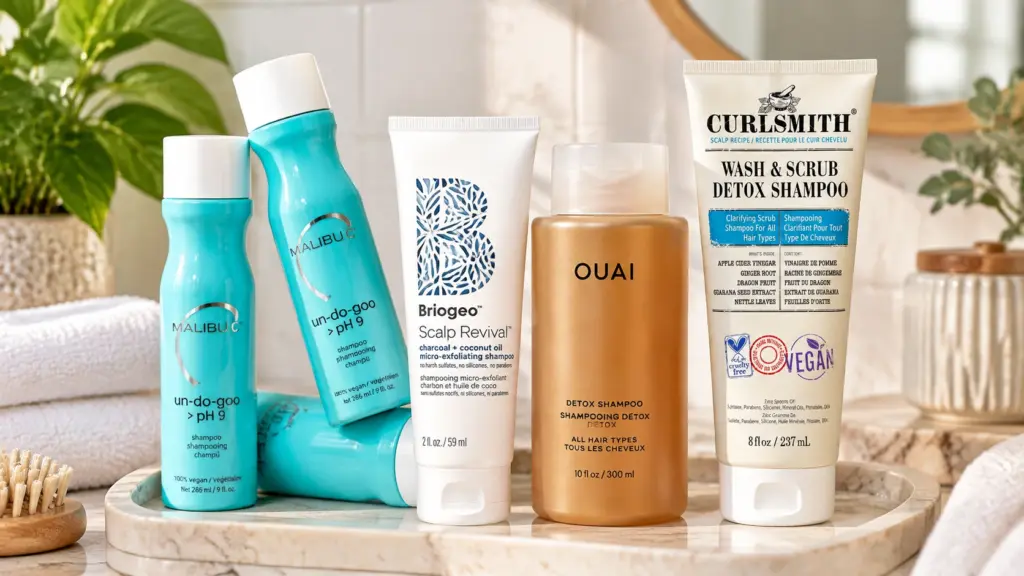
This is one of the most overlooked causes. Pomades, serums, dry shampoos, and styling sprays often contain heavy oils, silicones, or waxes that are fine for hair but can be comedogenic on the skin, meaning they actively clog pores.
When these products migrate down to the hairline and forehead throughout the day, they sit in pores and trigger what dermatologists call pomade acne.
Applying hair products mid-shaft to ends only, and keeping them well away from the roots and hairline, significantly reduces this type of breakout.
3. Stress and Hormonal Changes
Stress does not directly cause acne, but it triggers cortisol release. Cortisol stimulates sebaceous glands to produce more oil, increasing the risk of clogged pores.
Hormonal shifts, puberty, menstrual cycles, or stress cycles follow the same mechanism. The forehead is often one of the first areas to respond.
4. Makeup, Sunscreen, and Heavy Products
Heavy foundations, thick sunscreens, and pore-blocking moisturizers can contribute to breakouts when worn regularly on the forehead without thorough cleansing.
Double cleansing at night, first with a micellar water to break down product, then with a gentle cleanser, is the most effective way to fully remove these residues.
Non-comedogenic labeling on products matters, but it is not a guarantee; tracking which products coincide with new breakouts is the more reliable method.
5. Hats, Helmets, and Friction
Anything that creates consistent friction against the forehead, such as headbands, caps, or bike helmets, traps heat and pressure against the skin. This is called acne mechanica.
The pore doesn’t need to be clogged with product; the physical irritation alone can trigger an inflammatory response.
6. Not Washing After Workouts
Post-workout sweat sitting on the forehead for more than 30 to 45 minutes is a consistent breakout trigger.
Cleansing or, at a minimum, using a micellar water wipe after exercise keeps the surface clear before pores have the chance to clog.
7. Overwashing and Skin Barrier Damage
Washing too frequently, or with harsh, stripping cleansers, can backfire. When the skin barrier is disrupted, the skin overproduces oil to compensate, worsening the original problem.
Twice daily with a gentle, pH-balanced cleanser is the standard recommendation.
Tiny Bumps vs Painful Pimples on the Forehead
This table breaks down the key differences between tiny forehead bumps and painful pimples, so it is easier to spot the cause and choose the right care.
| Condition / Type | How It Looks | What It Means | What Helps |
|---|---|---|---|
| Fungal Acne | Small, uniform bumps often near the hairline may itch | Yeast overgrowth in hair follicles, not clogged pores | Use ketoconazole or selenium sulfide wash; avoid heavy products; see dermatologist if no improvement |
| Milia | Tiny, hard white bumps that do not form a head | Keratin trapped under skin, not acne | No acne treatment works; fades slowly or needs professional extraction |
| Comedonal Acne | Blackheads or small white bumps without redness | Pore blockage from oil and dead skin buildup | Salicylic acid (0.5 to 2 percent), gentle cleansing, consistent routine |
| Inflamed Pimples | Red, raised, sometimes painful bumps | Bacteria and inflammation in clogged pores | Benzoyl peroxide (around 2.5 percent), avoid over-irritation |
| Product Related Breakouts | Pimples near the hairline after new product use | Pores clogged by hair or skincare products | Stop the suspected product for 2 to 3 weeks and observe changes |
As a licensed aesthetician, the most common identification mistake I see is clients treating Malassezia folliculitis with benzoyl peroxide and salicylic acid for weeks and wondering why nothing is working.
The tell is the uniformity: fungal acne bumps are almost identical in size and often mildly itchy. Regular acne varies more in size and depth.
If the bumps are all the same size, scattered near the hairline, and do not respond after two weeks of standard treatment, stop and reassess before the yeast overgrowth worsens.
How to Get Rid of a Pimple on Forehead
A forehead pimple usually clears faster with gentle care, the right spot treatment, and a few simple habit changes that stop extra irritation.
- Keep the Area Clean but Do Not Scrub: Gentle cleansing twice daily is the foundation. Physical scrubs on active breakouts can spread bacteria and irritate inflamed skin. A gentle foaming or gel cleanser does the job without the damage.
- Use a Spot Treatment That Fits the Breakout: Matching the treatment to the breakout type matters. Salicylic acid (0.5 to 2%) works well for comedonal, non-inflamed bumps by loosening dead skin inside pores. Benzoyl peroxide (2.5%) is better suited for inflamed, red pimples with a bacterial component. Using both simultaneously can cause significant dryness, so start with one based on the breakout’s appearance to achieve better results with less irritation.
- Leave It Alone as Much as Possible: Touching, pressing, or picking a pimple on the forehead can push bacteria deeper and delay healing. It also increases the risk of post-inflammatory hyperpigmentation, the dark mark that often outlasts the pimple itself and can take months to fade.
- Avoid Heavy Hair Products Near the Hairline: Switch to water-based or lightweight styling products, and apply them mid-shaft, away from the scalp, to reduce product migration onto the forehead.
- Change Pillowcases and Headwear More Often: Pillowcases collect oil, skin cells, and product residue nightly. Changing them every 2 to 3 days or placing a clean cotton T-shirt over the pillow makes a real difference for people with regular forehead breakouts.
- Moisturize even if skin feels oily: Skipping moisturizer signals the skin to produce more sebum. An oil-free, non-comedogenic formula keeps the barrier intact. If choosing the right one feels confusing, a curated guide to oil-free moisturizer options for acne-prone skin can help narrow the choices without the trial-and-error.
Disclaimer: Persistent forehead acne, painful cystic breakouts, or skin irritation that worsens with over-the-counter products may require professional evaluation. Skin reactions can vary based on individual skin type, allergies, underlying conditions, and product ingredients. A licensed dermatologist can recommend treatments that are more appropriate for recurring or severe acne concerns.
What Usually Makes a Forehead Pimple Worse
A forehead pimple often gets worse when the skin is irritated by picking, too many actives, trapped sweat, heavy hair products, or a damaged moisture barrier.
- Picking and squeezing: Pushing or squeezing a forehead pimple drives inflammation deeper and increases the risk of scarring and dark marks.
- Layering too many acne products: Using salicylic acid, benzoyl peroxide, retinol, and vitamin C together can severely irritate the skin barrier.
- Mixing benzoyl peroxide and retinoids: Applying both at the same time often causes dryness and irritation. Benzoyl peroxide works better in the morning, and retinoids at night.
- Letting sweat sit too long: Sweat drying on the forehead after workouts can trap bacteria and clog pores more easily.
- Using thick oils near the hairline: Coconut oil, castor oil, and similar heavy oils commonly trigger hairline and forehead breakouts.
- Skipping moisturizer: Dry skin often produces more oil, which can worsen forehead acne and irritation over time.
- Over-exfoliating the skin: Daily exfoliation or harsh scrubs damage the skin barrier and may increase oil production and breakouts.
Reddit Advice on Stopping a Forehead Pimple Early
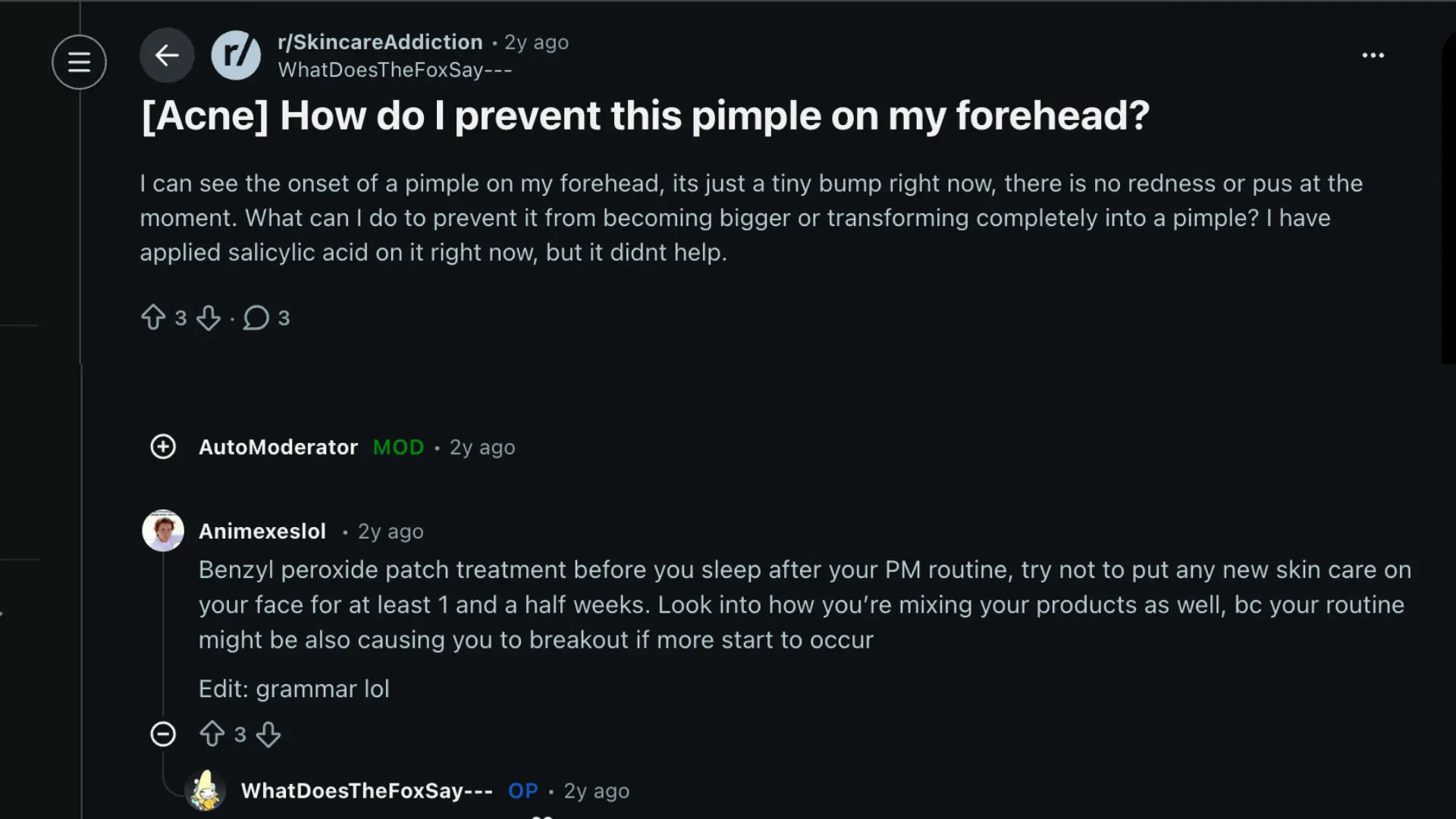
This Reddit post centers on someone noticing the early stage of a forehead pimple and asking how to stop it before it becomes red, swollen, or filled with pus.
The person says they already tried salicylic acid, but it did not seem to help. In the replies, another user recommends using a benzoyl peroxide patch treatment at night after a PM routine and avoiding any new skincare products for about a week and a half.
The reply also suggests checking whether product mixing may be causing more breakouts.
Overall, the discussion reflects a common concern about catching a pimple early and keeping skincare simple to avoid worsening the breakout.
When it is Time to See a Dermatologist
A dermatologist is worth seeing when forehead pimples become deep, painful, persistent, or start leaving marks, and basic care is not improving.
- Painful Deep Pimples: Hard, painful forehead pimples that sit deep under the skin and last more than a week often need prescription care rather than OTC products.
- Breakouts That Leave Marks: Dark marks after pimples heal can mean the breakouts are inflamed enough to affect deeper skin layers and should be treated early.
- Acne That Does Not Improve With Basic Care: If a consistent skincare routine shows no improvement after 6 to 8 weeks, a dermatologist can check whether it is acne or something else.
- Signs of Irritation or Infection: Strong redness, swelling, warmth, or pus around a pimple may point to infection and should be checked by a medical professional.
Conclusion
A pimple on the forehead is one of the most common skin issues, and in most cases, it can be managed once the real trigger becomes clear.
Extra oil, sweat sitting too long, hair products touching the skin, and using too many harsh treatments are some of the biggest reasons it keeps showing up.
The smartest move is usually to step back and look at what changed recently. A new hair product, a stressful week, skipping moisturizer, or not cleansing after sweating can all play a part.
In practice, clearer skin often comes from removing the trigger instead of adding more products.
If forehead breakouts keep coming back even after six to eight weeks of basic care, it makes sense to see a dermatologist.
That step can help prevent marks, reduce trial-and-error, and confirm whether the bumps are truly acne or something else, such as Malassezia folliculitis.
Got a forehead breakout story or a fix that actually worked for you? Drop it in the comments because everyone has had that one annoying pimple show up at the worst possible time.
Frequently Asked Questions
Can A Forehead Pimple Be Caused By Dandruff?
Yes, dandruff can contribute to forehead breakouts because flakes, scalp oil, and an antifungal imbalance near the hairline can irritate the skin and clog pores.
Does Wearing Bangs Make Forehead Pimples Worse?
Bangs can make forehead pimples worse by trapping sweat, oil, and hair products against the skin for long periods, especially in humid weather.
How Long Should I Wait Before Changing My Acne Routine?
A basic acne routine usually takes about 6 to 8 weeks of consistent use before results can be properly assessed, unless the skin becomes irritated earlier.