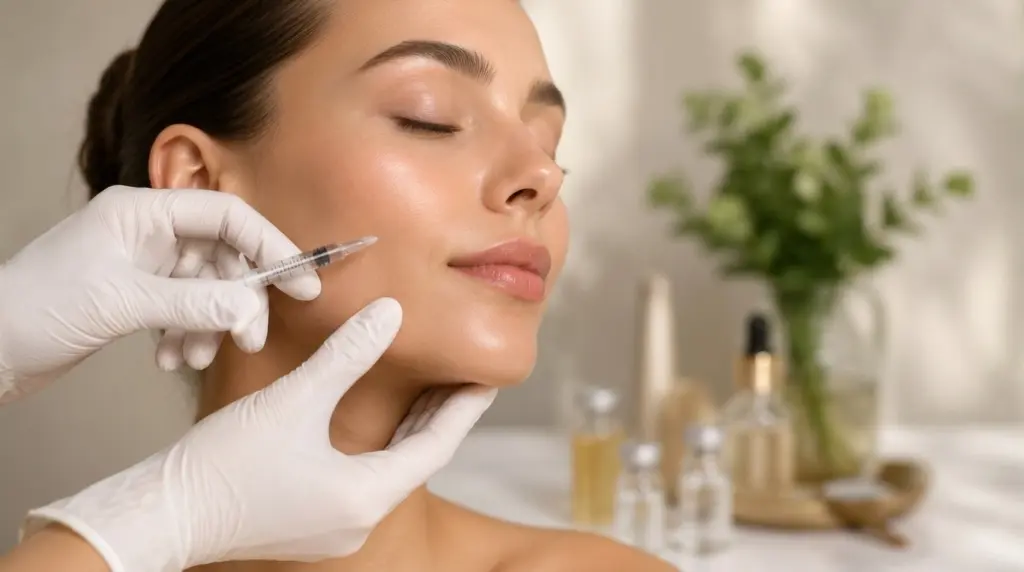
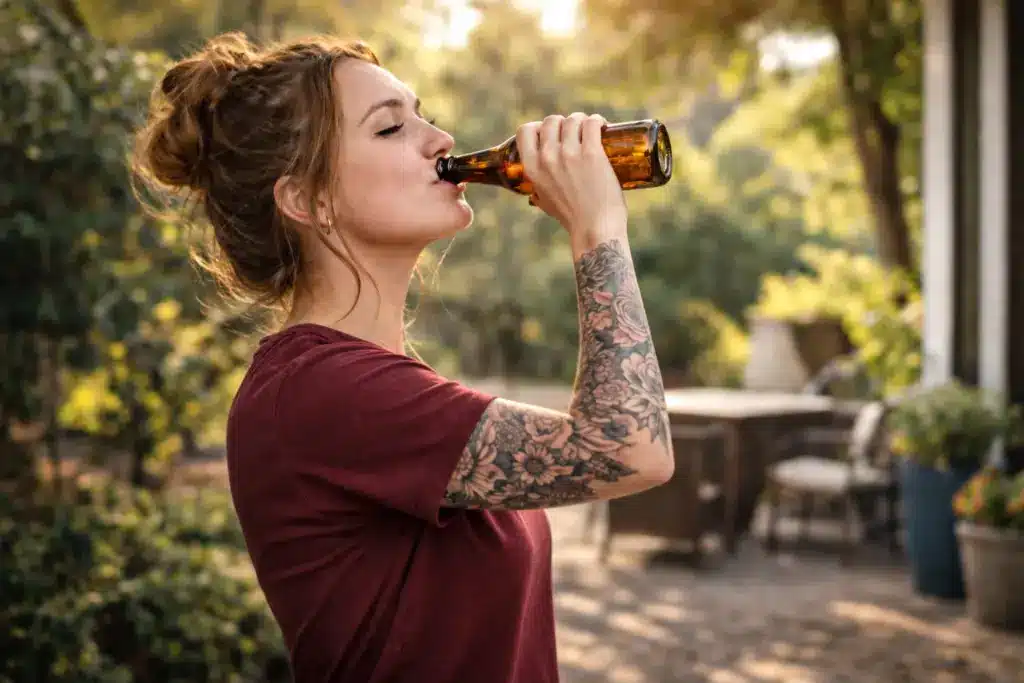
I sat in the tattoo chair last summer. My friend texted me about drinks right after the session. The temptation was real, but something told me to check first. So I looked it up: can you drink after getting a tattoo?
A fresh tattoo is an open wound on your skin.
Alcohol acts as a blood thinner, which slows down clotting. As a result, your body takes longer to heal. Excess bleeding can also push ink out before it sets in the dermis.
Most tattoo artists recommend waiting at least 48 to 72 hours before touching any alcohol. For larger pieces, some suggest waiting a full week.
This post covers the real risks, safe wait times, and practical aftercare steps. If you already had a drink too soon, there are ways to protect your ink in the future.
Why Alcohol and Fresh Tattoos Don’t Mix?
A tattoo machine punctures your skin hundreds of times in a session, prompting your body to treat each puncture as a wound and begin forming clots for repair. Alcohol disrupts this process in 3 key ways:
Blood Thinning
Delays the formation of clots, resulting in increased bleeding from the fresh wound. Alcohol inhibits the body’s ability to absorb vitamin B12, which is essential for normal platelet production.
Platelets are the small cells responsible for clotting after injury. Fewer platelets mean slower clotting and prolonged bleeding from the tattooed area.
Vasodilation
Alcohol widens blood vessels, which increases blood flow to the skin surface.
This means more blood reaches the tattooed area, making it harder for the wound to close and increasing the amount of ink that can be displaced before it settles into the dermis.
Skin Dehydration
Leads to cracking and uneven scabbing, which ultimately affects ink retention quality and can cause patchiness in the healed result. Fine-line tattoos and color work are especially vulnerable here.
Dehydrated skin holds pigment less evenly, and I have noticed this pattern repeatedly when clients come in for post-tattoo skin consultations after drinking during the first week.
According to Healthline, alcohol acts as an anticoagulant. This means your blood cannot clot as fast as it normally would. That single biological effect sets off a chain of problems for a healing tattoo.
How Long Should You Wait Before Drinking?
Avoid alcohol for at least48 to 72 hours post-tattoo. This helps reduce bleeding and promotes better healing during the critical first days.
Timeframe | What Happens in Your Skin | Recommendation |
0–48 hours | Skin is open; blood and plasma leak out | No alcohol at all |
48–72 hours | Scabs begin forming; the outer layer starts closing | Still best to avoid |
1–2 weeks | Outer healing progresses; peeling starts | Limit intake; stay hydrated |
4+ weeks | Most tattoos heal fully by this stage | Safe to drink in moderation |
Risks of Drinking Too Soon After a Tattoo
Drinking alcohol right after getting tattooed might feel harmless. In reality, the consequences can affect both your health and your tattoo’s appearance.
- Excess bleeding: Thin blood pushes ink out of the dermis before it sets. This leaves patches and uneven color.
- Infection risk: Alcohol suppresses your immune system. A weakened defense lets bacteria enter the wound.
- Slower healing: Dehydration from alcohol dries out skin cells. This delays scabbing and extends recovery time.
- Faded ink: The combined effect of bleeding and poor healing leads to dull, washed-out tattoo colors.
- Poor aftercare decisions: Impaired judgment from drinking can make you forget to follow your cleaning or moisturizing routine.
- Physical risk in social settings: Being in a bar or other social environment with a fresh tattoo increases the risk of bumping the tattooed area, rubbing it against surfaces, or exposing the open wound to unhygienic conditions.
Note: Certain medical conditions and medications can increase bleeding and slow healing after a tattoo. Seek medical advice if you notice persistent bleeding, unusual swelling, fever, or other signs of infection.
What About Drinking Before a Tattoo?
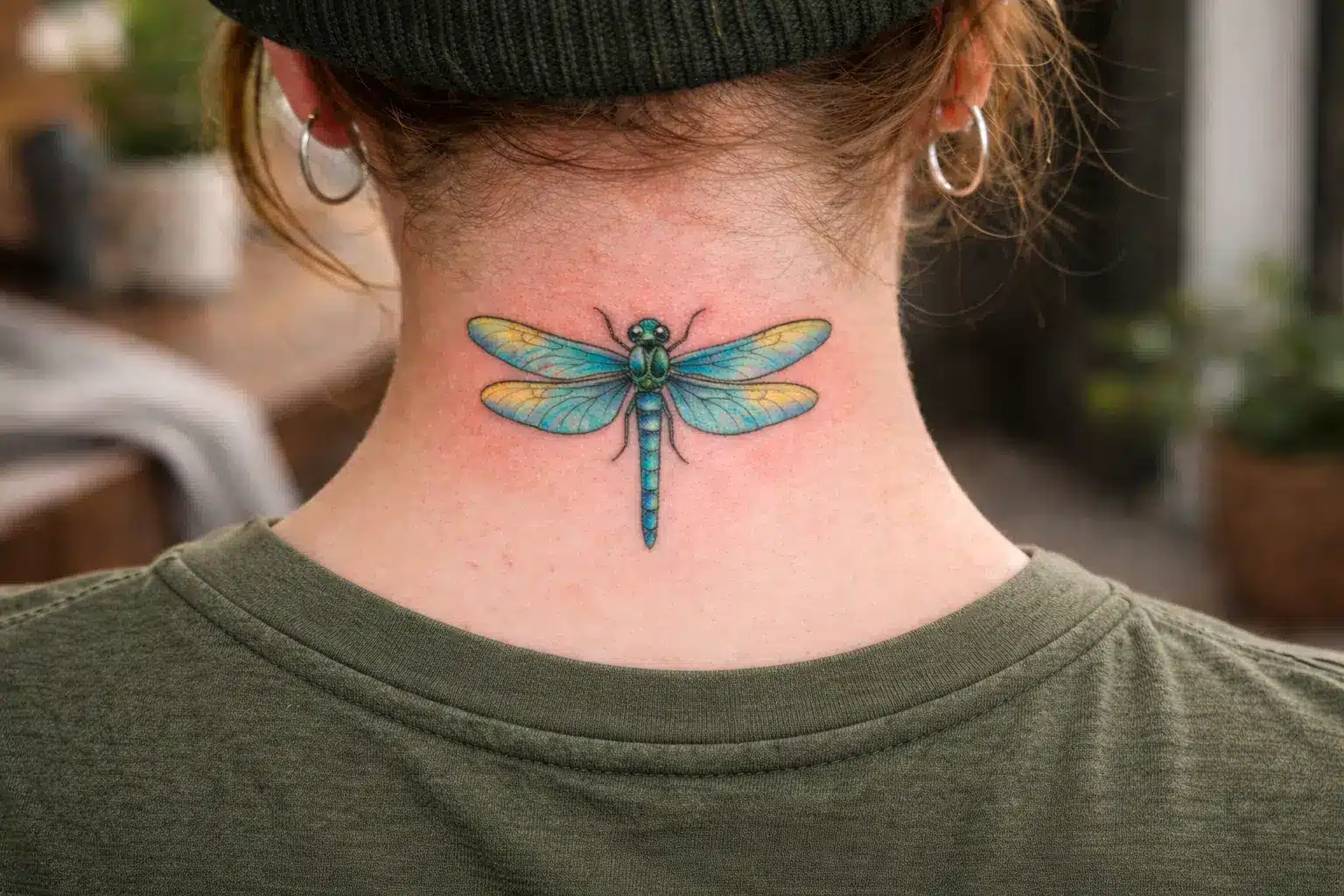
Alcohol consumption before a tattoo session can lead to significant complications.
Even after just one or two drinks, the blood remains thinner for several hours. This increased blood viscosity results in more blood pooling at the puncture site during the tattooing process.
The extra bleeding not only complicates the artist’s ability to see clean, precise lines but also dilutes the ink being applied.
As a consequence, the finished design may appear less sharp and defined than initially expected.
The same rule applies to cosmetic procedures like eyebrow tattoos and microblading, since they also involve needles on the skin.
Reputable tattoo studios will refuse to tattoo a client who appears intoxicated. This is both a professional standard and a legal one.
An intoxicated person cannot provide informed consent for a procedure. Arriving drunk also means losing your deposit in most studios, since the session has to be canceled and the time slot cannot be recovered.
A hangover the morning after heavy drinking also works against you.
Dehydration, disrupted sleep, and a lowered pain threshold all make for a more difficult session and slower healing afterward.
To ensure the best possible outcome for your tattoo, it’s advisable to avoid alcohol beforehand, which helps create a cleaner, more vibrant design that reflects your vision.
What to Do If You Have Already Had a Drink?
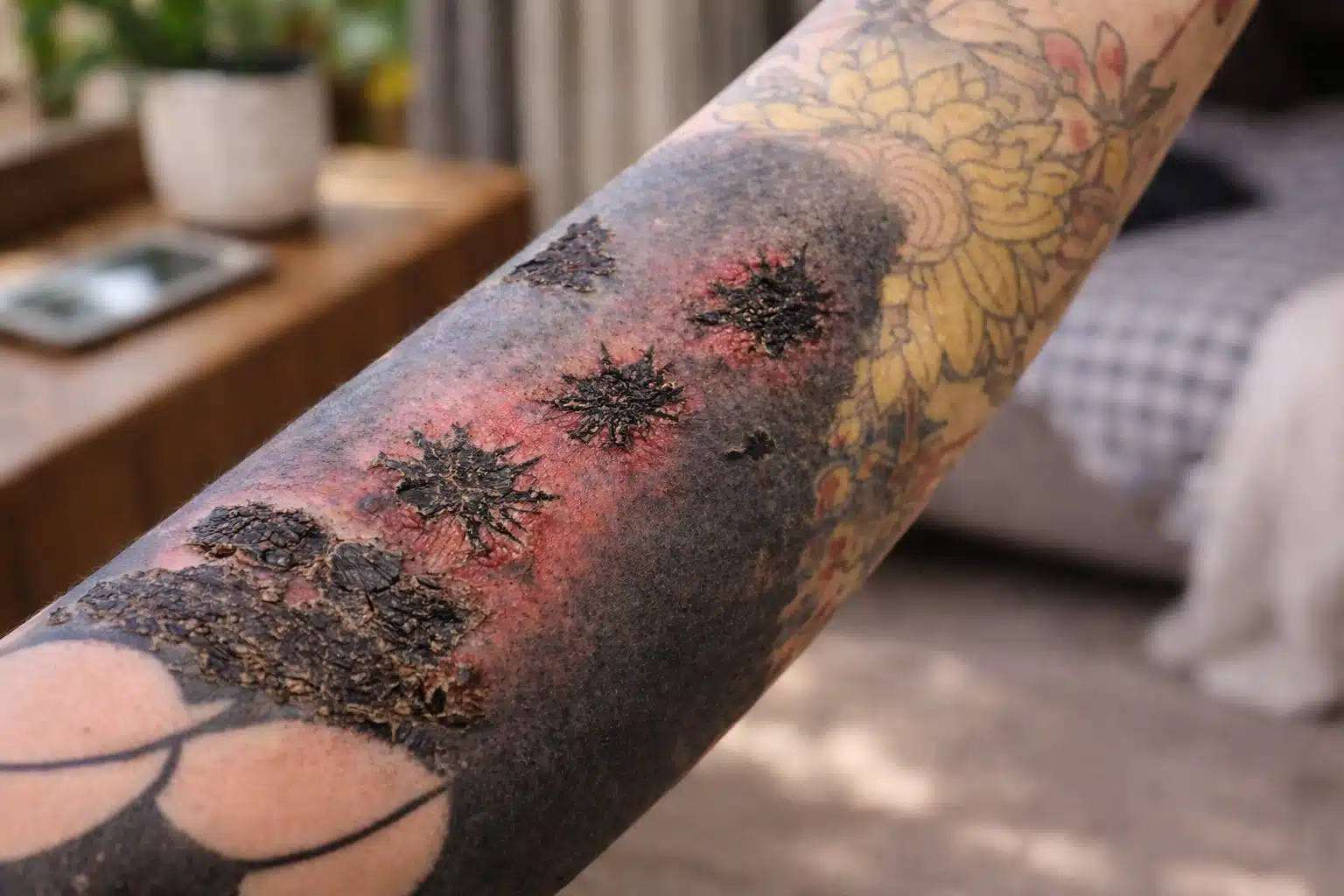
Maybe you had a beer without thinking about it. Don’t panic. The key now is to focus on damage control and proper aftercare.
First, drink plenty of water right away. Alcohol dehydrates your body and skin; rehydrating helps your cells recover faster.
If you have access to an electrolyte drink such as Pedialyte or coconut water, these can help restore hydration more effectively than water alone after alcohol consumption.
Next, wash your tattoo gently with lukewarm water and a mild, fragrance-free soap. Pat it dry with a clean paper towel.
Apply a thin layer of the aftercare ointment that your artist recommended.
Then, avoid any more alcohol until your scabs fully form. Keep an eye on the tattooed area for unusual redness, swelling, or discharge. If anything looks off, contact a medical professional quickly.
If you drank heavily the night before your appointment and woke up dehydrated with a headache, the honest recommendation is to consider rescheduling.
Most studios would rather reschedule than do work on compromised skin that may not heal well. Call ahead and explain the situation.
Important: Mild redness, tenderness, and clear fluid are common during the first few days after getting a tattoo. However, increasing pain, spreading redness, excessive swelling, pus, fever, or red streaks extending from the tattooed area may indicate an infection or another complication that requires prompt medical attention.
What Happens After Your Tattoo Fully Heals?
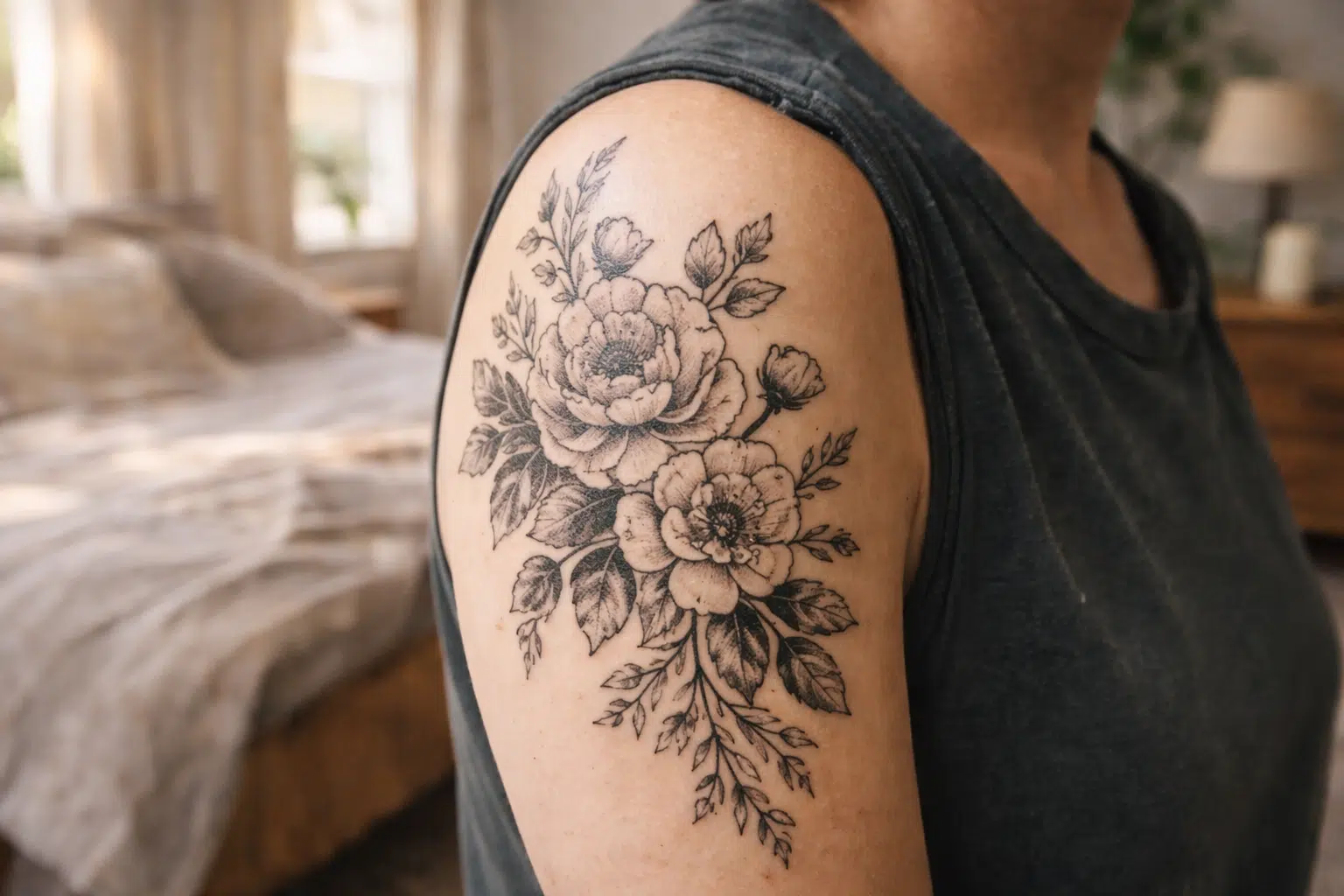
A tattoo typically takes 4 to 6 weeks to heal on the surface. However, the deeper layers of the skin may continue to repair for up to 3 months.
Once the peeling stops and the skin feels smooth again, your tattoo is mostly healed.
At this point, moderate alcohol consumption is generally safe. Still, maintaining good skin habits helps your tattoo stay vibrant for years.
Apply sunscreen over healed tattoos when going outdoors. Keep your skin moisturized regularly, and maintain proper hydration throughout the day.
Cosmetic tattoos follow a similar pattern, and you can see how ink holds up long-term in this post on lip blush fading over time.
What Does the Tattoo Community Say
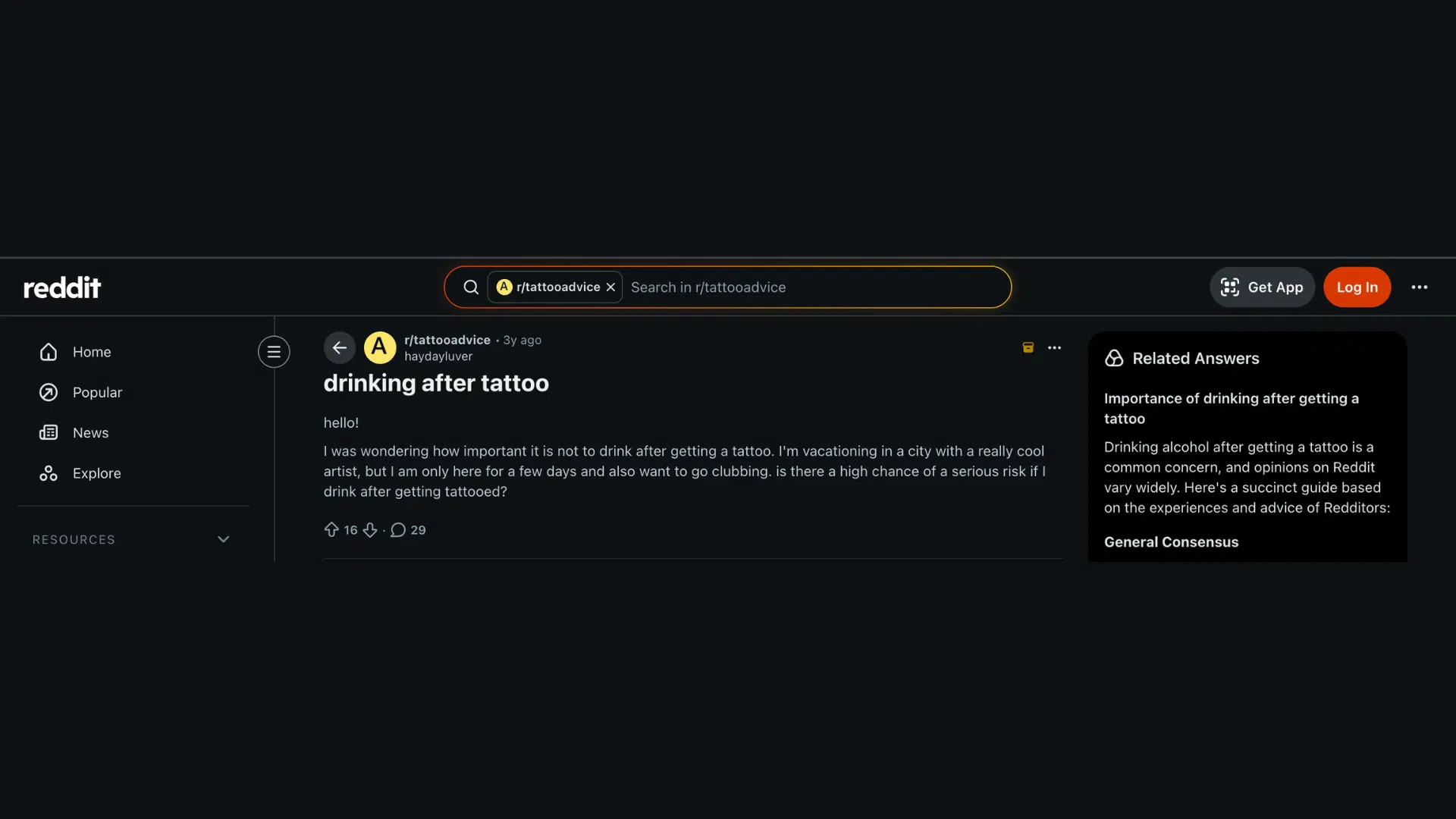
Opinions vary across online tattoo forums and social media groups. Still, most experienced people lean toward caution.
One Reddit user on r/tattooadvice shared, “I had 2 beers the night I got my sleeve done. Woke up with blood all over my sheets. Learned my lesson the hard way.”
Another user in the same thread commented, “Just wait 2 days. It’s not worth messing up something permanent for a drink.”
Over on a Facebook tattoo group, a member posted, “My artist told me no alcohol for 72 hours. I followed it, and my tattoo healed with zero issues.”
The consensus across these communities is clear. Most people who waited saw better healing results than those who didn’t.
Best Aftercare Tips to Heal Your Tattoo Faster
Good aftercare goes beyond avoiding alcohol. Your full routine in the first few weeks decides how your ink looks long-term.
- Stay hydrated: Drink at least 8 glasses of water daily to nourish your skin cells.
- Wash gently: Use lukewarm water and mild soap 2 to 3 times a day. Avoid scrubbing the tattooed area.
- Moisturize often: Apply a fragrance-free lotion or tattoo balm in thin layers to prevent cracking. Wait at least 24 to 48 hours before applying any moisturizer to fresh ink. During those first hours, the skin needs to breathe and begin forming its initial protective layer. Starting too early can trap bacteria under the product.
- Avoid sun exposure: UV rays break down ink pigments and slow healing. Cover the tattoo when outdoors.
- Skip swimming and hot tubs: Submersion in water, including chlorine-treated water, can expose a fresh tattoo to bacteria and chlorine. Wait at least 2 to 3 weeks.
- Don’t pick at scabs: Peeling and scabbing are normal. Pulling them off early can remove ink and cause scarring.
- Eat nutrient-rich foods: Oranges, strawberries, and bell peppers are high in vitamin C, which supports wound healing. Lean meats and legumes provide zinc and protein for tissue repair. Dark leafy greens add iron and antioxidants. These are not luxury additions; they make a measurable difference in how fast skin recovers.
- Patch-test new products: If you are trying a tattoo balm or moisturizer for the first time, test a small amount on untattooed skin first. Wait 24 hours. If there is no redness or irritation, it is safe to apply it to the healing area.
Conclusion
So, can you drink after getting a tattoo? Technically, no one can stop you.
But I’d strongly suggest holding off for at least 48 to 72 hours. Your tattoo is a real investment of time, money, and pain.
Can you drink alcohol after a tattoo and have everything turn out fine? Some people do. But the risks of excess bleeding, ink displacement, and slower healing are real and avoidable.
A few days of patience are all it takes.
Alcohol slows healing, increases bleeding, and raises infection risk. None of those is worth a single drink right after a session.
Instead, stay hydrated, eat well, and follow your artist’s aftercare instructions closely. I know it’s tempting to celebrate new ink with friends over drinks. But the celebration can wait. Your tattoo’s final look depends on how you treat it now.
Give it the care it needs, and you’ll have crisp, vibrant art for life.
Got a tattoo story or a tip that helped you heal faster? Drop it in the comments below!
Frequently Asked Questions
Can 1 Beer Ruin a Fresh Tattoo?
A single beer can slightly raise blood-thinning levels, increasing bleeding and delaying clotting. It’s best to avoid alcohol for the first 48 hours to minimize this low but avoidable risk.
Is Wine Safer than Hard Liquor After a Tattoo?
All types of alcohol thin the blood similarly since they all contain ethanol. The amount consumed is more important than the type, so wine is not a safer option during the healing period.
Can You Drink Non-Alcoholic Beer After a Tattoo?
Yes. Non-alcoholic beer contains little to no ethanol. It does not thin your blood or affect your immune system. So it is a safe option during the healing period. Just make sure you also stay on top of water intake for the best recovery.
Will a Tattoo Artist Refuse to Tattoo You If You Have Been Drinking?
Yes. Reputable tattoo studios will refuse to work on a client who appears intoxicated. This is a professional and legal standard. An intoxicated person cannot legally provide informed consent for the procedure, and most studios have policies in place to enforce this.