Perfect brows that stay put every day sound like a dream, right? That’s exactly why microblading has become so popular.
But one question keeps coming up before booking that appointment: how long does microblading last?
The truth is, results are not the same for everyone. Some people enjoy defined brows for over a year, while others notice fading much sooner.
Skin type, lifestyle, and aftercare all play a big role in how long those crisp strokes stick around.
Knowing what to expect can save both money and disappointment.
This blog breaks down real timelines, honest experiences, and what truly affects longevity, so better decisions can be made before committing.
What is Microblading?
Microblading is a semi-permanent cosmetic procedure designed to enhance the appearance of eyebrows by creating fine, hair-like strokes using a handheld tool with tiny needles.
Instead of using a machine like traditional tattooing, the pigment is manually deposited into the upper layers of the skin, which gives a more natural and realistic finish.
The goal is to fill in sparse areas, reshape uneven brows, or define the overall structure without making it look overly bold or artificial.
Over time, the pigment fades gradually, allowing adjustments in shape or color during touch-ups.
Simple daily habits and proper care can make a noticeable difference in how long microblading stays fresh and well-defined.
It is a popular option for those seeking fuller brows without the need for daily makeup application.
Nano and powder brow covers different techniques that work on different skin types, so you can choose based on your actual skin rather than the most popular option.
How Long Does Microblading Last?
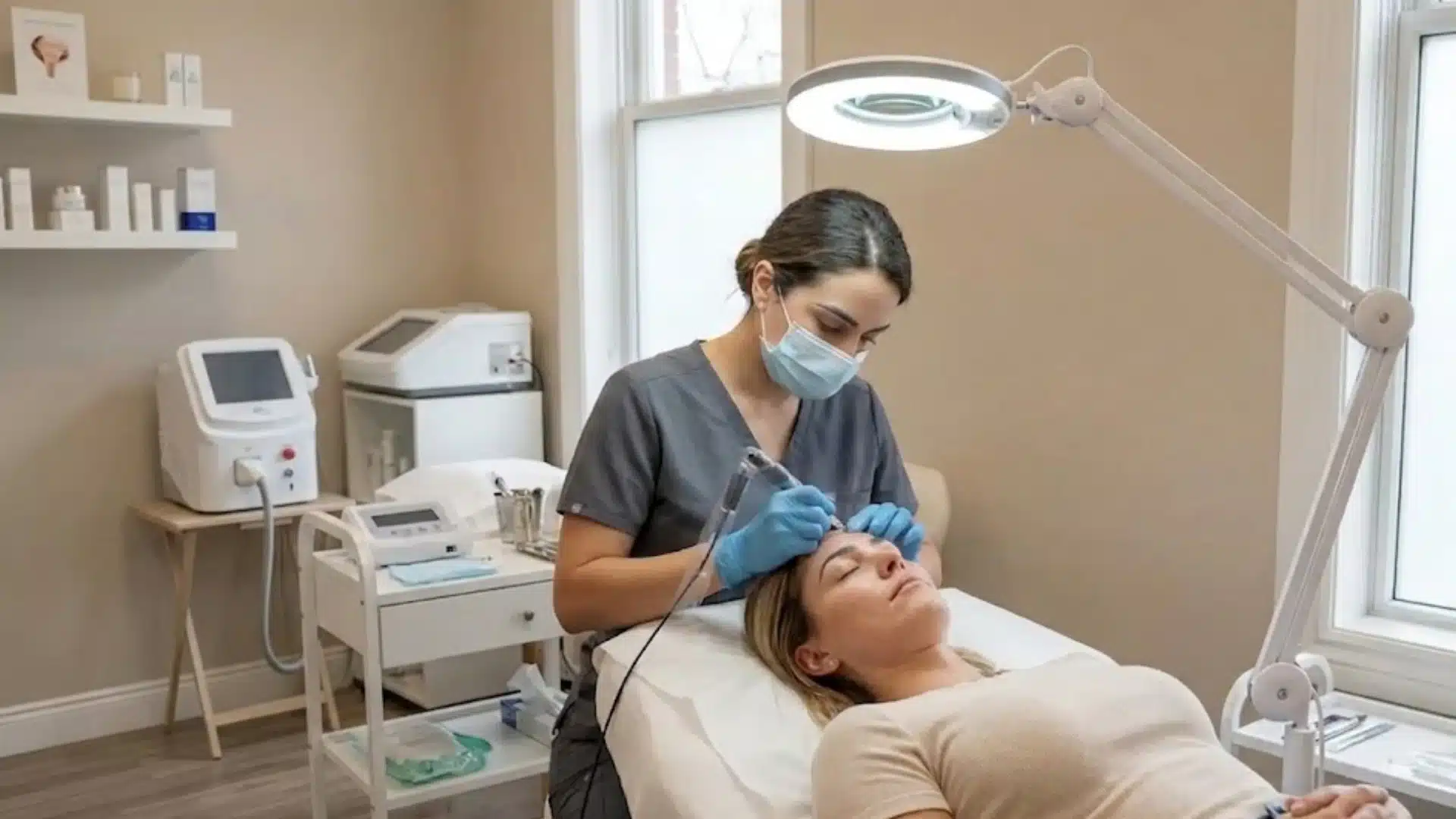
Microblading results can vary greatly depending on skin type, aftercare, and the technique used. While the pigment may remain visible for years, the sharpness and overall appearance often fade much sooner.
| Skin Type or Factor | How Long Does Microblading Usually Last | What Typically Happens Over Time |
|---|---|---|
| Dry Skin | Around 12 to 18 months or longer | Strokes stay sharper and fade more evenly with less blurring. |
| Oily Skin | Around 6 to 12 months | Excess oil can soften strokes and cause pigment to fade faster. |
| Combination Skin | Around 9 to 15 months | Some brow areas may hold pigment well while others fade unevenly. |
| Powder Brows on Oily Skin | Around 2 to 3 years | Powdered pigment usually lasts longer and resists blurring better. |
| Poor Aftercare | Fades much faster | Sun exposure, exfoliation, and improper healing reduce pigment retention. |
| Regular Touch-Ups | Longer-lasting results | Maintenance appointments help keep brows defined and evenly colored. |
Factors That Affect How Long Microblading Lasts
Several everyday factors, from skin type to lifestyle habits, quietly influence how long microblading stays fresh and defined.
- Skin Type And Oil Levels: Oily skin fades faster and softens strokes, while dry skin keeps results sharper for longer.
- Sun Exposure: Regular sun exposure breaks down pigment quickly, causing brows to lose color sooner than expected.
- Skincare Products: Exfoliants, retinol, and acids can slowly fade microblading without people realizing it at first.
- Artist Technique and Pigment Quality: Better technique and high-quality pigment lead to more even fading and longer-lasting results. If you’re weighing your long-term options, the eyebrow tattoo vs microblading breakdown should be consulted before you book.
- Lifestyle and Sweating: Frequent workouts, heat, and sweating can accelerate fading and shorten the time brows stay defined.
- Aftercare and Maintenance: Proper healing care and timely touch-ups make a noticeable difference in how long results actually last.
- Swimming and chlorine exposure: Chlorinated pool water can cause a chemical reaction with cosmetic pigments, accelerating fading and even shifting color. I spent years coaching swimmers before becoming an aesthetician, and I watched firsthand how chlorine breaks down even the most robust skin products.
Microblading Healing and Fading Timeline
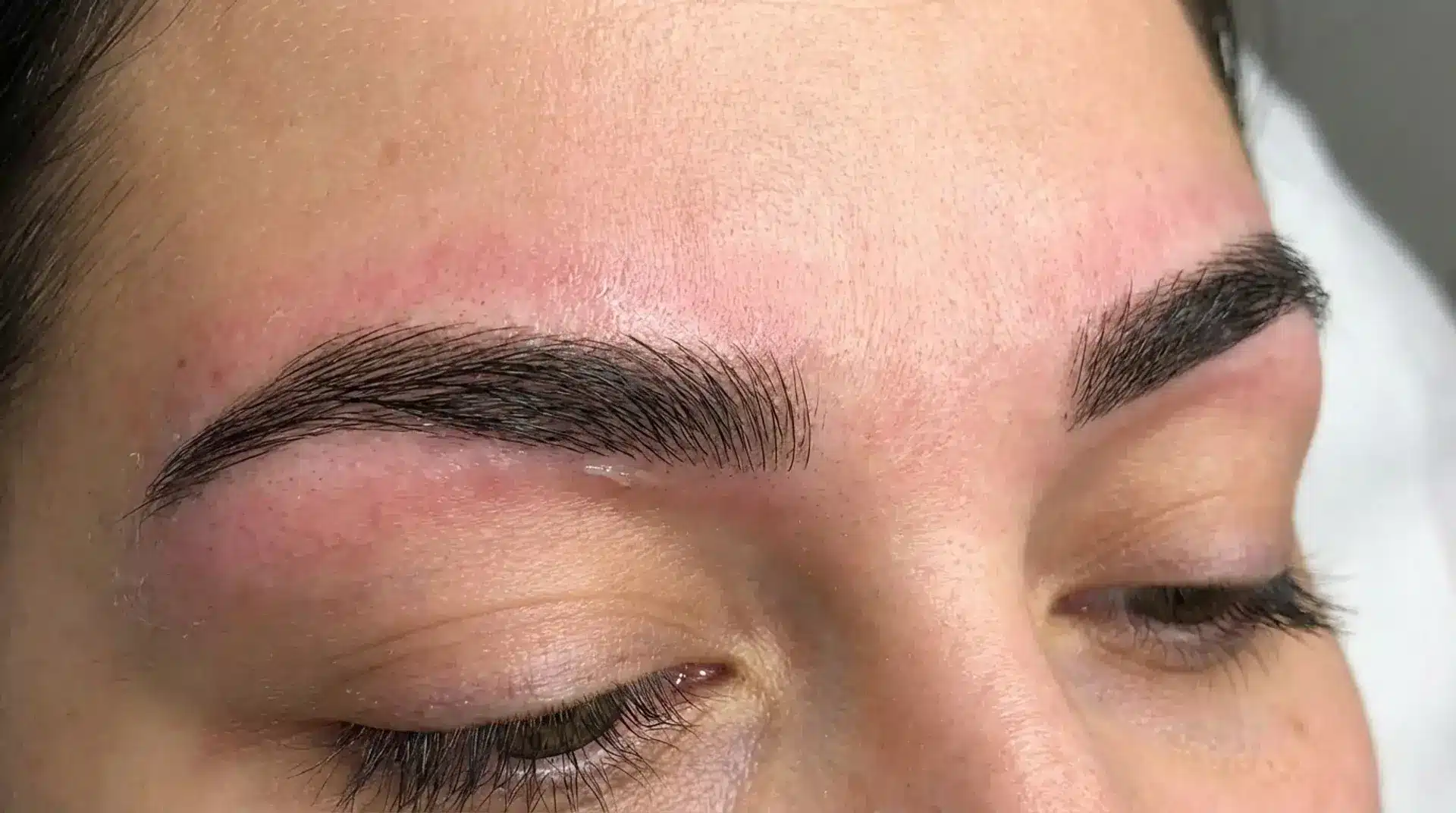
Microblading follows a gradual journey from bold, fresh strokes to softer, faded brows, with each stage contributing to the final look.
1. Day 1 to Day 3
Right after the procedure, brows appear very bold, dark, and sharply defined. The pigment sits fresh on the skin, which can make the brows look heavier than expected.
Some redness and slight swelling around the area are also common. At this stage, many people feel unsure because the results look intense, but this is only temporary.
The color will not stay this dark. This phase is simply the starting point before the healing process begins to soften everything.
2. Day 4 to Day 7
During this phase, the skin begins to heal more actively, and light scabbing forms. Brows may look uneven, dry, or slightly flaky.
This is when the color can appear patchy, which can feel concerning, but it is part of the normal process. It is very important not to scratch or pick at the scabs, as this can affect how the pigment settles.
Keeping the area clean and following aftercare instructions helps ensure better long-term results.
3. Day 8 to Day 14
As the scabs naturally fall off, the brows often look much lighter than expected. Many people think the pigment has disappeared, but it is actually still settling beneath the skin.
This stage can feel confusing because the brows lose that bold definition for a while. The strokes may look faint or barely visible in some areas.
Patience is key here, as the color will gradually return and stabilize over the next few weeks.
4. Week 4 to Week 6
By this time, the healing process is mostly complete, and the brows begin to look more natural and balanced.
The color comes back slightly and blends better with natural brow hair. The strokes appear softer and more realistic, which is usually when people start to feel satisfied with their results.
This is also when a touch-up appointment is often scheduled to fix any uneven areas or enhance the overall shape and depth.
5. Month 3 to Month 6
At this stage, subtle fading becomes noticeable. The once crisp hair-like strokes start to soften, and the overall color may look lighter.
For some people, especially those with oily skin, this change can happen a bit faster. The brows still look good, but may not have the same sharp definition as before.
This is usually when people start thinking about maintenance and whether they want to refresh the look with a touch-up.
6. Month 12 and Beyond
After a year or more, the brows lose much of their original sharpness and appear more diffused.
The pigment continues to fade, and the strokes may blend into a softer, less defined shape. In some cases, slight color changes can also be noticed.
This is the point where most people decide to get a touch-up to restore definition and depth. Without maintenance, the brows will continue to fade gradually.
Real Experiences on Long-Term Microblading
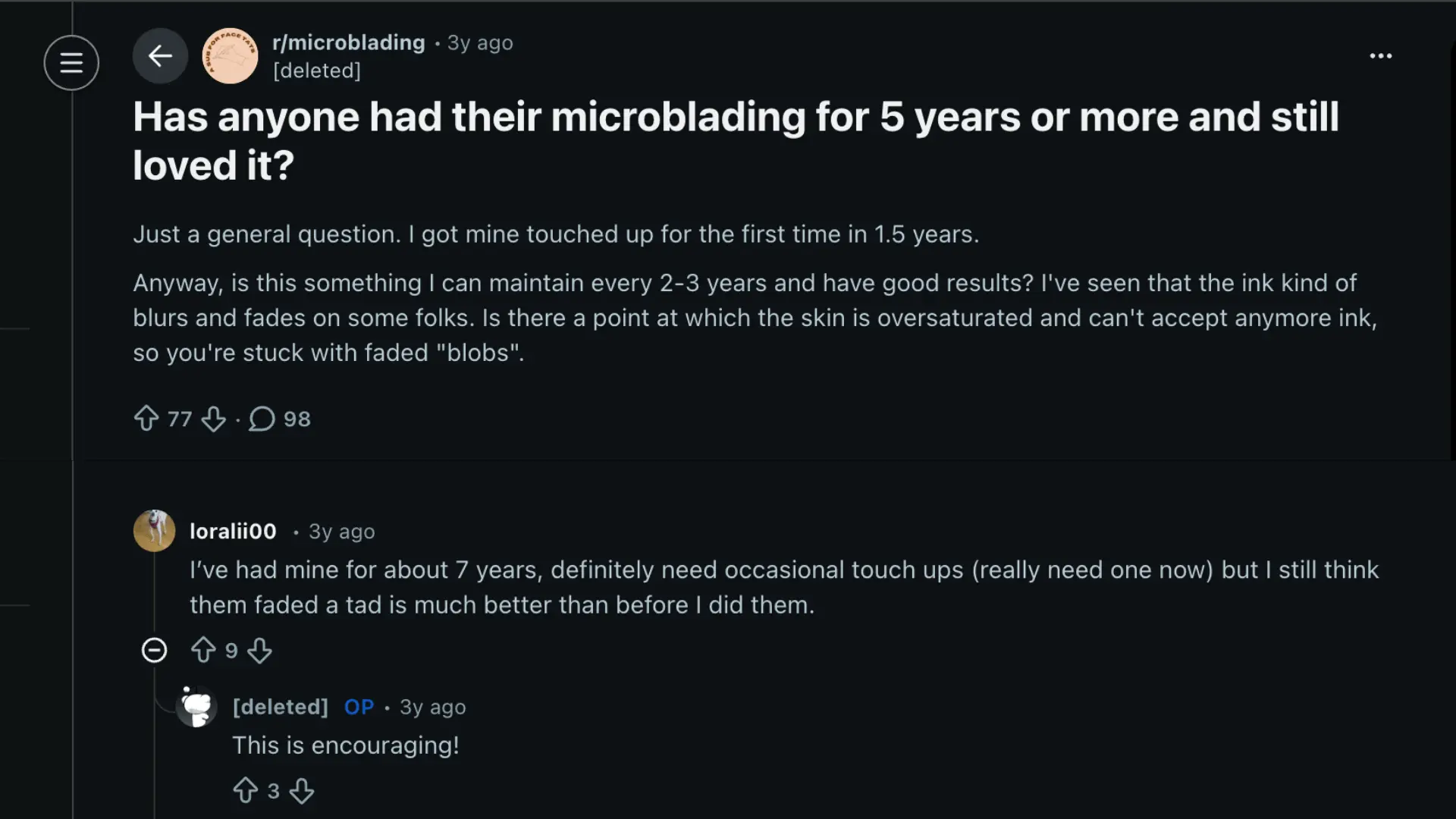
This Reddit discussion captures real, unfiltered experiences from people who have lived with microblading for 3 to 7 years.
Some users shared positive outcomes, saying their brows still looked good with occasional touch-ups and lighter fading that felt natural.
Others highlighted common concerns such as blurred strokes, color changes to red or orange tones, and a loss of definition over time.
A few mentioned needing removal before getting fresh work due to pigment buildup. There is also a clear divide based on skin type, technique, and the artist’s skill.
Overall, the content shows that while microblading can last years, results vary widely, and long-term expectations should be realistic rather than perfect.
How Often are Touch-Ups Really Needed?
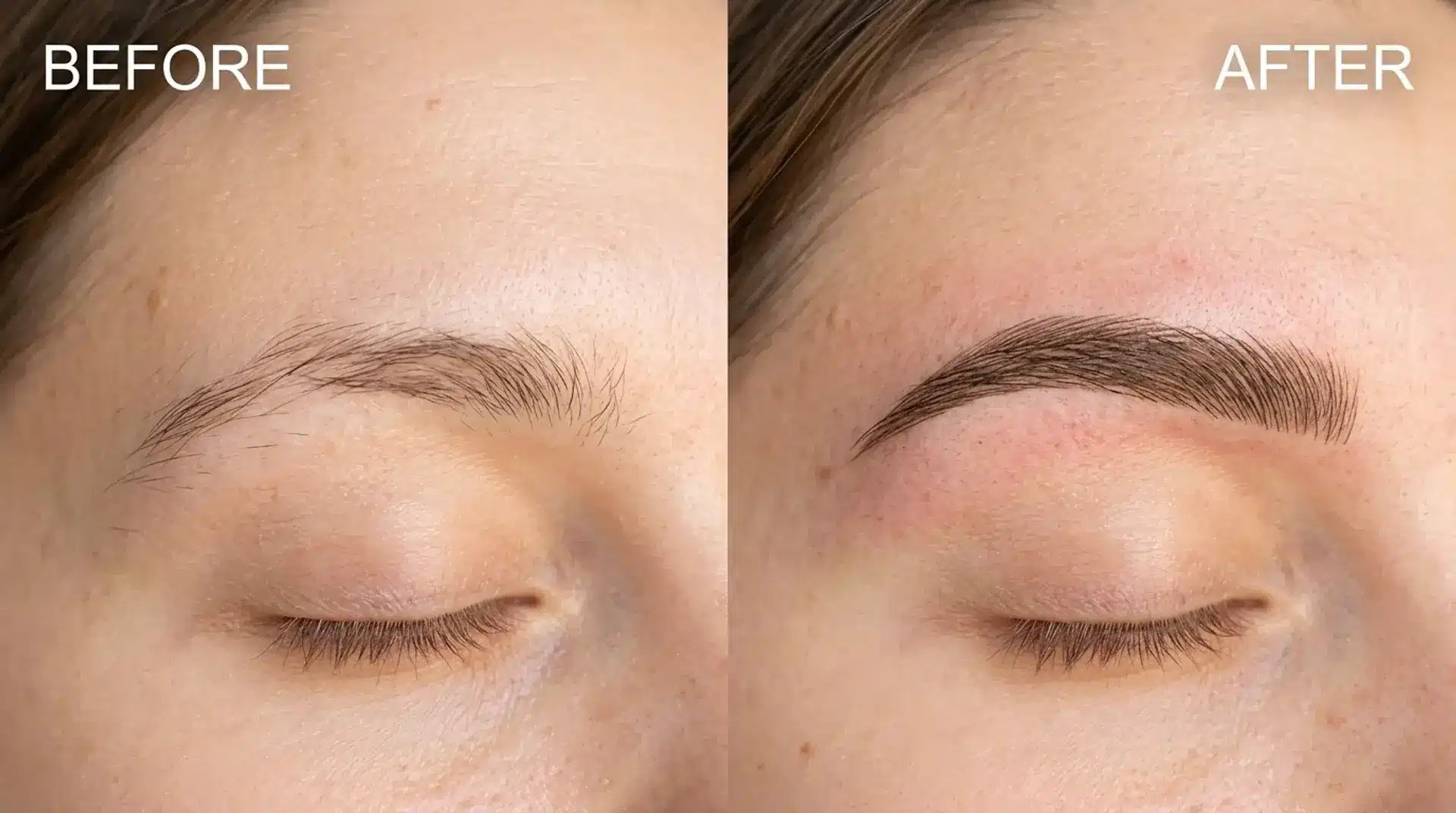
Touch-ups are a key part of maintaining microblading, not an optional step.
Most people need a touch-up around 6 to 8 weeks after the initial session to fix any patchy areas and refine the shape once the skin has healed.
After that, maintenance usually settles into an annual routine. Many people go back every 12 to 18 months to refresh the color and bring back the definition that fades over time.
Those with oilier skin may need touch-ups slightly sooner, while drier skin can sometimes stretch it a bit longer.
One thing I always tell clients: don’t wait until the brows look completely faded before booking a refresh. Brows that have faded significantly require more correction work and additional sessions to return to a clean baseline.
Catching them at the early-fading stage, when strokes are still partially visible, is both easier on your skin and more cost-effective in the long run.
Regular touch-ups help keep the strokes looking clean and the color consistent. Without them, the brows gradually lose structure and can look uneven or too faded.
Signs Your Microblading is Fading Faster than Expected
Fading is a natural part of microblading, but when it happens sooner than expected, it can affect the overall look and definition of your brows. Recognizing the early signs helps you decide when a touch-up or adjustment may be needed to maintain the desired shape and color.
- Patchy pigment loss: Certain areas of the brows begin to fade faster than others, creating an uneven appearance and disrupting the original shape and fullness of the brows.
- Blurred or softened strokes: Hair-like strokes lose their crisp definition and start blending together, giving brows a smudged or less detailed look, especially noticeable on oily skin types.
- Noticeable color fading or shifting: The pigment appears lighter than before or changes slightly in tone, making the brows look less vibrant and not as close to the original shade.
- Reduced brow definition early on: Brows start looking less sharp and structured much earlier than expected, indicating that the pigment is not holding well and may require a touch-up sooner.
How Much Does Microblading Cost?
Microblading costs go beyond the first appointment. The total price depends on touch-ups, maintenance sessions, and possible correction or removal treatments over time.
| Service or Expense | Typical Cost Range | What to Expect |
|---|---|---|
| Initial Microblading Session | $400 to $800+ | Price varies based on the artist’s experience, location, and technique used. |
| First Touch-Up Session | Included or extra cost | Usually done 6–8 weeks later to refine shape and pigment retention. |
| Annual Maintenance Touch-Up | $150 to $400 | Helps restore faded pigment and maintain brow definition over time. |
| Three-Year Maintenance Cost | Varies by frequency | Ongoing touch-ups can add up to a significant long-term expense. |
| Saline Brow Removal | $100 to $300 per session | Multiple sessions may be needed to lighten or remove unwanted pigment. |
| Laser Brow Removal | $100 to $300 per session | Results vary, and complete pigment removal is not always guaranteed. |
| Artist Experience Level | Higher cost for specialists | Experienced artists usually charge more for precision and long-lasting results. |
| Location and Studio Quality | Prices vary by city | Larger cities and premium studios often have higher service costs. |
Is Microblading Worth It Based on Longevity?
Microblading can feel worth it if the goal is to save time on daily brow routines.
Waking up with brows already shaped and filled can make a noticeable difference, especially for those who spend time every day fixing uneven or sparse areas.
However, longevity-wise, it is not a low-maintenance option. Results fade within a year for most people, and keeping that fresh look requires regular touch-ups.
Over time, this adds both cost and commitment.
My honest take, as an aesthetician: microblading works best for people with dry to normal skin who can commit to annual maintenance and are realistic about results evolving over time.
If you have oily skin, swim frequently, or want something that holds up with less upkeep, powder brows are worth a serious look.
Conclusion
Microblading can be a great option for anyone who wants fuller-looking brows without doing them every morning, but the results are never as simple as they first seem.
For most people, it lasts long enough to feel convenient, though not long enough to forget about maintenance, which often leads to the question: how long does microblading last in real conditions?
Fading, touch-ups, skin type, and daily habits all shape how those brows will look months or even years later.
The best results usually come from knowing exactly what the process involves and deciding whether the upkeep fits your routine, budget, and style.
In the end, microblading is less about permanent perfection and more about whether the trade-off feels worth it for you.
Have you tried microblading, or are you still thinking about it? Share your thoughts below.
Frequently Asked Questions
Can Microblading Be Removed if I Do Not Like the Results?
Yes, microblading can be lightened or removed using saline removal or laser treatments, though it may take multiple sessions.
Is Microblading Safe for All Skin Tones?
Microblading works on all skin tones, but pigment selection and technique must be adjusted to avoid unwanted color changes.
Can I Still Wear Makeup on My Brows After Microblading?
Yes, after the healing process is complete, you can apply brow makeup to enhance shape, fill gaps, or adjust color without affecting the microblading results significantly.
How Do I Know if My Artist is Using Good-Quality Pigment?
Ask your artist directly what brand and type of pigment they use, and whether it has been tested for color stability over time. If an artist can’t or won’t answer this question, that’s worth noting.