
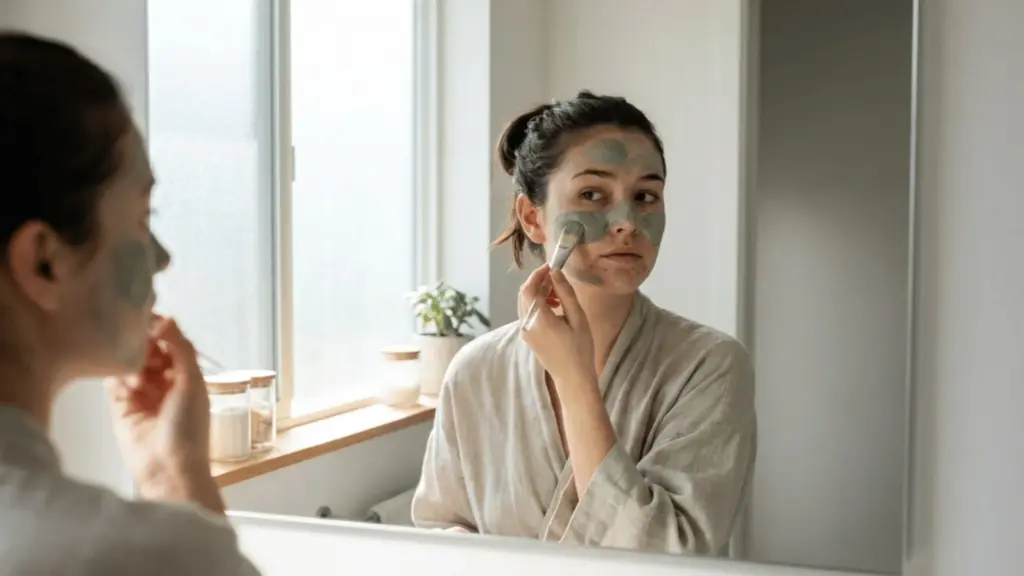
Ever applied a clay mask, watched it dry into a tight layer, and thought, “Is this actually helping my skin or just making it feel clean?”
That moment of doubt is more common than most people admit.
Clay masks are everywhere, recommended for acne, oily skin, and detox. The results people get are often inconsistent. Some swear by them, others see no difference, and a few end up with drier, irritated skin.
The problem isn’t the clay mask itself. It’s how it’s used, how often it’s used, and whether it even suits your skin in the first place.
This blog breaks down what clay masks do and how often to use them without damaging your skin.
What Do Clay Masks Do?
Clay masks work by pulling excess oil, dirt, and impurities from the surface of the skin.
The clay has natural absorbent properties that act like a magnet for buildup inside pores.
They help control shine by absorbing sebum, which makes them especially useful for oily or combination skin.
Regular use can reduce the risk of clogged pores, potentially lowering breakouts over time. Another noticeable effect is smoother skin, as clay also helps remove surface impurities and dead cells.
This works because clay has naturally charged particles that attract and bind to impurities, oil, and toxins. As the mask dries, it lifts these from the skin, leaving the surface cleaner and more balanced.
The first thing most people notice after rinsing is how fresh and slightly tight the skin feels. That tightness is temporary, but it signals that the clay pulled something out.
In my experience, clients with congested pores around the nose and chin see the most visible difference after the first few uses.
If you’re also struggling with clogged pores beyond what a home mask can address, our breakdown of facial treatments for blackheads covers professional and at-home options worth exploring.
Benefits of Clay Masks You Can Expect
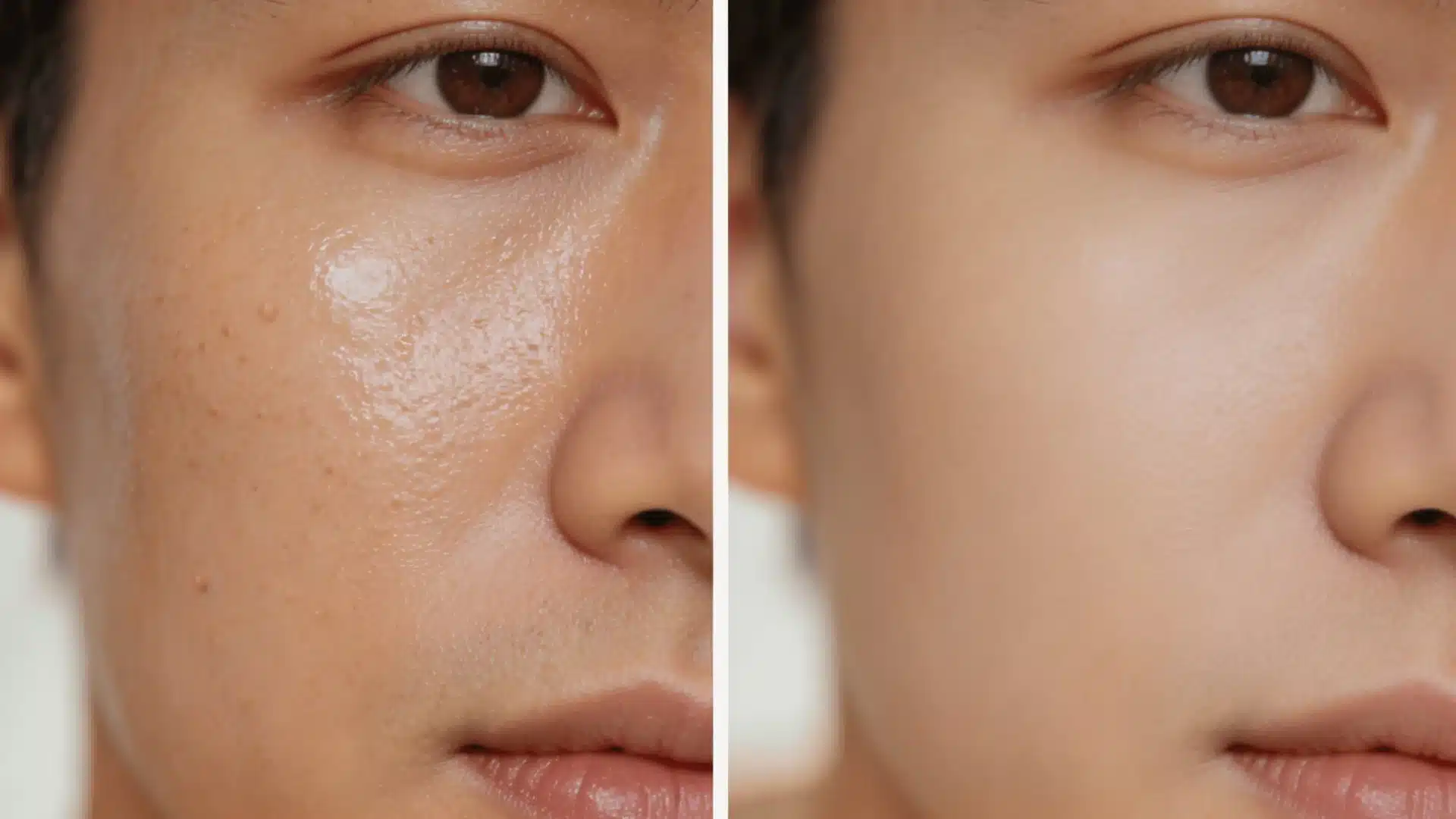
Clay masks have been used for years as a simple way to manage excess oil and refresh the skin. When used correctly, they can help clear pores, reduce shine, and improve overall skin texture.
- Deep pore cleansing: This helps prevent buildup that often leads to blackheads and whiteheads, leaving the skin feeling fresh and less congested.
- Oil control: One of the biggest advantages of clay masks is their ability to absorb excess sebum from the skin’s surface. The American Academy of Dermatology offers dermatologist tips for oily skin that pair well with a regular masking routine.
- Mild exfoliation: As the mask dries and is rinsed off, it gently lifts away dead skin cells. This light exfoliation helps smooth rough patches and improve overall skin texture.
- Temporary skin tightening: After using a clay mask, the skin often feels firmer and looks tighter. This effect is temporary, but it can make pores appear smaller.
- Pollution defense: In environments with dust and pollution, particles can settle on the skin and clog pores. Clay masks help draw out these environmental impurities, making them a useful addition to skincare routines in urban or high-pollution areas.
- Mineral nourishment: Many clay types are naturally rich in minerals such as silica, magnesium, and calcium. Silica in particular supports the skin’s collagen structure, which helps maintain skin elasticity over time.
Which Clay is Right for Your Skin Type?
Not all clay masks work the same, and choosing the right one can make a big difference in how your skin responds. Some clays are strong and better for controlling oil and breakouts, while others are gentle and focus more on refreshing the skin without drying it out.
1. Bentonite Clay
Bentonite is one of the strongest oil-absorbing clays. It is usually the best match for skin that looks greasy within a few hours, feels congested, or gets frequent clogged pores.
It works by pulling excess oil and impurities out of the skin, making pores appear cleaner and less visible after each use.
Many people notice a more matte look almost immediately, especially in high-shine areas.
For oily or acne-prone skin that needs more targeted care beyond masking, acne-focused skin treatments done professionally can complement a home clay routine.
Best for: Oily skin, acne-prone skin, congested skin, skin with blackheads, and visible shine.
2. Kaolin Clay
Kaolin is much gentler than bentonite. It comes in different forms, but white kaolin is usually the mildest.
This makes it a strong option for people who want the benefits of a clay mask without that overly tight feeling.
It helps cleanse the skin lightly while maintaining natural moisture, so the skin feels soft rather than stripped after use.
Best for: Sensitive skin, dry skin, normal skin, first-time clay mask users.
3. French Green Clay
French green clay is often chosen for skin that feels heavy, greasy, and blocked. It is more absorbent and is commonly used when the goal is a deeper detox-style mask.
It not only removes excess oil but also helps draw out impurities caused by pollution, sweat, and daily buildup, leaving the skin looking clearer and more refreshed.
Best for: Very oily skin, combination skin with an oily T zone, congested pores, and skin exposed to pollution and buildup.
4. Red Clay
Red clay is often better for skin that does not need intense oil removal but could benefit from a refreshing mask.
It is usually chosen for improving skin feel and appearance rather than strong decongesting. It helps revive dull-looking skin and can give a slightly brighter, more even look without causing dryness or discomfort.
Best for: Dry skin, dull skin, tired-looking skin, and skin that needs a gentler refresh.
Real Users’ Insights About Clay Masks
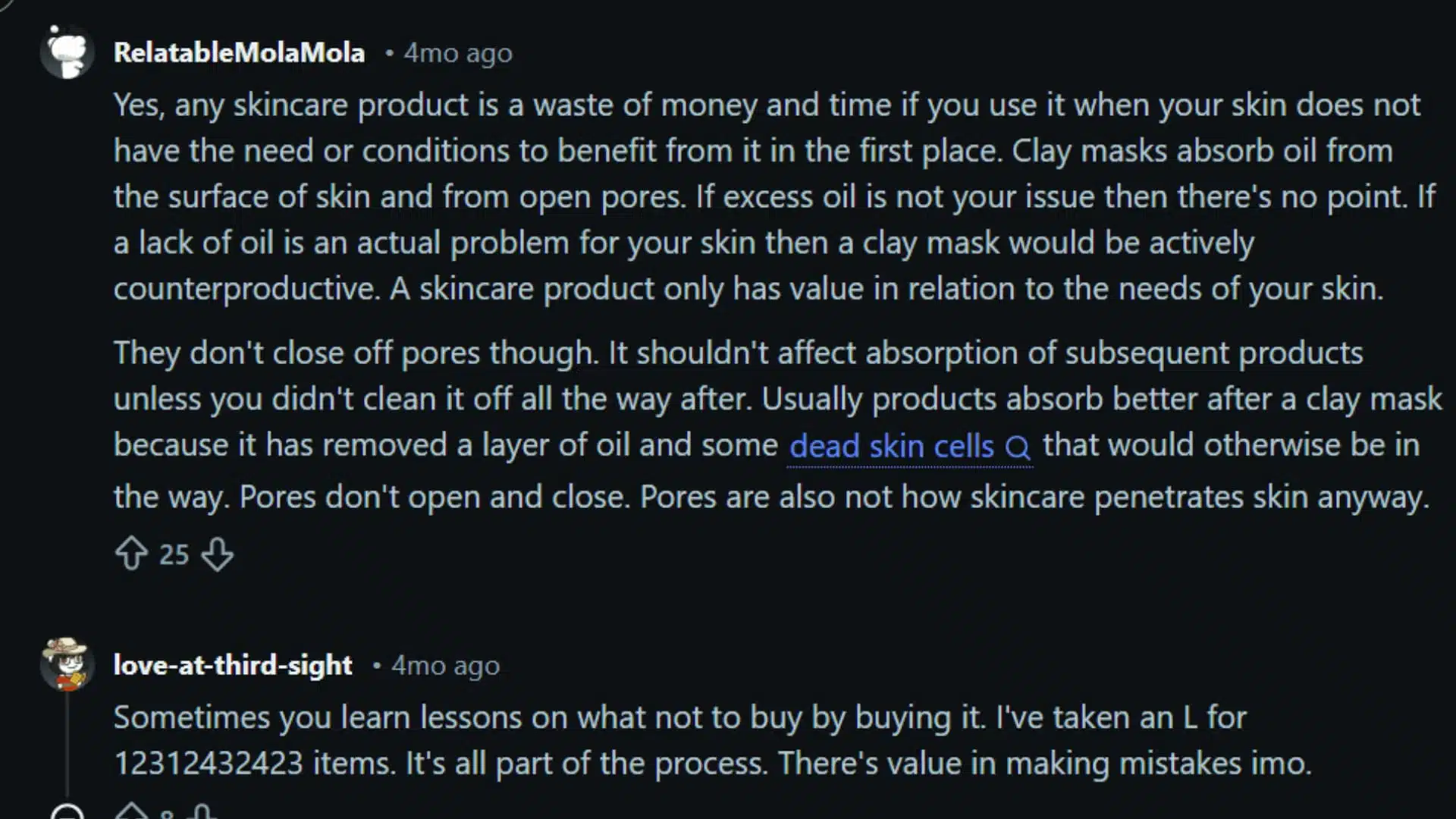
Insights from real skincare users on Reddit offer a more practical perspective on how clay masks perform in everyday routines.
Many users point out that clay masks work best only when the skin produces excess oil.
If the skin is already dry or lacks natural oil, using a Clay Mask can make it worse, rather than better. This explains why results vary so much from person to person.
One consistent takeaway from these discussions is that skincare is highly personal.
What works for one person may not work for another, and finding the right clay mask often comes down to trial and error, consistency, and understanding your own skin.
How Often Should You Use a Clay Mask?
How often to use a clay mask depends on your skin type and how it reacts after each use. Overuse is one of the most common mistakes.
When a clay mask is used too frequently, it can strip the skin’s natural oils faster than they replenish, leading to dryness, irritation, or a compensatory increase in oil production.
| Skin Type | Recommended Frequency |
|---|---|
| Oily skin | 2 to 3 times per week |
| Combination skin | 1 to 2 times per week |
| Normal skin | Once per week |
| Dry skin | Once per week or less |
| Sensitive skin | Once every 10 to 14 days |
The most reliable signal is your skin’s behavior the day after masking. If it feels tight, rough, or looks flaky, pull back the frequency.
If it looks clear and balanced, your current routine is probably working. I always tell clients: adjust based on evidence, not habit.
Clay Mask Aftercare Tips to Keep Skin Healthy
Using a clay mask is only half the process. What you do right after matters just as much. Proper aftercare helps maintain hydration, prevents dryness, and keeps your skin feeling smooth instead of tight or irritated.
- Rinse Gently: Use lukewarm water to remove the mask completely without rubbing, which can irritate freshly cleansed skin.
- Pat Dry Carefully: Avoid harsh towel rubbing; gently pat the face dry to protect the skin barrier and prevent sensitivity.
- Apply a Hydrating Toner: Restore moisture levels immediately with a soothing toner to balance the skin after oil absorption.
- Use a Lightweight Moisturizer: Lock in hydration with a moisturizer to prevent dryness and maintain soft, balanced skin after masking.
- Avoid Harsh Products: Skip exfoliants, retinol, or strong actives right after to prevent irritation on freshly treated skin.
- Stay Hydrated: Drink enough water to support skin recovery and maintain overall hydration from within after using a clay mask.
- Apply Sunscreen (Daytime): Protect your skin with sunscreen, as freshly cleansed skin can be more sensitive to sun exposure.
Conclusion
Clay masks do help with oil control, pore cleansing, and short-term skin improvement, but results depend heavily on how they are used.
If you have been wondering what clay masks do, the answer lies in how consistently and correctly they are applied.
Overuse, incorrect timing, or skipping aftercare can reduce their effectiveness, which often leads to mixed opinions about clay mask results.
Used correctly, a clay mask becomes a simple addition that supports clearer, healthier-looking skin over time, rather than a quick fix.
Regular use helps manage oil, keep pores clear, and maintain a smoother skin surface without complicated routines. For best results, consistency matters more than frequency.
Which clay mask type is best suited to your skin type? Share your answers and experiences in the comments below.
Frequently Asked Questions
Can Men Use Clay Masks?
Absolutely, and men may benefit from them even more than women. Male skin produces significantly more sebum due to higher testosterone levels, making clay masks particularly effective at controlling shine, clearing pores, and reducing breakouts.
How Long Should You Leave a Clay Mask On?
Most clay masks should stay on for 10 to 15 minutes, or until dry, helping cleanse pores without causing excess dryness or irritation.
Can I Use a Clay Mask While Pregnant?
Yes, most plain clay masks (kaolin, rhassoul) are considered safe during pregnancy. However, masks containing salicylic acid, retinol, essential oils, or high-dose vitamin C should be avoided. Always consult your OB-GYN or dermatologist before adding new skincare products during pregnancy.
What is the Difference Between a Clay Mask and a Mud Mask?
Clay masks absorb excess oil and clear pores, ideal for oily skin, while mud masks combine minerals and extracts to cleanse, hydrate, and soothe the skin.