
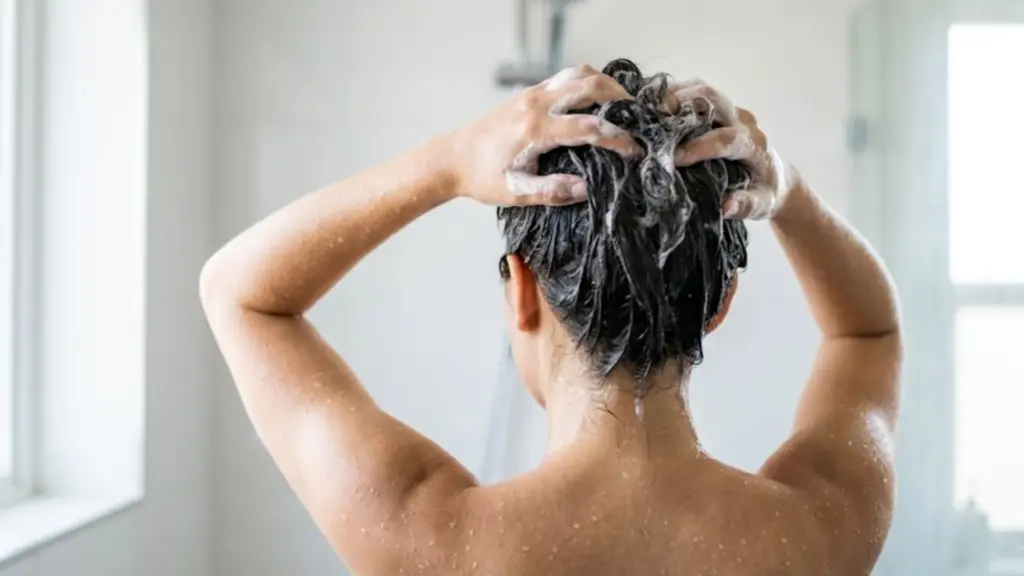
Most people have wondered, at least once, “Can i use shampoo as body wash?” while standing in the shower with an empty bottle of body wash.
It seems harmless enough. After all, both products create lather and rinse away dirt.
I thought the same thing until a lazy shower shortcut left my skin feeling a little different than usual. Nothing dramatic, just tighter and less comfortable after drying off.
That small change sent me down a rabbit hole of ingredient labels, pH levels, and skin science.
As it turns out, shampoo and body wash may look similar, but they are designed for different purposes. Those differences can matter more than many people realize.
Can Shampoo Actually Be an Alternative to Body Wash?
Yes, occasionally. A single use or an emergency swap when body wash runs out is unlikely to damage your skin.
The cleansing agents overlap enough to get the body clean. What’s missing is the pH compatibility and moisturizing support that body wash provides.
Skin experts generally agree that shampoo works as a one-off body wash substitute, but daily use can weaken the skin barrier over time.
Community threads and dermatology Q&As say the same thing: one use usually feels fine, but dryness or tightness tends to show up with repeated use, especially in winter or on already dry skin.
Disclaimer: This post is for general information only and does not replace professional skincare or dermatology advice. If you experience persistent skin irritation, consult a licensed dermatologist.
Body Wash vs Shampoo: Which Is Better for Your Skin
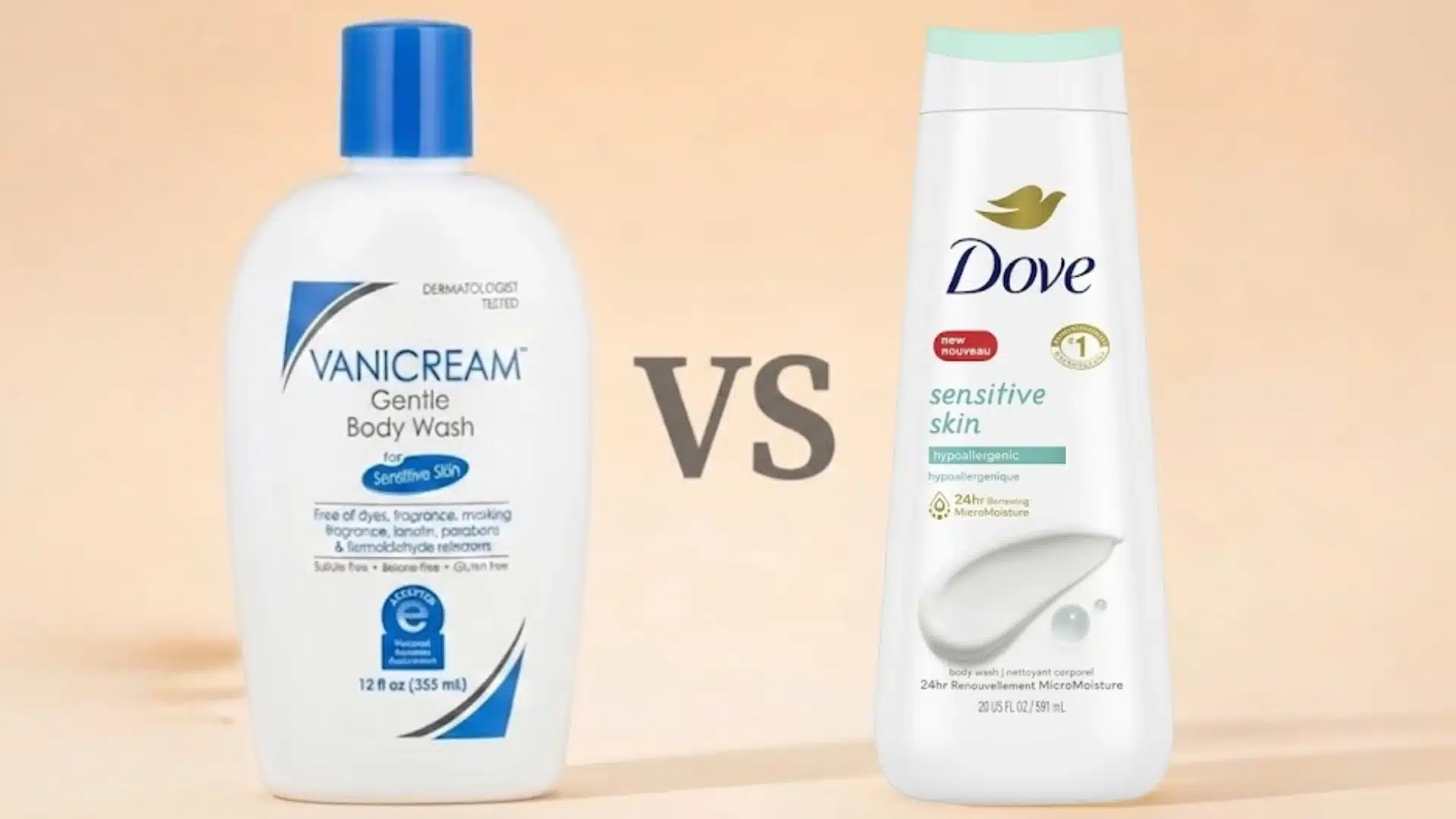
Body wash wins for skin, consistently. It is formulated to support the skin’s natural pH, preserve essential oils, and help maintain a healthy moisture barrier after every shower.
Dove Sensitive Wash and Vanicream Body Wash are two good examples of this kind of daily skin-friendly cleansing that is a gentler option for short-term use.
- pH balance: Body wash is formulated close to skin’s natural pH, around 5.5, while shampoo is designed more for the scalp.
- Natural oils: Body wash cleans sweat and dirt without stripping too much oil, while shampoo is designed to clear scalp sebum.
- Moisture support: Body wash often supports skin hydration, while shampoo’s conditioning ingredients are meant for hair, not the body.
Dry or sensitive skin usually feels the difference fastest, often with tightness or dryness. Oily skin may handle rare shampoo swaps, but body wash is still the safer choice for regular showers.
What Happens to Your Skin When You Use Shampoo Regularly
Using shampoo once in a while is usually not a problem. The bigger concern starts when it becomes part of every shower, as repeated use can gradually affect the skin’s balance and comfort.
1. It Can Shift Your Skin’s pH Balance
Your skin surface maintains a slightly acidic environment, with a pH between 4.5 and 5.5, often called the acid mantle.
According to the Journal of Integrative Dermatology, enzymes responsible for maintaining the skin barrier, including ceramidase, which processes lipids essential for skin hydration, have optimal activity within this pH range. Disrupting it reduces their efficiency.
Repeated exposure to products outside this range forces the acid mantle to recalibrate constantly. Over time, that recalibration becomes less effective, and the skin becomes more reactive to other products and environmental exposure.
2. It Strips the Natural Oils the Skin Relies on
Shampoo uses stronger surfactants because it is made to break down scalp oil, sweat, and product buildup. When you use it on body skin, that same cleansing power can remove too much natural oil.
These oils help keep skin soft, smooth, and protected. Once they are stripped away, the skin barrier may feel tight, rough, or irritated.
Some skin responds by producing extra oil, which can make it feel greasy again. Other skin stays dry because the barrier does not recover between washes. Over time, this can lead to ongoing dryness, sensitivity, and discomfort after showering.
3. Your Skin Type Changes How Much This Matters
Oily skin has more natural oil to buffer the cleansing process, so it may handle a shampoo swap with less noticeable discomfort. But no skin type benefits from it as a regular habit.
For anyone with eczema, rosacea, or an already compromised skin barrier, even a short stretch of shampoo use can trigger dryness, itching, or a flare.
The back and legs have thicker skin than the face, so they may react more slowly, but they still respond to repeated disruption.
Disclaimer: This section covers potential skin barrier effects. If you have eczema, rosacea, or a diagnosed skin condition, consult a dermatologist before making changes to your shower products.
Can You Use Conditioner as Body Wash?
Conditioner does not clean skin well. It lacks enough cleansing surfactants to lift sweat, dirt, and bacteria. Instead, it coats hair with softening ingredients, which can leave skin feeling slippery, greasy, or hard to rinse.
- Moisturizing effect: Conditioner is rich in emollients and humectants, so skin often feels soft right after. It is not a bad after-rinse treatment on dry patches if your body wash has already cleaned the area.
- Gentle on sensitive skin: Conditioners contain fewer surfactants, so they do not strip or irritate the way some soaps do.
- Insufficient cleansing: Without proper surfactants, sweat and bacteria stay on the skin. Using conditioner as a full-body wash means you are moisturizing dirty skin rather than cleaning it.
- Pore-clogging risk: The occlusive agents in conditioner can clog pores on the back and chest, especially if the formula is heavy. Breakout-prone skin should avoid this entirely.
When Can Shampoo Replace Body Wash?
Shampoo can replace body wash for a shower or two when needed, such as during travel or when body wash runs out. The occasional swap is usually fine, but regular use can leave skin drier and less comfortable over time.
| Situation | Skin type | Verdict |
|---|---|---|
| Ran out at home, one-time use | Normal or oily | Fine |
| Traveling, consolidating bags | Normal | OK, occasionally, avoid clarifying shampoo |
| Daily use for cost savings | Any | Not recommended |
| Sensitive skin, eczema, or rosacea | Sensitive or dry | Avoid |
| Using conditioner as a full-body wash | Any | Avoid, does not cleanse adequately |
What People Say About Using Shampoo as Body Wash
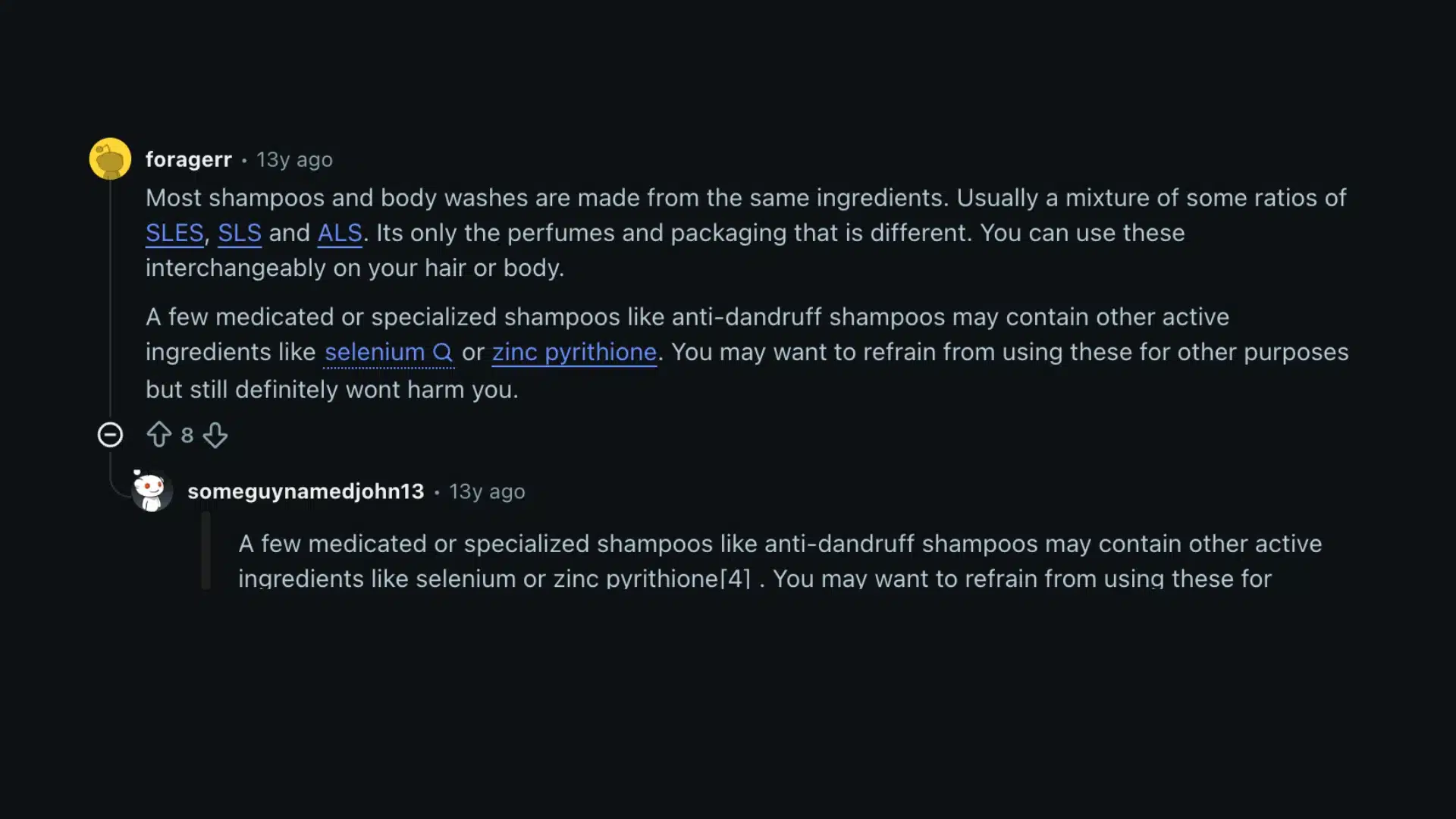
Reddit users generally agree that shampoo and body wash are more similar than many people think.
According to several comments, both products often contain the same cleansing agents, such as SLES, SLS, and ALS, with the main differences being fragrance, added conditioners, and packaging.
As a result, many people believe regular shampoo can be used as a body wash without any major issues.
However, users caution against using medicated shampoos, such as anti-dandruff formulas containing ingredients like selenium sulfide or zinc pyrithione, since they are designed for specific scalp conditions rather than everyday body cleansing.
Best Body Wash Alternatives
Body wash is not the only option when the bottle runs empty. Several everyday products can clean skin more gently than shampoo and are less likely to leave it feeling dry or tight afterward.
1. Bar Soap
Bar soap can work when body wash is not available, especially if it is gentle and fragrance-free. Many bar soaps have a higher pH than body wash, often around 9 to 10, so they are not perfect for dry or sensitive skin.
Still, a mild bar is usually a better fallback than a stripping clarifying shampoo.
Look for options like Dove Sensitive Bar or a glycerin-based bar. They clean the skin without leaving it as tight or as uncomfortable as harsher soaps do.
2. Mild Face Wash
A gentle face wash is a good alternative the body wash because it is formulated for delicate skin.
Face cleansers are usually designed to be low-irritation, pH-friendly, and gentler on the skin barrier than shampoo.
A sulfate-free cleanser like CeraVe Hydrating Facial Cleanser can remove sweat and light dirt without that stripped feeling. It may not feel as rich, but it works for a quick shower, especially on dry or sensitive skin
3. Diluted Castile Soap
Castile soap can clean the body, but it should not be used straight from the bottle. Pure Castile soap has a high pH, so using it undiluted may leave skin feeling dry or tight.
Diluting it well with water makes it a safer short-term option when body wash runs out.
It is still better for occasional use than daily cleansing, especially if the skin already feels dry. After using it, rinse well and apply moisturizer to keep the skin comfortable.
4. Baby Shampoo
Baby shampoo is the gentlest shampoo option if there is truly no body wash available.
Tear-free formulas in baby shampoos like Johnson’s Baby Shampoo typically contain milder surfactants and fewer harsh ingredients, so they are less likely to irritate skin than clarifying or volumizing shampoos.
It is not a true body wash, but it is gentle enough for a quick backup. Rinse well and moisturize if skin feels dry.
Conclusion
There is no disaster waiting at the end of one shower with shampoo as body wash. But skin is a slow-feedback organ.
It rarely reacts immediately and obviously; it tends to quietly accumulate stress until you notice tightness, dullness, or a rash that seems to have appeared out of nowhere.
The arguments about pH and barrier chemistry are not abstract. They describe what happens gradually as a product repeatedly works against the skin it comes into contact with.
The simplest upgrade: keep a gentle body wash as a non-negotiable. Everything else in your shower routine can flex.
What do you use when you are out of body wash? Drop your go-to backup in the comments.
Frequently Asked Questions
Can I Use Shampoo on My Face as a Cleanser?
No. Facial skin is thinner and more reactive. Shampoo can strip moisture fast. Use gentle face wash, micellar water, or plain water instead.
Is Baby Shampoo Safe to Use as Body Wash for Adults?
Yes, Occasionally. Baby shampoo is usually gentler and less irritating than adult shampoo, but it is still not a perfect replacement for body wash.
Can Using Shampoo as Body Wash Cause Breakouts?
Yes, especially on the back and chest. Shampoo can disrupt the skin barrier, and residue can clog pores or irritate acne-prone skin.