If you’ve spent more time than you’d like examining your nose in the mirror, you’re not alone.
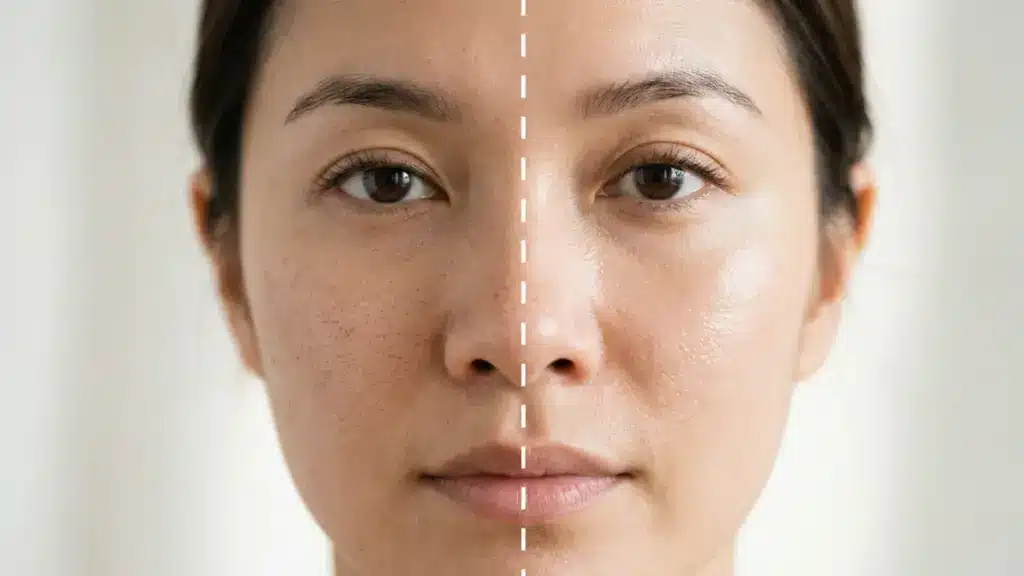
Large-looking pores, especially around the nose and chin, make skin texture more noticeable, and the skincare aisle doesn’t make it easier to figure out what actually helps.
I went through the clay masks, toners, pore strips, and scrubs phase. Some delivered a temporary result nothing lasted.
What I learned slowly, through trial and a lot of irritated skin, is that pores don’t respond to being scrubbed or forced closed.
They respond to consistent care that keeps them clear and supports the surrounding skin.
Why Do Your Pores Look Larger than They Should
Four things make pores look more noticeable.
First is excess sebum. When oil glands produce more than the skin can clear, oil collects inside the pore canal and stretches the opening, especially on the nose, forehead, and chin. Second is dead skin buildup.
Second is dead skin buildup: dead skin cells mix with oil at the pore opening, forming a soft plug that can widen the pore and turn into a blackhead if it oxidizes.
Third is collagen loss. As skin ages, support around each pore weakens, making the opening look wider.
Fourth is UV damage. Sun exposure breaks down collagen and elastin. Research in Clinical, Cosmetic, and Investigational Dermatology links UV damage, lower collagen, and enlarged pore appearance.
Can You Actually Get Rid of Pores Permanently?
No. Pores are a permanent part of how your skin functions.
They’re the openings of hair follicles, and they allow oil and sweat to reach the surface. You can’t remove them, and you can’t physically close them.
What you can do is make them look much smaller. With the right ingredients used consistently, most people see a noticeable difference in texture and pore appearance within four to twelve weeks.
The goal isn’t elimination. It’s keeping them clear, supported, and less visible.
How to Shrink Pores With Skincare Ingredients
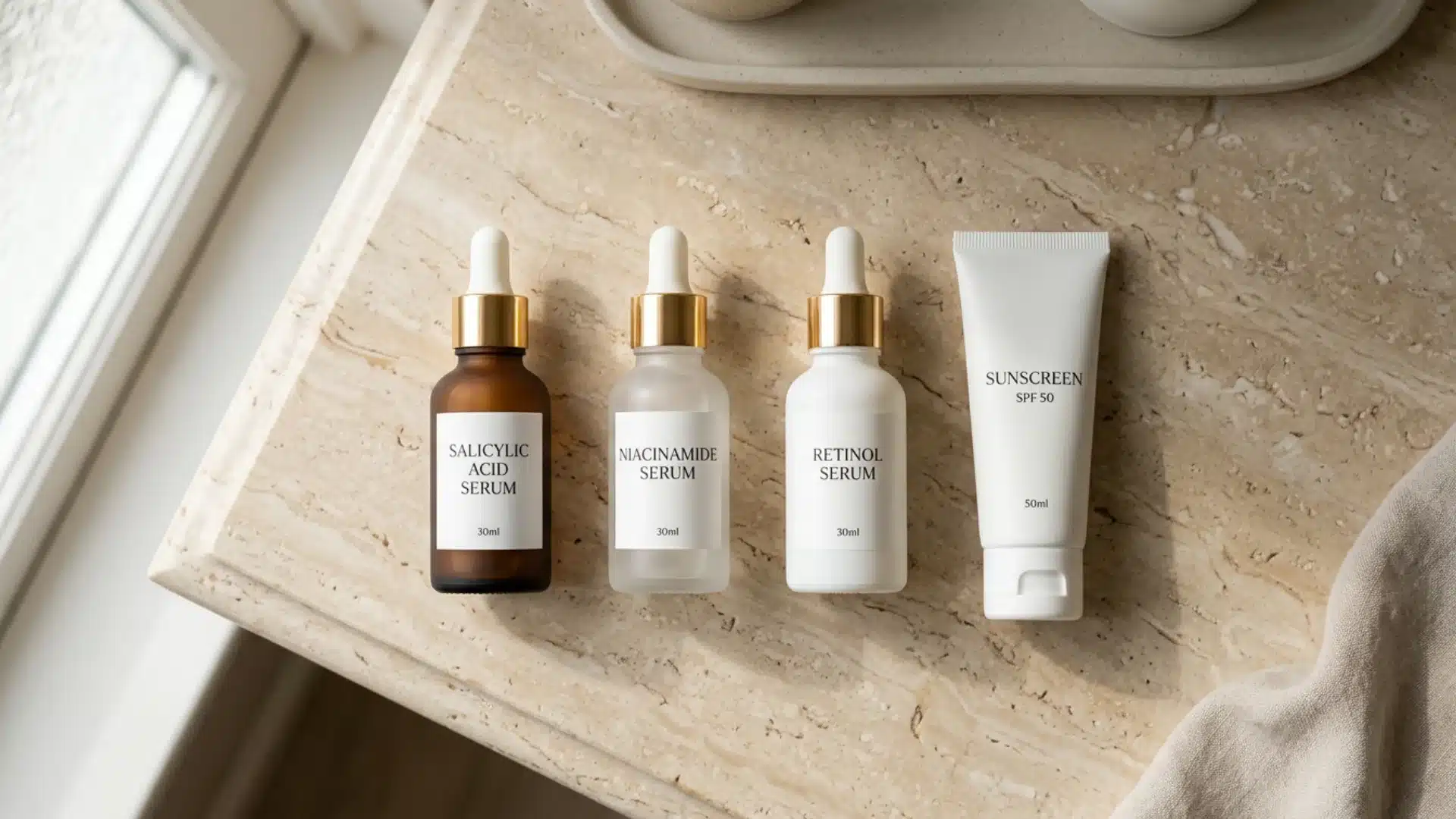
The good news is that several well-studied ingredients directly address the causes above. You don’t need a ten-step shelf. You need the right things, used consistently.
1. Salicylic Acid
Salicylic acid is a beta-hydroxy acid, and the thing that sets it apart is that it’s oil-soluble. That means it can get inside the pore canal rather than just working on the surface.
It dissolves the oil and debris that clog pores from within, and a study in the Journal of Cosmetic Dermatology found that regular use reduced oil production by around 20%.
For most people, noticeable clearing occurs within 1 to 2 weeks. It’s particularly useful for the nose and chin, where pores tend to be most congested.
Recommended: Paula’s Choice 2% BHA. Use it two to three times a week to start. If your skin handles it without irritation, you can work up to daily use.
2. Niacinamide
Niacinamide (vitamin B3) works differently from salicylic acid. Rather than clearing out what’s already in the pore, it targets the underlying problem: how much oil your skin produces in the first place.
A study in Dermatology and Therapy found that niacinamide improved skin texture by 15% after eight weeks of use.
It also strengthens the skin barrier, which reduces the kind of irritation that can make pores look red and inflamed.
The sweet spot for pore concerns is 5-10%. Anything above that rarely provides additional benefit and may cause flushing in sensitive skin.
Recommended: Ordinary Niacinamide is gentle enough to use morning and evening from day one, making it one of the most beginner-friendly active ingredients available.
If you’re pairing niacinamide with other actives, the layering order matters. Morning vs. night skincare routines cover when to apply each step for best results.
3. Retinol or Retinoids
Retinol works on the structural side of the pore problem. It accelerates cell turnover so dead skin sheds more consistently and stimulates collagen production, which tightens the dermal scaffold around each pore.
A study in Dermatology and Therapy found that niacinamide improved skin texture by 15% after eight weeks of use.
The timeline is longer than salicylic acid or niacinamide. Most people don’t see clear results until the 8- to 12-week mark, and real structural improvement takes closer to 3 to 6 months.
Recommended: CeraVe Retinol Serum. It’s also the most likely to cause irritation at the start, so a low concentration used every other night, applied to dry skin before moisturizer, is the right way to introduce it.
4. Sunscreen
SPF is not optional in a pore-minimizing routine. UV exposure degrades collagen and elastin over time, and once that structural support breaks down, pores look wider and harder to manage.
A broad-spectrum SPF 30 or higher applied every morning protects the collagen you’re building with your other actives and prevents pores from becoming more visible over time, even when everything else you’re doing is working.
Recommended: La Roche-Posay SPF 50. For oily skin, a lightweight gel or fluid formula tends to sit better than a cream.
For dry skin, a moisturizing SPF with ingredients like hyaluronic acid covers both steps at once.
Best Pore-Minimizing Routine for Every Skin Type
A routine only works if you actually use it. These are practical, low-resistance options by skin type, not perfection guides. You can build from here.
1. Oily Skin
Morning: Gentle foaming or gel cleanser → 5–10% niacinamide serum → lightweight oil-free moisturizer → SPF 30+
Evening: Gel cleanser → salicylic acid toner or serum two to three nights a week → niacinamide on the remaining nights → lightweight moisturizer
Avoid anything labeled “rich” or “balm.” These tend to sit on the surface rather than absorb, which contributes to congestion over time.
2. Dry Skin
Morning: Cream or milk cleanser → niacinamide serum → hydrating moisturizer with ceramides or hyaluronic acid → SPF 30+
Evening: Gentle cleanser → retinol every other night starting at a low concentration (0.0250.05%) → rich moisturizer immediately after to buffer irritation
Dry skin does well with the “sandwich” method for retinol: apply moisturizer first, wait a couple of minutes, apply retinol, then moisturizer again. It reduces flaking without stopping the retinol from working.
For dry and mature skin types specifically, building collagen from the inside out matters too, to see how face-tightening ingredients can complement your pore routine.
3. Sensitive Skin
Morning: Fragrance-free cream cleanser → niacinamide serum (start at 5%) → gentle hydrating moisturizer → mineral SPF
Evening: Same gentle cleanser → niacinamide only for the first four weeks → then introduce a very low-strength retinol every third night once your skin has settled
With sensitive skin, the instinct is to troubleshoot by adding more. The more useful move is to slow down and let each addition settle before layering anything new.
4. Combination Skin
Morning: Gel or foam cleanser → niacinamide serum all over → lightweight moisturizer → SPF 30+
Evening: Cleanser → salicylic acid applied only to oily zones (T-zone) two to three nights a week → retinol on other nights to drier areas → moisturizer adjusted by zone
Treating the T-zone and cheeks identically tends to either overdry the cheeks or under-treat the nose and forehead. Targeted application makes a real difference here.
Professional Treatments and Home Remedies for Large Pores
Professional treatments and home remedies can both help large pores look smaller, but they work best when matched to your skin type and consistency level.
| Option | What it does | What actually works |
|---|---|---|
| Microneedling | Creates tiny skin injuries. | Boosts collagen and helps pores look tighter. |
| Chemical peels | Use stronger exfoliating acids. | Improve texture and pore appearance. |
| Laser resurfacing | Treats deeper skin layers. | Can deliver noticeable pore-refining results. |
| Ice | Temporarily cools and tightens skin. | Makes pores look smaller briefly. |
| Pore strips | Remove blackhead plugs. | Give short-term results only. |
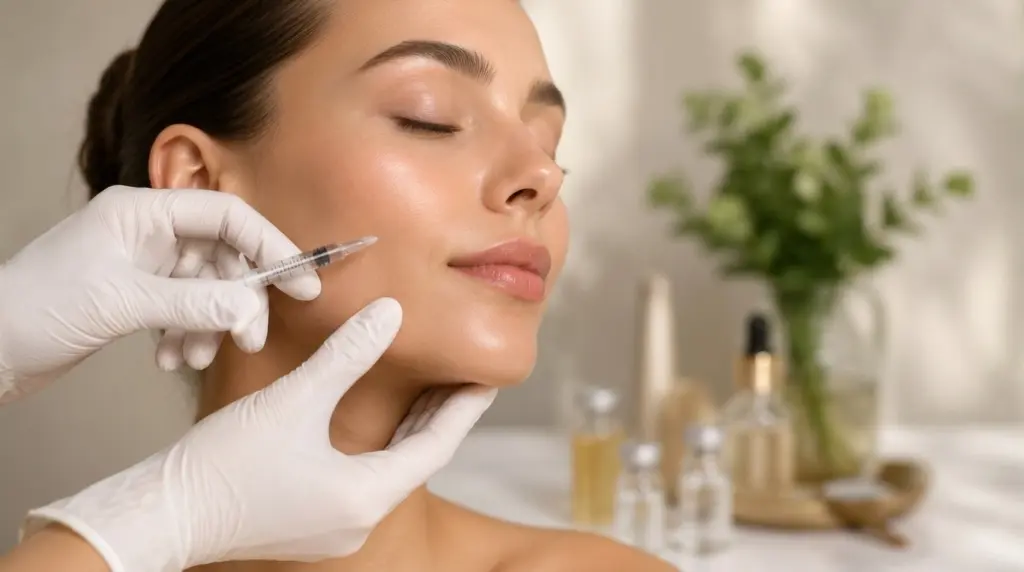
| Clay masks | Absorb excess oil. | Help reduce shine and congestion. |
| Double cleansing | Uses oil and water-based cleansers. | Removes makeup, SPF, and excess oil effectively. |
| Dermatologist visit | Provides expert guidance. | Helpful when home care is not enough. |
Habits That Make Pores Look Larger
Habits like sleeping in makeup, skipping SPF, over-exfoliating, squeezing pores, and using pore-clogging products can make pores look larger over time.
- Sleeping in makeup: Makeup left on overnight mixes with oil and debris, making pores look more congested by morning.
- Over-exfoliating: Using too many acids or exfoliants can irritate skin and trigger excess oil production.
- Skipping SPF: Daily sun exposure breaks down collagen over time, making pores appear larger.
- Picking or squeezing pores: Repeated pressure stretches the surrounding skin and can leave lasting marks.
- Using comedogenic products: Some skincare and makeup products can clog pores and make them more noticeable.
What the Skincare Community Says About Pore Size
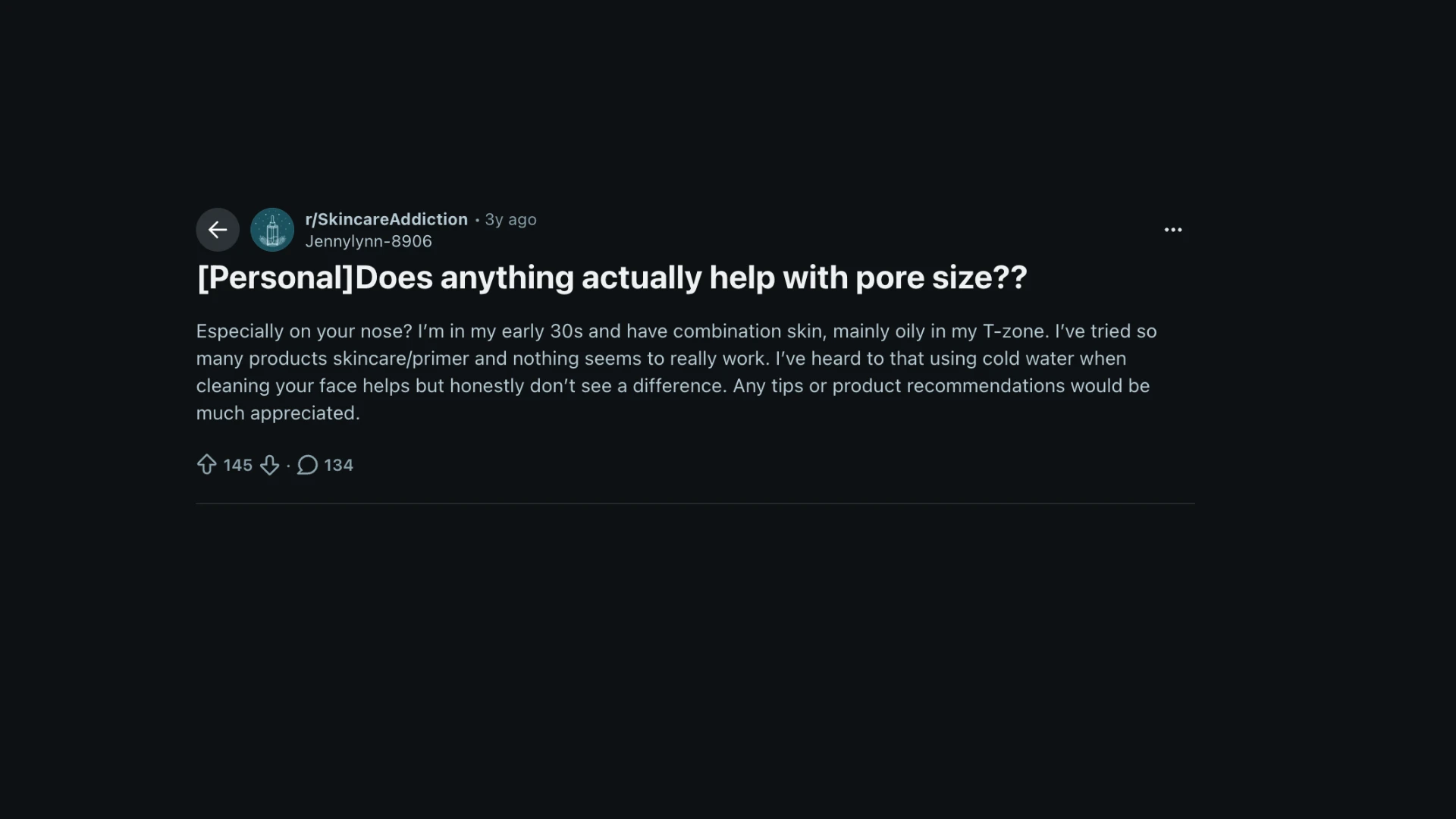
A Reddit skincare discussion on pore size shared a realistic takeaway: pores cannot permanently shrink, but they can look less noticeable with the right routine.
Users mentioned chemical exfoliants, salicylic acid, niacinamide, retinoids, oil cleansing, and regular moisturizer as helpful for reducing shine, clearing sebaceous filaments, and improving texture.
Several people also warned against squeezing pores or relying on cold water, since pores do not open and close like muscles.
The clearest advice was to focus on keeping pores clear, skin hydrated, and oil controlled instead of chasing a permanent fix.
Conclusion
Pores are part of how your skin works they’re not a flaw to fix. What you’re actually managing is congestion, collagen quality, and surface texture, all of which respond to consistent care.
Start with one or two ingredients rather than overhauling everything at once.
Track what shifts. The biggest improvements tend to come from people who stop switching products every two weeks and actually let something work.
If you’re starting a pore routine this week, drop a comment below with which ingredient you’re leading with. I’m curious what’s working for different skin types right now.
Frequently Asked Questions
Does Ice Actually Shrink Pores?
No. Ice temporarily tightens the skin and makes pores look smaller, but it does not affect oil production, collagen, or pore size.
Are Pore Strips Worth Trying?
Yes, they remove visible blackhead plugs and provide immediate results, but pores refill quickly because they do not address excess oil production.
Why Do Pores Look Bigger After Washing My Face?
Harsh cleansers can trigger rebound oil production, while freshly washed skin may reveal texture more clearly without natural oils or moisturizer.