I spent years working with swimmers whose skin took a beating from chlorine and the sun. Sensitivity was the baseline, not the exception.
When clients came in worried about a piercing bump, I often saw the same thing: a simple concern made worse by alarming online searches.
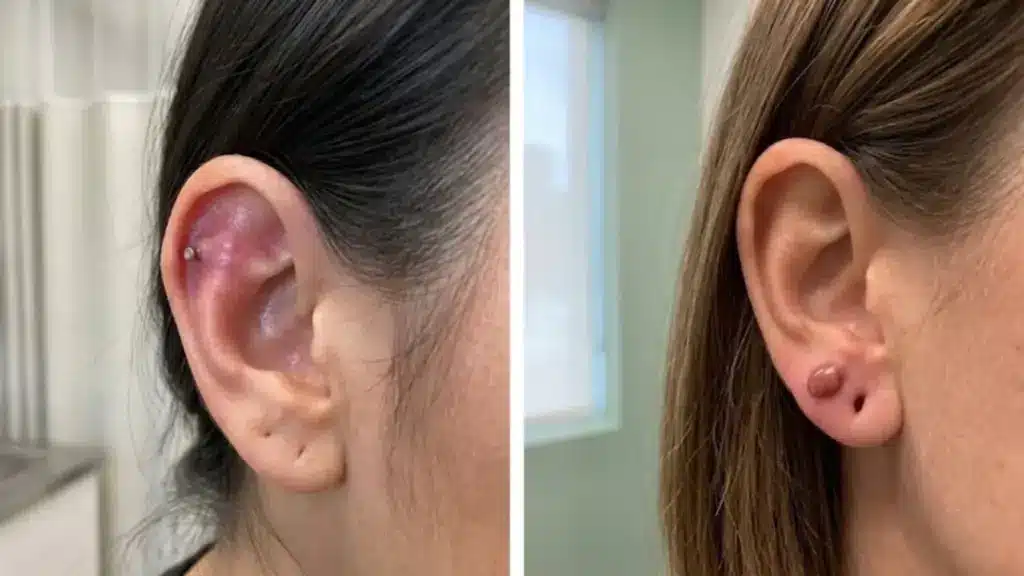
A piercing bump vs. keloid is genuinely one of those questions where guessing leads to the wrong care.
Both can look similar early on, especially when the area is pink, swollen, or tender. But they are different tissue responses that need different approaches.
This blog breaks down what each one is, how to tell them apart, and what to do about a piercing bump.
What is a Piercing Bump?
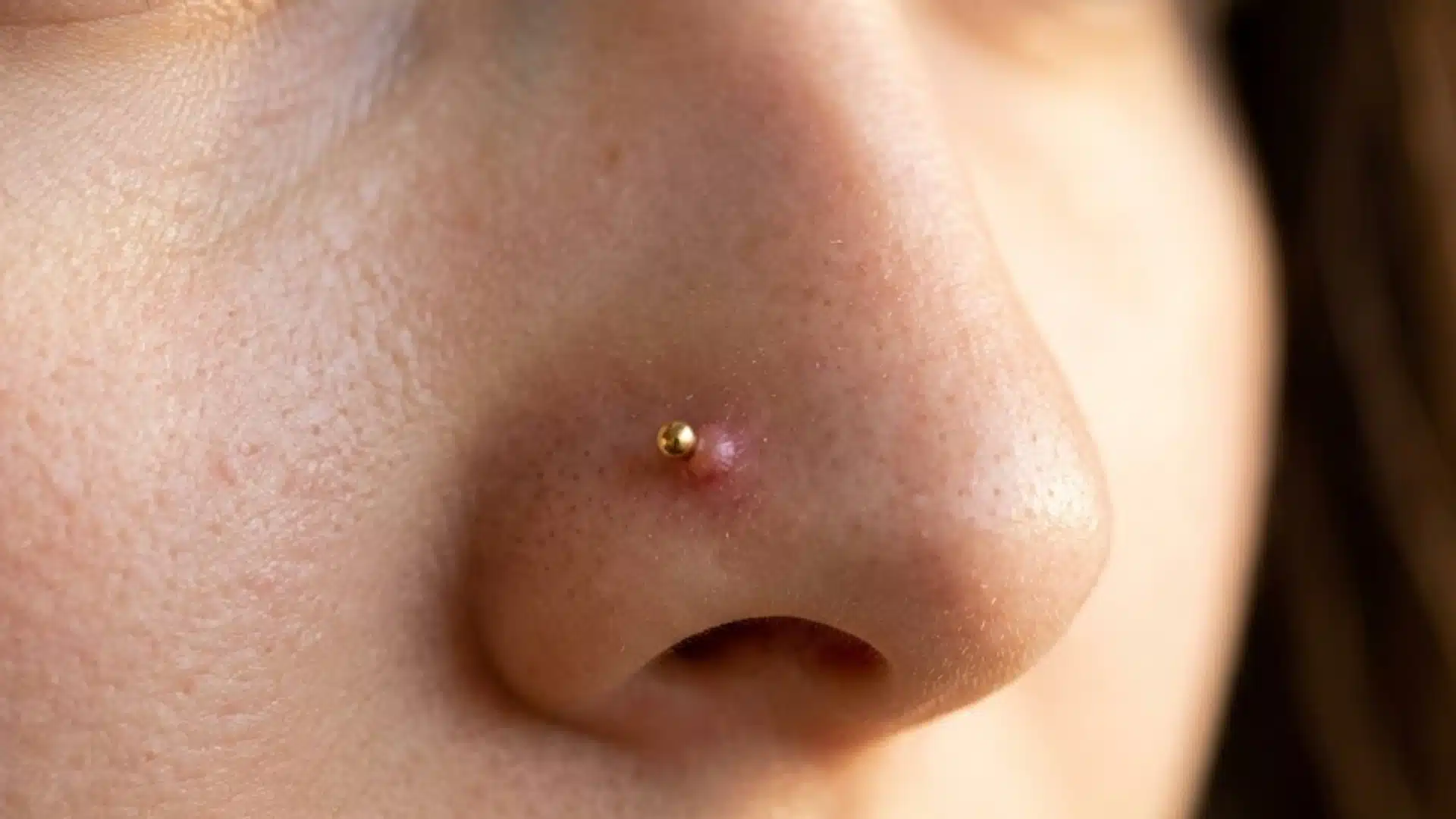
A piercing bump is a small raised lump that forms around a piercing. It is usually caused by irritation rather than a serious skin condition.
These bumps can appear during the healing process and are often linked to everyday issues that affect the piercing site.
Common reasons a piercing bump may develop include:
- Friction from clothing, hair, or sleeping on the piercing
- Touching the area with unclean hands
- Using jewelry that is too tight or made from irritating materials
- Minor trauma from snagging or moving the jewelry too much
Most piercing bumps are small and stay close to the piercing hole. They may look pink, red, or slightly flesh-colored. The surface can appear smooth or swollen, depending on the cause.
These bumps are most often seen on ear cartilage piercings, earlobes, nose piercings, and other areas that experience frequent movement or pressure during healing.
What is a Keloid?
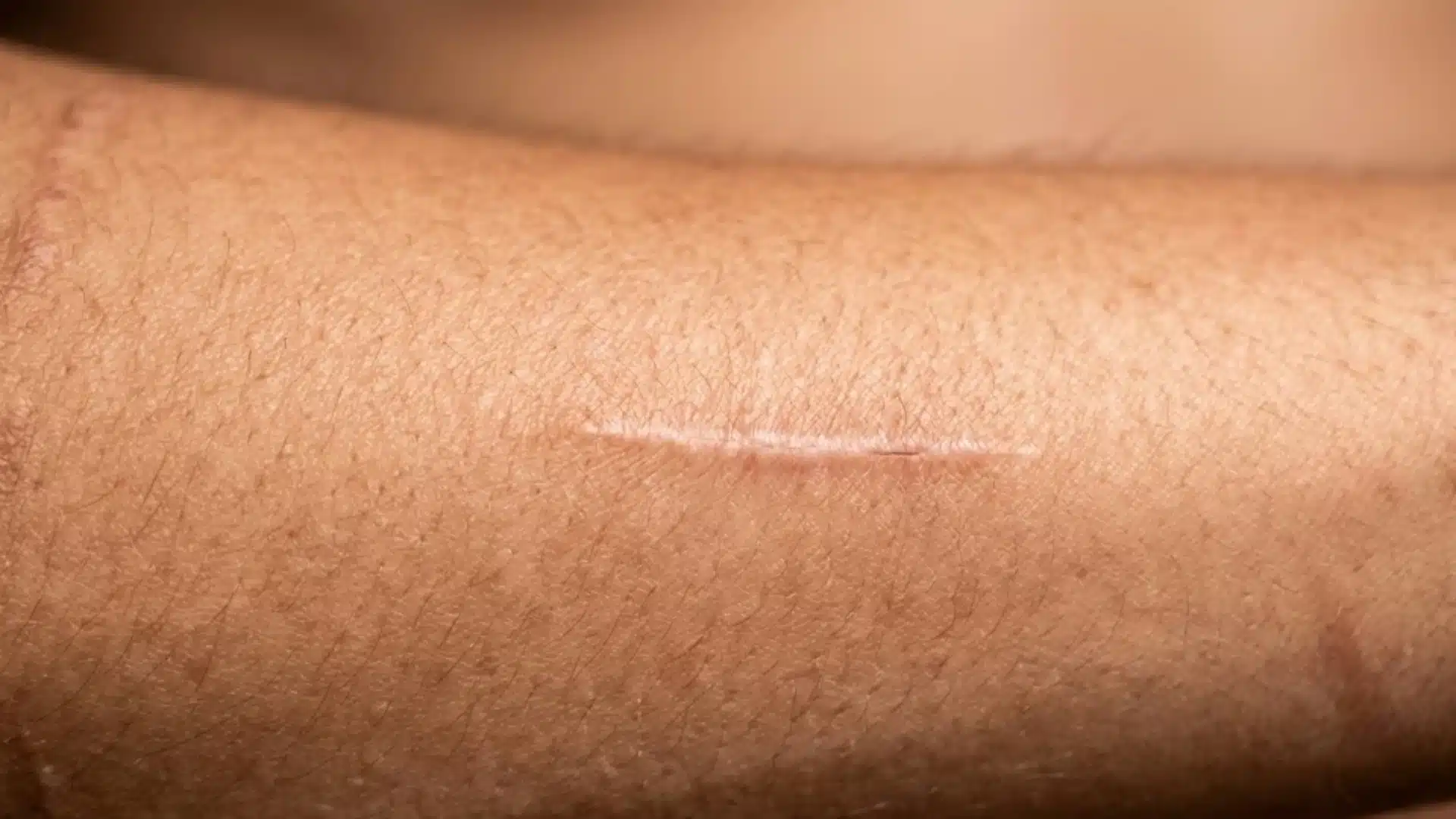
A keloid is a raised, firm overgrowth of scar tissue that spreads beyond the original wound.
Unlike a hypertrophic scar, it continues to grow and may expand for months or years. Removing the jewelry will not make it go away.
When skin is injured, fibroblasts produce collagen to repair it. In people prone to keloids, this process does not stop at the right time, so collagen continues to build and spread into nearby skin.
Genetics plays a central role. The American Academy of Dermatology reports that 33% to 50% of people with keloids have a blood relative who also gets them.
Risk is higher in darker skin tones and after past keloids from cuts, surgery, acne, or piercings.
Piercing Bump vs Keloid: Key Differences
This comparison makes it easier to spot the difference between a piercing bump and a keloid.
Look at factors like size, texture, growth, and healing time to get a clearer idea of what you may be dealing with.
| Feature | Piercing bump | Keloid |
|---|---|---|
| Size | Small, confined to the piercing hole | Large, spreads beyond the wound boundary |
| Shape | Rounded, flat disc or small dome | Irregular, often lobular or raised ridge |
| Color | Pink or red when fresh, lightens with healing | Pink/red initially, may darken to brown over time |
| Texture | Soft or slightly firm, often pliable | Rubbery or hard, firm to the touch |
| Growth | Stable; may shrink with proper care | Continuous; grows over weeks, months, or years |
| Pain/Itching | Mild tenderness or light itch | Can cause significant itching, tenderness, or pain |
| Healing | Usually resolves in 2–8 weeks with care | Does not resolve without professional treatment |
Signs You Might Have a Keloid
A keloid often grows beyond the piercing hole, feels firm or rubbery, and continues to grow over time rather than gradually improving with normal aftercare.
Watch for these specific indicators:
- The bump extends past the piercing hole: If you can see or feel tissue growing over skin that was never pierced, that’s a red flag.
- It’s been growing for more than 4–6 weeks without improvement: Irritation bumps respond well to good aftercare. A bump that only grows despite careful cleaning is behaving differently.
- The texture is hard and rubbery: Soft bumps are almost always irritation-related. A hard, dense lump is more characteristic of keloid tissue.
- The color has deepened: A bump that started red and is now turning brown, or is noticeably darker than your surrounding skin, has taken on a more permanent quality.
- It’s itchy without being touched: Persistent, spontaneous itching is a known symptom of keloids.
Disclaimer: This section is for informational purposes only and is not a substitute for professional medical advice. If you suspect a keloid, consult a board-certified dermatologist for diagnosis and treatment.
How to Get Rid of a Piercing Bump
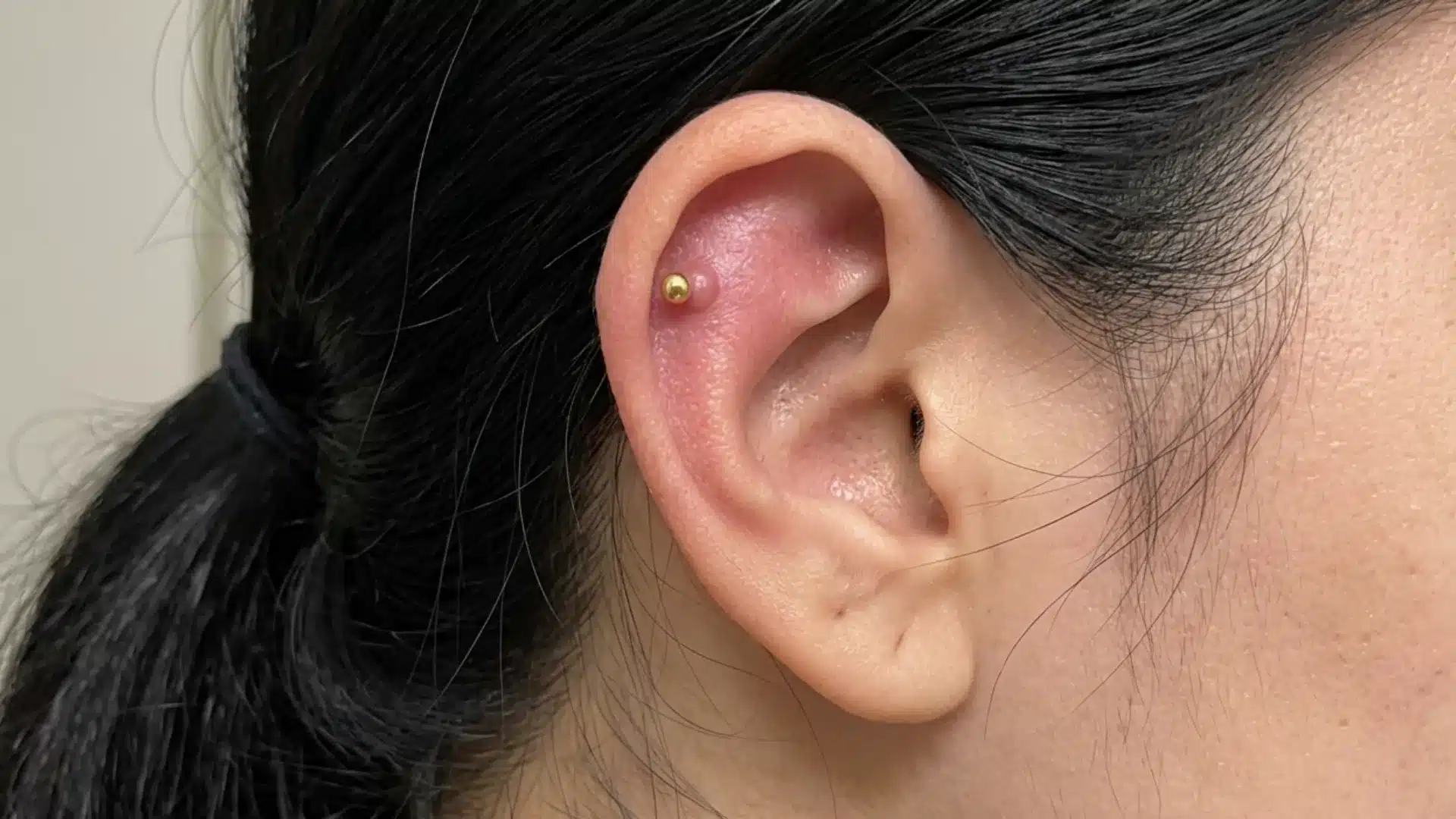
The good news: most piercing bumps respond well to straightforward care.
The protocol below is what I recommend to clients who come in with irritation bumps at new or partially healed piercings. Consistency is more important than intensity here.
1. Clean the Piercing With Sterile Saline
Use a sterile wound wash spray with 0.9% saline twice daily. Pharmacy options like NeilMed Wound Wash work well because the fine mist reaches the front and back of the piercing without contact.
If you prefer a DIY solution, dissolve 1/4 teaspoon of non-iodized sea salt in one cup of warm distilled water.
Make a fresh batch each time and don’t store it. Apply for 5–10 minutes per session. A salt concentration that’s too strong will dry out the tissue and worsen the bump, so precise measurements matter.
2. Check if the Jewelry is Too Tight
Jewelry that presses into the skin can keep a piercing irritated every day. Check the flat back, ball end, or decorative top.
If it looks like it is sinking into the skin, sitting too tight, or leaving a deep mark, the post may be too short.
Jewelry that is too snug can trap swelling and make the bump worse. Do not force it out yourself. Ask a professional piercer to check the fit and switch it safely if needed.
3. Switch Poor-Quality Jewelry with Help from a Piercer
Poor-quality jewelry can keep a piercing irritated, especially if it contains nickel, plating, or unknown metals.
Surgical steel is not always the safest choice if the nickel content is unclear. A better option is implant-grade titanium, ASTM F136, niobium, or solid 14k gold and above. These materials are usually less likely to trigger a contact reaction.
Still, do not change jewelry yourself while the bump is active. A professional piercer can check the fit, choose a safer piece, and swap it without causing extra trauma.
4. Avoid Tea Tree Oil, Alcohol, Peroxide, and Harsh Products
Many people reach for tea tree oil, alcohol, hydrogen peroxide, or strong antibacterial products when a piercing bump appears. While the intention is good, these products can slow healing rather than help it.
Alcohol and hydrogen peroxide may damage the new skin cells that are trying to form a healthy healing channel.
Tea tree oil has antibacterial properties, but it is often too harsh for fresh or irritated piercings and can cause additional irritation.
To avoid making the bump worse, stick with sterile saline solution and keep the aftercare routine simple.
5. Do Not Pop or Squeeze the Bump
It can be tempting to squeeze or pop a piercing bump, especially when it looks swollen or filled with fluid. Unfortunately, that usually makes the problem worse.
Pressing on the bump can push bacteria deeper into the tissue, increase irritation, and raise the risk of scarring.
In some cases, it may even damage the healing channel around the jewelry. If the bump contains fluid, be patient.
Regular saline soaks can help reduce pressure and support the body’s natural healing process. Leaving the bump alone is often the safest and fastest approach.
6. Give the Piercing Time to Calm down
Pressing on the bump can push bacteria deeper into the tissue, increase irritation, and raise the risk of scarring.
In some cases, it completely damages the healing channel around the jewelry. The same principle applies to other skin lesions, which is why healing a popped pimple requires its own careful approach, not just spot treatment.
If the bump contains fluid, regular saline soaks can help reduce pressure and support the body’s natural process. Leaving it alone is often the fastest path.
When to See a Dermatologist
Most piercing bumps improve with proper aftercare, but some signs need medical attention. See a dermatologist if there is severe pain, heat, swelling, pus, or fever, as these can point to an infection.
You should also get it checked if the bump keeps growing, spreading, or becoming firmer instead of calming down.
This matters even more if you or someone in your family has a history of keloids, because early care may help control the growth.
If it does not improve after gentle cleaning, avoiding pressure, and leaving the jewelry alone, a specialist can check the cause and suggest the right treatment.
Getting advice early is better than waiting until the bump becomes harder to treat.
Treatment Options for Piercing Bumps and Keloids
The right treatment depends on the type of bump. Piercing bumps often improve with proper aftercare, while keloids usually need medical treatment.
- Saline Cleaning: Gentle saline rinses can help reduce irritation and support healing around the piercing site.
- Reducing Friction: Avoid sleeping on the piercing, touching it often, or wearing items that create pressure on the area.
- Jewelry Adjustment: Tight, poor-quality, or unsuitable jewelry can cause irritation. A professional piercer can check whether a change is needed.
- Avoiding Harsh Treatments: Popping the bump or using strong products may worsen inflammation and delay healing.
- Steroid Injections: Dermatologists often use steroid injections to flatten and reduce the size of keloids.
- Silicone Sheets or Gels: These may help soften and flatten keloid tissue over time.
- Laser or Freezing Treatments: Some keloids respond to laser therapy or cryotherapy, depending on their size and location.
- Surgical Removal: Larger keloids may require removal, although they can sometimes return after treatment.
Conclusion
Getting the diagnosis right changes everything. A bump correctly identified as irritation-related is treatable, predictable, and usually gone within a few weeks of proper care. A keloid left without attention will only grow.
The practical test is the boundary. If the bump stays within the piercing hole and responds to saline care, it’s most likely standard irritation.
If it spreads, hardens, and refuses to calm down, stop self-treating and get a professional opinion.
If you’ve dealt with a piercing bump or think it might be a keloid, share your experience in the comments. What worked, what didn’t, and what you wish someone had told you earlier.
Frequently Asked Questions
Can a Piercing Bump Turn into a Keloid?
No. An irritation bump does not turn into a keloid. They are different tissue responses. If a bump grows beyond the piercing hole, it may have been a keloid from the start.
Does Removing the Jewelry Help a Keloid Go Away?
No. Removing jewelry may stop new irritation, but it will not remove existing keloid tissue. A true keloid usually needs professional treatment to shrink or flatten.
Can You Pierce Through Scar Tissue?
Sometimes, but it depends on the scar. Flat scar tissue may be workable. Piercing through or near a keloid can trigger more growth, so it is not recommended.