Dry, tight skin often leads people toward richer moisturizers, and cocoa butter has stayed popular for exactly that reason.Cocoa butter for skin works mainly as an emollient, helping rough or dry areas feel softer while supporting moisture retention.
It can suit body care especially well, but facial use needs more thought because skin type, acne tendency, fragrance, and the full product formula all matter.
Some familiar claims also deserve a closer look. Cocoa butter may improve the feel of dry skin, yet that does not mean it can erase scars, stretch marks, or dark spots.
Ahead, the focus stays practical: real benefits, suitable skin types, smart application, facial use, common concerns, possible reactions, and realistic results over regular use.
What is Cocoa Butter?
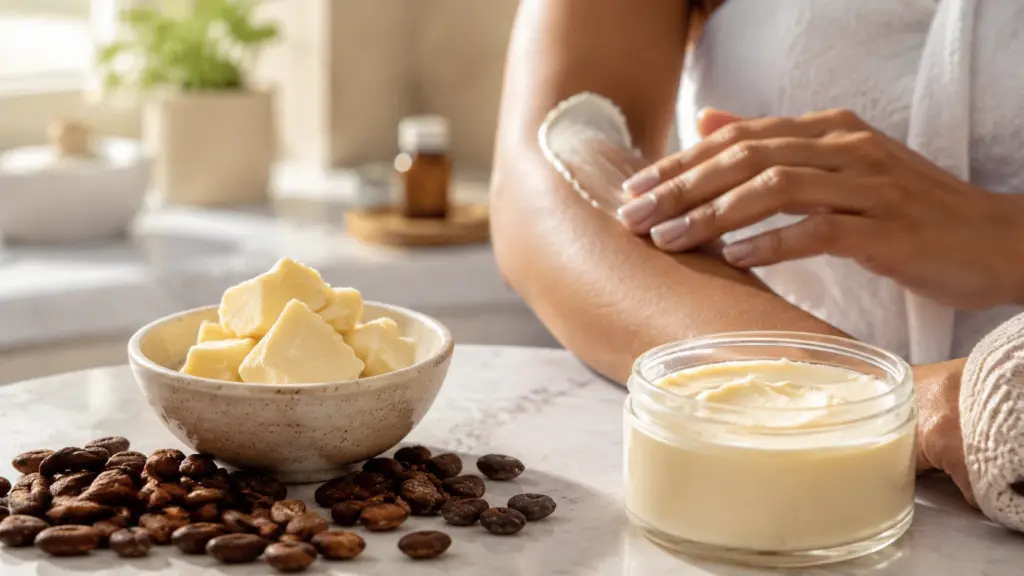
Cocoa butter is the natural fat extracted from cacao beans, the same beans used to make chocolate. Solid at room temperature, it melts on warm skin and has a balm-like texture.
It works mainly as an emollient and occlusive ingredient, helping soften rough skin while slowing moisture loss from the surface, which lines up with how most moisturizers work. That makes it especially useful for dry areas such as elbows, knees, hands, and heels.
Dry facial skin may also tolerate cocoa-butter formulas well, but oily or acne-prone skin often does better with lighter, non-comedogenic moisturizers.
A small amount is usually enough because pure cocoa butter can feel heavy. If a label says “cacao butter,” it refers to the same ingredient. Overall, cocoa butter suits skin best when its richness matches the skin type, body area, and product texture.
What are the Benefits of Cocoa Butter for Skin?
Cocoa butter is mainly valued for moisture support, softness, and comfort. Its rich texture can help dry skin feel smoother while supporting areas that need extra care.
1. Moisturizes Dry Skin
Cocoa butter contains fatty acids that help soften dry skin and improve its surface texture. Its rich consistency works especially well in creams, balms, and body butters designed for persistent dryness.
Applied regularly, it can make rough areas feel smoother and reduce the tight sensation that often appears when skin lacks enough moisture. This same richness needs a gentler hand on facial skin, since oil-prone areas respond differently than elbows or knees.
2. Helps Reduce Moisture Loss
Cocoa butter forms a light protective layer over the skin, which can slow water from evaporating too quickly. This makes it useful after bathing or washing, when moisture can leave the skin more easily.
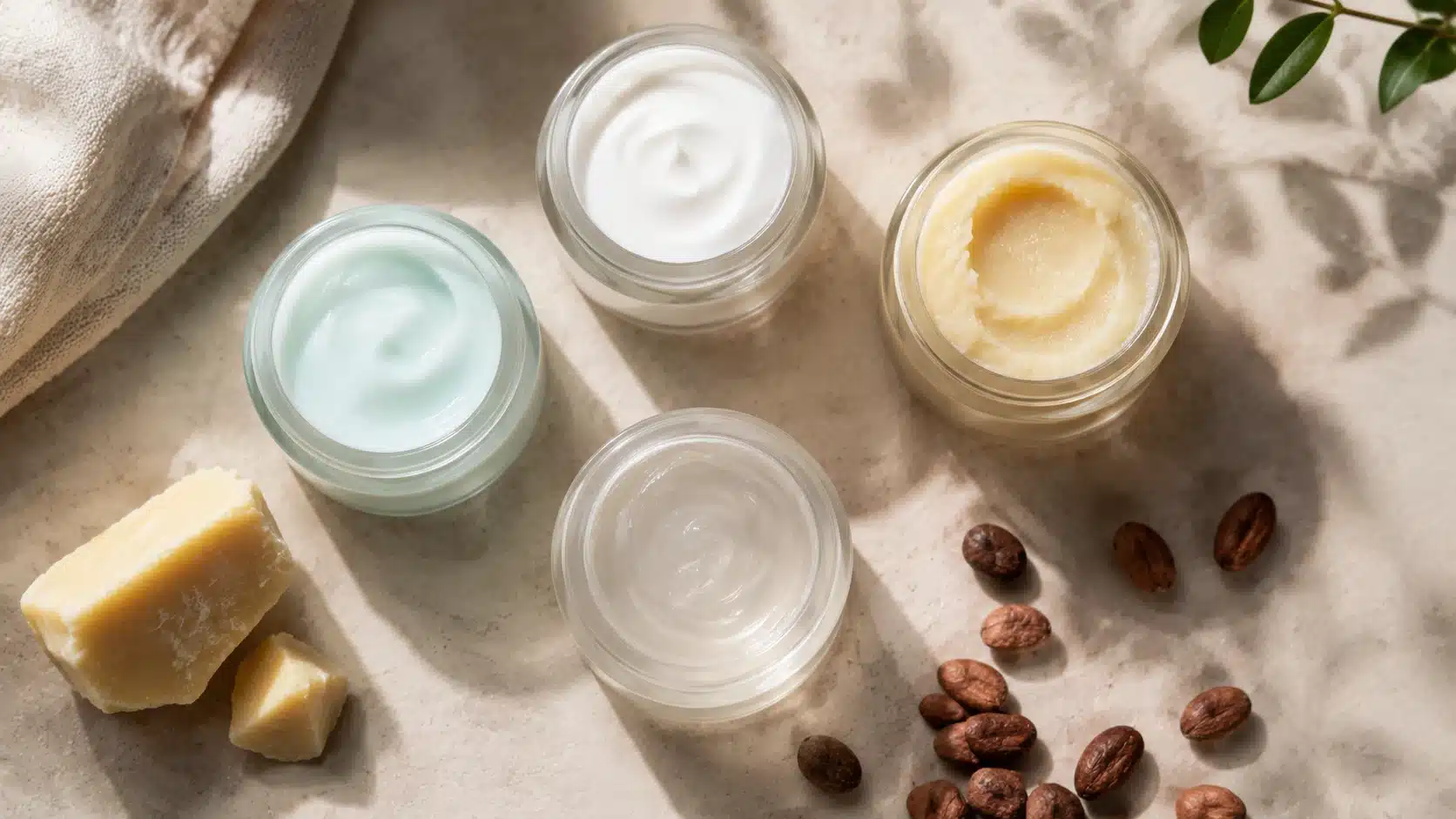
Applying it while the skin is still slightly damp can help maintain softness and reduce that dry, stretched feeling. Shea butter offers a comparable effect, though the two differ in texture when placed side by side.
3. Softens Rough Body Areas
Areas such as elbows, knees, heels, and hands often become rough because of friction, frequent washing, and dry weather. Cocoa butter provides a thicker layer of moisture that can soften these spots over time.
Regular application works best, especially after bathing, when the skin is clean and able to hold moisture more effectively. This same body-focused approach often comes up for expecting mothers’ skin, where comfort and elasticity both matter.
4. Helps Keep Lips Moisturized
Cocoa butter is commonly included in lip balms because it helps soften dry, chapped lips and reduce moisture loss. Its smooth texture creates a comfortable coating that protects lips from feeling tight or flaky.
Simple formulas without strong fragrance or flavoring may suit people who prefer gentler lip-care products.
5. Supports The Skin Barrier
Dry skin often feels uncomfortable when its natural protective barrier doesn’t hold moisture efficiently. Cocoa butter can support this barrier by supplying emollient fats that fill gaps between surface skin cells.
This can make the skin feel smoother, less rough, and better protected from the drying effects of wind, cold, or frequent cleansing. Shea butter works similarly, so it helps to understand its role in barrier support before choosing one.
Cocoa butter works best as a moisture-supporting ingredient rather than a treatment for every skin concern. Results depend on skin type, climate, product formula, and consistent use.
Which Skin Types Can Use Cocoa Butter?
Skin type matters here more than most benefit lists let on. The honest answer is that “best skin type for cocoa butter” depends less on a single label and more on how dry your skin runs and how easily you break out. Dry skin itself is a common adult skin condition, not a rare or unusual complaint.
| Skin Type | How Well It Fits | What To Do |
|---|---|---|
| Dry and very dry skin | Strong match | Use on tight, flaky, or rough areas, especially on the body. |
| Normal skin | Useful when extra richness is needed | Save it for dry weather or rough areas rather than using a heavy layer everywhere. |
| Sensitive skin | Depends on the formula | Check for fragrance and other added ingredients, then patch test first. |
| Combination skin | Better for targeted use | Apply mainly to dry areas instead of oily zones. |
| Oily and acne-prone skin | Use with extra care | Choose lighter, non-comedogenic facial products and reserve heavier cocoa butter for dry body areas. |
A little caution and skincare tips for acne-prone skin here go a long way toward avoiding an unwanted reaction, and knowing where you fall on this table makes it much easier to decide how and where to use cocoa butter.
How to Use Cocoa Butter on Your Skin
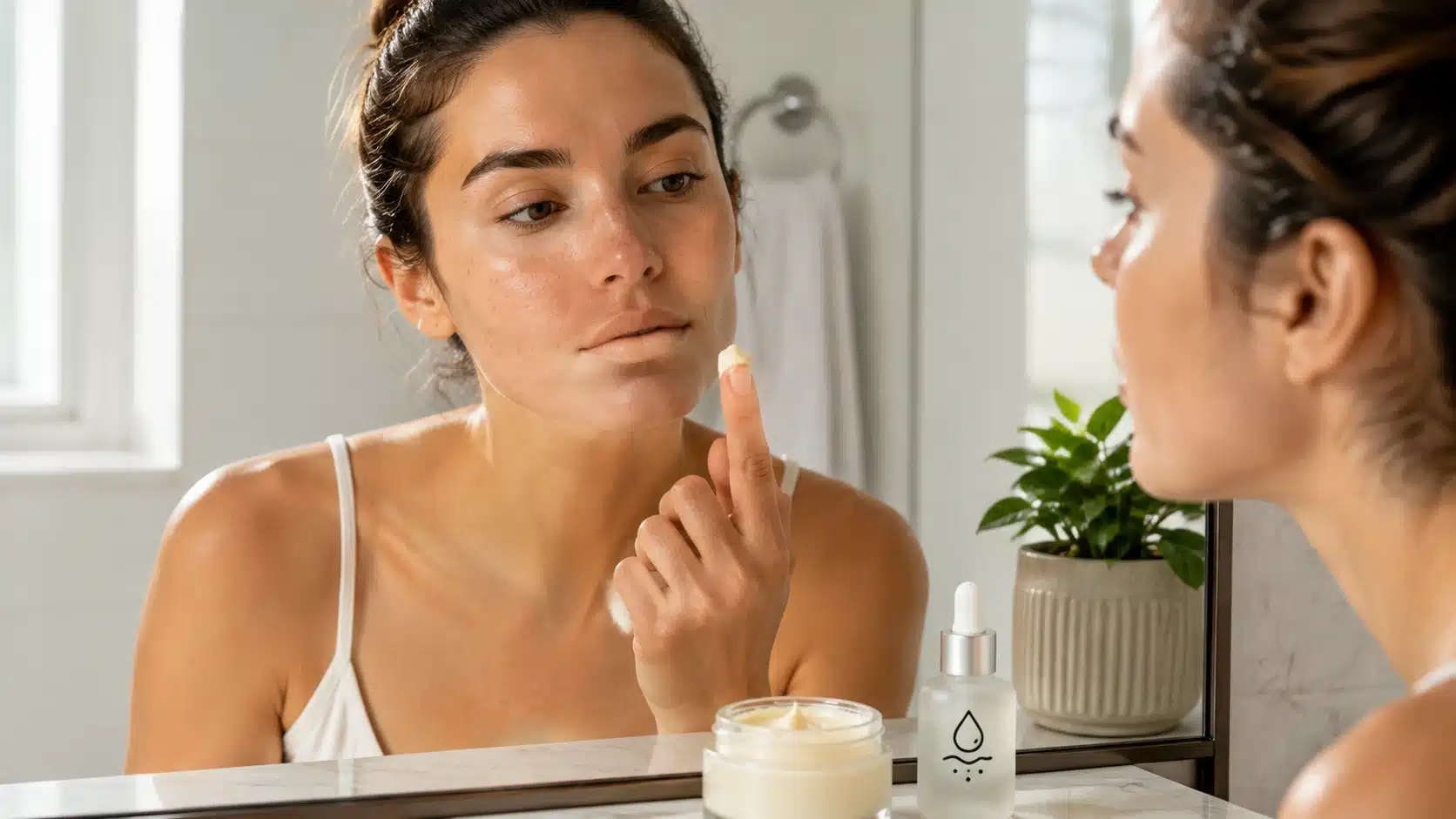
Using cocoa butter the right way helps lock in moisture without making skin feel overly greasy. Timing, amount, and placement matter most.
Step 1: Apply After Washing: Use cocoa butter on slightly damp skin after a shower, bath, or hand wash to help retain moisture.
Step 2: Warm A Small Amount: Rub pure cocoa butter between the palms until it softens, then apply a thin layer. Lotions and creams usually spread more easily.
Step 3: Focus on Dry Areas: Apply mainly to elbows, knees, heels, hands, and other rough spots instead of coating areas that already feel comfortable.
Step 4: Adjust The Frequency: Use daily if needed for dry body skin. Reapply when dryness returns, and reduce use if irritation, bumps, or congestion appear.
A small amount used consistently is usually enough. Adjust the frequency based on dryness and skin response so the routine stays comfortable and practical.
What Results Can You Expect From Cocoa Butter?
Cocoa butter gives its clearest results through moisturization. Looking at results by timing helps separate realistic changes from claims hydration alone cannot reasonably deliver.
- Soon after application: Skin may feel softer, smoother, and less tight because the surface has been coated with emollient fats.
- With regular use: Dry areas can stay more comfortable when you reapply cocoa butter consistently, particularly after bathing or handwashing.
- What may vary: Absorption, greasiness, and comfort depend on the formula, climate, body area, and individual skin type.
- What not to expect: Moisturized skin can look smoother, but hydration alone does not remove scars, prevent stretch marks, or correct dark spots.
Those expectations make it easier to judge cocoa butter fairly. Its value is strongest when the goal is maintaining softness and moisture, not treating structural or pigment-related skin changes.
Cocoa Butter Claims vs. Reality: Stretch Marks, Scars, and Dark Spots
This is where marketing often outruns the evidence, so it’s worth slowing down and separating what’s proven from what’s just popular. Here’s how cocoa butter actually holds up against some of its most common claims.
| Claim | What the Evidence Shows | What to Expect Instead |
| Stretch marks | A randomized, placebo-controlled trial found no significant reduction in pregnancy-related stretch marks. | Moisturized skin may feel more comfortable, but it won’t reliably prevent marks. |
| Scars | No evidence cocoa butter heals or removes scar tissue | Softer, hydrated skin may look slightly smoother around a scar, but only temporarily |
| Skin tone (dark spots) | No solid evidence cocoa butter evens out skin tone in either direction | Use it for moisture, not brightening or tone correction |
| Acne marks | Can be pore-clogging, which may worsen breakouts | A lighter, non-comedogenic product is a safer choice for acne marks |
While cocoa butter can help keep skin soft and moisturized, research does not show that it prevents stretch marks.
Does Cocoa Butter Have Any Side Effects?
Most people use cocoa butter products without major problems, but reactions can happen.
Breakouts: rich formulas may be uncomfortable for acne-prone facial skin, so non-comedogenic options are safer bets when congestion is a concern.
Irritation: fragrance and other ingredients in a finished product can cause stinging, redness, or itching. Fragrance remains a well-documented trigger behind many cosmetic skin reactions
Patch testing: apply a small amount to a limited area before broader use, then watch for an unwanted reaction. Cleveland Clinic also recommends spot-testing cocoa butter before regular use.
Stop using it if swelling, persistent rash, significant itching, or worsening breakouts appear. See a dermatologist if very dry skin cracks, bleeds, burns, or remains painful despite moisturizing, because an underlying skin condition may need treatment.
The goal is simple: comfortable skin without new irritation, congestion, or discomfort. A product that works well on the body may still feel unsuitable on facial skin.
Tips for Getting Better Results with Cocoa Butter
A few small application habits can make cocoa butter easier to use while helping dry skin stay comfortable without leaving an unnecessarily heavy or greasy finish.
- Apply cocoa butter to slightly damp skin after bathing or washing to help retain moisture.
- Start with a small amount and add more only if the skin still feels dry.
- Warm pure cocoa butter between the palms before applying so it spreads more evenly.
- Focus on rough areas such as elbows, knees, heels, hands, and shins.
- Use lighter cocoa-butter formulas on areas where heavy textures feel uncomfortable.
- Reduce use or stop application if redness, itching, bumps, or congestion develops.
Consistent application matters more than using large amounts. Pay attention to how the skin feels and adjust the quantity, frequency, and product texture when needed.
Common Mistakes When Using Cocoa Butter
Cocoa butter is easy to use, but a few common habits can reduce comfort or lead to unrealistic expectations. Knowing these mistakes helps keep application practical.
| Common Mistake | Why It Matters |
|---|---|
| Using too much | Can leave skin greasy. |
| Using body butter on the face | May feel too heavy for acne-prone skin. |
| Expecting stretch-mark removal | Cocoa butter is not proven to remove stretch marks. |
| Ignoring other ingredients | Fragrance or additives may cause irritation. |
| Continuing after breakouts | Redness, itching, or bumps may signal poor tolerance. |
Better results come from using the right amount, choosing a suitable formula, and stopping when skin reacts. Cocoa butter should support comfort, not create new problems.
Final Thoughts
Cocoa butter earns its long-standing popularity honestly: it’s a simple, effective way to soften dry skin and lock in moisture, especially on rough spots like elbows, knees, and heels.
Where it falls short is in the bigger promises: stretch mark removal, scar fading, and tone correction just aren’t backed by strong evidence, and it’s not the best pick for acne-prone or oily skin.
And if you’re still deciding between rich plant butters for your routine, try patch-testing both cocoa butter and shea butter on a small area this week to see which one your skin actually prefers.
Ready to give your skin the moisture it’s been missing? Browse our full collection of cocoa butter and shea butter body care to find the texture that best fits your routine.
Frequently Asked Questions
Can You Put Sunscreen Over Cocoa Butter?
Yes. Apply cocoa butter or another moisturizer first, let it settle, then use sunscreen as the final skincare step before makeup. Choose broad-spectrum, water-resistant SPF 30 or higher and apply enough product for proper coverage on exposed skin each day.
Does Cocoa Butter Expire?
Yes. Cocoa-butter products can eventually change in smell, texture, or quality, and finished formulas may have shorter recommended use periods because they contain additional ingredients. Check the package date or period-after-opening symbol and discard products that smell noticeably rancid or unusual.
Can Cocoa Butter Be Used After Shaving?
It can be used after shaving if the skin tolerates the formula and there are no cuts or active irritation. A fragrance-free cocoa-butter moisturizer may feel more comfortable on dry skin, while heavily scented products can sting freshly shaved or reactive areas.
Can You Mix Cocoa Butter with Body Lotion?
Yes, although mixing products in the hand is usually more practical than altering the lotion container. A small amount of softened cocoa butter can add richness to a lighter body lotion, especially on dry areas, but the blend may feel heavier.