Hair extensions can look fresh for weeks, months, or much longer, but how long the last depends on what you’re measuring. How long do hair extensions last often means two things: time before a maintenance appointment and total time before the extension hair needs replacing.
Tape-ins may need attention after several weeks, while reusable human-hair pieces can stay in rotation for months. Clip-ins follow a different pattern because they come out after each wear.
The useful answer, then, is not one fixed number. It comes from matching the extension method with realistic upkeep, hair quality, styling habits, and signs of wear.
The sections below separate those timelines so you can judge maintenance dates and replacement needs with far less guesswork.
How Long Do Hair Extensions Last?
Hair extensions do not have one fixed lifespan because two timelines matter: maintenance and total hair use. The maintenance timeline tells you when extensions need to be moved up, tightened, removed, or reapplied as natural hair grows.
The second timeline is how long the extension hair itself stays soft, full, and reusable before replacement makes sense.
For example, tape-ins may need maintenance after several weeks, while the same hair can often be reused across multiple appointments if it remains in good condition.
Clip-ins work differently because they are removed after each wear and are judged more by total use than salon visits.
Extension type, hair quality, natural growth, styling habits, washing, heat exposure, and aftercare all influence lifespan. So, always separate maintenance time from replacement time when comparing extension options.
Lifespan of Hair Extensions by Type
Not every extension method ages in the same way. Some require frequent repositioning, some stay attached for months, and removable options are judged mainly by total wear.
1. Tape-In Extensions
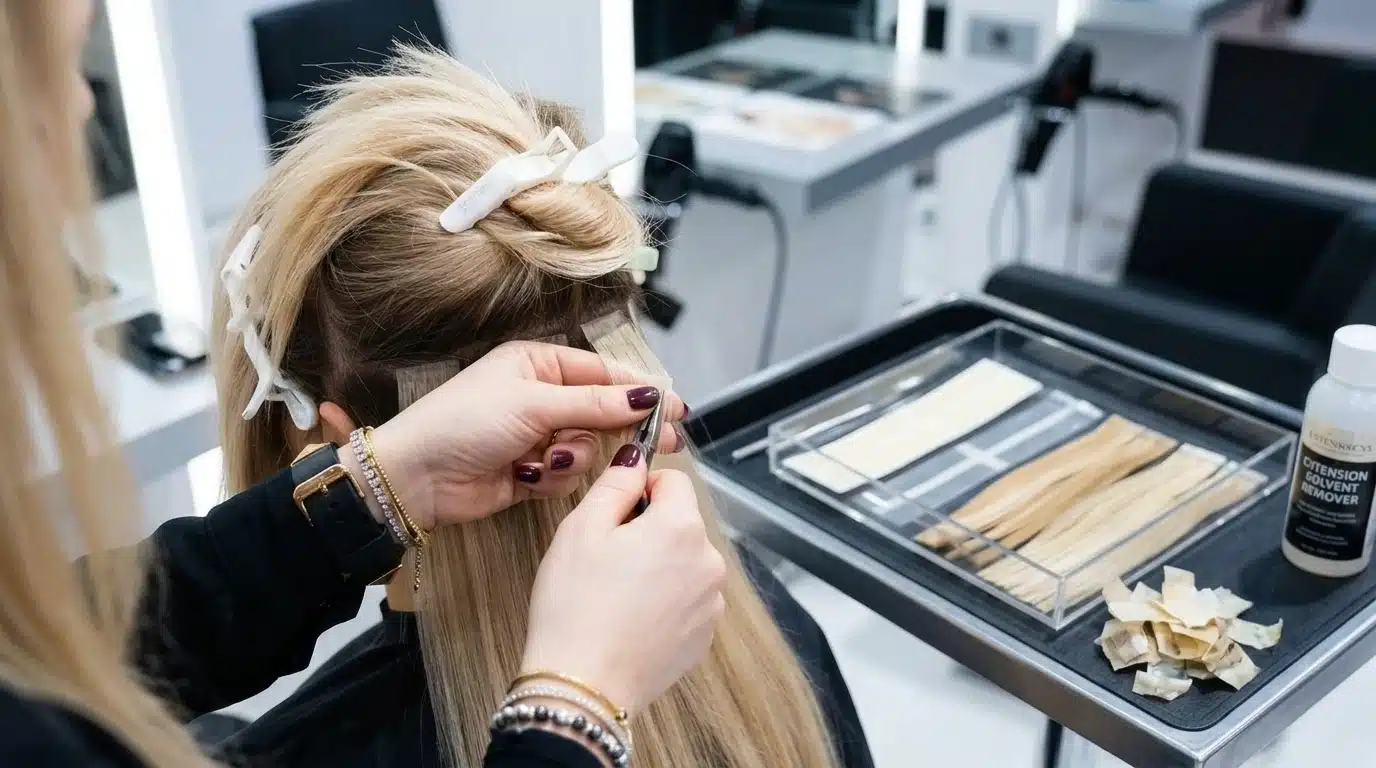
- Maintenance: commonly around 6–8 weeks
- Reusable hair lifespan: often several installation cycles
Tape-ins attach small sections of extension hair using adhesive tabs, and each attachment method requires a slightly different maintenance rhythm. As natural hair grows, those tabs move farther from the scalp and need professional removal and reapplication.
The important distinction is that maintenance does not necessarily mean new hair. The extensions may be cleaned, fitted with fresh tape, and reused if their condition allows it. Oils and unsuitable products around the tabs can contribute to slipping
2. Sew-In Weaves
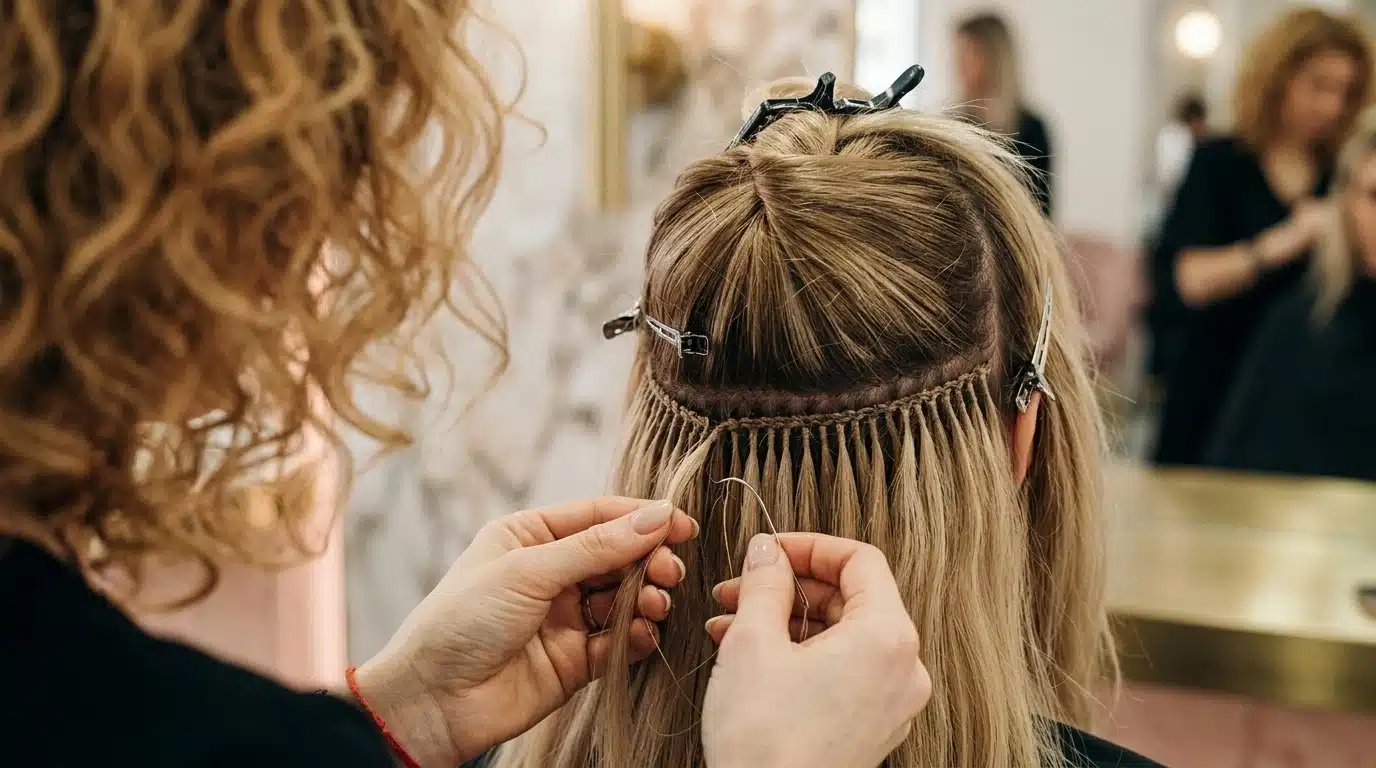
- Maintenance: commonly around 6–10 weeks
- Reusable hair lifespan: depends on hair quality and condition
Sew-in extensions are attached to a prepared braided base, giving the weft a secure foundation. As natural hair grows, the installation eventually needs to be removed and reinstalled.
Good-quality extension hair may be suitable for reuse, but there is no reliable twelve-month guarantee for every set. Density, shedding, matting, processing, and everyday handling determine how many installations the hair can reasonably handle
3. Hand-Tied Wefts
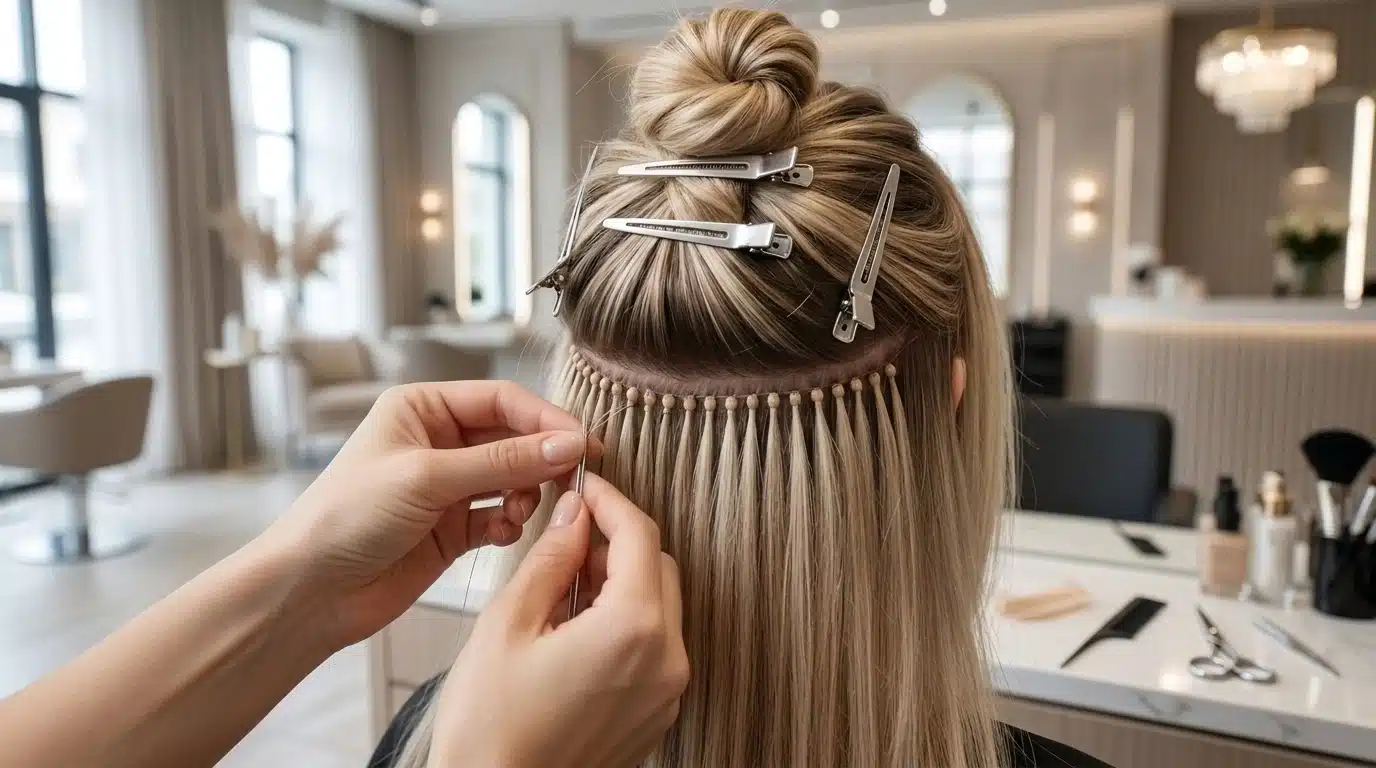
- Maintenance: often around 7–10 weeks, depending on the system
- Reusable hair lifespan: commonly several months
Hand-tied wefts are attached along professionally installed rows and can be moved upward as natural hair grows. The extension hair itself may remain usable through several appointments when shedding and dryness stay manageable.
Hair density matters here, so fine hair should not automatically be treated as a good candidate, though options for finer strands do exist. A stylist should match the weight and placement to the natural hair rather than choosing a method by hair thickness alone.
4. Keratin Fusion Bonds
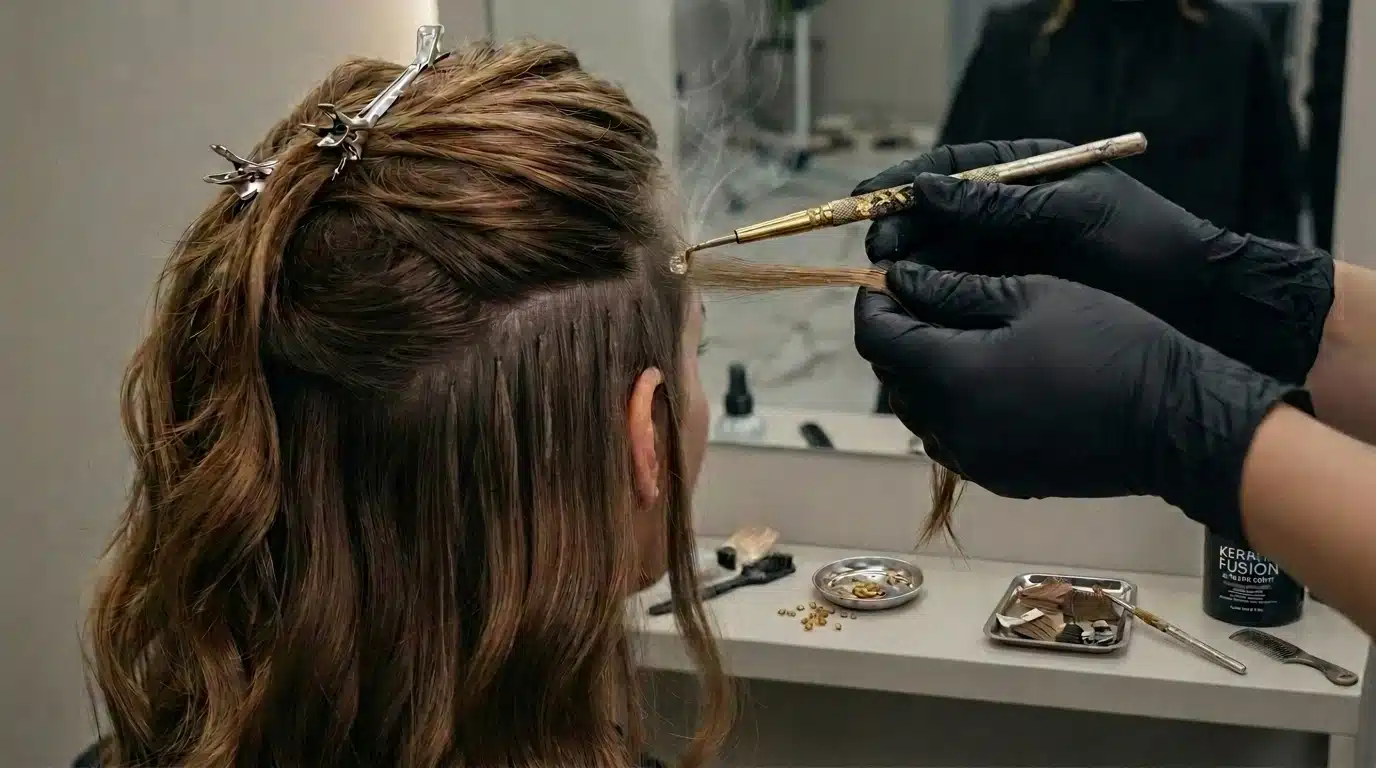
- Installation lifespan: commonly around 3–4 months, sometimes longer
- Reusability: varies by system
Keratin or K-tip extensions attach individual strands using small bonded tips. Since each strand moves downward as natural hair grows, the installation eventually reaches a point where professional removal is needed.
The original bonds are not simply moved upward like tape tabs. Depending on the extension system, removed hair may be discarded or professionally re-tipped, so confirm reusability before installation rather than assuming it, as each bonding method differs in this regard.
5. Micro-Link and I-Tip Extensions
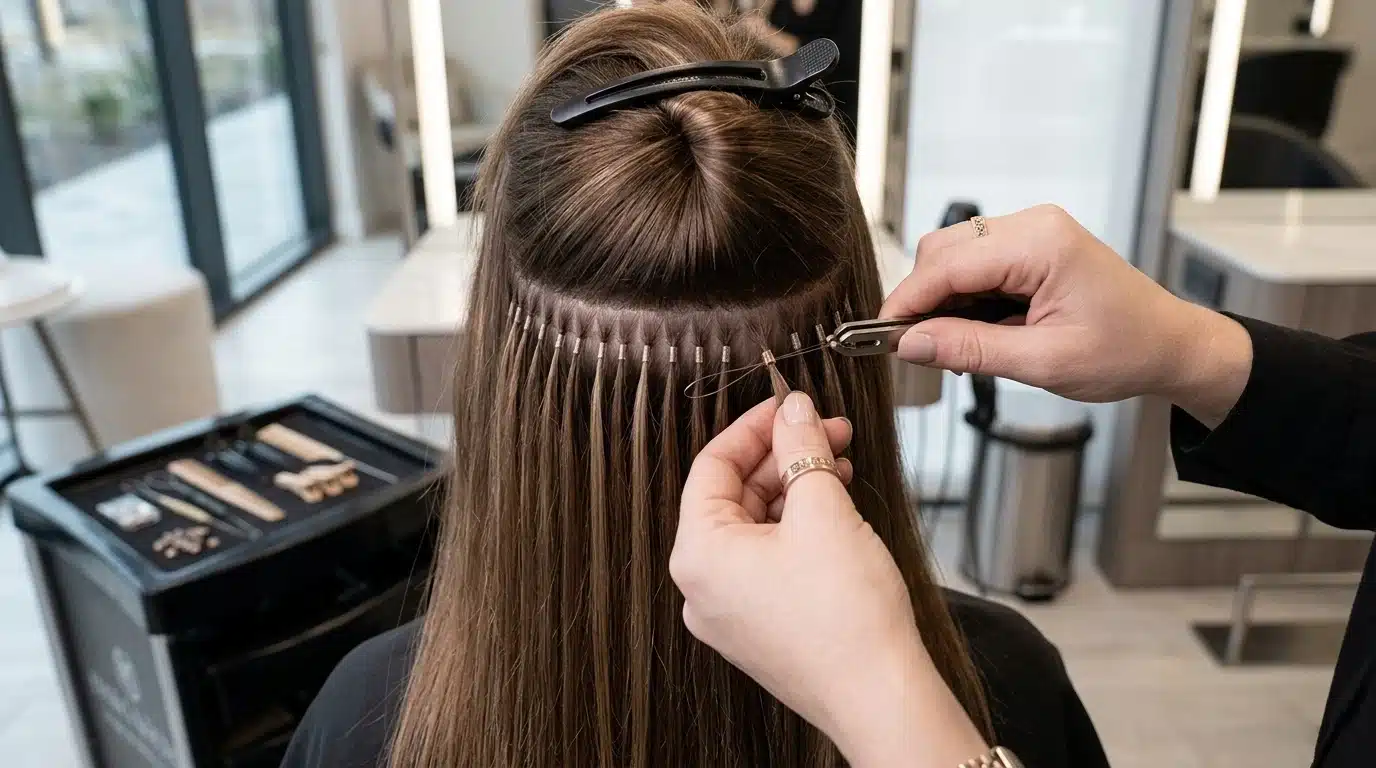
- Maintenance: removed after each wear
- Reusable hair lifespan: commonly several months or longer
Clip-ins change the lifespan equation because they are not continuously installed. They avoid daily sleeping friction and do not need move-up appointments.
Frequently worn sets usually age faster than pieces reserved for occasional use. Current professional extension sources commonly place human-hair clip-ins in the several-month range, with longer use possible when wear is limited and care is consistent
6. Clip-In Extensions
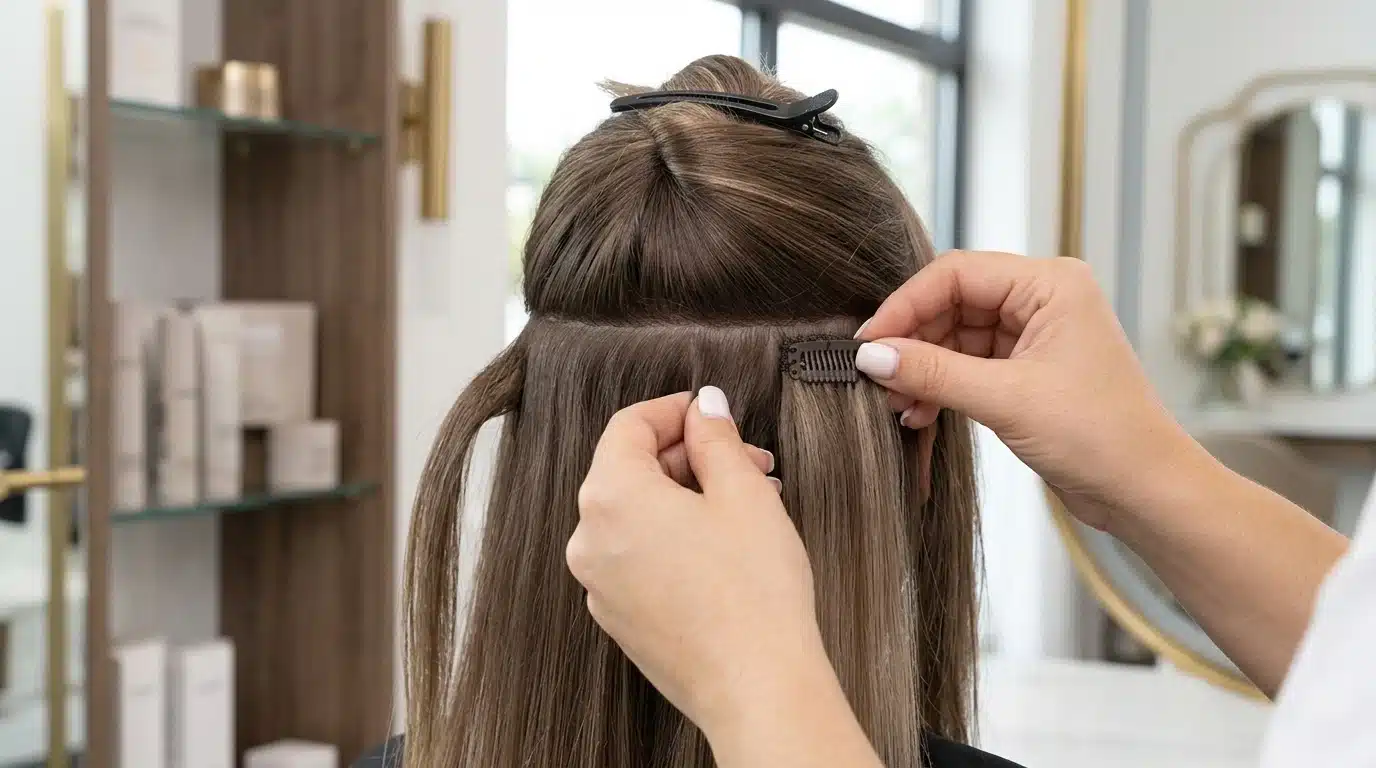
- Maintenance: removed after each wear
- Reusable hair lifespan: commonly several months or longer
Clip-ins change the lifespan equation because they are not continuously installed. They avoid daily sleeping friction and do not need move-up appointments.
Frequently worn sets usually age faster than pieces reserved for occasional use. Current professional extension sources commonly place human-hair clip-ins in the several-month range, with longer use possible when wear is limited and care is consistent.
What Affects Extension Longevity?
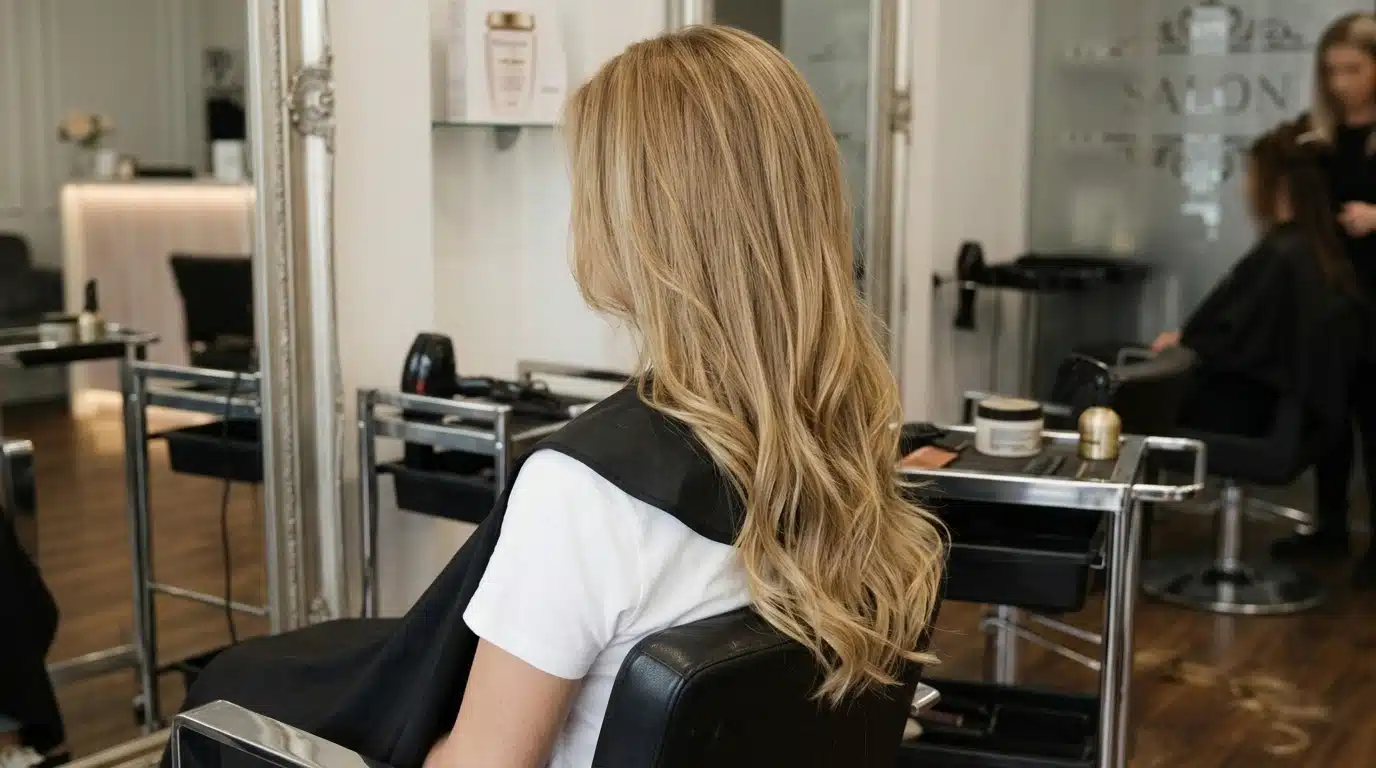
The type you pick sets the baseline, but everyday factors can push that number up or down.
Two people with the same tape-in set can get completely different results depending on habits, and this is usually the part salons skip over during a first consultation.
| Factor | How It Affects Longevity |
|---|---|
| Hair quality | Better-quality human hair generally tolerates repeated wear and styling better than lower-quality or heavily processed hair. |
| Application quality | Poor placement, excessive weight, or too much tension can cause discomfort, slipping, or stress on natural hair. |
| Natural hair growth | Faster growth moves attachment points away from the scalp sooner, bringing maintenance dates forward. |
| Wear frequency | Daily use exposes extension hair to more brushing, friction, styling, washing, and product buildup. |
| Aftercare routine | Brushing technique, cleansing, drying, and product choices influence tangling, dryness, and attachment stability. |
| Heat and chemical processing | Frequent high heat, bleaching, coloring, and other processing can reduce the usable condition of extension hair. |
None of these factors work alone; it’s usually a combination that decides whether your set hits the low end or the high end of its range.
How to Care for Hair Extensions so they Last Longer
Keeping hair extensions in good condition comes down to a few consistent habits. Gentle handling, suitable products, controlled heat, and timely maintenance can all support longer wear.
Dos
- Brush gently from the ends upward while supporting the roots.
- Follow the washing routine recommended for the extension type.
- Keep heavy oils and conditioners away from tapes or bonds, as needed.
- Detangle before bed and dry attachment areas properly.
- Use heat protectant and the lowest suitable heat setting.
- Book maintenance when attachments grow out, slip, or become more visible.
Don’ts
- Scrub tapes, bonds, beads, or rows aggressively.
- Follow the same washing schedule for every extension method.
- Sleep with wet extensions or removable clip-ins.
- Apply repeated high heat directly to attachment points.
- Ignore persistent pain, scalp tenderness, headaches, or breakage.
- Delay maintenance just because the extension lengths still look healthy.
Combining extensions with additional chemical treatments deserves extra caution, since some heat-activated smoothing treatments can affect hair condition more than expected.
Human Hair vs. Synthetic Extensions: Which Lasts Longer?
Human hair extensions usually make more sense when repeated styling, longer use, and potential reuse matter. In the US, extensions generally fall under federal cosmetics oversight, covering labeling, chemical content, and flammability.
They can often be washed and styled more like natural hair, although individual product instructions still apply.
Synthetic hair follows different rules. Heat tolerance, washing methods, texture retention, and expected lifespan vary according to the fiber. It generally offers less styling flexibility than human hair and may need replacement sooner with frequent use.
Processing matters within the human-hair category too. Remy, virgin, chemically processed, bleached, and colored hair should not automatically be given the same lifespan.
For buyers planning regular wear, checking both fiber quality and attachment method gives a more useful lifespan estimate than looking at either one alone.
Choosing the Right Type for You
No single extension method wins for every routine. Country-of-origin labeling on hairpieces also falls under federal labeling requirements, worth checking when comparing sellers.
| If The Priority Is… | Options Worth Discussing | Why |
|---|---|---|
| Occasional length or volume | Clip-ins or halo extensions | Removed after wear with no move-up schedule |
| Continuous wear with reusable hair | Tape-ins or suitable weft systems | Hair may be reused across appointments |
| Longer installed wear | K-tips or selected link systems | Can remain fitted for several months |
| Avoiding adhesive | Micro-links or I-tips | Use bead-based attachments instead |
| Lower salon commitment | Clip-ins or halos | No scheduled repositioning appointments |
| Fine or lower-density hair | Professional consultation first | Weight and placement need to match natural hair carefully |
Hair type alone should not decide the method. Comfort, density, scalp condition, attachment weight, and willingness to keep maintenance appointments matter just as much. Professional assessment is especially useful before choosing a continuously worn system
Final Thoughts
Hair extensions can last well when the type, maintenance schedule, and daily care all work together. If you are asking how long do hair extensions last, the answer depends on both installation time and the condition of the extension hair.
Some methods need regular move-ups, while removable options follow a different wear cycle. Hair quality, brushing, washing, heat use, storage, and timely salon visits also affect how long a set stays manageable.
I recommend watching the attachment points and overall hair condition instead of relying only on a fixed timeline.
That makes it easier for you to know when maintenance or replacement is actually needed. Have experience with extensions? Share your routine in the comments or check out our related hair care blogs.
Frequently Asked Questions
How Much Do Hair Extensions Typically Cost?
Costs vary widely by type and salon, generally ranging from around $100 for clip-ins to several thousand for full fusion sets. Ask your stylist for exact pricing.
Does Removing Hair Extensions Hurt?
Professional removal shouldn’t hurt if done correctly. DIY removal, especially of glued or fused methods, risks pulling natural hair and should be avoided.
Do Synthetic Extensions Last as Long as Human Hair Ones?
No. Synthetic fibers degrade faster, can’t handle heat styling, and typically last one to three months versus several months or longer for human hair.
Does Humidity or Swimming Affect How Long Extensions Last?
Yes. Chlorine, salt water, and high humidity dry out strands and loosen adhesives faster, often shortening the time between maintenance appointments.