

Scroll through any skincare thread, and you’ll find split opinions on using hand soap in the shower.
In my aesthetician practice, the question comes up more than you’d think, usually from someone who ran out of body wash and grabbed the nearest bottle by the sink. Some people say it works just fine.
Others notice dryness, tightness, or discomfort once they start using it regularly. The real answer depends on the formula, your skin type, and how often you reach for it.
Hand soap and body wash both clean skin, but their ingredients, pH balance, and moisture support are built for different jobs, and that difference is what decides how your skin feels afterward.
Hand Soap vs Body Wash: What is the Difference?
Hand soap and body wash can look interchangeable on the shelf, but the formulas are built for different tasks. I ask new clients to check three things before I even look at their skin: cleansing strength, pH balance, and how much moisture the formula leaves behind.
It’s a question I hear in different forms too, like whether reaching for shampoo instead works out any better.
Difference | Hand Soap | Body Wash |
|---|---|---|
Purpose | Made mainly for cleaning hands | Made for full-body cleansing |
Formula | Often focuses on removing dirt and oils | Usually includes gentler cleansers and skin conditioners |
pH Balance | Some formulas may feel more drying | Often designed to support skin comfort |
Moisture | May provide less hydration after washing | Often contains moisturizing ingredients like glycerin |
The biggest factor isn’t just the product name, but how the formula interacts with your skin. A gentle hand soap may work occasionally, since the CDC’s guidance on handwashing ties it to quick germ removal rather than full-body cleansing and moisture support.
Why Skin pH Actually Matters Here
Skin’s surface sits on the mildly acidic side, which helps it hold onto moisture and keep out bacteria and irritants. Many hand soaps, especially bar soaps and antibacterial liquid formulas, are made more alkaline on purpose because that higher pH helps break down oil and grime faster on hands.
That’s the mechanism behind the “tight” feeling people describe after using hand soap in the shower. A more alkaline cleanser can temporarily disrupt the skin’s protective acid layer, which is why the effect shows up faster on thinner or already-dry skin
In my practice, I tell clients that tightness isn’t in their head. It’s their skin’s protective layer being nudged out of its comfort zone by a cleanser built for a tougher job than the one it’s doing.
This is also why the difference is more noticeable with daily use than with a one-off shower: your skin barrier can bounce back from an occasional disruption, but repeated exposure gives it less time to recover between washes. If that tightness lingers, healing a compromised skin barrier takes more than switching soaps once.
Can You Use Hand Soap as Body Wash Every Day?

Using hand soap as a body wash once in a while is different from making it your everyday shower cleanser. Daily use depends on the product formula, your skin type, and how your skin reacts after repeated washing. Some people may notice no issues, while others may experience dryness, tightness, or irritation over time.
1. Check the Ingredients Before Using It
I tell my clients to flip the bottle over before they turn on the shower. A formula with moisturizing ingredients like glycerin tends to feel gentler, while soaps with strong surfactants or heavy fragrance are more likely to leave skin feeling uncomfortable after a full-body rinse.
Looking beyond the label helps you understand whether the soap suits regular body use and whether it supports your skin’s moisture needs.
2. Consider Your Skin Type First
Your skin type plays a major role here. In my own experience testing cleansers on myself and on clients, normal or oily skin tolerates occasional hand soap use better, especially for anyone already keeping oil production in check with a dedicated routine, while dry or sensitive skin shows discomfort sooner, sometimes within a single shower.
A cleanser that removes dirt without disturbing the skin’s moisture balance is usually a better choice for frequent showers and long-term comfort.
3. Switch Back to Body Wash When Possible
Hand soap can solve a short-term problem, but body wash is made for regular full-body cleansing. My own rule of thumb, the one I pass on to clients too, is simple: once I have a real body wash back in the shower, I switch that day, not “eventually.”
A product made for the body is usually easier to match with your skin needs and daily routine.
Is Hand Soap Safe for Sensitive Skin?

Sensitive skin often reacts differently to hand soap, since many formulas are made for frequent, short hand washes rather than sustained contact over larger areas. If your skin feels uncomfortable after use, which MedlinePlus links to contact dermatitis, it likely isn’t the right fit for regular showers.
- Choose gentle formulas: Look for moisturizing ingredients and fewer potential irritants if your skin runs dry or reactive.
- Avoid strong fragrance: Heavily scented soaps are a common trigger for reactive skin.
- Watch for reactions: Stop use if you notice redness, itching, burning, or increased dryness.
- Protect your moisture barrier: If your skin already feels compromised, start with a damaged-skin-barrier repair routine before reintroducing any stronger cleanser, including hand soap.
A body wash designed for sensitive skin is my go-to recommendation for anyone in this camp, since it’s formulated for regular use on larger areas of skin rather than quick contact on hands.
What People are Saying Online About Using Hand Soap as Body Wash
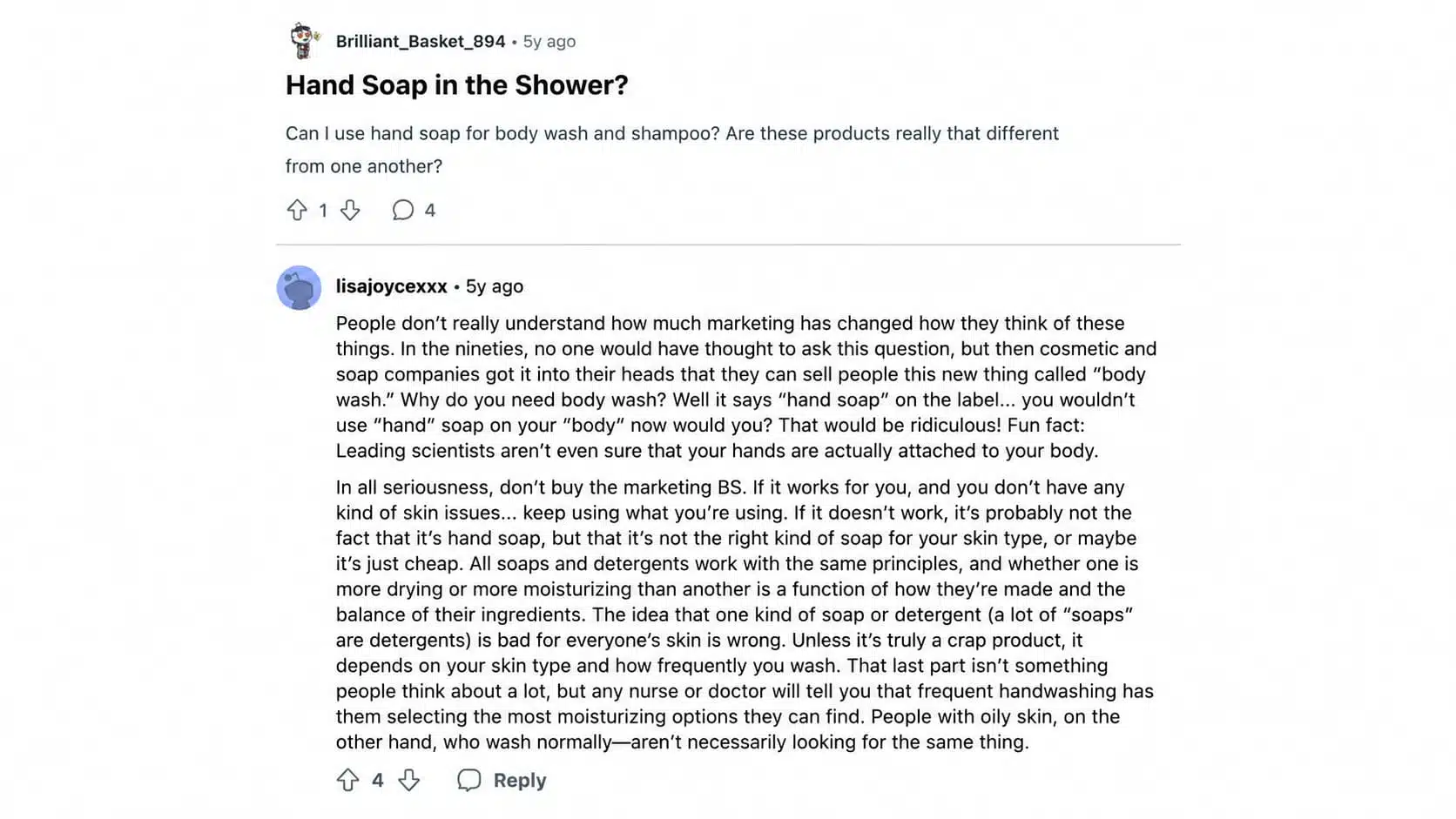
Many people online have discussed whether hand soap works in the shower, and opinions are mixed.
In Reddit discussions, some users say hand soap works fine because it still cleans skin, while others point out that the formula, fragrance, and how their skin feels afterward matter more than the product label.
Others shared that they use hand soap, bar soap, or similar cleansers in the shower because they prefer the scent, feel, or simplicity.
Some users also noted that they would avoid certain hand soaps because they can feel drying, especially when used regularly over larger areas of skin.
The general takeaway from these discussions is that people often see hand soap as a workable backup rather than a perfect replacement for body wash.
Note : Reddit opinions reflect real user experiences, not professional skincare advice, so ingredients and your skin type should still guide your choice.
What Should You Use Instead of Hand Soap as Body Wash?

If you need a regular shower cleanser, a product made for the body is the better long-term choice. When clients ask me what to switch to, I steer them toward these four categories first, then narrow down based on their skin type.
- Gentle Body Wash: A mild body wash is designed for full-body use and can remove sweat, dirt, and oils while being easier on the skin during regular showers.
- Fragrance-Free Cleanser: If your skin is sensitive or easily irritated, a fragrance-free option may help reduce the chance of dryness or discomfort.
- Moisturizing Cleanser: Look for ingredients like glycerin, ceramides, or oils that help support the skin’s moisture barrier after washing.
- Dermatologist-Recommended Options: People with ongoing dryness, irritation, or sensitive skin may benefit from cleansers recommended for their specific skin concerns.
Choosing a cleanser based on your skin’s needs rather than convenience can make your shower routine more comfortable and help maintain healthier-looking skin.
Common Mistakes When Choosing a Body Cleanser
These are the mistakes I see most often at the sink, not just in the shower. Picking a cleanser by scent or marketing alone often leads to a mismatch with your actual skin needs.
Mistake | Better Approach |
|---|---|
Choosing only by scent | Check ingredients and how your skin reacts after use |
Using the strongest cleanser available | Pick a formula that cleans without leaving skin uncomfortable |
Ignoring dryness or irritation | Switch products if skin feels tight, itchy, or dry |
Assuming expensive means better | Focus on ingredients and suitability for your skin type |
A good body cleanser removes dirt while keeping skin comfortable, and in my book, that’s the only claim on the bottle that actually matters.
Can You Use Hand Soap as Body Wash While Traveling?
I’ve done this myself more than once, packing light and forgetting body wash, then relying on whatever’s by the hotel sink. Running out of body wash mid-trip is one of the most common real-world reasons people reach for hand soap, and it’s also the scenario where it works best.
- Hotel or guest stays: Hand soap works fine as a temporary stand-in when no body cleanser is available.
- Short trips: A few showers with hand soap is a different situation from replacing body wash long term.
- Check the formula: Gentler, moisturizing hand soaps feel noticeably more comfortable than stronger cleansing formulas.
- Switch back when possible: Returning to your usual body wash helps your skin settle back into its normal routine.
For travel, hand soap is a genuinely useful backup, in my experience, as long as I treat it as a temporary fix rather than a permanent swap.
Final Thoughts
So, can you use hand soap as body wash? My honest take, after years of hearing this question in consultations: yes, but it works best as a short-term solution rather than a permanent one. For occasional situations like travel or when you run out of body wash, it gets the job done.
Regular use is a different story, and it comes down to your skin type and the formula you reach for. Pay attention to how your skin feels afterward. Dryness, tightness, or irritation are your skin’s way of telling you it needs a cleanser built for the job.
Choose a cleanser that keeps your skin comfortable, not just one that removes dirt. Your skin’s response is the best indicator of what belongs in your routine.
Frequently Asked Questions
Can Hand Soap Dry out Your Skin?
Yes. Many hand soaps are formulated with stronger cleansing agents and a more alkaline pH than body wash, which can leave skin feeling dry or tight, especially with frequent use over larger areas like the arms, legs, or torso.
Can You Use Hand Soap on Your Face?
It’s best to avoid using hand soap as a facial cleanser. Facial skin is thinner and more reactive than body skin, and it usually needs a gentler, more targeted formula than what hand soap is designed to provide.
Is Hand Soap the Same Thing as Body Wash?
No. Hand soap and body wash can share some ingredients, but they’re formulated for different purposes. Hand soap is built to remove dirt and germs quickly from hands, while body wash is built for gentler, sustained contact with larger areas of skin.
Can You Use Hand Soap as Body Wash Long Term?
It’s not recommended for most skin types. In my practice, I’ve watched occasional use turn into a daily habit without clients noticing, and that’s usually when the complaints start. Long-term daily use can wear down your skin’s protective barrier, especially for dry or sensitive skin, leading to ongoing dryness or irritation.
Does More Lather Mean a Better Cleanser?
Not necessarily. A product that foams heavily can feel more “cleansing,” but lather comes from surfactant strength, not effectiveness or gentleness. Some of the most skin-friendly cleansers produce very little foam at all.