Noticing your hairline shift, especially in your 20s, can send you straight to the mirror in search of answers. Is this normal? Is it hair loss? Or has your hairline always sat that way?
The confusion is understandable because most people were never taught what a normal hairline actually looks like or how it changes with age.
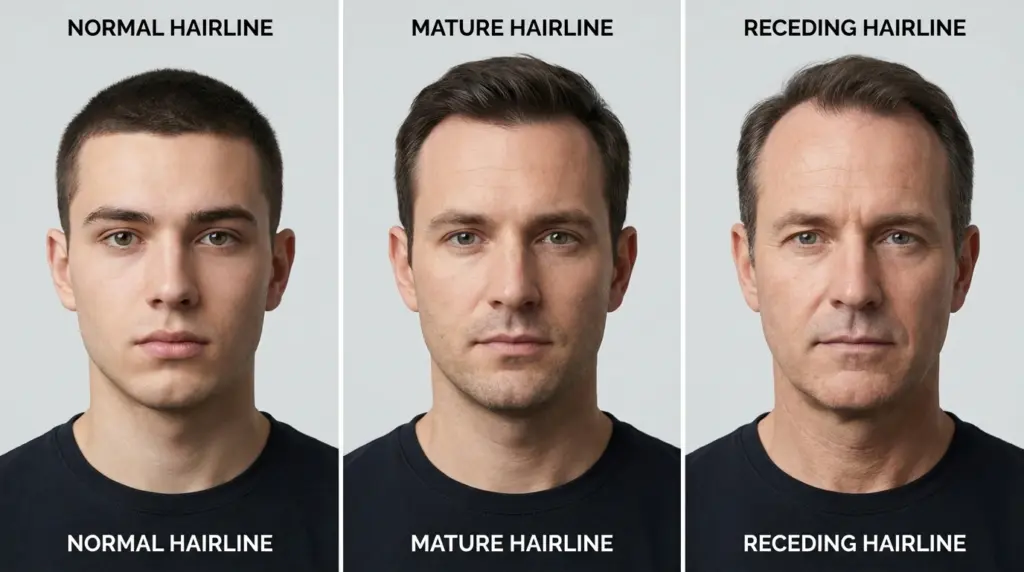
A normal, mature, and receding hairline can look surprisingly similar, but knowing the difference is important.
I work with hair every day, and this is one of the most common concerns I hear. Many people mistake a natural change in the adult hairline for hair loss, while others overlook the early signs of recession.
In this guide, I’ll explain what a normal hairline looks like at different ages, how a mature hairline differs from a receding one, and the key signs that tell them apart.
What is a Normal Hairline?
A normal hairline is the natural boundary where hair begins growing on the forehead. It typically has even density, a consistent shape, and no obvious signs of thinning or recession at the temples or crown.
Hairlines vary widely from person to person due to genetics, ethnicity, age, and natural facial structure. There is no single hairline shape that defines what is normal.
What matters most is whether your hairline remains stable over time, with consistent density and no progressive thinning.
Common Characteristics of a Normal Hairline
Most normal hairlines share a few key traits:
- Even hair density across the front and temples
- A balanced and generally symmetrical shape
- No noticeable thinning or widening at the temples
- No excessive shedding concentrated around the hairline
- A stable position that changes little over time
What a Normal Hairline Looks Like in Young Adults
During the teenage years and early adulthood, most people have their lowest and most defined hairline.
At this stage, the hairline typically sits closer to the forehead and appears as a solid, uninterrupted line of hair growth. The temples are usually full, the edges look well defined, and hair density is strong throughout the frontal area.
Between ages 17 and 21, many people begin noticing subtle changes as the hairline matures. This is often a normal developmental shift rather than true hair loss.
The key difference is that a normal or maturing hairline still maintains good density, even coverage, and no patchy areas of thinning.
Common Hairline Shapes: Straight, Rounded, Widow’s Peak
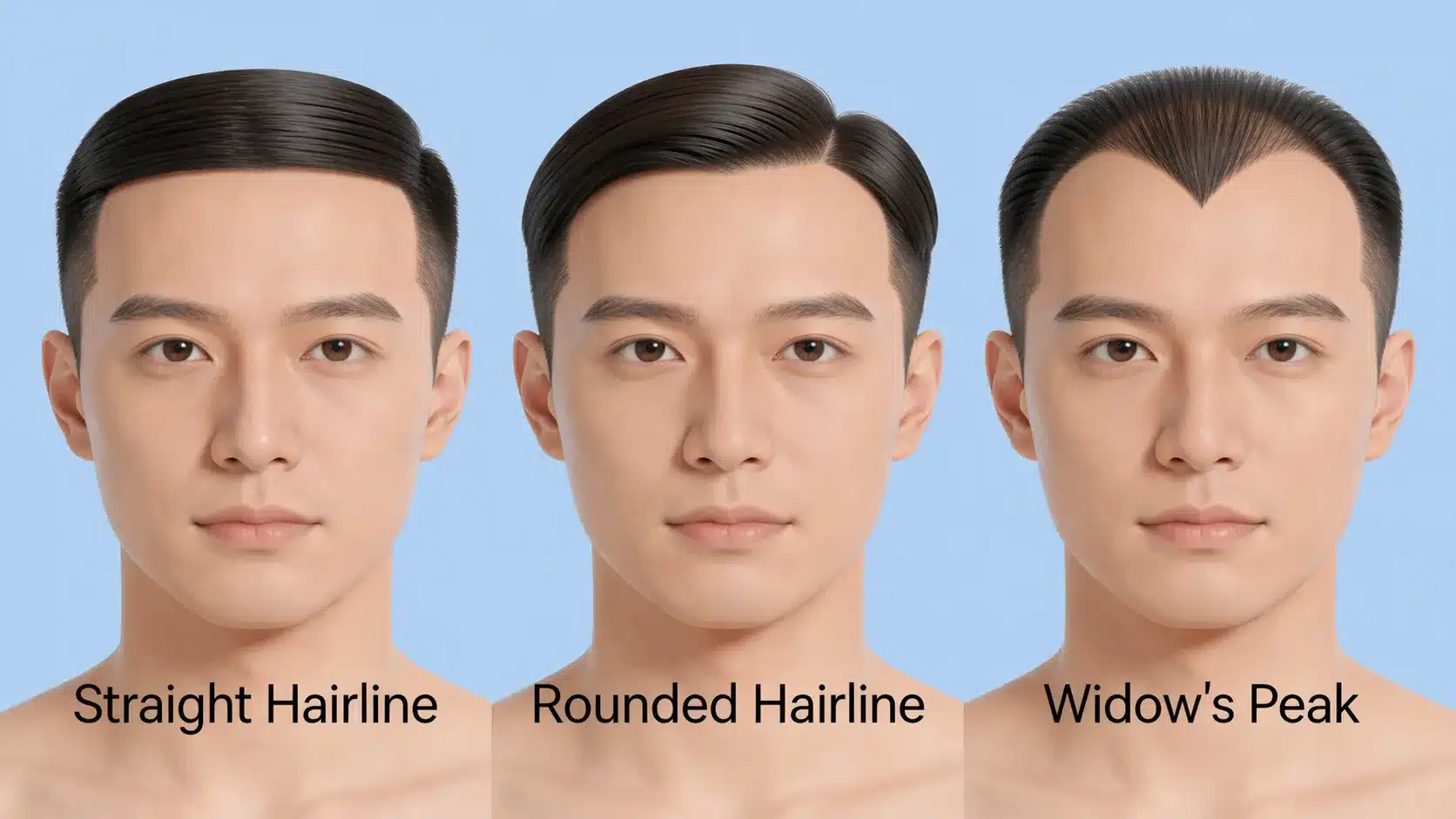
A normal hairline can take several shapes, and none of them automatically indicate hair loss. Understanding your natural hairline type gives you a baseline for spotting meaningful changes over time.
| Hairline Shape | Description | Is It Normal? |
|---|---|---|
| Straight Hairline | Forms a relatively flat line across the forehead, creating a bold and defined appearance. More common in some ethnic groups. | Yes |
| Rounded Hairline | Features a gentle curve around the temples, creating a soft and balanced look. One of the most common hairline types. | Yes |
| Widow’s Peak | Forms a V-shaped point in the center of the forehead. This is a genetic trait and not a sign of hair loss. | Yes |
Understanding your natural hairline shape is important because it serves as the baseline you’ll compare against as you age. Changes in density, symmetry, or position are often more meaningful than the shape itself.
Does Everyone Have the Same Normal Hairline?
No two hairlines are exactly alike. Genetics plays a dominant role in determining the shape, position, and density of your hairline.
If your parents had a high or receding hairline early in life, you may be more likely to experience similar changes.
Ethnicity also influences hairline characteristics.
Research suggests that men of East Asian descent often have straighter, lower hairlines, while men of African descent may have naturally higher or more rounded hairlines.
Men of European descent show the widest variation in shape and recession patterns.
What looks like a high or unusual hairline for one person may be completely normal for another based on their genetic background.
What is a Mature Hairline?
A mature hairline is a natural, non-pathological shift that typically occurs in a man’s late teens to mid-twenties.
The frontal hairline moves back slightly, usually by one to two centimeters, without ongoing progression or significant thinning.
Unlike pattern baldness, this change is driven by normal hormonal development rather than DHT-related follicle miniaturization.
Hair density remains completely intact throughout the transition.
Once established, a mature hairline stabilizes permanently, making stabilization the single most reliable indicator that what you are seeing is natural adult development and not hair loss.
The most useful thing I learned about mature hairlines is that they stop. Once established, the hairline holds its position, sometimes for decades.
That stabilization is the single, clearest indicator that what you are watching is normal adult development, not the beginning of hair loss.
Mature Hairline Age Timeline
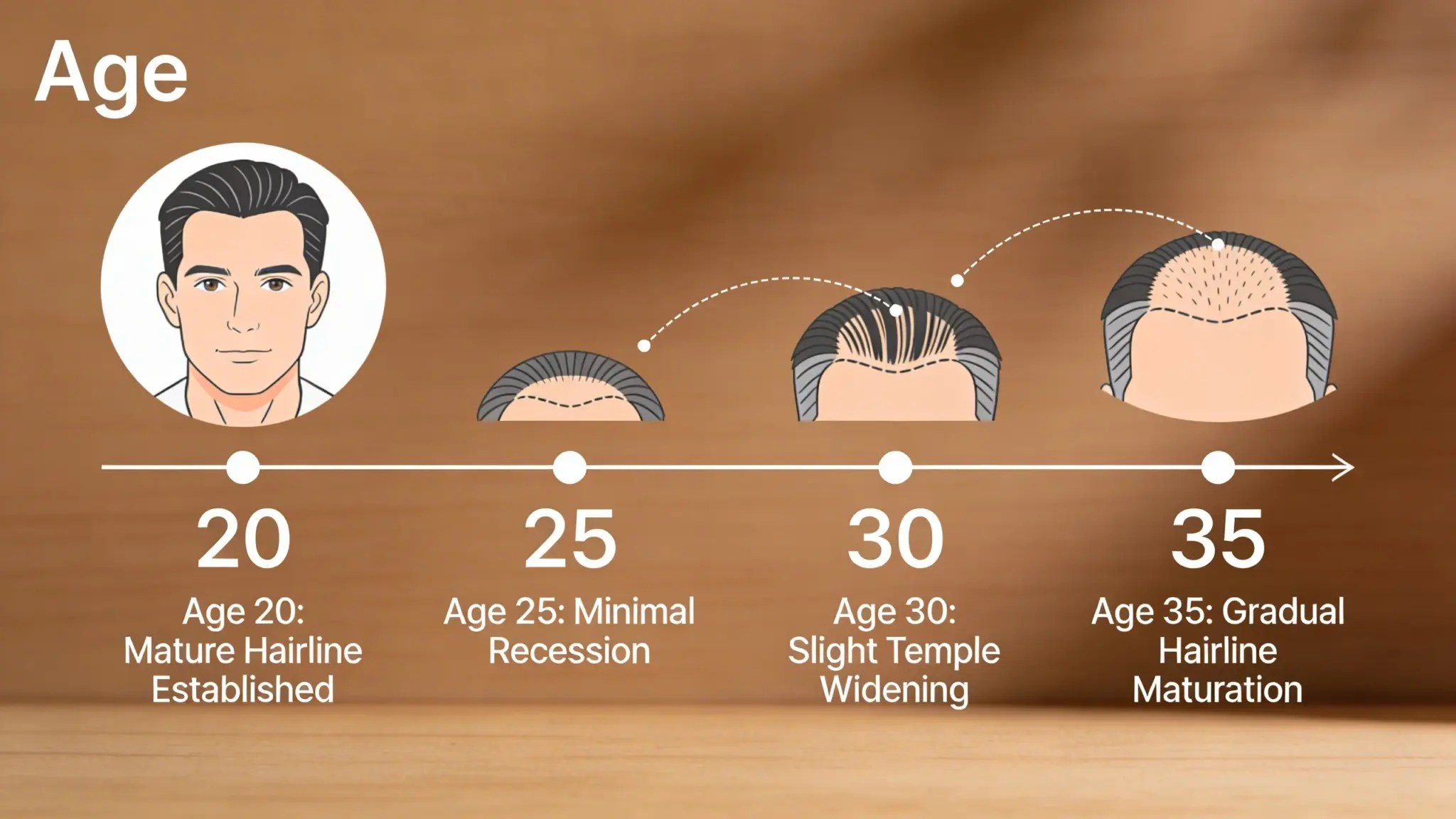
The development of a mature hairline is one of the most common and least discussed changes men experience in early adulthood. It typically begins between the ages of 17 and 25, though some men experience it slightly earlier or later.
Here is a general age-based timeline:
- Ages 17–19: Juvenile hairline begins shifting upward. A normal part of physical maturation.
- Ages 20–25: Hairline settles into its mature position. Movement slows or stops entirely.
- Ages 25–30: Stable hairline and density confirm natural maturation, not recession.
Mature Hairline Shape: Subtle M or V Pattern
A mature hairline naturally develops a soft M or V shape as the temples recede slightly during adulthood.
Unlike male pattern baldness, this recession is subtle, symmetrical, and stable. Hair throughout remains full and dense with no visible thinning or exposed scalp.
The shape alone is never the deciding factor. What truly matters is recession depth, overall hair density, and whether the pattern is holding steady or continuing to evolve over time
A mature hairline is a natural development, not androgenetic alopecia. Follicles reposition slightly but never miniaturize, maintaining full thickness and density.
Mistaking maturation for hair loss causes unnecessary anxiety, potential misuse of medications, and distraction from monitoring genuine future changes.
Recognizing the difference is both reassuring and clinically valuable.
What is a Bad Hairline?
A bad or receding hairline refers to the progressive backward retreat of the hairline caused by androgenetic alopecia.
Unlike natural maturation, it is driven by genetic sensitivity to DHT, which triggers irreversible follicle miniaturization over time. Hairs become progressively finer, shorter, and weaker until follicles stop producing altogether.
Without intervention, the process continues to advance indefinitely, following the predictable Norwood scale pattern.
Early identification is critical because treatment is significantly more effective when started before substantial miniaturization has occurred.
Signs of a Receding Hairline
Identifying a genuinely receding hairline requires looking beyond simple hairline position and paying attention to a combination of signs that, together, indicate something more than natural maturation is happening.
- The hairline continues to move back consistently past the age of 25, rather than stabilizing
- Temple recession is deeper than a subtle softening and forms a pronounced angular or M-shaped pattern
- The hairs at the temples appear visibly finer, shorter, or more translucent than hair elsewhere on the scalp
- The scalp becomes visible through the hair at the temples or along the hairline itself
One habit that cuts through the guesswork is comparing photos from the same angle every few months. You stop relying on memory and start working from actual evidence.
When I started doing this, I could see clearly that my own hairline had stopped moving. That was genuinely a relief.
M-Shape vs Deep V-Shape
An M-shape features temples that recede slightly, with a subtle, symmetrical pattern and full-density normal maturation. A deep V-shape shows dramatic, progressive recession with visible thinning, indicating potential hair loss.
Feature | M-Shape | Deep V-Shape |
Appearance | Moderate temple recession, central hairline intact | Extreme temple depth, isolated central peak |
Temple Density | Reduced but still present | Severely thinned or bare |
Norwood Stage | II to III | III vertex to IV+ |
Progression | Gradual, may slow | Continues advancing without treatment |
Treatment | Monitor, consider early intervention | Early medical treatment is strongly recommended |
What Causes a Bad Hairline?
A “bad” hairline results from genetics, hormonal changes, aging, and lifestyle factors such as stress, poor nutrition, and tight hairstyles. Medical conditions, scarring, and certain medications can also contribute to receding or uneven patterns.
Genetics is the primary factor, especially in male pattern baldness, which is inherited from both sides of the family. Hormonal changes, particularly DHT sensitivity, shrink hair follicles and shorten growth cycles, while the back and sides remain resistant.
Lifestyle habits can worsen hairline issues. Chronic stress may trigger shedding, poor nutrition weakens hair production, and tight hairstyles can lead to traction alopecia.
Medical conditions like thyroid disorders, alopecia areata, and scalp inflammation also affect hair health. Low ferritin is often overlooked. A blood test checking ferritin, thyroid, vitamin D, and zinc levels can help identify underlying causes.
How DHT and Genetics Cause Hair Loss
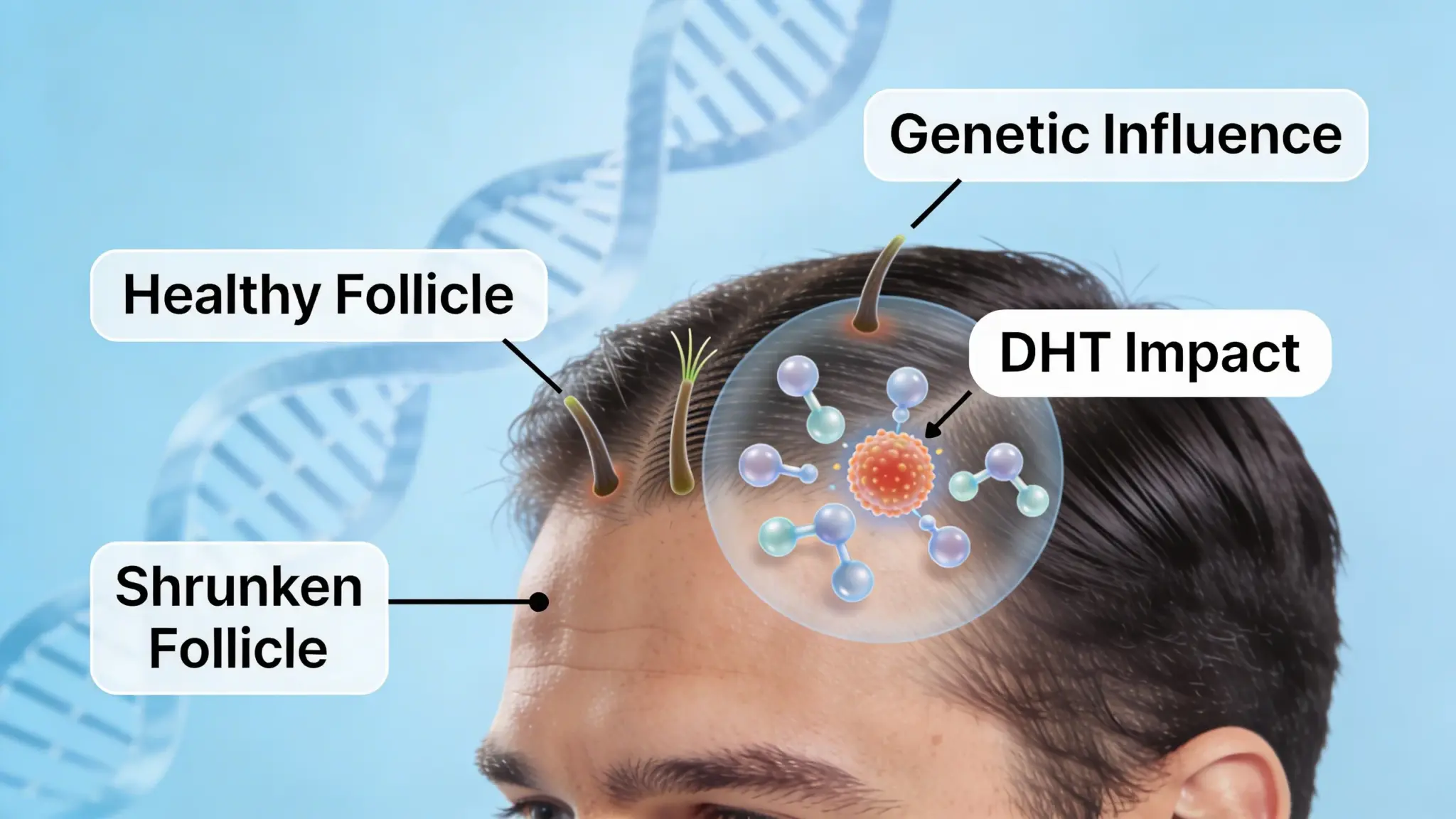
DHT is produced when testosterone is converted by the enzyme 5-alpha reductase.
In genetically sensitive individuals, DHT binds to follicular receptors along the hairline and crown, leading to progressive miniaturization.
Over time, follicles shrink, produce finer hair, and eventually stop growing altogether.
The key factor is not DHT levels but your follicles’ inherited sensitivity to it.
Two men with identical hormone levels can have completely different outcomes based purely on genetics.
Looking at hair loss patterns in your father’s and maternal grandfather’s hairline gives the most reliable early indication of your own risk.
Mature Hairline vs Receding Hairline: Key Differences
Understanding the difference between a mature hairline and a receding hairline is essential for making informed decisions. Both involve a hairline change, but they differ completely in cause, pace, impact on density, and long-term outcome.
Factor | Mature Hairline | Receding Hairline |
Speed | Gradually over 2–5 years, then stabilizes | Continuously advances without stopping |
Shape | Subtle, balanced temple softening | Deep, dramatic M-shape, increasingly asymmetric |
Hair Density | Zero change, full thickness maintained | Progressive miniaturization, hairs become finer |
Stability | Holds a position for years | Never stabilizes without treatment |
Can Women Have a Receding Hairline?
Yes, women can experience a receding hairline, though the pattern and causes are usually different from those in men.
In women, a shifting hairline is more likely to result from traction alopecia caused by tight hairstyles, frontal fibrosing alopecia (an autoimmune condition more common in postmenopausal women), or hormonal changes such as pregnancy or menopause.
Female pattern hair loss more typically presents as diffuse thinning at the crown rather than a retreating frontal hairline. Women naturally have a lower hairline than men on average, so a noticeable upward shift, particularly without an obvious styling cause, is worth discussing with a trichologist sooner rather than later.
For women exploring their options, hair implants, both non-surgical and surgical approaches, tend to be a practical option.
Tips to Maintain a Healthy Hairline
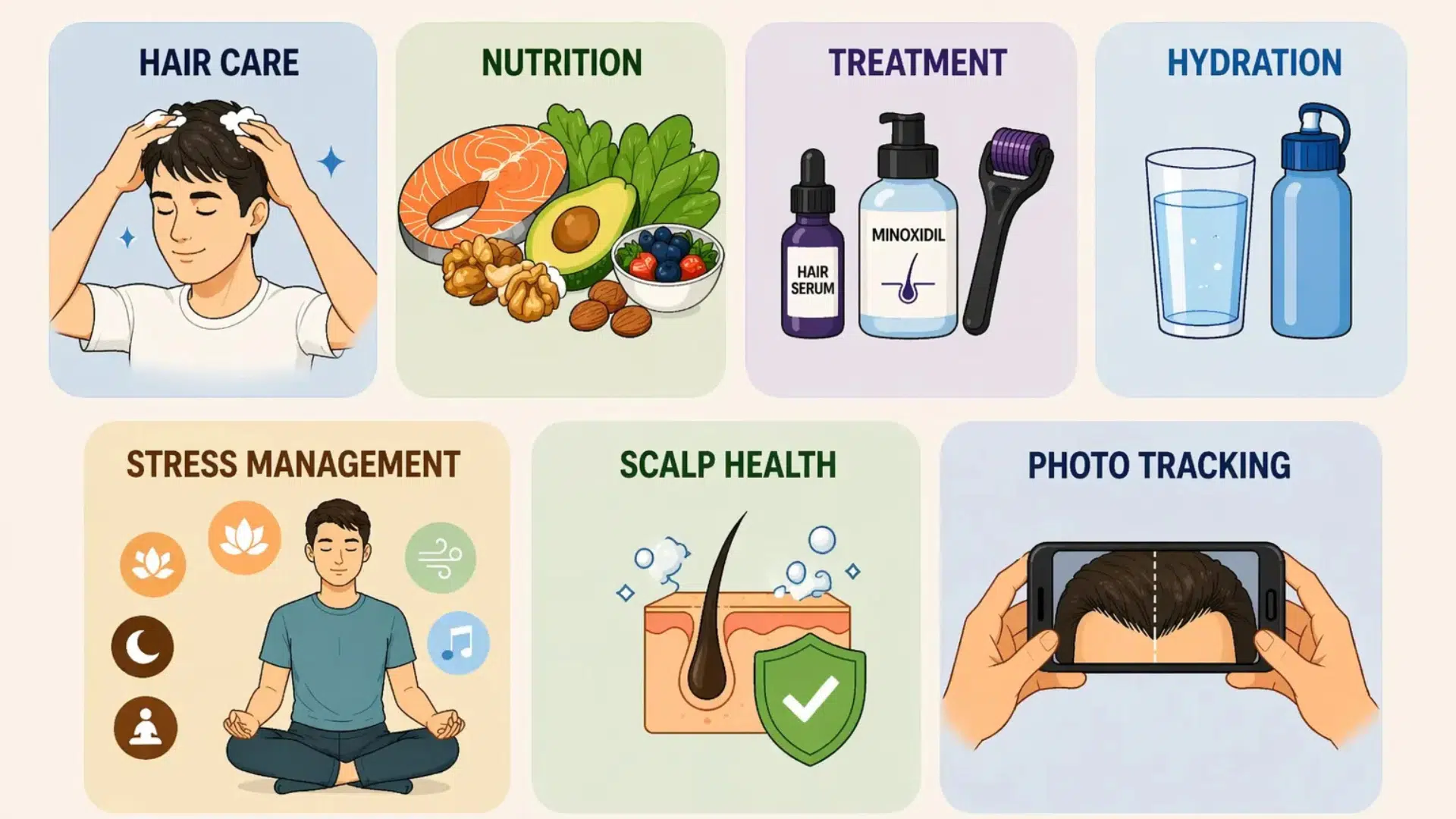
Maintain a healthy hairline by eating a nutrient-rich diet, managing stress, avoiding tight hairstyles, and staying hydrated.
Use gentle hair products, monitor changes regularly, and consult a dermatologist early if thinning or recession begins progressing.
- Hair Care: Use a sulfate-free shampoo, avoid tight hairstyles, limit heat styling, and massage the scalp regularly to promote healthy circulation.
- Nutrition: Eat foods rich in protein, iron, zinc, and vitamin D. Test for deficiencies before supplementing.
- Treatment: If the hairline continues to recede and thin for 6 months, consult a dermatologist immediately.
- Hydration: Drink adequate water daily. Dehydration weakens hair strands, reduces scalp elasticity, and slows healthy follicle function over time.
- Stress Management: Practice consistent stress-reduction habits like exercise, sleep, and meditation. Chronic stress directly triggers telogen effluvium, accelerating unnecessary hair shedding.
- Scalp Health: Keep your scalp clean and free from buildup. Seborrheic dermatitis and clogged follicles create inflammation that weakens hairline density gradually
- Photo Tracking: Photograph your hairline every two to three months in consistent lighting. Early detection of changes gives you the widest possible window for effective intervention.
Conclusion
I have spent years researching mature hairline changes, speaking with dermatologists, and working through the same confusion that brings most people to a guide like this.
What I have learned is that most men who worry about their hairline in their twenties are simply seeing a natural, mature hairline, not the beginning of pattern baldness.
Understanding the difference between a normal hairline, a mature hairline, and a genuinely receding one is essential.
It tells you whether to monitor and wait, start evidence-based treatment, or stop worrying altogether.
That clarity is genuinely valuable. The guidance here is grounded in current clinical understanding of androgenetic alopecia, DHT sensitivity, and proven treatments.
It is not a substitute for professional diagnosis. If you are seeing consistent progression, consult a dermatologist.
Frequently Asked Questions
What Foods Help Stop Hair Loss?
Eggs, spinach, salmon, nuts, and sweet potatoes support hair health by providing protein, iron, zinc, and omega-3 fatty acids. These nutrients strengthen follicles and reduce excess shedding caused by nutritional deficiencies.
What Vitamins Help Hair Regrowth?
Vitamin D, biotin, iron, zinc, and vitamin B12 are the most important vitamins for hair regrowth. Deficiencies in any of these directly contribute to increased shedding and slower follicle recovery.
What are the Big 3 for Hair Regrowth?
The big 3 are finasteride, minoxidil, and ketoconazole shampoo. Used together, they block DHT, stimulate follicle growth, and reduce scalp inflammation, making them the most clinically recognized combination for combating hair loss.