
If you’ve scrolled past enough hair care videos, you’ve probably seen someone slathering plain mayonnaise onto their hair and calling it a miracle treatment.
Is mayonnaise good for your hair, or is this just another kitchen-aisle trend that looks better on camera than it works in real life?
Below, you’ll find what’s really in that jar, exactly how to use mayo in hair if you want to try it, what other people’s real experiences look like, and the precautions worth knowing before you reach for the condiment aisle instead of the hair care aisle.
I’ve spent enough time in a barbershop chair watching clients try (and abandon) budget hair fixes to know which ones are worth the mess, so this guide sticks to what actually holds up
Is Mayonnaise Good for Your Hair?
Mayonnaise can genuinely soften and add shine to dry or damaged hair, but the evidence is mostly anecdotal rather than backed by strong clinical research.
Mayonnaise contains egg, oil, and vinegar, ingredients that individually have plausible conditioning properties for dry or damaged hair
People who use mayo in their hair regularly often report softer, shinier strands, especially if their hair tends to be dry or frizzy.
That said, most of these claims come from personal experience and beauty blogs rather than dermatology studies, so treat mayo as a low-cost experiment rather than a guaranteed fix.
What Ingredients in Mayonnaise Can Help Hair?
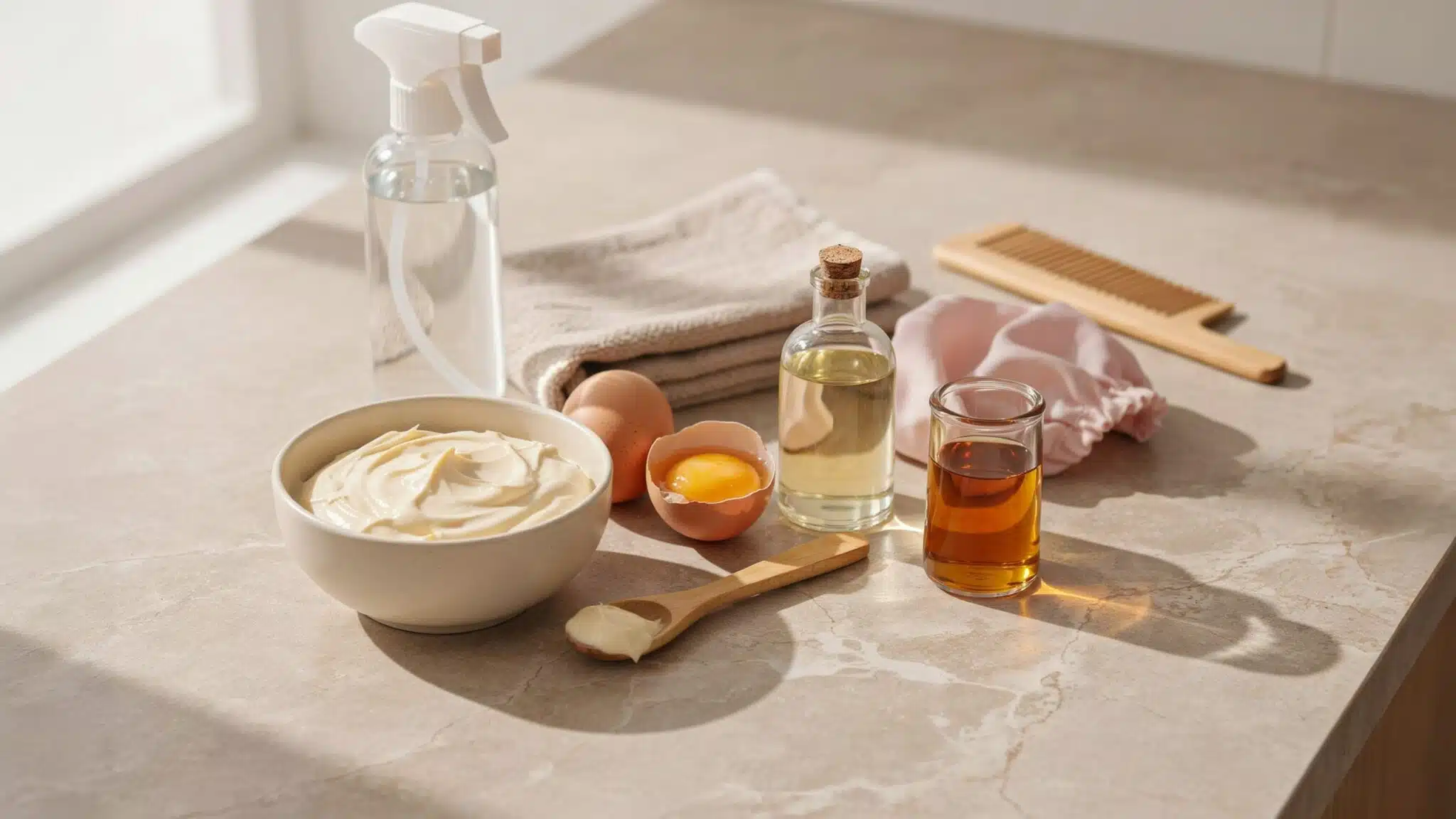
Understanding the actual ingredients makes it easier to judge if this trend has real potential for your hair type.
- Egg yolks: provide protein and amino acids that may help strengthen the hair shaft, though anyone with a known food allergy should be cautious even with topical use
- Oil (usually soybean or vegetable oil): works similarly to a deep conditioner, coating the hair and locking in moisture
- Vinegar: has mild antimicrobial properties and may help balance scalp pH, similar to how a diluted vinegar hair rinse is sometimes used
- Freshness matters here too: since mayo is an egg-based product, the FDA’s own guidance on egg safety is worth keeping in mind, since old or improperly stored mayo isn’t something you want sitting on your scalp for 20 minutes
Knowing what each ingredient actually does makes the rest of this guide, from application to frequency, much easier to follow.
How to Use Mayonnaise in Your Hair
Using mayo in hair is simple, but the way you apply it affects the results. Applying too much or leaving it on for too long can make hair feel greasy or difficult to wash.
For the best results:
- Start with clean, slightly damp hair.
- Apply a small amount of plain mayonnaise through the mid-lengths and ends.
- Avoid applying too much directly to the scalp, especially if your hair gets oily easily.
- Cover your hair with a shower cap.
- Rinse thoroughly with cool or lukewarm water.
- Shampoo afterward to remove leftover residue.
Once applied correctly, a mayo hair mask can leave your strands feeling softer and smoother. Watch how your hair responds before folding it into your regular wash-day routine.
Mayo Hair Mask Recipes You Can Try
Each method below covers the ingredients, timing, and exact steps, so you can pick the one that fits your hair type instead of guessing.
Method 1: Plain Mayonnaise Mask
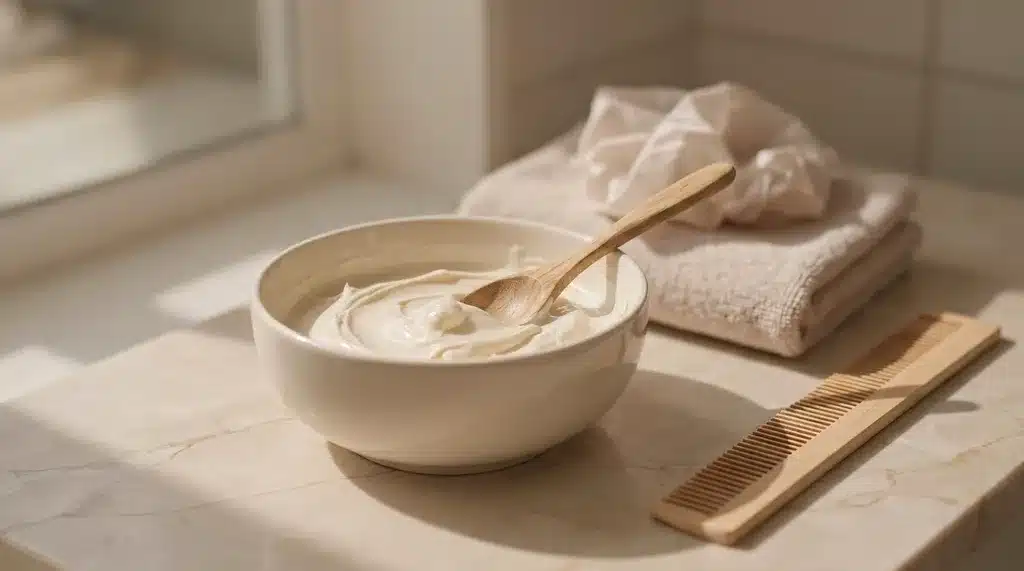
A plain mayonnaise mask is the easiest way to try mayo in hair for the first time. It works best for people who want a simple homemade conditioning treatment without adding extra ingredients.
Ingredients:
- Half a cup of plain mayonnaise
Steps to Apply:
- Apply mayonnaise to clean, damp hair, focusing on the mid-lengths and ends.
- Use your fingers or a wide-tooth comb to spread the product evenly.
- Cover your hair with a shower cap and let the mask sit for 15 to 20 minutes.
- Rinse thoroughly with cool water, then shampoo to remove any leftover residue.
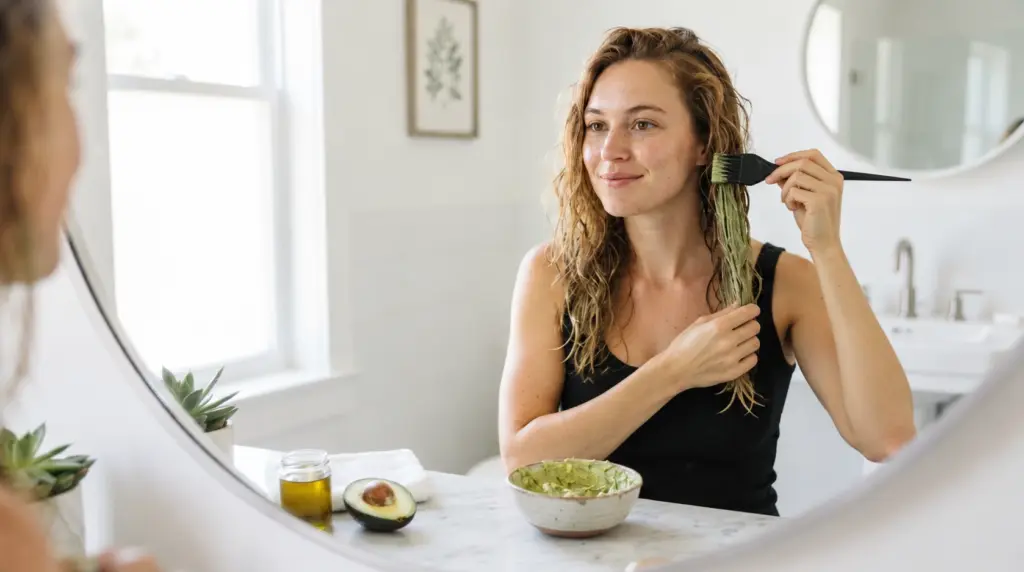
Method 2: Mayo and Avocado Mask for Dry Hair
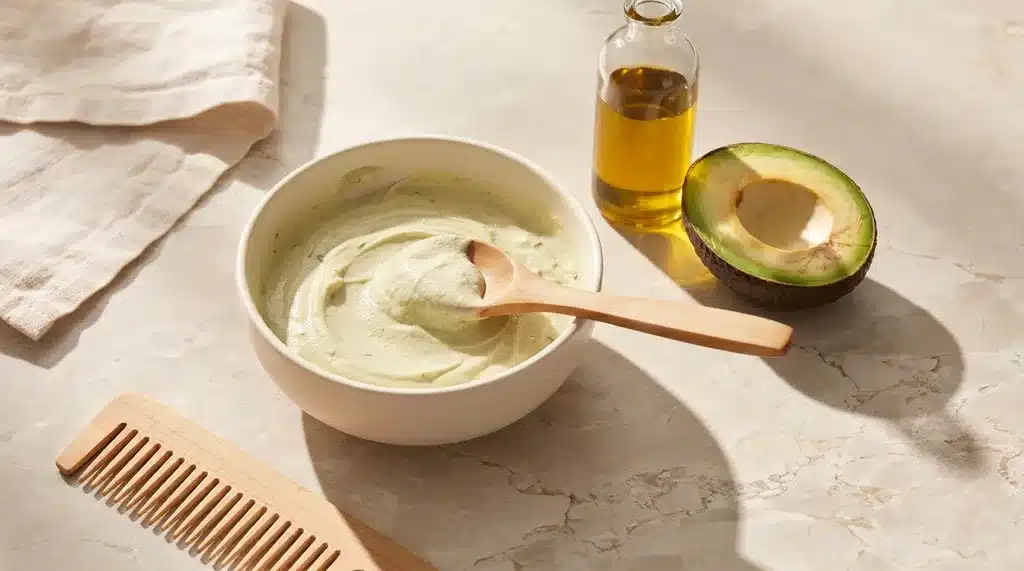
Avocado is often added to DIY hair masks because it contains natural oils and fatty acids that can help dry hair feel softer. This mask may work best for thick, coarse, or dry hair that needs extra conditioning.
Ingredients:
- ½ cup plain mayonnaise
- ¼ mashed avocado
- 1 teaspoon olive oil
How to apply:
- Mash the avocado until smooth, then mix it with the mayonnaise and olive oil.
- Apply the mixture to damp hair, focusing on the middle and ends.
- Leave it on for 20–25 minutes.
- Rinse thoroughly and shampoo to remove residue.
Method 3: Mayo and Honey Mask for Shine
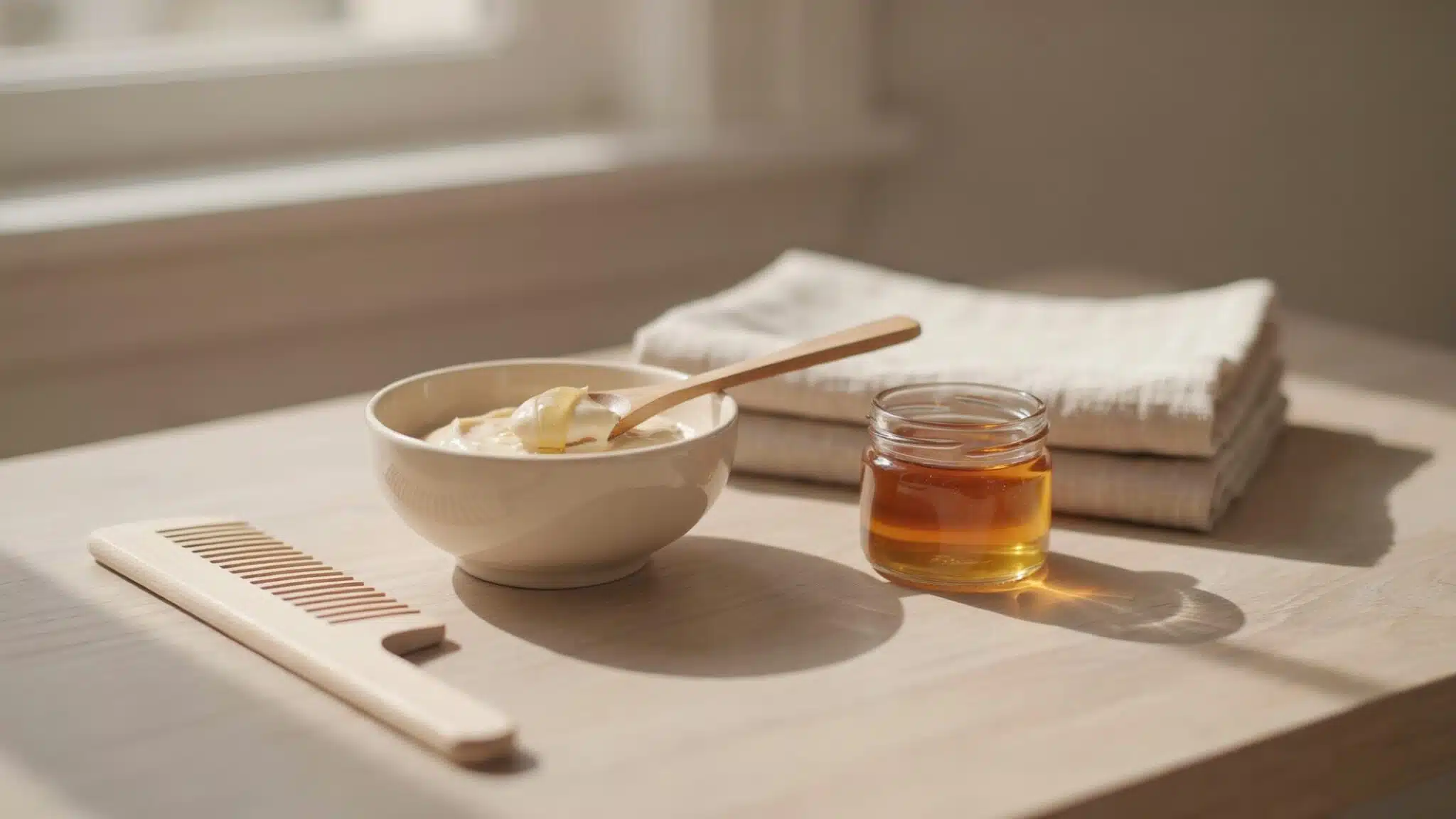
Honey is commonly used in hair care because it helps attract and hold moisture. When combined with mayo, it creates a richer conditioning treatment. This option may be better for hair that feels dull or rough rather than severely damaged.
Ingredients:
- ½ cup plain mayonnaise
- 1 tablespoon honey
How to apply:
- Mix the ingredients until evenly combined.
- Apply the mask through damp hair.
- Leave it on for 15–20 minutes.
- Rinse well to remove the sticky texture.
Method 4: Mayo and Coconut Oil Mask for Deep Conditioning
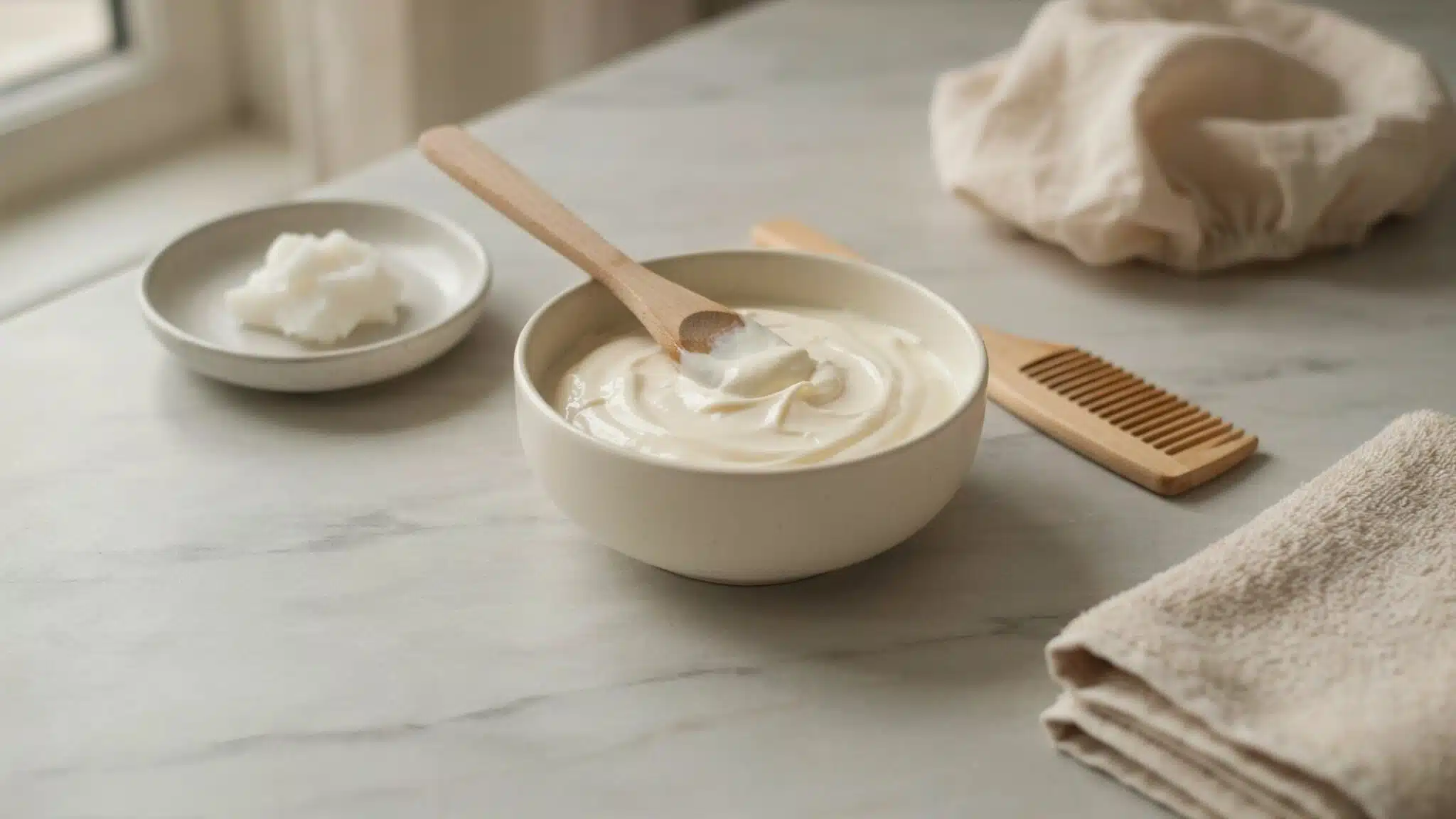
Coconut oil is another popular DIY hair ingredient, but it can be heavy for some people. If your hair is fine or gets oily quickly, use this combination carefully. This combination may provide extra softness, but using too much oil can make hair feel coated.
Ingredients:
- ½ cup plain mayonnaise
- 1 teaspoon coconut oil
How to apply:
- Mix the coconut oil into the mayonnaise until fully combined.
- Apply a small amount from the mid-lengths to the ends.
- Leave it on for 15–20 minutes.
- Wash thoroughly with shampoo.
No matter which method you choose, rinse with cool or lukewarm water first, since hot water can cause the egg in mayo to cook slightly and clump.
What About Protein Overload?
Protein overload happens when hair gets more protein treatments than it can absorb, and it’s the risk most mayo tutorials skip entirely.
Egg yolk and mayo are both protein-heavy, and hair that’s already low on moisture (especially curly or coily textures) can start to feel stiff, straw-like, or prone to snapping if these treatments show up too often.
The fix isn’t avoiding mayo altogether; it’s balancing it. In my experience, protein-based treatments like mayo used more than once a week can leave curly or coily hair feeling stiff instead of soft, so spacing them out matters more than the ingredient itself.
If your hair feels harder or less bouncy after a mayo mask instead of softer, follow it up with a moisture-only conditioner and skip the next protein treatment for a couple of weeks.
Is Mayonnaise Good for Every Hair Type?
Mayonnaise does not work the same way for everyone. Your hair texture, oil production, and level of damage can affect whether this DIY mask feels helpful or uncomfortable.
| Hair Type | How Mayo May Work |
|---|---|
| Dry hair | May help hair feel softer and smoother temporarily |
| Curly hair | May reduce roughness but can feel heavy if overused |
| Thick or coarse hair | Often handles richer masks better |
| Fine hair | May weigh strands down and reduce volume |
| Oily hair | Extra oils may make hair feel greasy faster |
| Damaged hair | Can improve softness but cannot repair broken strands |
If you are unsure how your hair will react, start with a small amount and avoid applying it directly to your scalp. Choosing the right approach depends on your hair’s needs and how it reacts to richer treatments. Start slowly, observe the results, and adjust use based on your hair type.
What Do People Say About Putting Mayo in Hair?
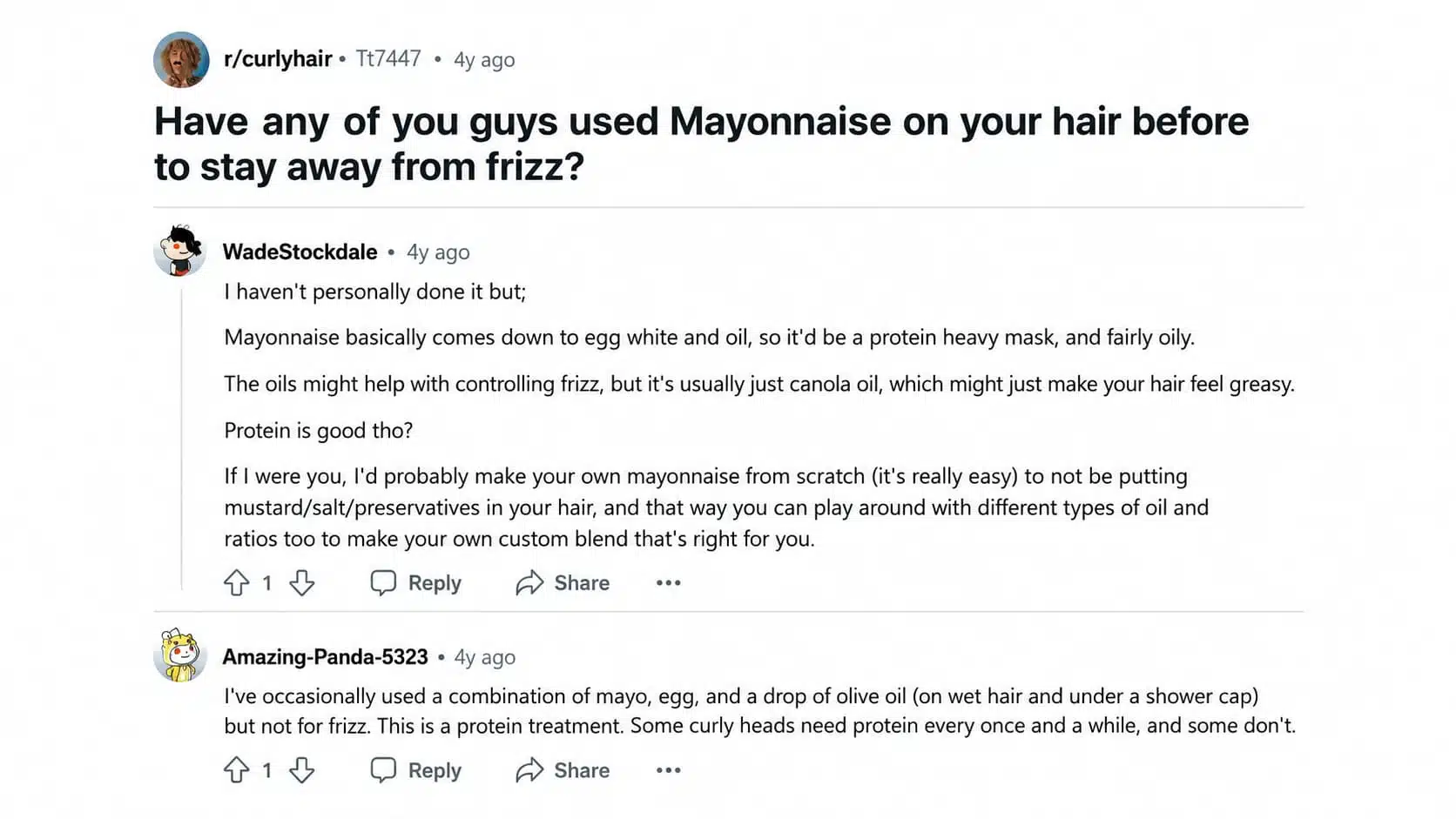
A popular Reddit post asking if anyone had actually tried mayonnaise on their hair drew a wide range of responses, and the overall pattern matches what shows up across most communities discussing this trend.
Real-world opinions on mayo in hair tend to split along fairly predictable lines. People with dry, frizzy, or damaged hair often report genuinely noticeable softness and shine after just one or two treatments, and this seems to be the group that benefits most consistently.
Those with naturally oily hair or fine, thin strands tend to report the opposite experience, describing hair that feels weighed down or greasy even after thorough rinsing.
A smaller number of people mention using mayo specifically for head lice, based on the idea that a thick layer suffocates the insects, though medical guidance doesn’t recommend it as an effective treatment.
How Often Should You Repeat the Treatment?
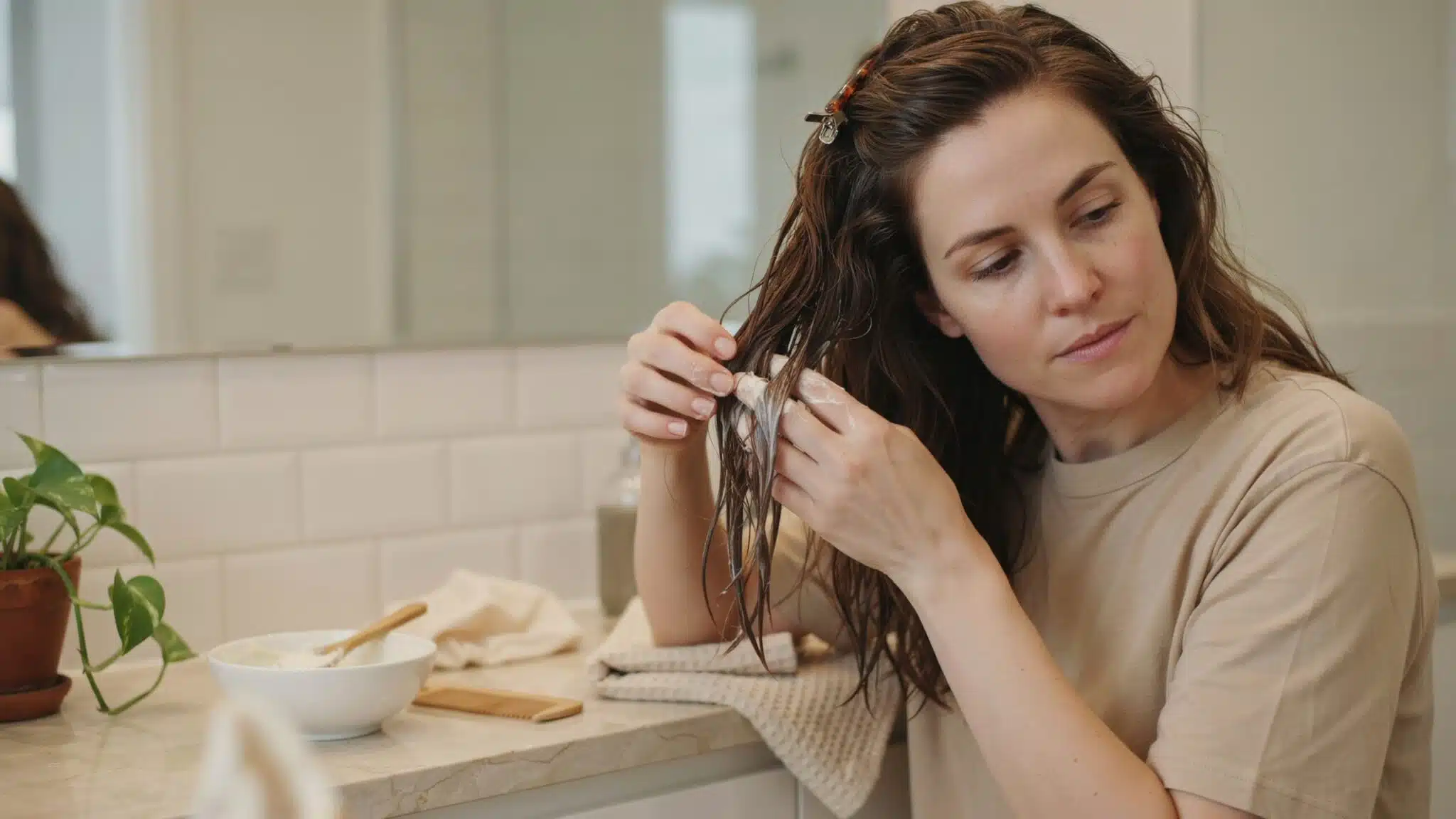
Once a week is the most commonly recommended frequency for most hair types, though how your specific hair responds should guide the final call more than any fixed schedule.
- Dry or coarse hair: Around once every 1–2 weeks if it responds well
- Fine hair: Less often because mayo can feel heavy
- Oily hair: Once every few weeks or avoid it completely
- First-time users: Try one treatment and see how your hair reacts
Your hair’s response matters more than following a strict schedule. If it feels softer and healthier, the treatment may suit your routine. If it feels greasy or stiff, use it less.
Common Mistakes When Using Mayonnaise on Hair
A handful of avoidable mistakes tend to make this treatment less effective or messier than it needs to be.
| Mistake | Fix |
|---|---|
| Using too little product | Use enough to evenly coat hair from scalp to ends, not just a light layer |
| Skipping the patch test | Always test a small area first, especially when combining with new add-ins |
| Applying over product buildup | Wash hair first to clear styling product residue that can block the treatment |
| Not rinsing thoroughly | Rinse until no residue or greasy feeling remains before shampooing |
| Using it too frequently on oily hair | Limit use to once every two weeks or less, or skip it entirely |
Most of these mistakes are easy to avoid once you know what to watch for, making the treatment noticeably more effective the second time around.
Final Thoughts
So, is mayonnaise good for your hair? For dry, frizzy, or damaged strands, trying mayo in your hair as an occasional deep-conditioning treatment is a genuinely low-risk experiment worth considering, as long as you’re mindful of egg allergies and freshness.
It’s not a guaranteed fix, and it’s certainly not backed by the same research as commercial hair treatments, but plenty of people report real results from something already sitting in their fridge.
If you’re curious, start with a small patch test this week, and try the basic mask on a day when you have time to rinse thoroughly afterward.
Frequently Asked Questions
Can Mayo Damage Your Hair If Left on Too Long?
It’s unlikely to cause real damage, though the egg content can start to smell or feel slightly tacky the longer it sits, which is more of a nuisance than an actual risk to your hair.
Is Store-Bought Mayo the Same as Hair Mayonnaise Products?
Not exactly. Commercial hair mayonnaise products are formulated specifically for hair with added ingredients, while regular condiment mayo is simply repurposed from your kitchen.
Can You Use Mayo on Color-Treated Hair?
Generally, yes, since mayo doesn’t contain harsh chemicals that typically strip color, though a patch test is still a reasonable precaution for any new treatment.
Does Mayo Help with Hair Growth or Just Hair Health?
Mayo is more associated with improving hair’s appearance and moisture than actually stimulating new growth, so treat it as a conditioning treatment rather than a growth solution.