Your can of mousse sits on the shelf, but a nagging question won’t go away: is mousse bad for your hair? Maybe you’ve noticed extra strands in the shower drain, or your curls feel stiffer than they used to, and now every spray feels risky.
That worry is fair. Mousse gets blamed for damage, hair loss, and dryness more than almost any other styling product.
I hear this question weekly from clients standing in my chair, mousse can in hand, half convinced their hairline is thinning because of it.
The good news is that most of these fears trace back to a few fixable habits, not the mousse itself. Once you know what your formula actually does to your hair, you can style with confidence instead of guessing.
Is Mousse Bad for Your Hair?
No, mousse is not naturally bad for your hair. It’s a surface-level product, so any damage comes from misuse, not the formula. Drying alcohols, heavy-handed application, and skipped wash days are the actual troublemakers, not the entire mousse category.
A well-matched formula, used in a reasonable amount, adds volume and hold without touching the parts of your scalp responsible for new hair growth.
Most of the fear here comes from mixing up two separate issues, temporary dryness and permanent hair loss, which behave differently and deserve different levels of concern.
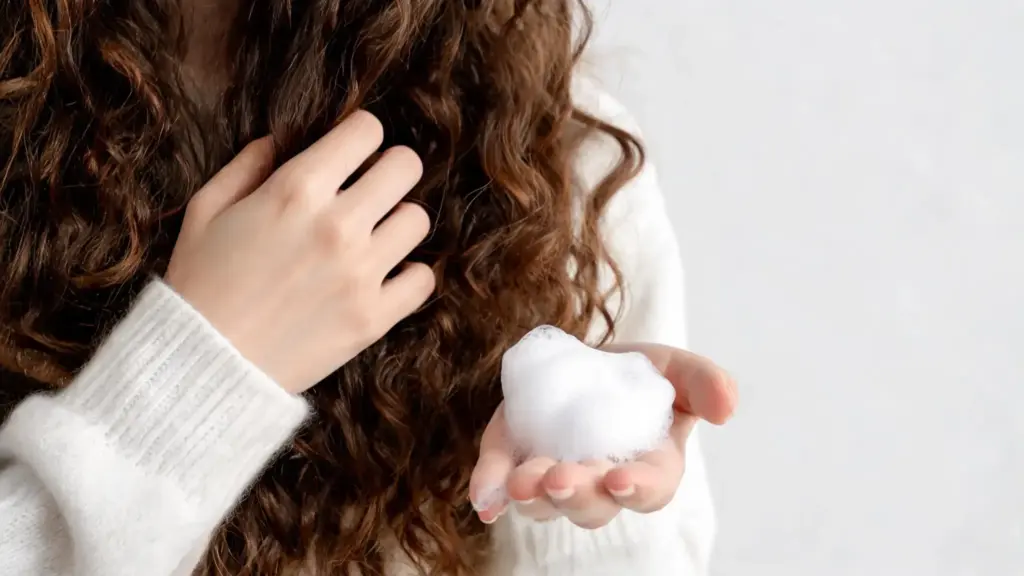
What is hair mousse? Hair mousse is a foaming styling product that coats the outside of each strand with a thin layer of hold polymers, adding volume, texture, or curl definition without penetrating the hair shaft.
What Hair Mousse Actually Does to Your Hair
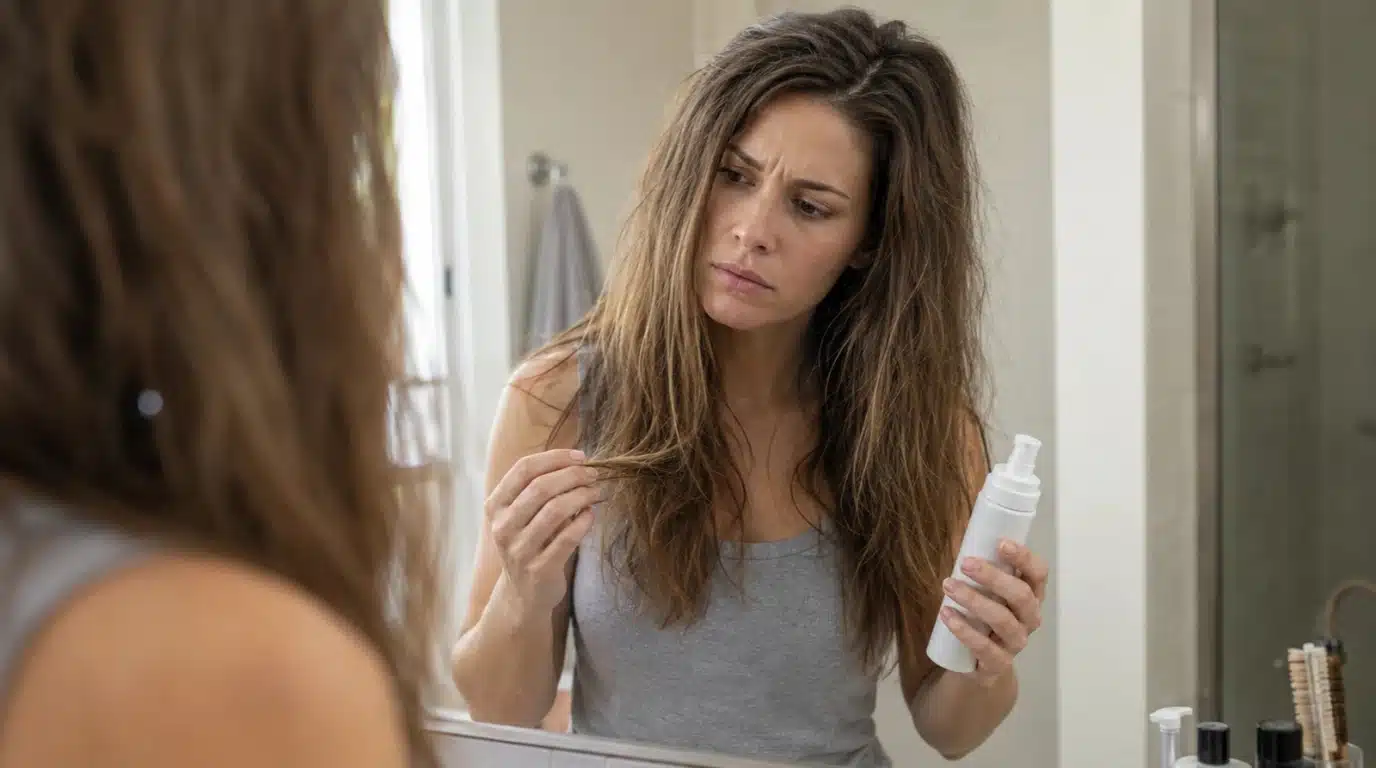
Hair mousse is a lightweight styling foam that works mainly on the surface of your strands, helping shape and control hair without changing its natural growth.
- Adds volume: Mousse lifts the hair and gives fine or flat strands more body, making them appear temporarily fuller without increasing actual hair density.
- Provides hold: Film-forming polymers create a light coating around each strand, helping your hairstyle maintain its shape without permanently changing the hair structure.
- Defines curls and waves: Mousse helps curls and waves hold their pattern while adding texture and reducing loose, frizzy strands throughout the style.
- Supports moisture and conditioning: Some formulas contain ingredients such as panthenol, glycerin, or conditioning agents that can help hair feel softer and easier to manage.
- Works without changing hair growth: Mousse does not need to alter the hair follicle to work. Its styling benefits come from coating and shaping the visible strands.
This is the part I explain most often in the chair: everything on this list happens above the skin. None of it reaches deep enough to touch how your hair grows.These effects are temporary and mostly cosmetic. Problems are more likely to come from unsuitable formulas, excessive buildup, scalp sensitivity, or styling habits than from mousse itself.
Can Hair Mousse Damage Your Hair or Cause Hair Loss?
Hair mousse does not usually cause permanent hair loss, since it works only on the visible strand. What it can do is dry hair out, weigh it down, or irritate a sensitive scalp, and each of those has a different fix.
1. Hair Breakage
Hair breakage happens when a strand snaps somewhere along its length instead of falling out from the root.
You’ll notice shorter pieces, uneven ends, and less fullness, especially if a mousse leaves hair feeling dry or stiff before you brush or heat-style it. Gentle handling, a wide-tooth comb, and regular conditioning protect strands that are already dried out from styling.
2. Temporary Thinning From Buildup
Mousse can make hair look thinner without touching actual hair density. Too much product builds up at the root and weighs strands down, flattening them against the scalp. Fine hair loses visible volume fastest this way.
I can usually tell within a few seconds in the chair whether a client’s flatness is genetics or three days of unwashed product. Washing on schedule and using a moderate amount restores the movement buildup takes away.
3. Scalp Irritation and Shedding
A mousse that irritates your scalp can cause itching, redness, or a burning feeling. Scratching that irritation adds friction, and that friction can pull out strands that weren’t shedding on their own.
Stop using the product if irritation shows up, and give your scalp a few days to settle before trying a different formula.
4. When It’s Not About the Mousse
Some patterns point away from mousse entirely: a gradually widening part, a receding hairline, round bald patches, or shedding that continues after you’ve already stopped using the product.
Eyebrow or body-hair loss without any change to your styling routine falls into the same category.
Genetics, hormonal shifts, stress, illness, medication, and scalp conditions can all drive these patterns, and a board-certified dermatologist can sort out which one applies to you rather than leave you guessing your way through more product swaps.
Common Mousse Mistakes I See Behind the Chair
Most mousse complaints I hear trace back to four repeatable habits, not a flaw in the product itself. Mistakes to Watch For
- Applying to soaking-wet hair: the product dilutes and slides off instead of gripping the strand, so clients add more to compensate.
- Scrunching from the roots down: this pushes product straight onto the scalp, where it’s more likely to cause buildup and irritation.
- Reapplying mousse over day-old product: layering without a wash in between is the fastest route to the dull, stiff feel people mistake for damage
- Brushing dried mousse with a stiff bristle brush: this snaps the hardened polymer film and takes strands with it, which reads as breakage.
Fix these four habits and most of what clients call “mousse damage” disappears within a wash or two.
Is Mousse Safe for Your Hair Type?
Judge hair mousse ingredients by the full formula, concentration, frequency of use, and your hair or scalp sensitivity rather than one ingredient alone, since fragrance is often a common irritant trigger for sensitive scalps.
| Hair Type | Effects | Best Approach |
|---|---|---|
| Fine Hair | Adds volume but may feel stiff or heavy if overused. | Use a small amount of lightweight mousse. |
| Thinning Hair | Creates the appearance of fuller hair but does not treat hair loss. | Choose lightweight formulas and avoid pulling. |
| Curly or Wavy Hair | Defines texture with less weight than creams. | Use flexible-hold mousse and add moisture if needed. |
| Coily Hair | May not provide enough moisture alone. | Pair with moisturizing products and limit manipulation. |
| Chemically Treated Hair | May worsen dryness or breakage in fragile hair. | Use gentle products, conditioner, and low heat. |
| Sensitive or Flaky Scalp | May cause itching, redness, or irritation. | Stop use if irritation occurs; try fragrance-free formulas. |
If your hair type needs a specific adjustment, the “Best Approach” column above is the one worth following. Matching that guidance prevents most problems before they start.
Is it Bad to Use Hair Mousse Every Day?
Using hair mousse every day is not automatically bad, but how your hair responds depends on the formula, amount used, scalp condition, washing routine, heat exposure, and other styling products layered with it.
Daily use may become a problem if your ends feel increasingly dry, your hair turns unusually stiff or rough, or you notice more breakage than normal. Persistent flakes, itching, burning, or a coated feeling can also signal buildup or irritation. If mousse stops giving the same volume or hold, residue may be weighing the hair down.
In the chair, I tell clients to watch their second-day hair for the real answer: if yesterday’s mousse still feels tacky before you’ve even reapplied, that’s buildup talking, not your hair type.
The goal is not to avoid mousse every day at all costs. Instead, adjust your routine when your hair or scalp shows clear signs that the product, amount, or styling habits are no longer working well.
Mousse Ingredients That May Cause Problems
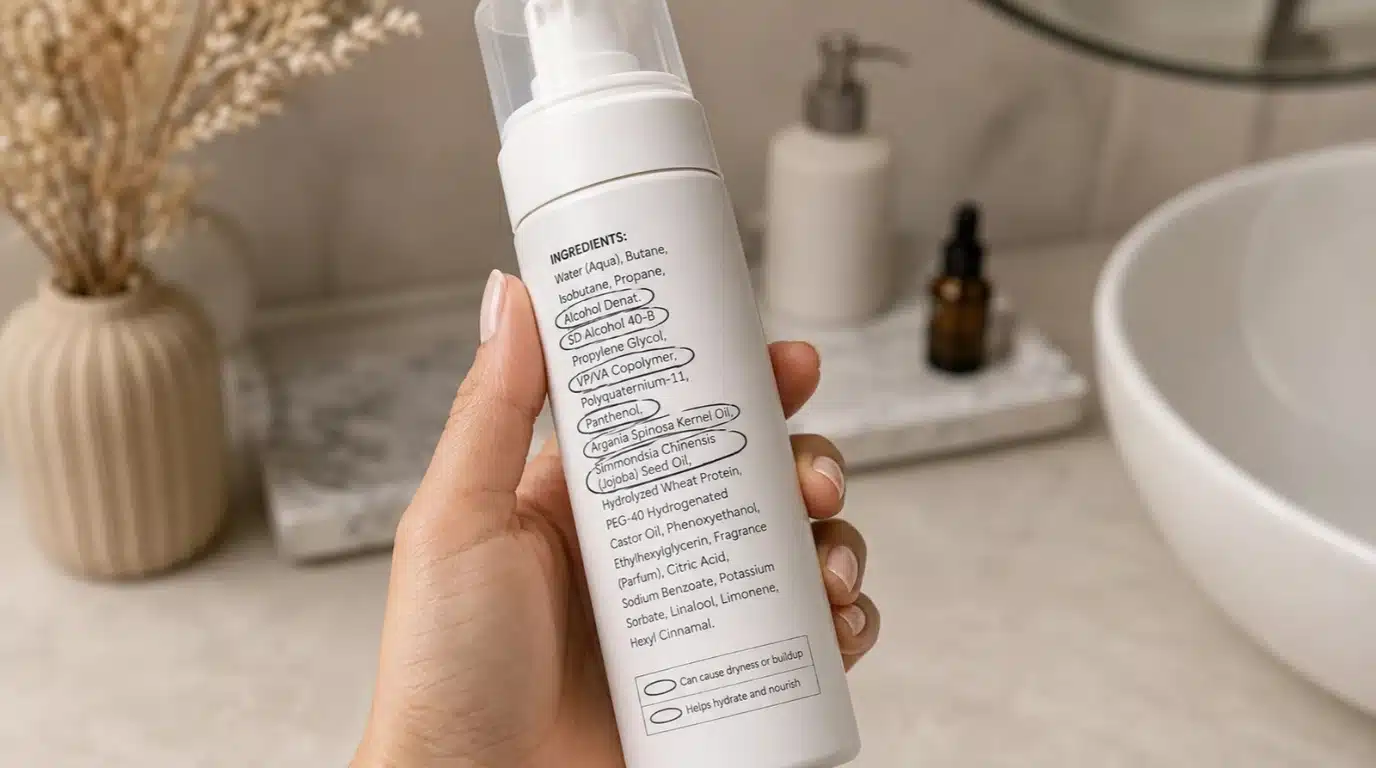
Hair mousse ingredients should be judged by the full formula, concentration, frequency of use, and your hair or scalp sensitivity rather than one ingredient alone.
| Ingredient Type | Examples | Main Concern |
|---|---|---|
| Quick-Drying Alcohols | alcohol denat., SD alcohol, isopropyl alcohol, ethanol | May leave already dry or fragile hair feeling rougher with frequent use. |
| Fatty Alcohols | cetyl alcohol, cetearyl alcohol, stearyl alcohol | Usually conditioning rather than drying, so they do not need to be avoided automatically. |
| Fragrance & Preservatives | fragrance, parfum, preservatives | Can trigger itching, redness, or burning in sensitive scalps. |
| Moisturizing Ingredients | glycerin, panthenol, emollients | Can help hair feel softer and more manageable without repairing existing damage. |
I’ve had clients hand me a “clean” mousse can and still react to it, because the irritation was coming from fragrance, not alcohol.
Reading past the first ingredient on the label saves a lot of guessing. The ingredient list can offer useful clues, but how your hair and scalp respond to the full mousse formula matters more than any single ingredient.
How to Use Mousse Without Damaging Your Hair

A few small adjustments to your regular styling routine remove almost all the risk that people typically associate with mousse and its everyday misuse around the house.
- Apply to damp, not soaking wet, hair for even distribution.
- Start with a golf-ball amount for medium hair, then adjust.
- Work through mid-lengths and ends, away from the scalp.
- Distribute with a wide-tooth comb rather than a stiff brush.
- Clarify every one to two weeks to clear buildup.
Follow these five simple steps, and most of the dryness, stiffness, or buildup people often blame on mousse will stop showing up in your hair at all going forward.
When Hair Loss is Probably Not From Your Mousse
Hair loss is less likely to be related to mousse when it follows a clear pattern or continues even after you stop using the product.
Signs such as a gradually widening part, receding hairline, patterned thinning, round bald patches, or sudden widespread shedding often point to causes beyond styling products.
The same applies if you notice eyebrow or body-hair loss or if thinning began without any recent change in your hair routine. Genetics, hormonal changes, stress, illness, nutritional issues, medications, and scalp conditions can all affect normal hair growth.
If shedding or thinning continues after removing mousse from your routine, avoid assuming the product is responsible.
Identifying the underlying cause is more useful than repeatedly switching styling products without knowing what is actually affecting your hair.
Mousse Compared with Other Styling Products
If mousse still doesn’t sound right for your hair, here’s how it stacks up against the other styling options sitting on the same shelf so that you can pick with more confidence.
| Product | Best For | Watch Out For |
|---|---|---|
| Mousse | Volume, lightweight hold | Dryness if overused |
| Gel | Strong, long-lasting hold | Crunchiness, visible buildup |
| Wax | Texture and definition | Heavy residue |
| Cream | Moisture and smoothness | Can weigh down fine hair |
When a client’s set on hold but their hair’s already dry, I’ll usually steer them toward cream before mousse, since it adds moisture instead of asking for more.
Each product solves a different styling problem, so the right pick depends on your hair type and styling goals, not on which one carries a lower overall risk on paper.
Who Should Limit or Avoid Mousse
A small group of people should be more careful with mousse, or skip it for now, compared with the average person reaching for a styling product on a normal day.
- Extremely dry or chemically over-processed hair that already struggles to hold onto moisture
- Sensitive or easily irritated scalps that react to fragrance or alcohol content
- Anyone with a known allergy to a specific mousse ingredient or preservative used.
- Hair already dealing with heavy, unresolved product buildup from daily styling habits
If any of these describe your hair right now, a lighter product or a clearly labeled alcohol-free formula is worth trying before you give up on mousse completely.
When to See a Dermatologist
Consider seeing a dermatologist if hair loss appears suddenly, worsens noticeably, or continues after you stop using a product you suspected was causing problems. Bald patches, rapidly widening areas of thinning, or unusually heavy shedding also deserve professional evaluation.
Scalp symptoms can also be a warning sign, especially significant pain, severe redness, persistent burning or itching, thick scaling, sores, or pus-filled bumps.
Hair loss accompanied by other unexplained health changes should also be checked, not treated only as a styling issue.
A dermatologist can examine your hair and scalp, review possible triggers, and determine whether the problem involves breakage, excessive shedding, or an underlying hair-loss condition.
Identifying the right cause early can help you avoid unnecessary product changes and choose more appropriate care.
Wrapping It Up
So, is mousse bad for your hair? Not on its own. The real culprits are drying alcohols in the wrong formula, too much product left near the scalp, and skipping the occasional clarifying wash between styling days.
Match your mousse to your hair type, use a coin-sized amount, and rinse out buildup weekly, and you remove nearly every risk people worry about with this product.
Hair mousse works with your hair, not against it, when you treat it like any other styling product deserving a little attention instead of guesswork.
Try switching to an alcohol-free formula this week and watch how your hair responds over the next few washes.
Frequently Asked Questions
Can Mousse Help with Frizz in Humid Weather?
A lightweight, alcohol-free mousse can seal the cuticle enough to reduce humidity frizz, but too much adds stickiness that attracts more moisture and makes frizz worse. Use a smaller amount than you would in dry weather.
Is Mousse Safe to Use with Heat Styling Tools?
Yes, as long as the mousse doesn’t contain high alcohol content, which can make hair more prone to heat-related dryness. Pair it with a heat protectant for extra safety.
Can Men Use Hair Mousse the Same Way as Women?
Yes, application rules are the same regardless of gender. Amount and formula should match hair length and texture, not the person using it.
Does Mousse Work for Second-Day Hair?
A small amount worked into roots can refresh volume on second-day hair, though a light dry shampoo often works better for oil control.
Is Homemade or Natural Mousse Safer than Store-Bought?
Not automatically. DIY versions skip synthetic alcohols but often lack preservatives, so they spoil faster and offer less consistent hold.