Makeup can get confusing when several products seem to belong in the same place. Does concealer go before foundation? Should blush come before powder? And where does primer actually fit?
The order of makeup becomes much easier once you stop treating every product as a separate rule.
Start by preparing the skin, build the complexion with liquid and cream formulas, set only where needed, then move into brows, eyes, lips, and finishing products.
You can also skip anything your routine does not need. I prefer thinking of makeup in layers rather than following a long checklist. It keeps the routine simpler and makes product choices easier.
What Is the Correct Order of Makeup?
For most everyday looks, start with skincare and sunscreen, followed by primer, color corrector, foundation, concealer, cream face products, powder, brows and eyes, lips, and setting spray.
A practical sequence looks like this:
Step | What Goes On |
|---|---|
1 | Moisturizer and sunscreen |
2 | Primer and color corrector |
3 | Foundation and concealer |
4 | Cream bronzer, contour, and blush |
5 | Setting powder and powder face products |
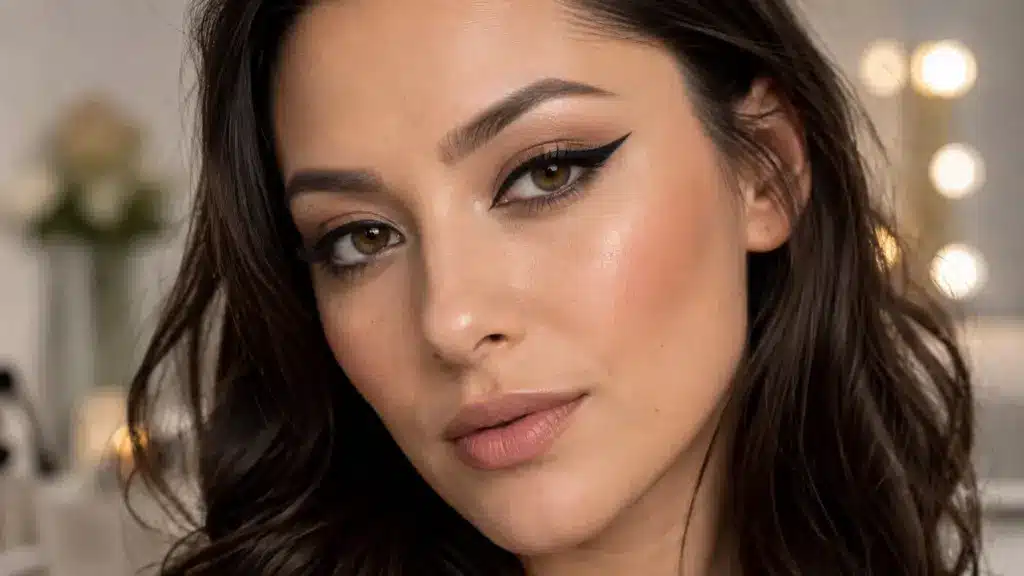
6 | Brows, eyeshadow, eyeliner, and mascara |
7 | Lip products |
8 | Setting spray |
Not every face needs all eight stages. Primer, color corrector, contour, highlighter, and setting products are optional. The point is knowing where they belong when you choose to use them.
The Correct Makeup Order Step by Step
1. Prep Skin With Moisturizer and Sunscreen
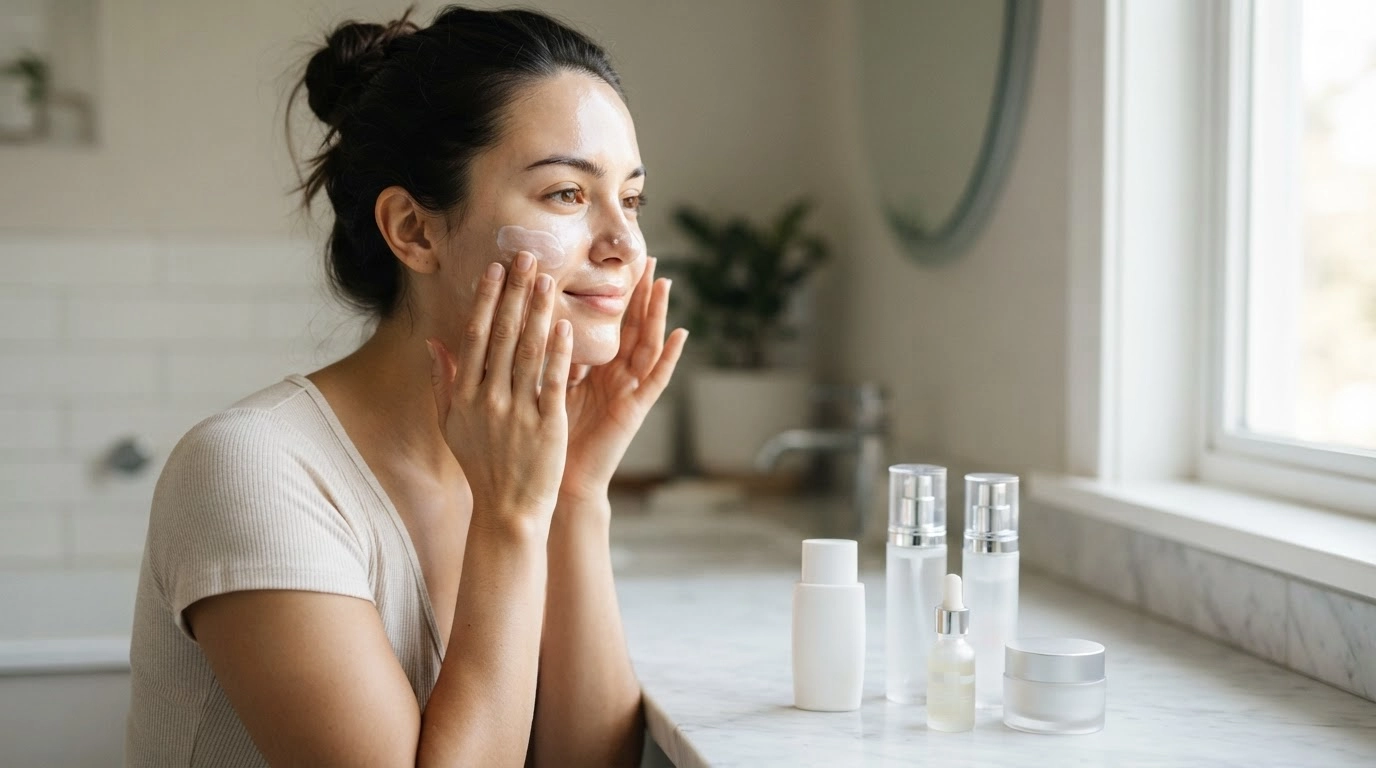
Start on clean skin and follow the skincare routine that already works for you. Apply moisturizer first, then finish daytime prep with sunscreen.
The American Academy of Dermatology recommends choosing a broad-spectrum, water-resistant sunscreen with SPF 30 or higher for sun protection.
Give your skincare a little time to settle before applying makeup. If you are still working out your morning skin prep, keeping moisturizer and sunscreen ahead of makeup gives the routine a clear stopping point before complexion products begin
There is no need to add extra products simply because you are wearing makeup. Comfortable, moisturized skin gives foundation and concealer a much simpler base to work over.
Products to Try:
- CeraVe Daily Moisturizing Lotion: A straightforward moisturizer that works well as a simple prep step before makeup.
- EltaMD UV Clear Broad-Spectrum SPF 46: A lightweight facial sunscreen option for daytime makeup routines.
2. Apply Primer and Color Corrector
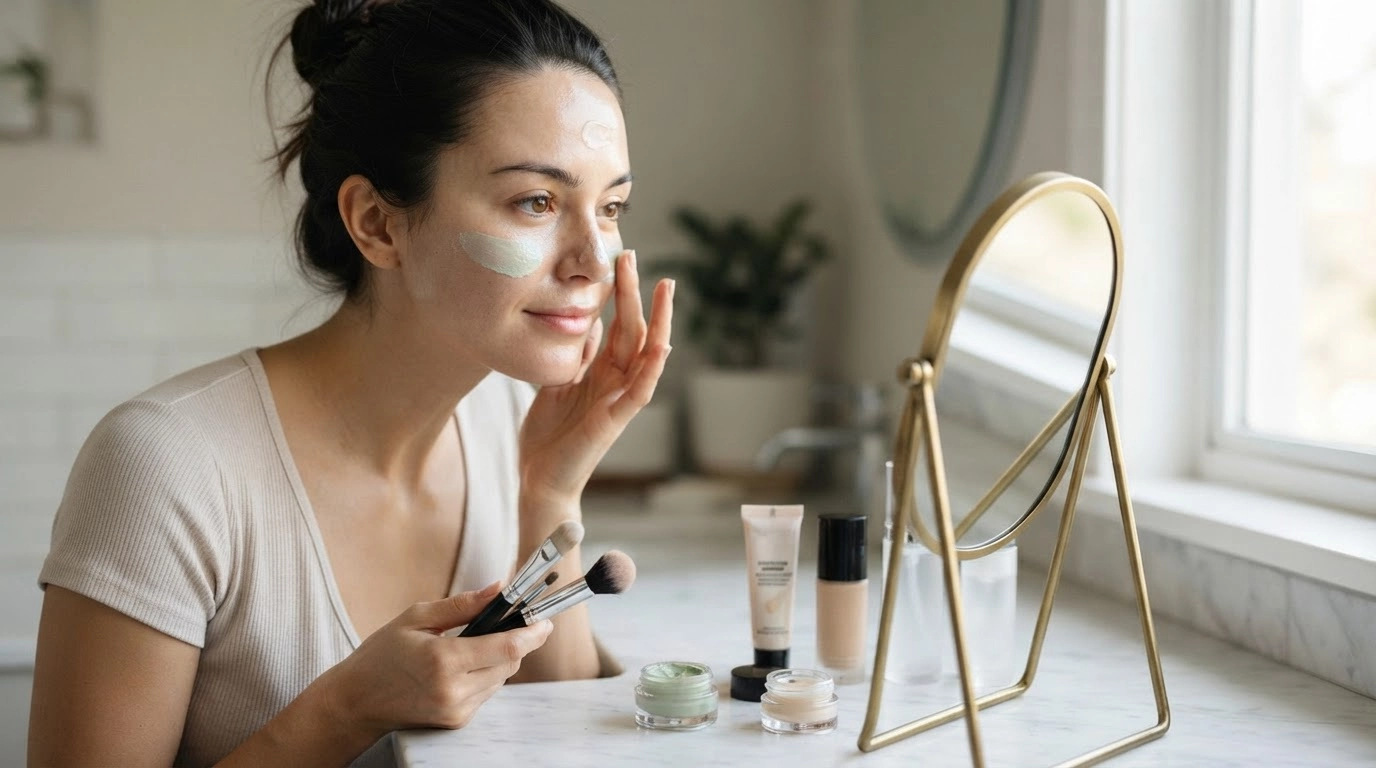
Primer comes after skincare. Rather than automatically spreading it everywhere, use it according to what your skin or makeup needs.
A hydrating primer can help where the skin feels dry, while a mattifying formula may be more useful around an oily T-zone.
Apply color corrector next if you have discoloration you specifically want to neutralize. Keep the amount small and targeted. Corrector should make the following complexion layer easier, not create another thick layer that foundation has to cover.
You Can Try:
- Primer: e.l.f. Power Grip Primer
- Hydrating Primer: Tatcha the Liquid Silk Canvas Primer
- Color Corrector: L.A. Girl HD Pro Conceal Color Corrector
3. Build Coverage With Foundation and Concealer
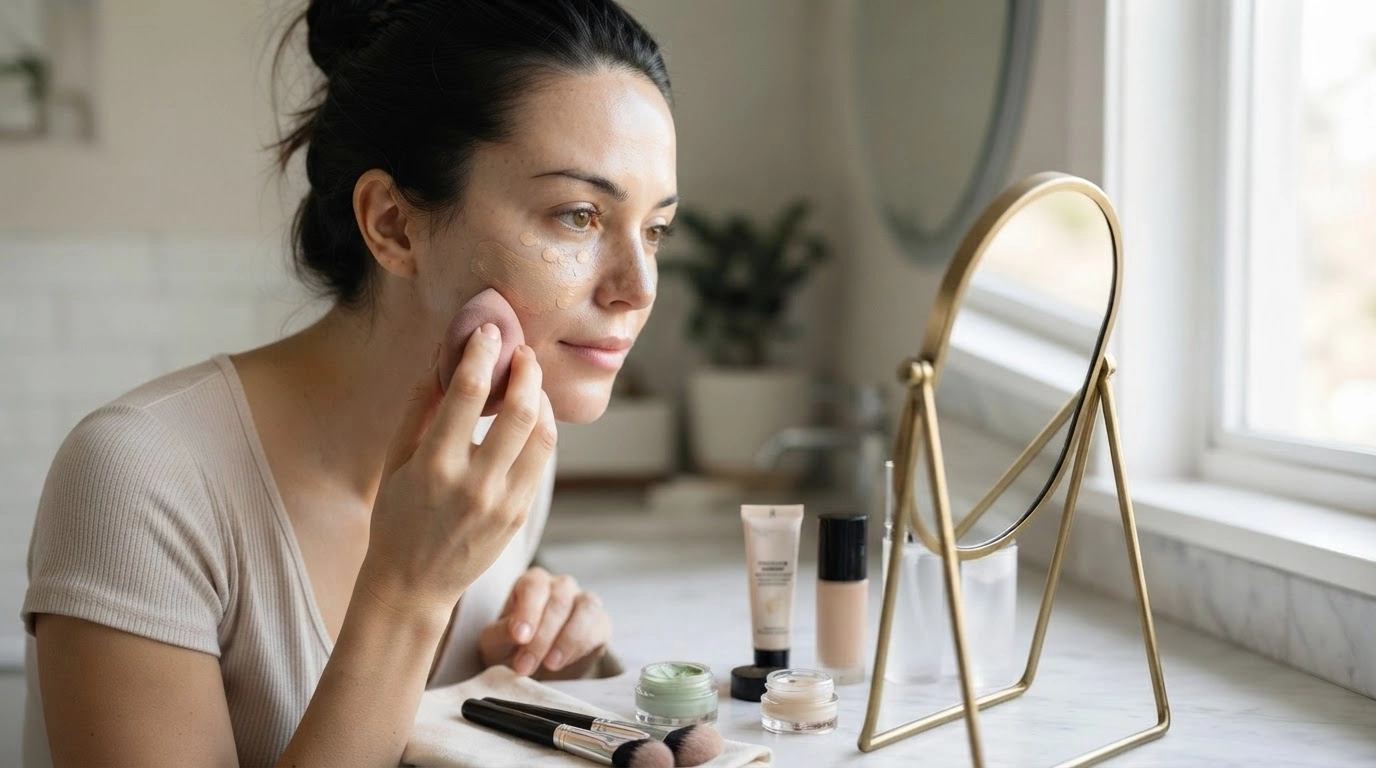
Apply foundation or skin tint in thin layers, starting where you want the most evening of the complexion. Blend outward rather than covering the entire face with the same amount.
If your base repeatedly feels too heavy, too sheer, or wrong for your skin, choosing a foundation formula that suits your preferred coverage and finish can make more difference than simply applying another layer.
Once the foundation is blended, check the skin again. Add concealer only where more coverage is needed, such as beneath the eyes, around redness, or over blemishes and dark spots. Foundation first often means less concealer is necessary afterward.
For quick makeup, I would rather build two light layers exactly where needed than start with one heavy layer everywhere.
You Can Try:
- Foundation: Estée Lauder Double Wear Stay-in-Place Makeup
- Concealer: NARS Radiant Creamy Concealer
4. Add Cream Bronzer, Contour, and Blush
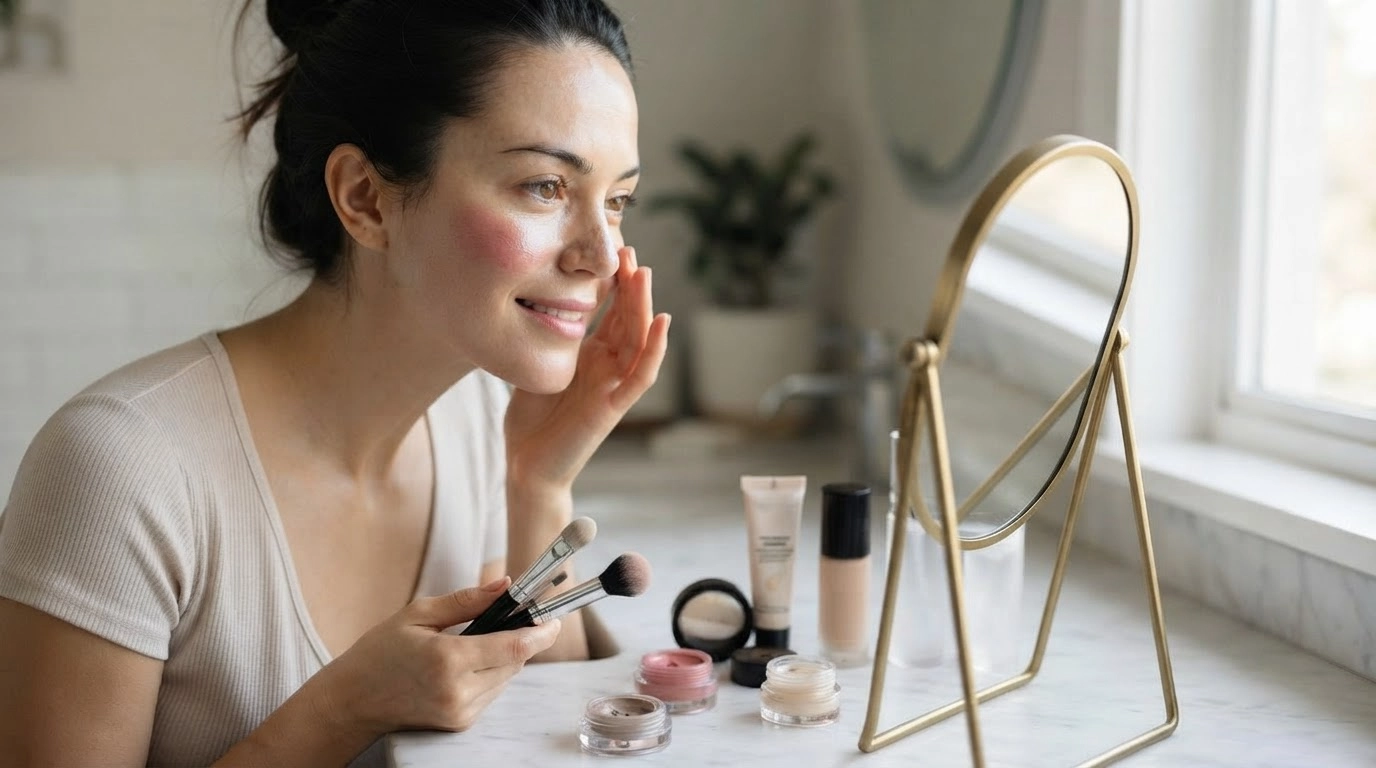
Cream and liquid cheek products generally fit before setting powder because they are easier to blend over an unset complexion.
Use bronzer when you want warmth, contour when you want to create more visible depth, and blush when you want color through the cheeks. You do not need all three.
Start with small amounts and build gradually. This gives you more control and keeps the base underneath from becoming overloaded.
If you only use powder blush or bronzer, skip this stage and add them after setting.
You Can Try:
- Cream Blush: Rare Beauty Soft Pinch Liquid Blush
- Cream Contour: MAKE UP FOR EVER Artist Color Cream Contour Palette
5. Set the Base and Add Powder Products
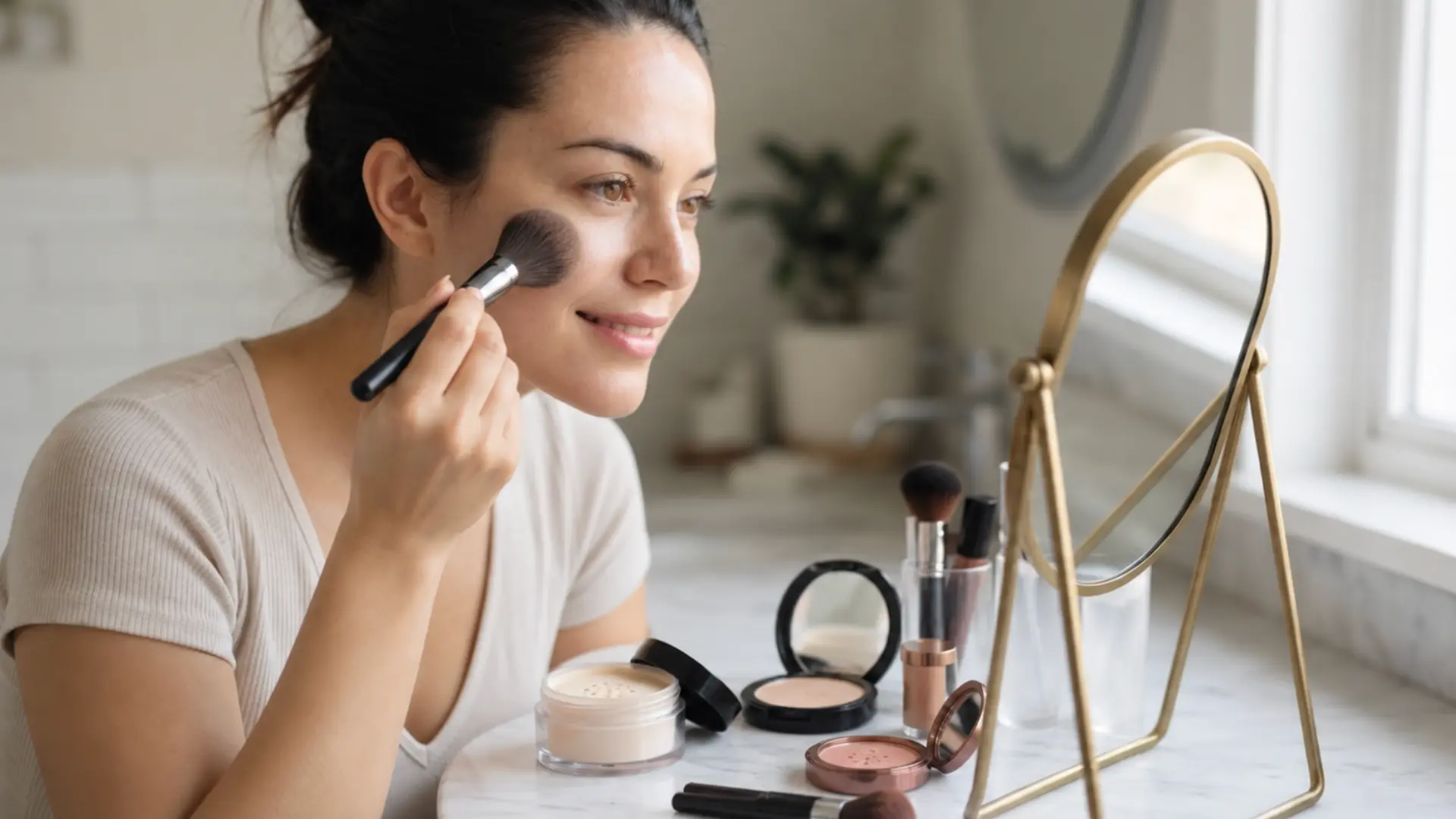
Setting powder comes after the main cream and liquid complexion products.
You also do not need to powder the entire face. Focus on areas where makeup tends to crease, move, or become shiny. That might mean the T-zone, beneath the eyes, or around the nose.
Once the base is set, apply powder bronzer, blush, or highlighter if you use them.
A simple texture rule helps here: Liquid and cream products first → powder products second.
It is not an absolute rule for every modern formula, but it is a useful starting point for beginners.
You Can Try:
- Setting Powder: Laura Mercier Translucent Loose Setting Powder
6. Define Brows and Complete Eye Makeup
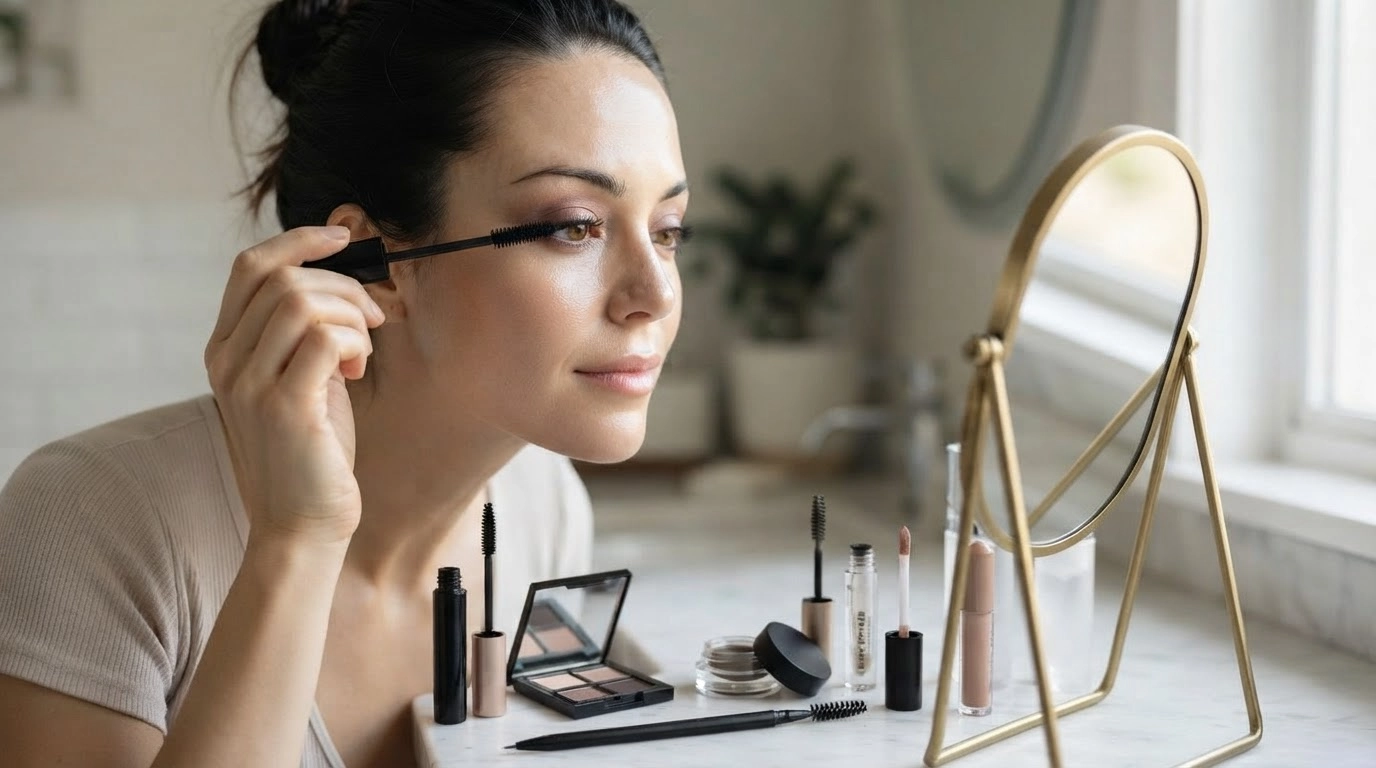
Once the complexion is in place, move to brows and eyes.
Fill only the sparse parts of the brows if you want a natural finish, then brush through the product to soften any obvious edges.
For most eye looks, follow: Eyeshadow → eyeliner → mascara
Shadow goes first so you can blend without disturbing freshly applied liner or mascara. If you are deciding how much definition the look actually needs, understanding different eye product roles can help you decide whether liner, mascara, or both make sense.
The U.S. Food and Drug Administration (FDA) also includes these precautions in its eye cosmetic safety guidance.
If you use false lashes, apply them after eyeshadow and eyeliner. The FDA classifies false eyelashes, extensions, and their adhesives as cosmetic products and advises checking adhesive ingredients because the eye area is delicate.
You Can Try:
- Brow Product: Anastasia Beverly Hills Brow Wiz
- Eyeshadow Palette: Urban Decay Naked3 Eyeshadow Palette
- Eyeliner: Stila Stay All Day Waterproof Liquid Eyeliner
- Mascara: Benefit Cosmetics They’re Real! Lengthening Mascara
7. Finish With Lip Products
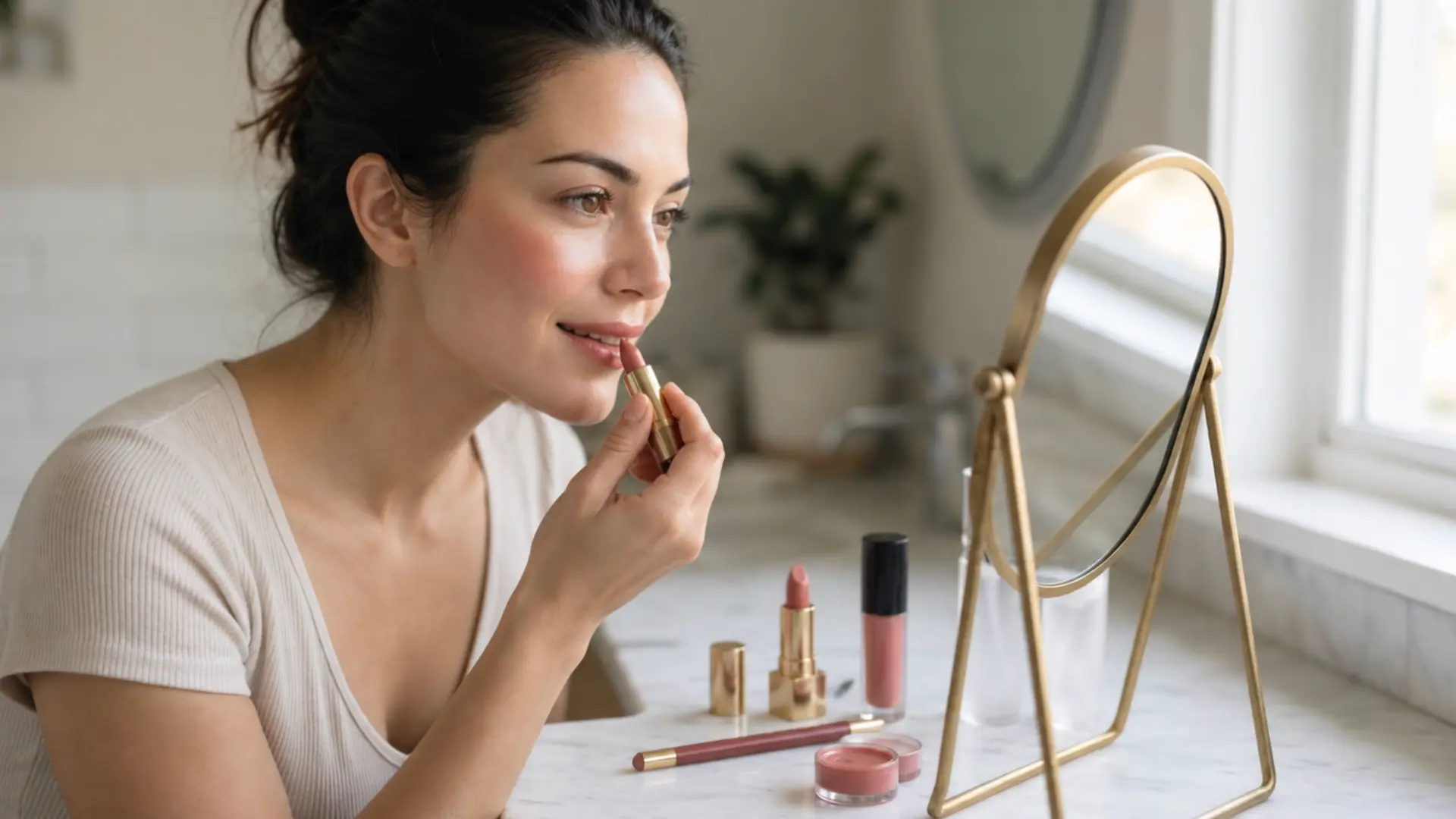
Lip makeup usually makes more sense toward the end because you can see how much color and definition the rest of the face already has.
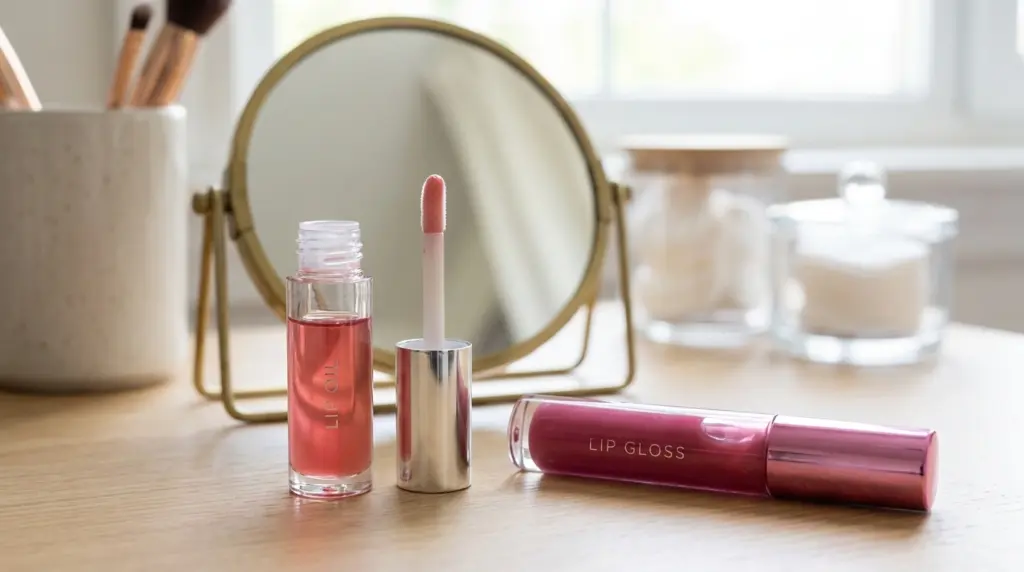
For a complete lip routine, use: Lip balm → lip liner → lipstick → gloss
You do not need all four. Lipstick alone, tinted balm, liner with gloss, or another simple combination may be enough.
If you use a rich balm before makeup, let it absorb while you finish the rest of your face. That can help keep lipstick and liner from sliding over an overly slippery surface.
Product to Try:
- NYX Professional Makeup Slim Lip Pencil: A classic lip liner that can define the lip shape before lipstick or gloss.
8. Set the Finished Makeup
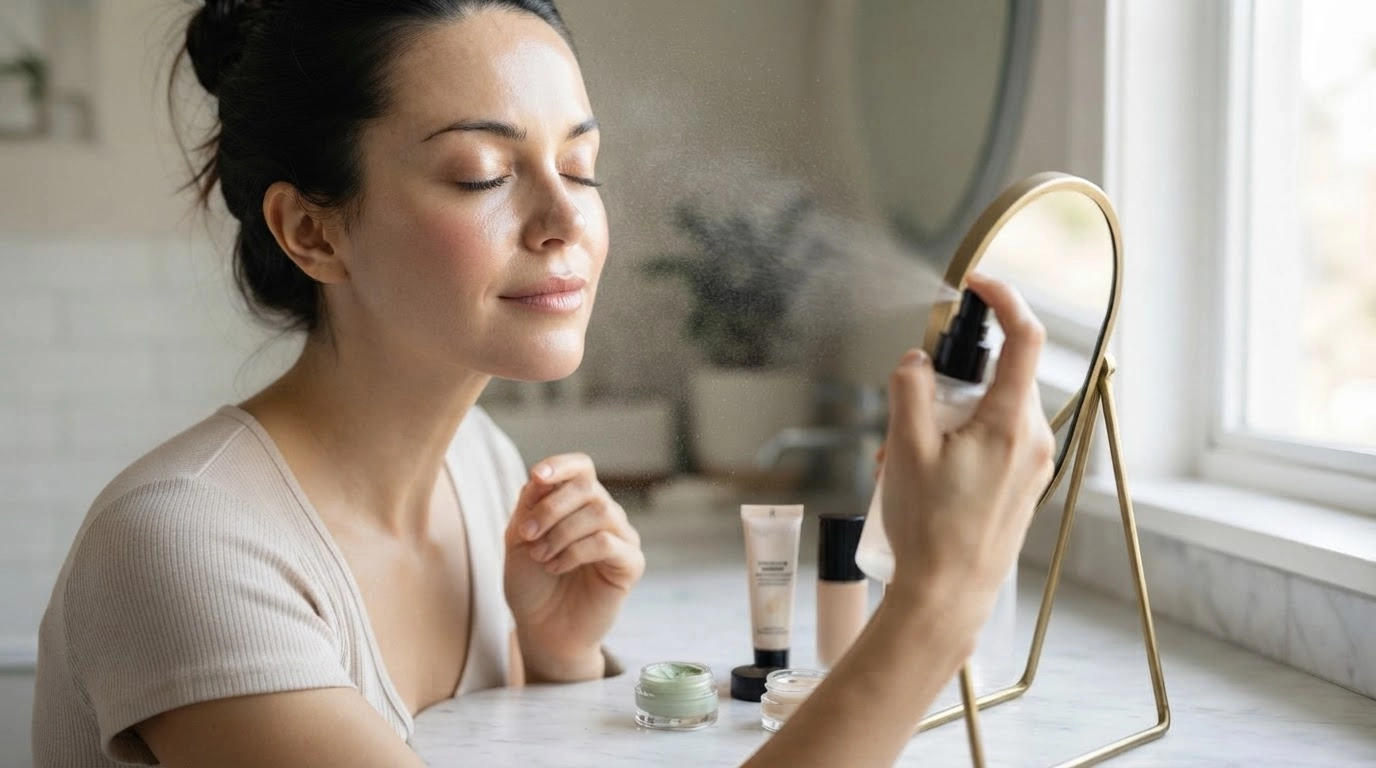
Setting spray is usually the final step in the order of makeup.
Mist it evenly rather than saturating one area and allow the face to dry naturally. Choose the formula according to the finish or wear you want.
Setting spray and setting powder are not interchangeable. Powder is primarily used during the complexion stage to set specific products and areas. Spray goes over the finished makeup.
You also do not automatically need both. A light everyday routine may work perfectly well without either one.
You Can Try:
- Dewy Finish Setting Spray: Charlotte Tilbury Airbrush Flawless Setting Spray
When Should Eye Makeup Come Before Foundation?
Base first is easy for everyday makeup, but it is not the only workable sequence. Doing your eyes first can be particularly useful with:
- dark or smoky eyeshadow
- loose pigment
- glitter
- strong shadow fallout
- detailed eyeliner
- false lashes
This allows you to wipe away fallen pigment without disturbing finished foundation or concealer.
For neutral shadow, simple liner, or mascara-only looks, doing the complexion first is usually straightforward. Choose the sequence according to how messy or detailed the eye makeup is likely to be rather than treating one order as compulsory.
Which Makeup Steps Can You Skip?
Almost all makeup steps are optional apart from the products you personally want for the finished look. For a basic everyday routine, you might use only:
- Moisturizer and sunscreen
- Skin tint or foundation
- Concealer where needed
- Blush
- Brows
- Mascara
- Lip product
Primer is useful when it solves a particular problem. Color corrector only matters when you have discoloration you want to neutralize. Contour, bronzer, highlighter, eyeliner, and multiple setting products are choices rather than requirements.
A shorter routine is not an incomplete routine.
Common Makeup Order Mistakes
A few layering habits can make good products unnecessarily difficult to work with.
- Applying too much base at once: Start with a small amount of foundation and build coverage only where necessary.
- Powdering before cream products: Heavy powder can make cream blush or contour harder to blend evenly.
- Using every available product: More layers can add texture without improving the finished makeup.
- Applying mascara too early: Eyeshadow fallout can collect on freshly coated lashes.
- Rushing between skincare and makeup: Let skincare settle instead of immediately rubbing another layer over it.
- Ignoring product texture: Consider whether the formula is liquid, cream, or powder before deciding where it belongs.
A Makeup Routine That Makes Sense
There is a correct framework for layering makeup, but there is no rule saying every product has to appear in every routine.
Once you understand the basic order of makeup, you can adjust it around your products and the look you want. Keep skincare underneath, build complexion coverage gradually, apply most creams before powders, and save finishing products for later.
That is the part worth remembering. The number of steps matters much less than how the layers work together. A calm routine with seven products can make far more sense than forcing fourteen products onto the face simply because they exist.
Frequently Asked Questions
Can I Apply Concealer Without Foundation?
Yes. Concealer can be applied only where you want extra coverage, such as under the eyes or over blemishes, while leaving the remaining skin bare.
How Long Should Primer Sit Before Foundation?
Give primer enough time to settle rather than applying foundation while it is still very wet or slippery. Follow the specific product directions when provided.
Where Do False Lashes Go in Makeup Order?
False lashes usually go after eyeshadow and eyeliner. Mascara placement can vary depending on your lash style and preferred application method.
Can I Apply Blush Without Setting Powder?
Yes. Cream or liquid blush can be worn without setting powder. Powder is mainly useful where you need extra setting or shine control.
Should Makeup Be Done Before or After Hair?
Either works. Doing heat styling or messy hair prep first can help prevent sweat, hairspray, or frequent touching from disturbing freshly applied makeup.