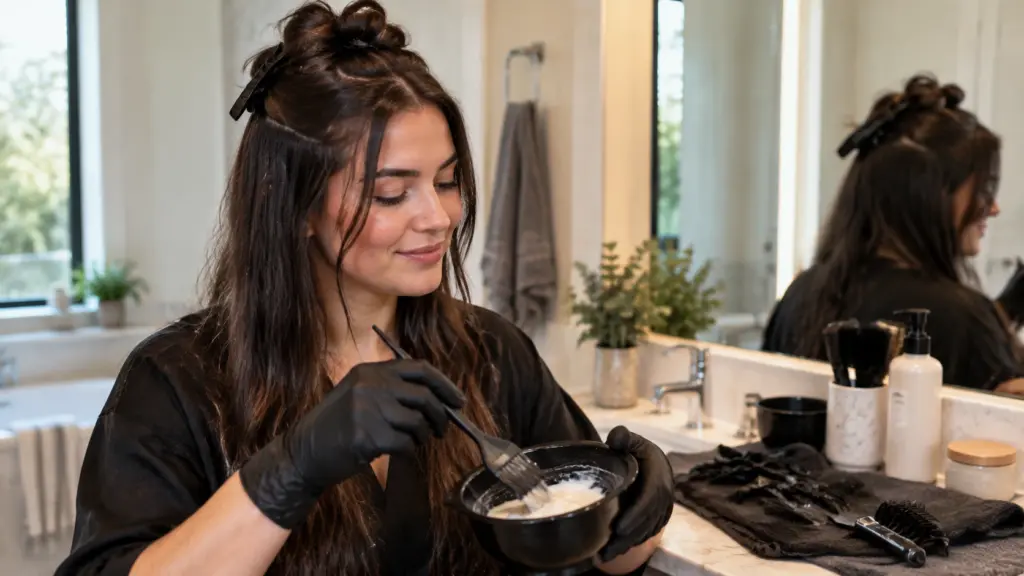

Box dye is formulated for all hair types, which means it contains higher concentrations of ammonia and hydrogen peroxide than most professional color products.
For most people, the occasional use of box-dyed hair products on healthy, unprocessed hair poses limited risk.
The real problems compound when it’s used repeatedly, applied over previously colored hair, or used to significantly lighten the natural shade.
I’ve stood in that drugstore aisle more times than I can count. Box in hand, comparing shades under fluorescent lighting, wondering if I was about to make a very expensive mistake.
It depends on what’s in the box, what’s already on your head, and how you use it. Here’s what to actually consider before you open the kit.
What’s Actually Inside a Box Dye
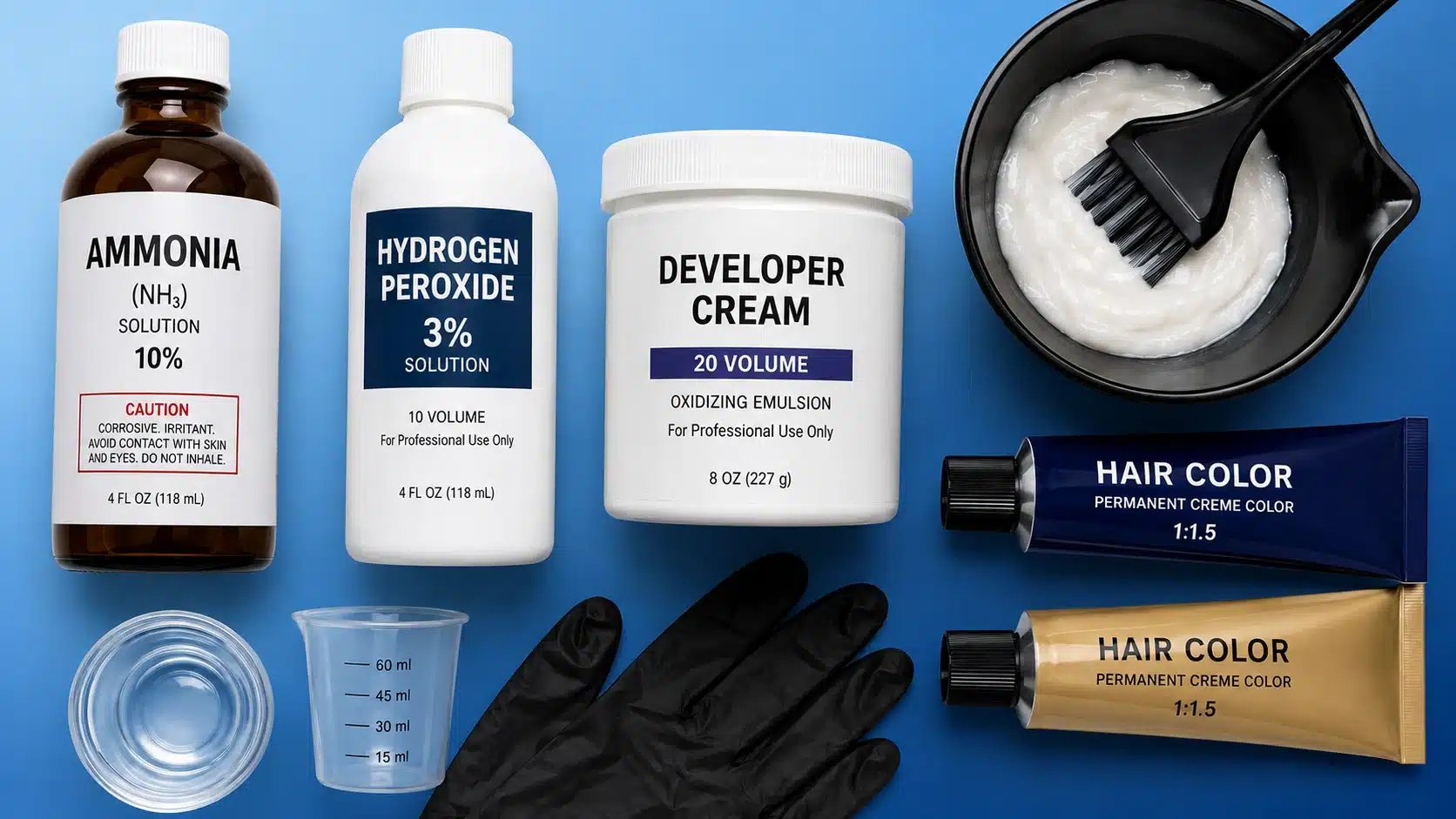
Most box dyes rely on a similar chemical base, no matter the brand or price. Understanding what each ingredient does helps you predict how the color will behave on your hair and what risks to watch for.
| Ingredient | What it does | Why it matters |
| Ammonia | Opens the hair cuticle so color can enter the hair shaft | Without ammonia or a substitute alkaline agent, color usually will not penetrate deeply enough to last |
| Hydrogen peroxide | Strips out natural melanin and helps new color molecules set | Higher peroxide volume creates more lift, but it can also be harsher on the hair |
| Standard developer | Comes pre-calibrated in most box dyes | It is made to work across many hair types, so it may deliver more peroxide than your hair actually needs |
| PPD | Creates long-lasting color, especially in darker shades | It is one of the most common contact allergens in hair products, so patch testing is important |
| Metallic salts | Help deposit color in some box dye formulas | Copper or silver compounds can react unpredictably with professional color or bleach later |
I always tell people to check the ingredient list before buying, not after. Most skip that step entirely, and it’s where many preventable problems start.
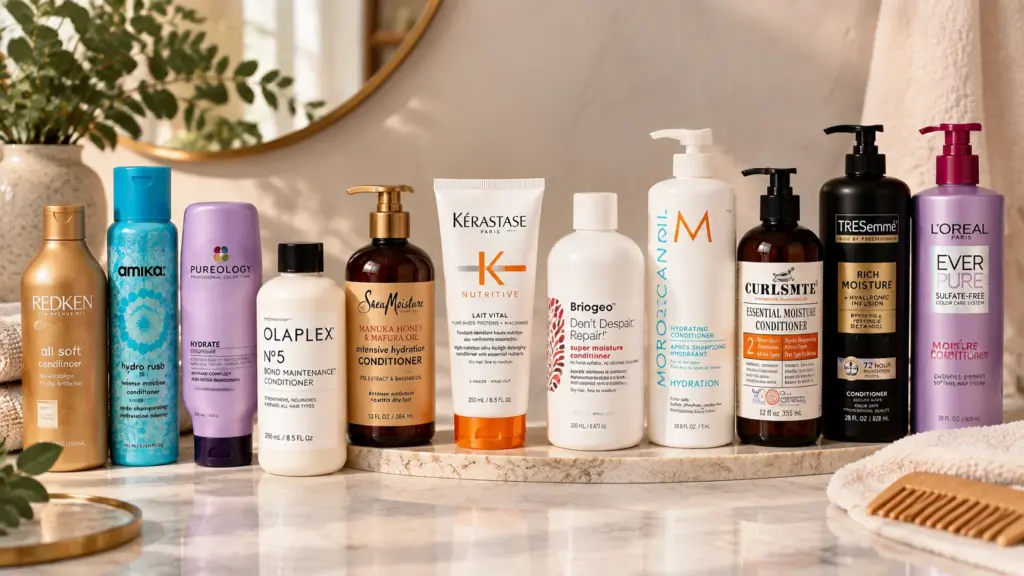
For anyone who colors at home regularly, pairing that habit with a good hair-washing routine goes a long way between sessions.
Why is Box Dye Bad for Your Hair?
Box dye damage rarely comes from one bad session. It builds over repeated use, through mismatched chemistry, and through decisions made without the full picture. Two issues show up most consistently.
1. One Formula for Every Head of Hair
Box dye is designed to work on any hair type, which sounds like a selling point, but is the source of most real problems.
Your hair’s thickness, porosity, texture, and color history all affect how it responds to chemical processing.
A formula calibrated to work on thick, coarse, completely unprocessed hair will behave very differently on fine, previously highlighted strands.
Hair that’s already porous from heat styling or past color can absorb dye too fast, producing a darker or muddier result than the box shows.
Fine hair may process unevenly across the sections. The color on the model on the front of the box is almost always a professionally staged result on hair similar to, but controlled by, the model.
The gap between that photo and what shows up on your head is where expectations break down.
Color correction after a bad box dye result takes significantly longer and costs more than the original service would have.
Some stylists charge by the hour for correction work, and it can run to multiple sessions depending on what happened.
2. High Ammonia and Peroxide Concentrations
The Environmental Working Group studied over 560 hair color products and found that the median hazard score for hair coloring products was a 6 out of 10 on their Skin Deep database.
Only 4 percent of products scored in the lowest-risk range, and most of those were temporary dyes. That’s a lot of moderate-to-high-hazard formulas sitting on an accessible shelf with a cheerful photo on the front.
Box-dye formulas need to work on a wide range of hair types, so chemical concentrations tend to be higher than necessary for any one person.
The ammonia forces the cuticle open aggressively, and once the cuticle is lifted, the hair is vulnerable.
According to research, permanent dyes penetrate into the cortex of the hair shaft and can alter its structure in ways that don’t fully reverse.
Repeated applications compound the stress each time, especially when the product is applied to lengths that have already been processed.
The result over time is dryness, rough texture, loss of elasticity, and increased breakage.
The Hair Dye Safety Checks: Most Boxes Do Not Explain
This is the part most labels don’t explain clearly.
PPD is the most common allergen in both box and professional hair dye. In the general population, sensitization rates are relatively low. Among people who have had a confirmed dye reaction, the rate is dramatically higher.
Experts recommend a patch test before every application, not just the first. Sensitivities can develop even after years of using the same product without problems.
A 48-hour patch test on the inner elbow or behind the ear is the only way to know before it goes on your scalp.
In its 15th Report on Carcinogens, the National Toxicology Program classified several chemicals used in hair dyes as reasonably anticipated to be human carcinogens.
The FDA does not currently require pre-market safety approval for coal-tar hair dyes, the most common type on shelves.
While regulatory requirements tightened under the Modernization of Cosmetics Regulation Act of 2022, gaps remain.
Checking the EWG’s Skin Deep database for a specific product before buying gives you a faster read on its formula than the box labeling usually provides.
When Box Dye Causes the Most Damage
The real risk with box dye depends less on the product and more on how and where you use it. Hair that has already been processed or repeatedly colored carries a much higher chance of damage.
| Risk level | Situation | What happens |
| Low risk | Using box dye on untreated hair | Hair generally tolerates the formula well |
| Moderate risk | Reapplying color over already dyed lengths | Color starts to build up unevenly |
| Moderate risk | Multiple rounds of permanent dye over time | Hair becomes less responsive and more fragile |
| Moderate to high risk | Large color change from natural shade | Requires stronger processing and more peroxide |
| High risk | Using box dye on bleached or chemically treated hair | Hair is more prone to breakage and uneven results |
| High risk | High peroxide exposure | Leads to protein loss in the hair structure |
| Very high risk | Metallic salts in the previous dye | Unpredictable reactions with future color or bleach |
Good scalp care between dye sessions also matters here. A clean, balanced scalp tolerates chemical processing better than one that’s been neglected or over-stripped.
How to Reduce the Risk if You’re Using Box Dye
If you decide to use box dye, these steps make a real difference in how your hair holds up.
- Patch test: Do it 48 hours before applying color, every time. Apply a small amount behind the ear or on the inner elbow and wait the full 48 hours.
- Stay close to your natural color: Keep the change within two to three shades to reduce lift and lower the peroxide load on your hair.
- Touch up roots only: Apply color only to the roots during touch-ups. Recolor the lengths only when they have genuinely faded.
- Space out applications: Wait at least four to six weeks between coloring sessions to reduce chemical stress.
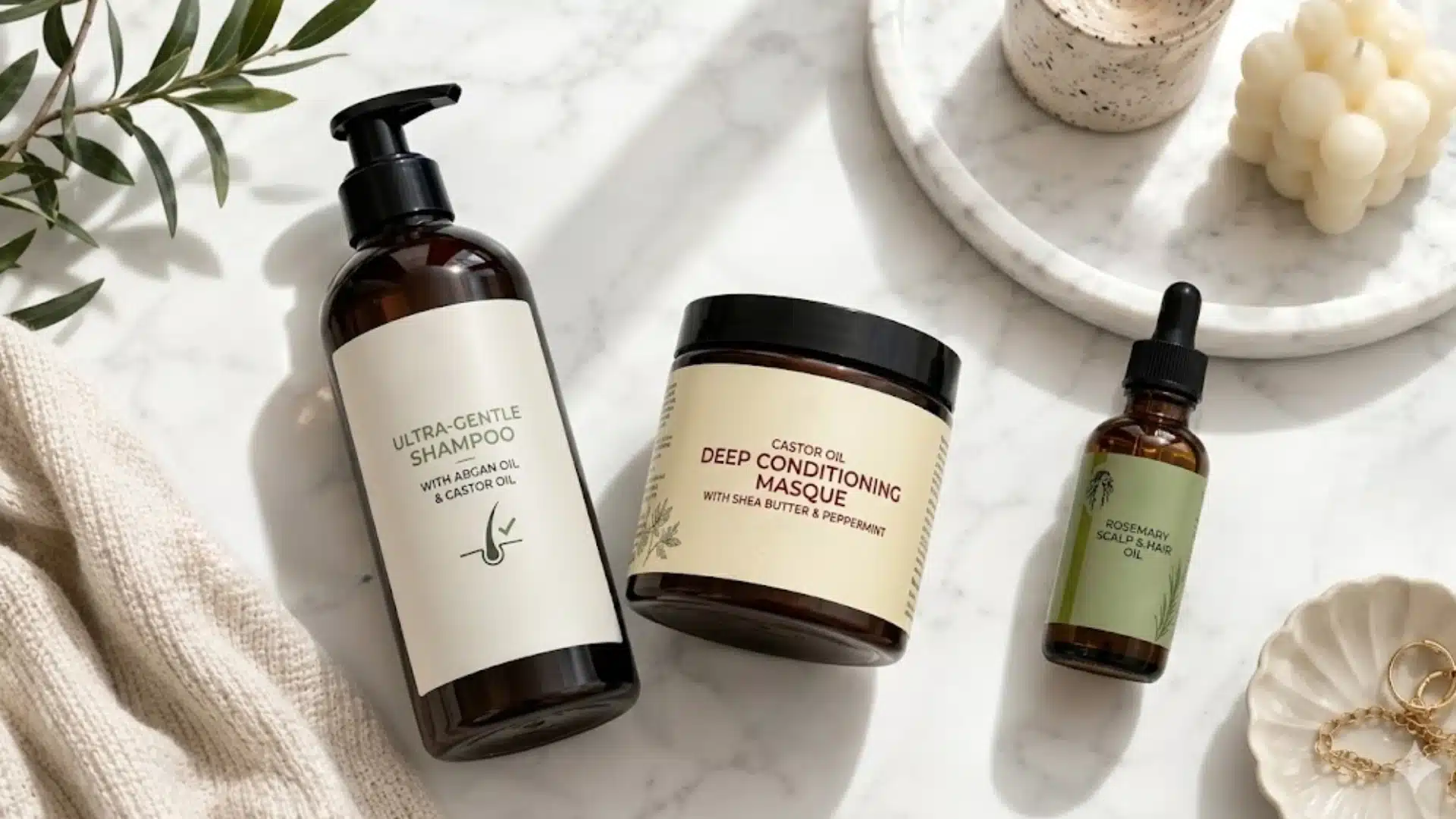
- Support your hair after coloring: Use a sulfate-free shampoo and a protein-restoring mask to help improve texture and resilience.
- Avoid major lightning at home: Do not use box dye to bleach or significantly lighten dark hair. The risk of breakage can be severe.
When is Box Dye Actually Fine to Use?
There’s a lot of categorical fear around box dye that doesn’t match reality for every person or every situation.
If your hair is healthy and unprocessed, you’re covering grays, and you’re targeting a shade close to your natural color, box dye is a genuinely low-risk option.
The chemistry is less aggressive, the result is more predictable, and the margin for error is wider. Many people use box dye this way without significant problems.
The risk scales upward with complexity. Highlighted hair, bleached hair, color-treated hair, or any attempt to go more than a couple of shades lighter raises the stakes in a meaningful way.
Those are the scenarios where professional guidance makes a difference that shows up in the condition of your hair months later.
I think of box dye as a tool with a specific range. Use it within that range, and it works well. Push it past its limits, and the results are harder to walk back than most people expect.
Conclusion
Box dye is not bad for your hair by definition. What makes it risky is the mismatch between a universal formula and the specific reality of your hair’s history, texture, and current condition.
Used carefully, on healthy, minimally processed hair, within a modest shade range, with proper spacing and real aftercare, box dye is a reasonable and cost-effective choice.
Used without that context, over-bleached or highlighted hair, to achieve dramatic lightening, or in rapid repeated applications, it causes real damage that can take months and real money to address.
The box can’t tell you whether it’s right for your specific hair. That part takes a bit of honest self-assessment before you open the kit.
If you’re unsure, talking to a colorist for even one consultation can save you from a decision you’ll spend months reversing.
Have you had a box dye experience you’d do differently? Or one that worked exactly as hoped? Share it in the comments; real experiences on this topic are more useful than almost anything else.
Frequently Asked Questions
Can Box Dye Cause Permanent Hair Loss?
Box dye does not usually cause permanent hair loss. Most damage leads to dryness, breakage, or temporary thinning rather than damage to the hair follicles. In rare cases, allergic reactions can irritate the scalp and increase shedding. A dermatologist can help identify the cause if hair loss continues.
How Long Should I Wait Before Using Box Dye Again?
It is best to wait at least four to six weeks before using the box dye again. This gives the hair time to recover from dryness and protein loss caused by coloring. Hair that still feels rough or weak may need more time before another treatment.
Can I Use Box Dye if I Have a Sensitive Scalp?
People with sensitive scalps may react to ingredients like PPD or ammonia. A patch test 48 hours before coloring is important. Semi-permanent dyes are often gentler because they contain less peroxide and no ammonia. If past reactions have occurred, speak with a dermatologist before coloring again.