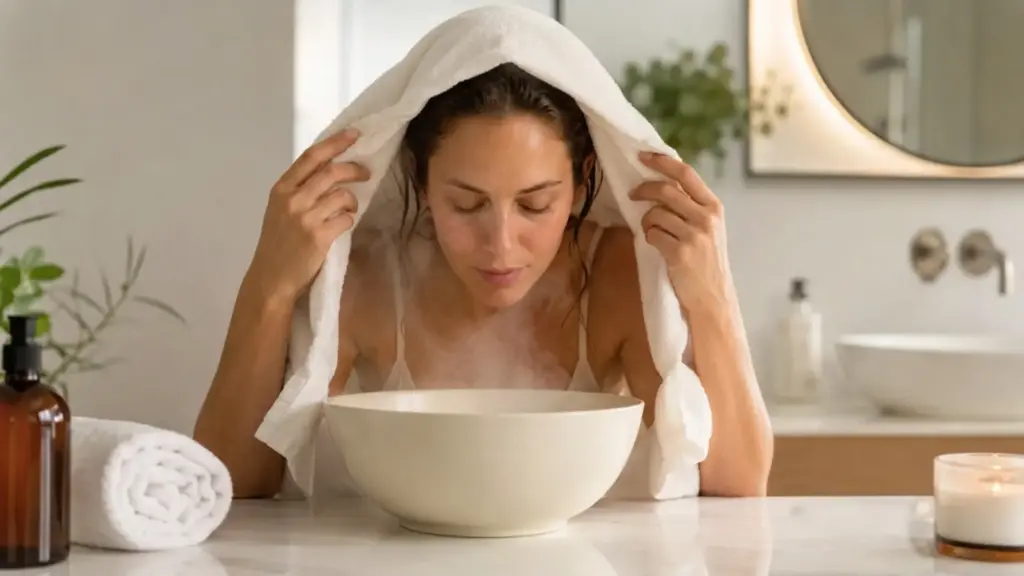
Facial steaming has been part of professional facials for decades, and the reason it keeps showing up in treatment rooms is simple: it works.
But the benefits of facial steaming depend almost entirely on how you sequence it. Most guides cover what steaming does without explaining the order that makes it effective.
That’s where things tend to go wrong at home. I first tried it with a bowl of hot water and a dish towel, thinking it was a little dramatic for a Tuesday night.
Then I applied my serum right after and noticed something I hadn’t felt before: it absorbed almost immediately, no patting needed.
That one small shift changed how I approached skincare preparation. This guide covers what steaming actually does, whether to steam before or after cleansing, and how to adapt it to your skin type.
What Does Facial Steaming Actually Do to Your Skin?
Steam affects the skin in a few simple ways:
- Skin surface: Steam warms and softens the outer layer, which helps loosen trapped sebum, dead skin cells, and debris.
- Blood flow: Heat increases circulation, which can give skin a warm flush and a more awake-looking tone.
- Pores: Steam does not open pores like a door. Pores do not have muscles, so they cannot truly open or close. What steam does is soften the contents inside a congested pore, making it easier to clear.
- Congestion: Steam softens buildup in the pores, making it easier to clear without harsh friction or force.
- Blackheads: Steaming alone does not remove blackheads, but it prepares the skin for the subsequent clearing step.
- Product absorption: Warm, softened skin allows serums and treatments to work more effectively than on dry, unprepared skin.
Research into skin hydration and temperature supports the idea that warmed, softened skin allows topical products to absorb and spread more effectively.
If you’re steaming specifically to address pore congestion, understanding what comes after matters just as much.
A practical guide on removing blackheads safely covers the extraction and treatment steps that follow a steaming session.
How does Facial Steaming Benefit your Skin?
Most guides talk about the benefits of facial steaming in a very general way. They mention softer skin, open-looking pores, and better product absorption, and then stop there.
That is helpful, but it does not explain why steaming may feel useful for one person and pointless for another. The real value comes from matching facial steaming to what your skin is actually dealing with.
Acne-prone, dull, dry, oily, and congested skin do not respond in exactly the same way. Steam can support each concern differently, as long as it is used gently and not treated like a cure.
1. For Acne-Prone Skin
For acne-prone skin, facial steaming can be helpful when the main issue is clogged pores, blackheads, whiteheads, or rough congestion under the surface.
According to the Cleveland Clinic, steam can soften sebum plugs and loosen the material sitting inside clogged pores. That is why steam is often used before professional extractions.
This does not mean steaming treats acne itself. It does not clear hormonal acne, cystic acne, bacterial inflammation, or red active breakouts. It simply makes comedonal congestion easier to manage by softening what is trapped inside the pore.
This is an important difference. If your skin has small bumps, blackheads, or closed comedones, steaming may make extractions gentler.
If your skin is inflamed, painful, or actively breaking out, too much heat may make redness worse. In that case, steaming should be short, mild, and occasional.
2. For Dull or Tired-Looking Skin
Dull skin often looks flat because the surface is dry, tired, or lacking visible circulation. A few minutes of gentle steam can make the skin look fresher because warmth encourages blood flow near the surface.
This temporary circulation boost can give the face a more awake look without relying on makeup or strong exfoliating products.
With consistent but careful use, facial steaming may also help skin look smoother because it softens the outer layer.
When followed with hydration, the skin often reflects light better, which can make uneven texture appear less noticeable.
3. For Uneven Skin Tone
Uneven tone can come from many things, including sun exposure, dryness, irritation, acne marks, and natural pigmentation.
Steam will not fade dark spots or replace ingredients like sunscreen, vitamin C, niacinamide, or retinoids. Still, it can support the skin by improving surface hydration and making the face look less dull.
When skin is dehydrated, uneven tone often looks more obvious. Fine lines, rough patches, and flat areas catch light unevenly.
Steaming before a hydrating serum can help the skin feel more flexible and look more balanced on the surface.
The key is not to overdo it. Too much heat can trigger redness, especially if the skin is sensitive or prone to flushing. For uneven tone, short and gentle sessions are better than long, intense steaming.
4. For Dry Skin
Dry skin can benefit from steam because it adds temporary moisture to the surface and softens the rough texture.
If your skin feels flaky, tight, or papery, a short steaming session can make it feel more comfortable before applying skincare.
The real benefit comes after steaming. Warm, damp skin is more ready for hydrating products. A serum with humectants, followed by a good moisturizer, can help trap that water before it evaporates.
Without this step, the moisture from steam can disappear quickly and leave the skin feeling dry again.
For dry skin, steaming should feel soft and comforting, not hot or intense. Long sessions can do the opposite of what you want by increasing water loss from the skin. A few minutes are usually enough.
5. For Dehydrated Skin
Dry skin and dehydrated skin are not the same. Dry skin lacks oil, while dehydrated skin lacks water.
Facial steaming can be especially useful for dehydrated skin because it temporarily increases surface moisture and makes the skin feel more supple.
After steaming, apply hydrating products while the skin is still slightly damp. This is when ingredients like hyaluronic acid, glycerin, aloe, and lightweight moisturizers can work better.
The goal is to seal in hydration before the skin cools and dries down.
If you steam and then leave your face bare, your skin may feel tight again within minutes. That is why the post-steam routine matters as much as the steam itself.
6. For Congested Skin
Congested skin often feels bumpy, heavy, or rough, especially around the nose, chin, forehead, and jawline. Facial steaming can help by softening the oil and buildup sitting inside the pores.
This makes the skin feel more pliable and easier to cleanse.
Steam can also make clay masks, gentle exfoliants, and pore-focused treatments feel more effective because the skin is already softened.
However, this does not mean you should stack too many strong products after steaming. Warm skin can be more reactive, so harsh scrubs or strong acids may sting more than usual.
For congestion, steaming works best when paired with a calm routine. Cleanse first, steam briefly, use a gentle treatment if needed, then moisturize. The goal is to loosen buildup without stripping the skin.
7. For Oily Skin
Oily skin can benefit from facial steaming when the oil has hardened inside the pores and created blackheads or a rough texture. Steam helps soften that oil, making it easier to cleanse away surface buildup.
However, oily skin does not need aggressive steaming. More heat will not make your skin produce less oil. In some cases, too much heat can leave the skin irritated, which may make it feel oilier later.
The best approach is balance. Use steam as a softening step, not as a way to dry out the skin.
After steaming, a lightweight, non-greasy moisturizer can help keep the skin comfortable without adding heaviness.
8. For Blackheads
Blackheads are one of the main reasons people try facial steaming at home.
Steam can make blackheads easier to remove because it softens the sebum and dead skin trapped inside the pore. This can make gentle extraction less irritating than trying to squeeze dry skin.
Still, steam does not permanently shrink pores or stop blackheads from coming back. Blackheads often return when oil, dead skin, and debris build up again.
For longer-term results, facial steaming works better alongside a consistent routine that includes gentle cleansing, exfoliation, and lightweight hydration.
If you remove blackheads at home, keep the pressure light. Redness, pain, or deep squeezing means you are going too far.
9. For Product Absorption
One of the biggest benefits of facial steaming is how it prepares the skin for the products that follow. Warm, damp skin tends to feel softer, which can help serums and moisturizers spread more evenly.
This does not mean steam pushes products deep into the skin in a dramatic way.
It simply creates a better surface for hydration. When the outer layer is softened, skincare often feels smoother and more comfortable to apply.
The best products to use after steaming are hydrating and calming formulas.
Think lightweight serums, soothing gels, barrier-supporting moisturizers, and simple creams. Strong exfoliants, retinoids, or active treatments may feel more intense right after heat, so use them carefully.
Should You Steam Before or After Cleansing?
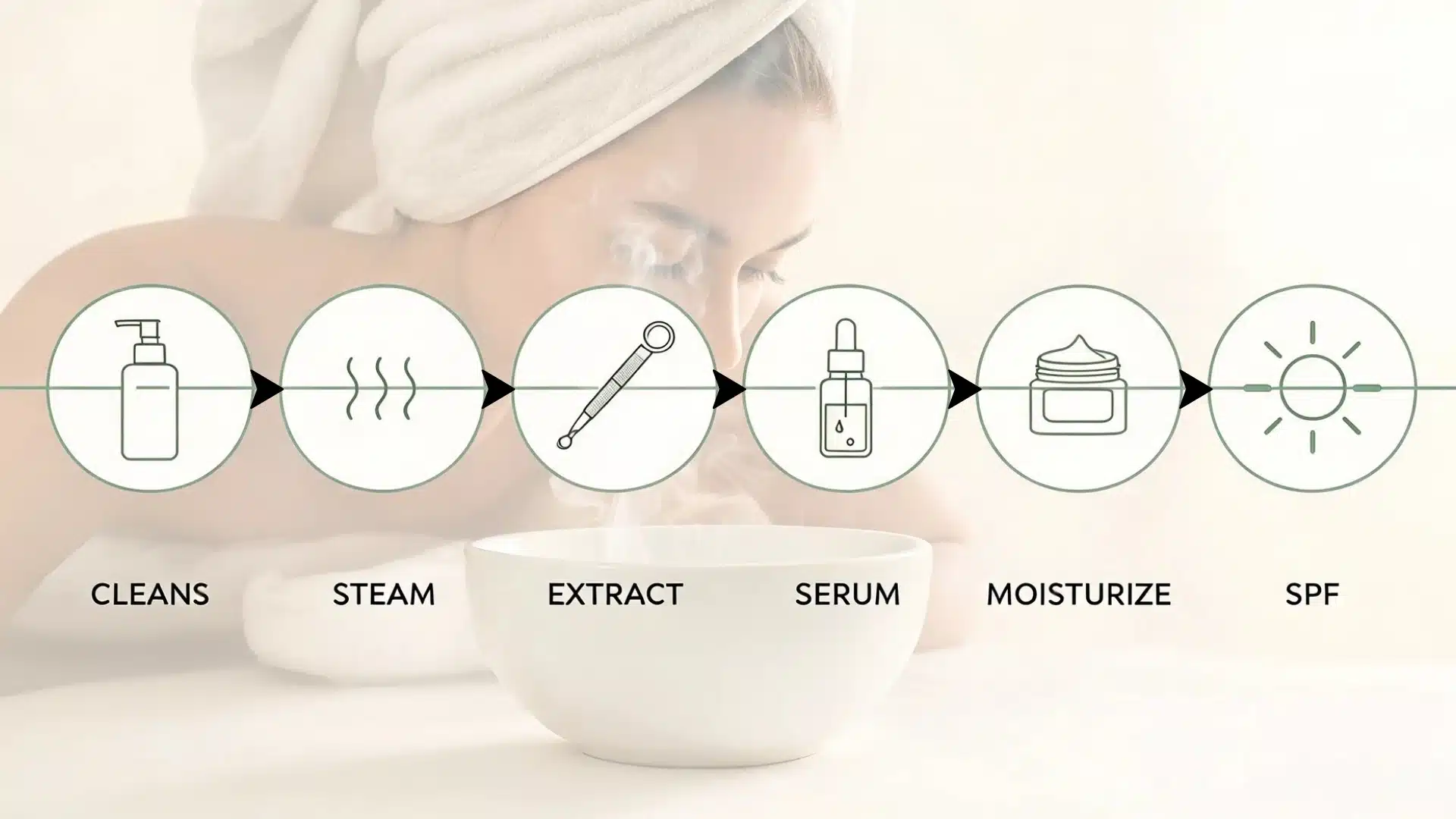
This is the question most people skip. The correct order is: cleanse first, then steam. The reason is simple: Steaming increases the skin’s permeability.
When the surface softens and becomes more receptive, whatever is sitting on top, SPF, old makeup, pollution particles from the day, gets the same easier pathway into pores that your actives do.
Steaming onto uncleaned skin doesn’t release impurities. It risks pushing surface residue further in.
A clean face going into the steam means the process works as intended: softening what’s already trapped inside, not adding to it. The full recommended sequence looks like this:
- Cleanse with a gentle, pH-balanced cleanser suited to your skin type. Pat almost dry, leaving the skin slightly damp.
- Steam for 5 to 10 minutes. See timing by skin type in the section below.
- Extract or mask while pores are still soft. If you’re clearing blackheads, this is the window. If you’re treating or hydrating, apply your mask now.
- Apply serum while the skin is still slightly warm. This is when hyaluronic acid for skin and similar actives absorb most effectively.
- Moisturize to seal everything in and support the skin barrier.
- Add SPF if this is a morning session, though steaming generally works better in the evening when there’s no UV exposure immediately following.
A lot of people ask whether to cleanse again after steaming. A light rinse with cool water is fine to clear any loosened residue, but a full second cleanse isn’t necessary.
Over-cleansing at this stage disrupts the barrier and undoes what the steam helped you set up.
What to Apply to Your Face After Steaming?
The window right after steaming is worth protecting. Skin is warm, softened, and more permeable than usual. What you apply here absorbs faster and goes deeper than it would on unprepared skin.
- Hydrating serum first: Hyaluronic acid for skin works especially well post-steam because the warmth helps it draw in moisture rather than sit on the surface. Niacinamide serums also absorb cleanly at this stage.
- Treatment mask (if using one): Apply immediately after steaming while pores are still soft. Clay masks draw out remaining debris; sheet masks and gel masks lock in hydration.
- Moisturizer to seal: Once your serum or mask has absorbed, apply moisturizer to trap the hydration and restore the skin barrier.
- Avoid strong actives on freshly steamed skin: Retinoids, high-strength acids, and vitamin C should be used with caution immediately post-steam. The same permeability that helps hydrators absorb also makes irritants hit harder.
If you use these regularly, apply them after your moisturizer has had a few minutes to calm the skin, or skip them on steaming nights.
For sensitive skin, skip retinoids or strong acids after steaming, and use a basic serum and moisturizer instead.
How to Steam Your Face at Home?

You don’t need a facial steamer device to get solid results. The bowl method works just as well if the water temperature is right.
Bowl Method
- Boil water and pour it into a wide, heat-safe bowl. Let it cool for 60 to 90 seconds so the steam is warm but not scalding.
- Position your face 20 to 30 centimeters above the water.
- Drape a clean towel over your head to create a loose tent, trapping the steam around your face.
- Keep your eyes closed and breathe through your nose. Steam near the eyes can irritate.
- Stay for 5 to 10 minutes. You don’t need longer.
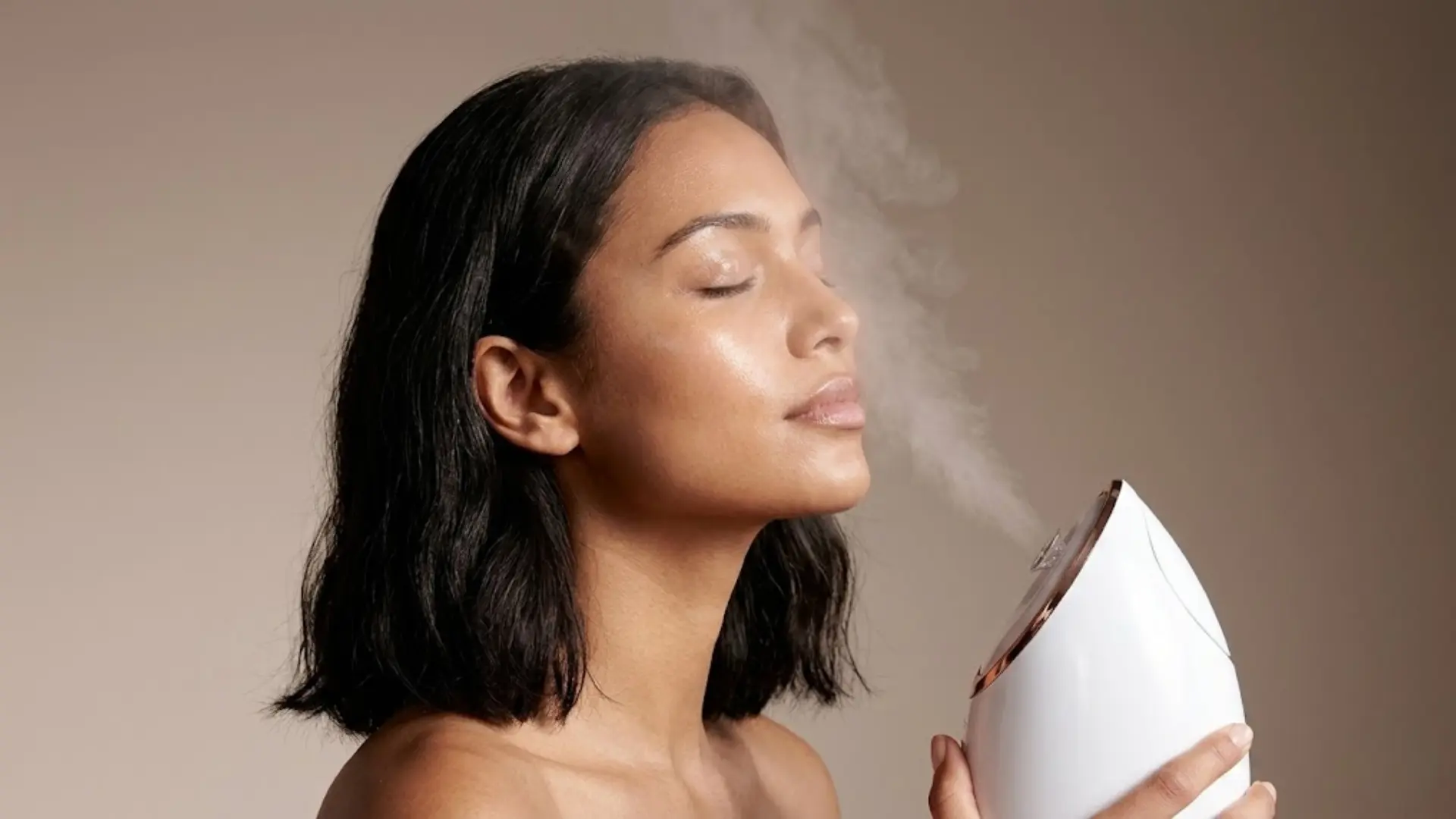
Facial steamer device: Handheld and tabletop steamers produce a steadier, more consistent mist that doesn’t cool off mid-session. Follow the manufacturer’s distance guidance, which typically falls within the same 20 to 30 centimeter range.
Herbs and Essential Oils
Chamomile or dried lavender added to the water brings a calming effect and may help reduce post-steam redness.
A few drops of diluted tea tree oil can be useful for acne-prone skin. Keep essential oils well diluted; anything too concentrated can irritate the skin even through steam.
Steaming fits naturally into your evening skincare routine, since there’s no sun exposure afterward and your skin has the full night to absorb your treatments.
How Often Should You Steam Your Face?
Frequency matters more than most people think. Steaming too often strips and irritates the skin barrier rather than preparing it.
A session calibrated to your skin type, done consistently, does more than frequent sessions that leave skin over-processed.
| Skin Type | How Often to Steam |
|---|---|
| Oily or acne-prone skin | 1 to 2 times per week |
| Normal or combination skin | Once a week |
| Dry or dehydrated skin | Once every 1 to 2 weeks |
| Sensitive skin | Every 2 weeks at most |
If your skin feels tight, dry, or unusually reactive after a session, reduce frequency. That’s the signal to pull back, not to add more product and push through.
Who Should Be Careful with Facial Steaming?
Steaming works well for most people. There are real situations, though, where it does more harm than good.
Note: This section is for general information only. If you have a diagnosed skin condition, consult a dermatologist before adding facial steaming to your routine.
1. Rosacea and Couperose Skin
Heat is one of the most consistently documented triggers for rosacea flares. The National Rosacea Society (NRS) identifies direct heat exposure as a primary environmental aggravant for the condition.
If your skin tends to flush easily, stays red for extended periods, or shows visible broken capillaries, facial steaming adds direct heat to blood vessels that are already reactive.
A few steaming sessions, and their skin would stay reactive for days. Switching to a cool-water rinse as a prep step instead made a real difference.
Skipping steaming entirely and finding other ways to prep the skin for product absorption is the safer approach here.
2. Active Inflammatory Acne
There’s a difference between comedonal acne (blackheads, whiteheads, congestion) and active inflammatory acne (red, swollen, painful breakouts). Steam can assist with the first type.
For active inflammatory breakouts, added warmth increases inflammation, and the temporary surface permeability can make it easier for bacteria to spread to adjacent areas. Wait until the active flare has settled.
3. Eczema and a Compromised Skin Barrier
When the skin barrier is already disrupted, cracked, weeping, or raw, steam applies heat to a surface that cannot regulate moisture properly.
Instead of helping the skin feel cleaner, it can pull away more hydration, increase redness, and make stinging or tightness feel worse. Heat may also slow the comfort stage of healing by keeping the area reactive.
Let the skin recover first, then return to gentle care before adding any heat-based treatment back into the routine.
Signs You’ve Over-Steamed
Steaming should leave skin feeling soft and relaxed. These signs mean the session was too long, the water was too hot, or the skin was not ready for steam that day:
- Redness that lingers: A little flushing right after steaming is normal because heat increases blood flow to the surface. Redness that lasts more than an hour suggests the skin was exposed to excessive heat or steamed for too long.
- Tight or flaky skin after drying: Skin should not feel stretched after steaming. Tightness, dry patches, or flaking often mean the barrier has been stripped rather than prepared.
- Increased product sensitivity: Actives that normally absorb without issue may start to sting, burn, or irritate. This usually points to a weakened surface layer that needs rest.
- Extra oiliness later in the day: Skin may produce more oil when it feels dried out after steam. This can make the face look shiny even though the barrier feels tight underneath.
- Small bumps or breakouts: Over-steaming can leave skin more reactive, especially when followed by strong exfoliants or heavy products. New bumps after steaming are a sign to reduce frequency.
- Burning or warmth that lasts: Skin should cool down shortly after the session. Lasting heat, burning, or discomfort means the steam was too intense and should be avoided until the skin feels calm again.
Conclusion
The step itself is simple. What makes it useful is what surrounds it. Cleanse first, so the steam can work on what’s actually inside the skin rather than what’s sitting on top.
Follow with your actives while the skin is still warm. Keep sessions short and spaced according to your skin type. I’ve worked with clients whose skin didn’t respond well to steaming until we adjusted the sequence and the frequency.
Two small changes, and suddenly the rest of their routine worked better too.
That’s what I keep coming back to with steaming: it’s a preparation tool. The better you use it, the more everything that follows it improves.
If steaming is already part of your routine, I’d love to know how you’ve made it work for your skin. Drop your approach in the comments below.
Frequently Asked Questions
Can You Steam Your Face Every Day?
Daily steaming is too frequent for most skin types. Steaming more than two or three times a week can gradually weaken the skin barrier, leading to dryness, sensitivity, and irritation.
Even oily skin, which tolerates more regular steaming than most, benefits from rest days between sessions.
Is It Safe to Steam Your Face While Pregnant?
Mild, brief steam sessions are unlikely to cause harm, but prolonged heat exposure is generally approached with caution during pregnancy since raised body temperature can be a concern.
It’s worth checking with your midwife or OB-GYN before including any heat-based treatments in your routine.
Can Facial Steaming Help with Blackheads?
Yes, in a preparatory capacity. Steam softens the sebum and debris packed inside a blackhead, making it easier to remove with gentle pressure or a comedone tool afterward.
It doesn’t dissolve or extract blackheads on its own. You still need to follow up with a proper extraction technique or a salicylic acid treatment.
Can You Steam Your Face with a Mask on?
Yes, and it’s one of the more efficient ways to use steaming. Applying a hydrating or treatment mask to clean skin before steaming allows the warmth to help the mask’s ingredients penetrate more deeply.
This works well with nourishing sheet masks and gel masks. Avoid this approach with clay masks, which should be applied after steaming when pores are softened, not during.