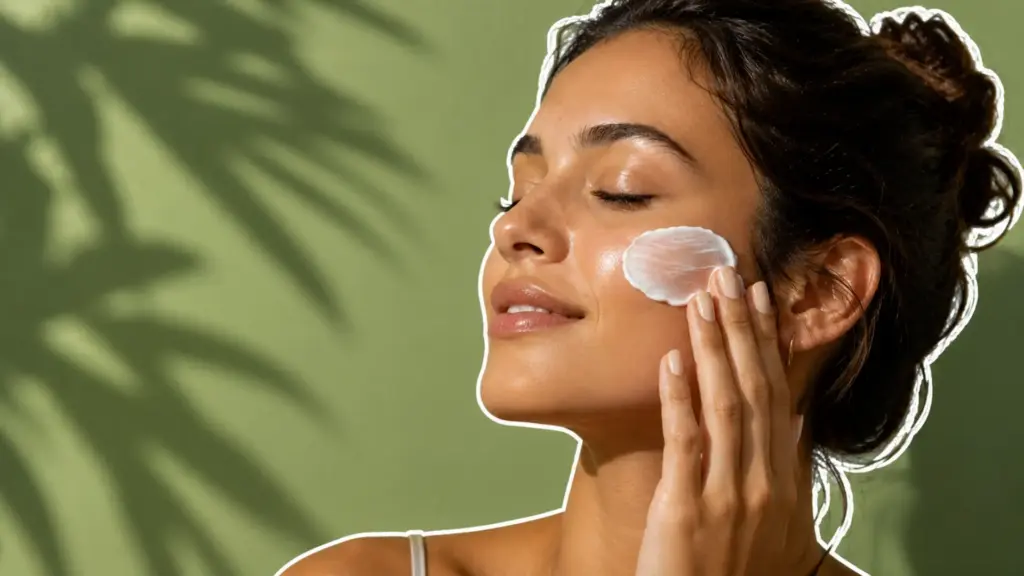
If you’ve worn sunscreen all day and still come home with a tan, you’re not doing anything wrong. SPF reduces UV exposure, but it doesn’t build a complete barrier between your skin and the sun.
The idea that sunscreen blocks all tanning is one of the most common misconceptions in skincare, and it’s worth understanding clearly.
I used to coach outdoor swim meets through some very long afternoons. I wore SPF 30 every single day, reapplied it faithfully, and still ended each season with visible tan lines across my shoulders and arms.
For a while, I assumed I was doing something wrong. Turns out, I wasn’t. Sunscreen was working exactly as it should.
What I didn’t fully understand then, and what most people still don’t, is that the question “Does SPF prevent tanning?” has a more detailed answer than yes or no.
Once I understood that distinction, I stopped feeling like sunscreen had failed me and started using it in a way that made real sense.
Disclaimer: The information in this post is for educational purposes and does not constitute medical advice. Consult a dermatologist for personalized skin care guidance.
What is Tanning?
A tan is your skin’s injury response.
When UV rays reach the surface, specialized cells called melanocytes produce a pigment called melanin to absorb and scatter that radiation before it can damage deeper layers.
The more UV exposure your skin receives, the more melanin it makes, and the darker you appear. Two types of UV rays reach the earth’s surface.
UVA rays penetrate deeper into the skin, trigger immediate melanin oxidation (the tan that appears within hours of being outside), and are the primary driver of premature aging and hyperpigmentation over time.
UVB rays affect surface-level cells, cause sunburn, and produce a delayed tan that develops 48 to 72 hours after exposure.
Both are present year-round, even on overcast days. Both can reach your skin through windows, reflected off water, and off sand.
Understanding which one your sunscreen actually addresses is where a lot of sun care routines quietly fall short.
If you’re curious about what happens to that color once you have it, the biology behind how long your tan lasts is more involved than most people expect.
Does SPF Prevent Tanning?
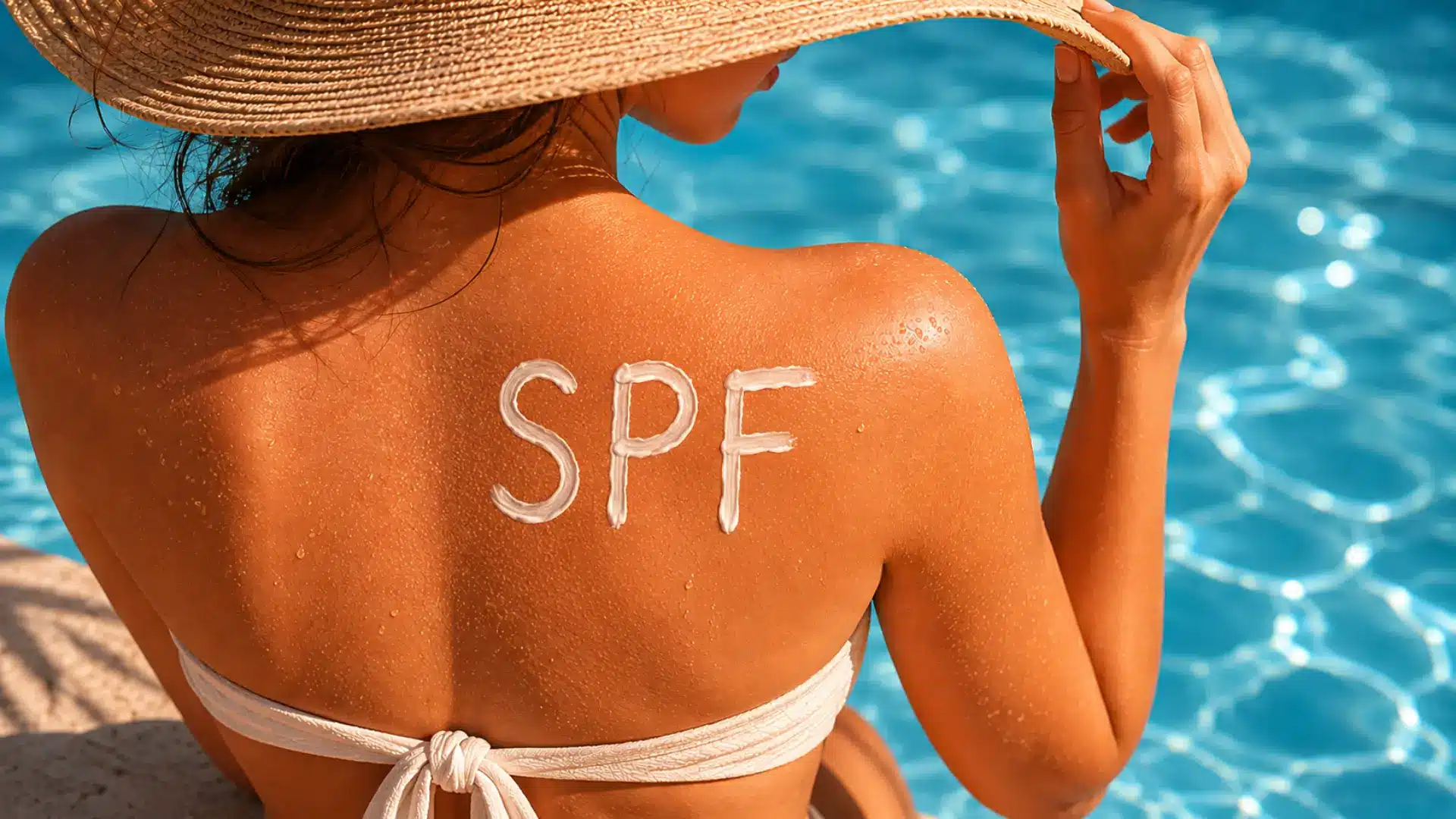
SPF, or Sun Protection Factor, measures how well a sunscreen blocks UVB rays. That’s it.
A sunscreen labeled SPF 30 does not automatically block the UVA rays responsible for the deeper, slower tan that builds through summer.
To actually reduce tanning, your sunscreen needs to say “broad-spectrum” on the label. That designation means the formula has been tested and confirmed to filter both UVA and UVB rays.
A regular SPF without that label won’t meaningfully slow your UVA-driven tan, regardless of how carefully you apply it.
It’s also worth knowing that UVA protection options in the US are more limited than in other markets.
The only chemical UVA filter currently approved by the FDA is avobenzone, which means formula quality and stability matter more than the SPF number alone when you’re choosing a sunscreen for tanning prevention.
Even with a broad-spectrum formula, some UV still gets through. The American Academy of Dermatology (AAD) notes that SPF 50 blocks approximately 98% of UVB rays, meaning 2% still reaches your skin.
That’s enough to slowly stimulate melanin production over the course of an afternoon. Yes, you can still tan through SPF 50. That’s not a flaw in the sunscreen. It’s just the limit of what sun protection can do.
SPF Levels and Tanning: What the Numbers Mean
Here’s how the protection numbers actually break down:
| SPF | UVB rays blocked | UVB rays reach the skin |
|---|---|---|
| SPF 15 | ~93% | ~7% |
| SPF 30 | ~97% | ~3% |
| SPF 50 | ~98% | ~2% |
| SPF 100 | ~99% | ~1% |
The gap between SPF 50 and SPF 100 is one percentage point. For most people, a correctly applied broad-spectrum SPF 30 or 50 provides reliable daily protection.
The bigger problem is usually not which SPF you buy. It’s how much you use.
Research from the American Academy of Dermatology shows that most people apply only 20 to 50% of the recommended amount of sunscreen.
When you apply half the product, you get roughly half the protection. That SPF 30 on the label can drop to an effective SPF of 10 to 15 on your actual skin.
The recommendation is about 1 ounce, roughly a shot glass of product, for full body coverage, and 1/4 teaspoon for the face and neck.
Your environment also changes how much UV reaches you, even with SPF applied.
Beach sand reflects an additional 15 to 25% of UV radiation back onto your skin. Water adds 10 to 15%. At high altitude, UV intensity increases roughly 4% per 1,000 feet of elevation.
None of these factors break your sunscreen, but they do mean your exposure is meaningfully higher than you might expect.
Do You Tan Better with Sunscreen?
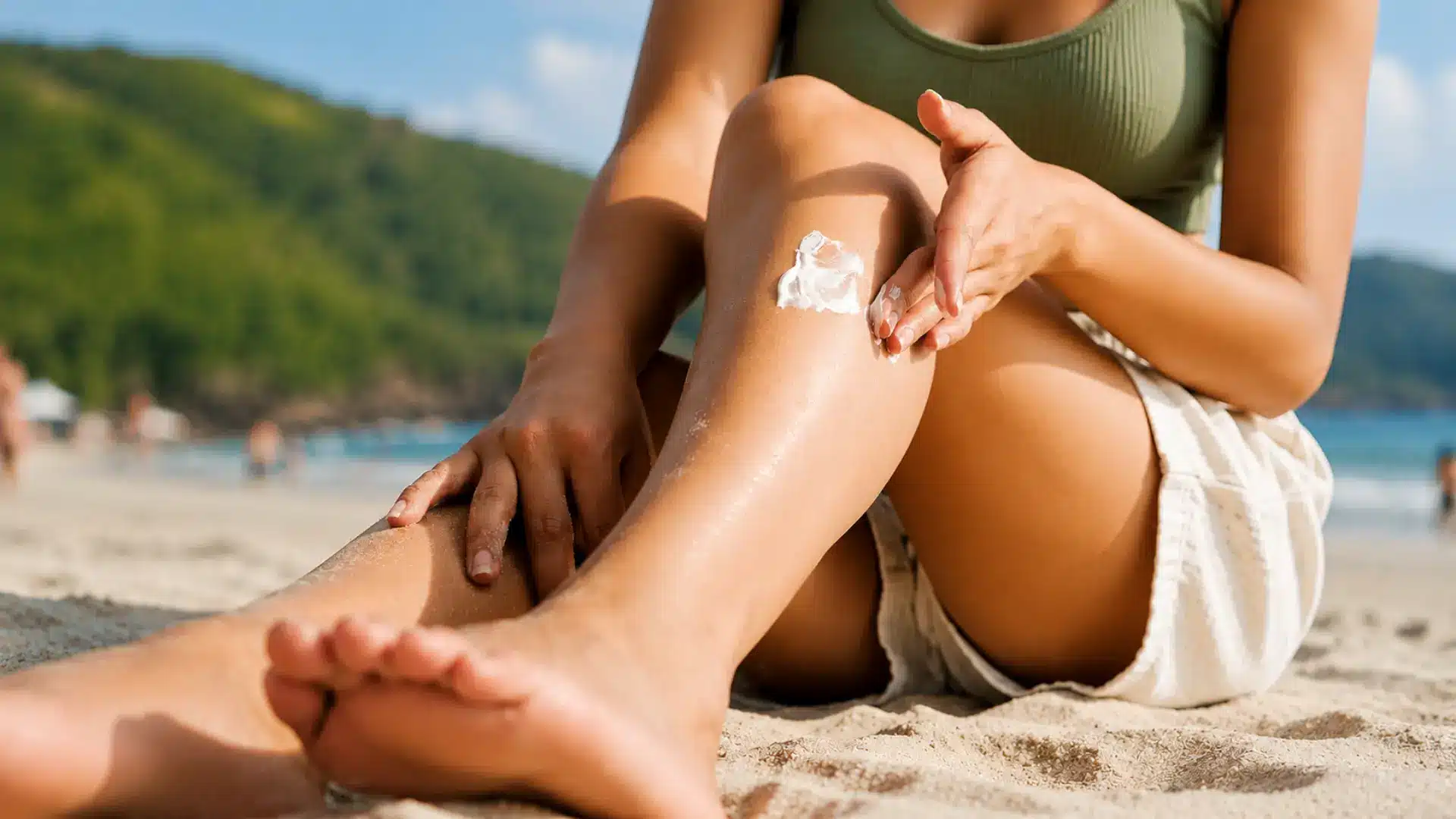
This is the question underneath the question. And the answer depends on what “better” means to you.
- If better means faster, no. Sunscreen reduces the rate of UV exposure, so any tan that develops through an SPF formula will form more slowly than one you’d get unprotected. That’s the point.
- If better means safer, then yes. A gradual tan that develops over time with SPF applied is far less damaging than one that appears quickly on bare skin.
NIH/PMC research found that repeated low-level UVA1 exposure can cause dermal damage in human skin, even when tanning occurs.
The visible color is not the whole picture of what’s happening. There’s also a persistent idea that using a lower SPF, like SPF 15, will help you tan more evenly or more naturally.
In practical terms, the difference in tanning speed between SPF 15 and SPF 30 is small. The difference in cumulative skin damage is not.
The FDA is direct on this: Any increase in skin pigmentation from UV exposure is a sign of skin damage. A tan is your skin producing melanin defensively, not a cosmetic process happening separately from the harm.
Do Skin Types Matter?
Skin type changes how quickly you tan and how visible the damage is, but it does not determine whether UV rays harm you.
The Fitzpatrick scale classifies skin into six types based on sun response. The table below shows how each type tans, burns, and what that means for SPF.
| Fitzpatrick type | Skin description | Sun response | SPF guidance |
|---|---|---|---|
| Type I | Very fair, often freckled | Always burns, never tans | SPF 50+ daily, reapply frequently |
| Type II | Fair, light eyes | Burns easily, tans minimally | SPF 50+ recommended |
| Type III | Medium, beige tone | Burns moderately, tans gradually | SPF 30–50, consistent reapplication |
| Type IV | Olive or light brown | Burns minimally, tans easily | SPF 30+, don’t skip UVA protection |
| Type V | Brown skin (includes many South Asian, Latin, Middle Eastern tones) | Rarely burns, tans deeply | SPF 30+ is still required; UVA damage accumulates silently |
| Type VI | Deep brown to dark skin (includes much East African, Caribbean skin) | Almost never burns | Melanin offers ~SPF 3–4 natural protection only; broad-spectrum SPF essential |
That last column is where most mainstream sun care guidance falls short. Darker and South Asian skin tones are frequently told, or simply assumed, that they don’t need SPF.
A tan that shows up without a burn still means UV has damaged the skin. UVA rays penetrate deeply regardless of skin tone and are linked to hyperpigmentation, uneven texture, and long-term cellular changes.
Broad-spectrum SPF is applied to every row in that table. If you follow a multi-step skincare approach, K-beauty skincare routines treat SPF as a non-negotiable morning step, which is worth noting.
Disclaimer: Sun protection recommendations may vary based on individual skin conditions. Consult a dermatologist if you have concerns about UV sensitivity, hyperpigmentation, or skin cancer risk.
How to Apply Sunscreen so It Actually Works?

Getting the SPF level right matters less than applying the product correctly. These are the details that change how well your sunscreen actually performs:
- Amount for the face: Use about 1/4 teaspoon for the face and neck. Most people apply a fraction of that.
- Amount for the body: Use approximately 1 ounce (the volume of a standard shot glass) to cover all exposed skin fully.
- Timing: Apply 15 to 30 minutes before going outside. Chemical sunscreens need time to absorb and activate; mineral formulas work on contact, but applying early allows for even coverage.
- Reapplication: Every two hours during outdoor exposure and immediately after swimming or heavy sweating. “Water resistant” on a label means the SPF holds for 40 or 80 minutes in water. It doesn’t mean the protection lasts all day.
- Missed spots: Ears, the back of the neck, the tops of hands, and the scalp (if not covered) are consistently undertreated and prone to cumulative exposure.
Both chemical sunscreens (which absorb UV and convert it to heat) and mineral sunscreens (which use zinc oxide or titanium dioxide to scatter UV before it penetrates) need consistent, full coverage to work as labeled.
If you use tanning beds and want guidance on fair skin protection, tanning bed lotions for fair skin cover formulas that balance coverage and hydration for lighter complexions.
Can You Tan without Damage?
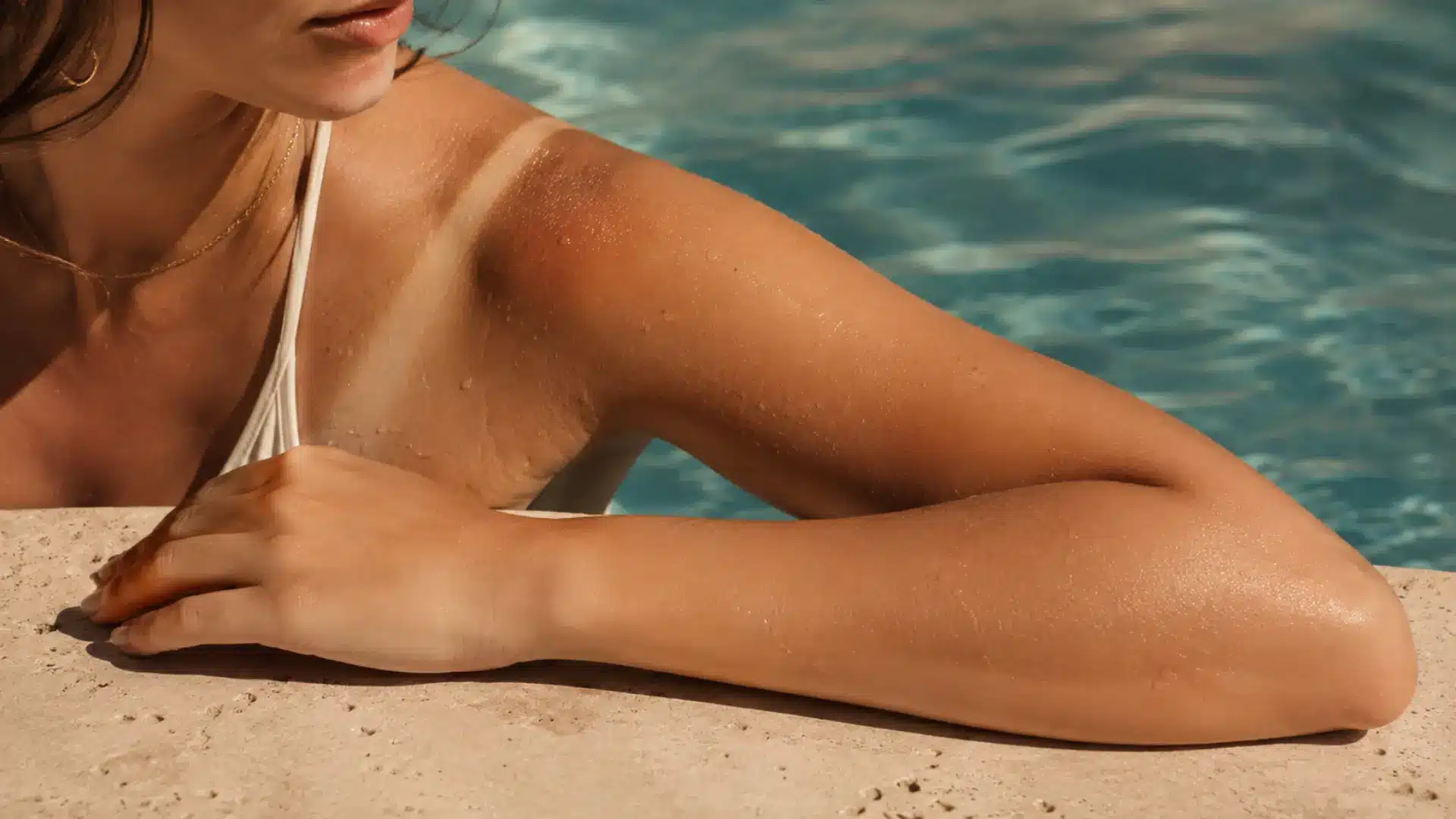
The FDA is clear: there is no such thing as a safe tan from UV exposure.
Self-tanners are the only way to get a tanned appearance without triggering melanin production through UV damage.
The active ingredient in most self-tanners is dihydroxyacetone (DHA), which reacts with amino acids in the outermost layer of skin to temporarily darken it. No UV needed. No DNA damage involved.
To get an even result from a self-tanner:
- Exfoliate 24 to 48 hours before applying to remove dead surface skin
- Moisturize any dry patches (elbows, knees, ankles) before you apply
- Work in thin, even layers rather than a heavy application in one pass
- Wash your hands immediately after, unless tanned palms are part of the plan
Spray tans follow the same DHA principle with a professional application. The color fades naturally over 7 to 10 days as surface skin cells shed.
Neither self-tanners nor spray tans offer UV protection on their own, so sunscreen is still necessary before any sun exposure.
Tinted sunscreens made with iron oxide are worth knowing about here, too.
They provide broad-spectrum UV protection plus a light color adjustment in one product, which makes them a practical daily option for anyone who wants some warmth in their complexion without a separate self-tanner step.
Conclusion
SPF doesn’t erase a tan. It reduces the UV exposure that triggers one, slows the rate at which melanin forms, and limits the damage building in the layers you can’t see.
The tan you might develop through a correctly applied SPF 30 is slower and less harmful than one you’d build unprotected, but the more meaningful result is the skin damage that didn’t accumulate over time.
The goal was never to block out the sun completely. It’s to give your skin the protection it needs to stay healthy over the long run, not just look good this season.
A broad-spectrum SPF 30 or higher, applied generously and reapplied every two hours, is the most straightforward way to get there.
What does your current sunscreen routine look like? Drop your SPF or any questions in the comments. I’d genuinely like to know what’s working for you.
Frequently Asked Questions
Can I Still Get Vitamin D if I Wear SPF 50?
Sunscreen does reduce vitamin D synthesis from sun exposure, but the effect in real-world conditions is modest. Most people don’t apply full coverage or stay in the sun long enough to block vitamin D production entirely.
If vitamin D levels are a concern, supplementation is more reliable and consistent than relying on unprotected sun exposure.
Does Expired Sunscreen Still Protect Against Tanning?
Expired sunscreen may still offer some protection, but the active ingredients can degrade over time, and the SPF listed on the label is no longer guaranteed.
The FDA requires sunscreens to maintain their stated SPF for at least 3 years from the date of manufacture. If the expiry date has passed or the formula looks separated or discolored, replace it.
Is Waterproof Sunscreen Better at Preventing Tanning than Regular Sunscreen?
Not significantly. “Water resistant” means the formula holds its stated SPF for 40 or 80 minutes during water activity, depending on what the label specifies. It doesn’t block a higher percentage of UV.
After that window, or after toweling off, the protection has diminished, and reapplication is needed regardless of the water-resistant claim.
Does Tinted Sunscreen Protect Against Tanning Better than Untinted SPF?
In some cases, yes. Tinted sunscreens formulated with iron oxide offer protection against visible light in addition to UVA and UVB rays.
For hyperpigmentation-prone skin, a tinted broad-spectrum SPF with iron oxide addresses a wider range of light exposure than standard untinted formulas.