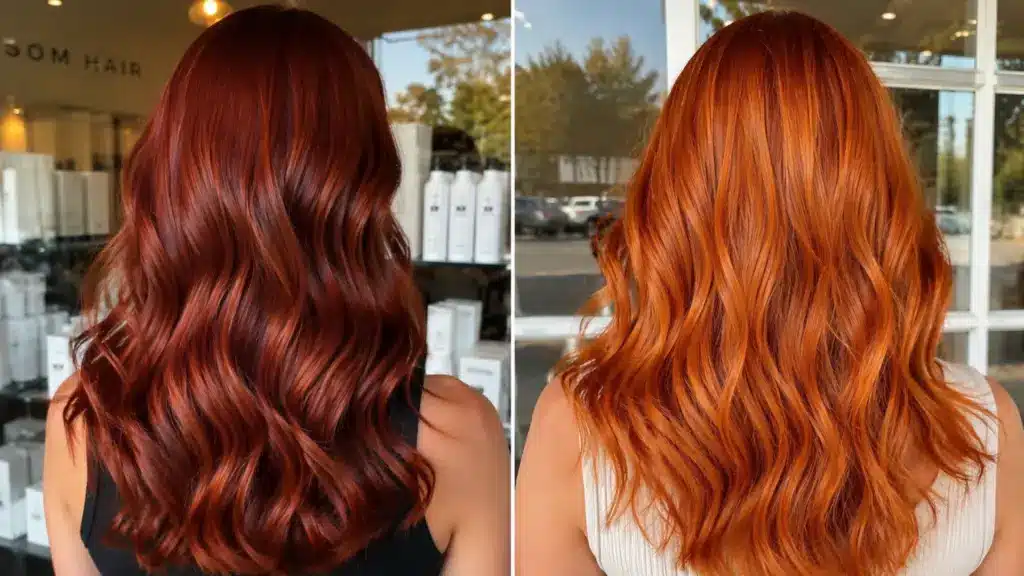
Red hair shades always spark debate, but few comparisons get as much attention as auburn vs copper hair.
I’ve sat in that salon chair more than once, holding two swatches under the light and genuinely not seeing the difference. One is auburn. One is copper.
They look close enough to feel interchangeable, and yet your colorist treats them like completely different colors. She’s right.
Both shades live in the warm red family, but they land on hair very differently.
Auburn pulls brown. Copper pulls orange. That one shift changes how the color reads on you, how fast it fades, and which skin tones it actually flatters.
If you’ve been going back and forth between the two, here’s everything worth knowing before you book.
What is Auburn Hair?
Auburn is a medium-to-dark brunette shade that blends brown with deep red undertones.
Depending on the formula, it can lean slightly cool with violet hints or stay warm with mahogany tones. In low light, auburn often looks like a rich brunette, while sunlight reveals its subtle red warmth.
Colorist Fabian Tamayo Garcia describes auburn as a mix of brown and deep red undertones that prevent the color from looking overly orange.
The brown base gives auburn depth, softness, and versatility, making it suitable for both casual and professional settings.
There are several common variations. Light auburn appears softer and can look caramel-like in bright light. Medium auburn offers the most balanced mix of red and brown. Deep auburn leans darker, closer to mahogany, with red tones becoming more noticeable in sunlight.
If you’ve done a soft summer color analysis on yourself, auburn is one of the shades that frequently comes up for cooler, muted undertones.
What is Copper Hair?
Copper is a bright orange-red hair color with strong golden undertones and very little brown base.
That lack of brown is what gives copper its vivid, light-reflective finish, even indoors. It often resembles the shine of a new penny or the warmth of autumn leaves.
One popular variation is “Cowgirl Copper,” a brighter take that blends soft brunette undertones with vibrant copper warmth. The result is bold, warm, and highly photogenic without looking overly dark.
Copper is also one of the trickier red shades to achieve. If the formula runs too warm, it can look overly orange.
Understanding your seasonal color analysis can help determine whether a softer, golden, or deeper copper shade will complement your complexion best. It is worth knowing your undertone before walking into that consultation.
Auburn and Copper Hair Differences
Auburn and copper may sit in the same red hair category, but the final result can feel completely different depending on lighting, upkeep, and overall intensity.
| Factor | Auburn | Copper |
|---|---|---|
| Base tone | Red-brown | Orange-gold |
| Depth | Medium to dark brunette range | Brighter, lighter overall |
| Light behavior | Darker indoors, warm in the sun | Vivid in all lighting |
| Fade pattern | Softens to warm brown | Can fade to peachy tones |
| Maintenance | Moderate | High |
| Statement level | Understated | Bold |
The fade pattern difference is worth noting before you commit. Copper fades faster and can shift to softer peach or blonde tones between touch-ups. Auburn tends to hold its depth longer and fades more gently into warm brown, which is a much more forgiving mid-point.
Which Skin Tones Suit Auburn Hair Best

Auburn’s brown base makes it one of the more flexible red shades for different skin tones, but it does have a natural affinity for certain complexions.
1. Fair & cool-toned: Auburn adds warmth without overwhelming pale features. For pink undertones, a deeper auburn with mahogany worked in can neutralize that pinkness.
2. Medium with yellow undertones: Auburn can look particularly rich here, reading as a warm, almost natural shade on golden skin with real dimension.
3. Olive skin: Deep or medium auburn works beautifully, adding dimension without creating too much contrast against warmer complexions.
4. Deep skin tones: A dark or plum-toned auburn is the move. Medium auburn can disappear in low light; richer, deeper formulas show up clearly.
Which Skin Tones Suit Copper Hair Best
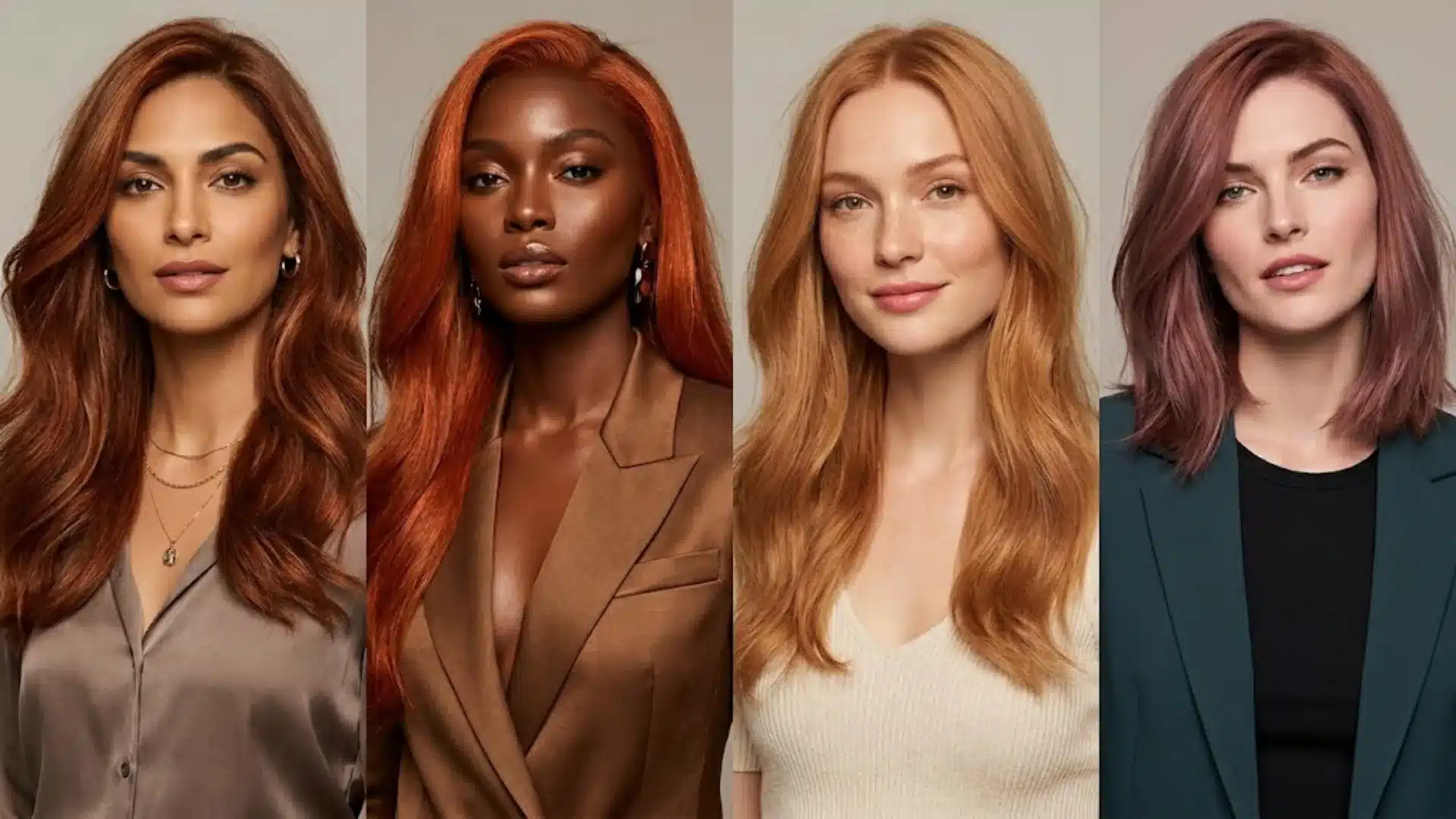
Copper’s golden, orange-forward nature makes it a better fit for warmer and deeper skin tones than auburn’s cool-tilting base usually allows.
1. Olive & medium skin: The golden warmth in copper complements the yellow-green undertones naturally. It feels warm rather than jarring in this range.
2. Deep & warm-toned: High contrast, vivid pop, metallic warmth that photographs beautifully. Deep skin with warm undertones carries copper at its best.
3. Fair with warm/yellow base: A softer, golden copper is the safer start. Fully saturated copper can overwhelm paler features with pink undertones.
4. Cool-toned skin: Trickiest pairing. An orange base can clash with pink or blue undertones. A violet-adjusted formula helps, but needs a skilled colorist.
Which Shade is Right for You?
If you want a red that blends in as much as it stands out, auburn is likely your shade.
It works across more settings, fades more gracefully, and is forgiving if you miss your touch-up appointment by a few weeks.
If you want a color that makes a statement and you are willing to keep up with it, copper is worth the commitment.
It is bolder and brighter and needs regular toning to stay true, but the payoff is a shade that commands attention and photographs beautifully.
Still unsure? Bring reference photos to your consultation. Show your colorist what you love and what you want to avoid. That one conversation will get you further than any quiz. Your colorist can also adjust the formula, softer copper, deeper auburn, to land you somewhere in between.
Can You Transition Between the Two?
Yes, but the transition depends on the direction of the color change.
Moving from copper to auburn is usually easier because auburn already contains warm red and brown tones. A colorist can deepen the existing copper base by layering richer brunette and red pigments over it.
The result is softer brightness, added depth, and a more muted, sophisticated finish that feels natural and dimensional.
Going from auburn to copper takes more work. Copper shades are brighter and lighter, so darker auburn hair often needs some lifting before copper tones can appear vibrant enough.
In many cases, stylists use balayage or foilyage techniques to introduce lighter copper ribbons gradually instead of pushing the entire head lighter in one appointment.
Trying to shift from deep auburn to vivid copper too quickly can leave hair dry and stressed.
A balanced option is auburn copper highlights, which blend both shades beautifully while creating natural movement and shine.
How to Look After Auburn or Copper Hair?
Red is the hardest hair color to hold, and that’s true for both auburn and copper.
The science behind it matters: red and orange color molecules are larger than the molecules in blonde or brown shades, which means they sit closer to the hair’s surface and wash out faster with each shampoo.
Copper fades faster than auburn, full stop. Auburn is more forgiving: it tends to fade to warm brown, which is a more livable in-between shade. That difference in fade trajectory matters for how you plan your maintenance schedule.
The non-negotiables for both shades:
- Wait at least 48 hours before washing after coloring, to give the cuticle time to close and lock in pigment
- Switch to a sulfate-free, color-safe shampoo; regular formulas strip red molecules quickly
- Wash no more than 2–3 times per week, where possible
- Apply a UV-protecting leave-in or wear a hat in direct sun; UV exposure breaks down red pigment the same way it damages skin
- Use a deep conditioning mask weekly, since red formulas can dry out strands
For copper: A color-depositing shampoo in a warm copper or red tone helps maintain vibrancy between touch-ups.
For auburn: A purple or mahogany-toning gloss preserves depth and prevents warmth from going brassy.
Conclusion
Choosing between auburn and copper hair comes down to the kind of statement you want your color to make.
Auburn offers depth, softness, and a more understated red finish that fades gracefully over time.
Copper feels brighter, warmer, and far more eye-catching, but it also demands extra maintenance to keep its shine and vibrancy intact.
Both shades can look incredible when matched correctly to skin tone, undertone, and lifestyle.
The good news is that there is no wrong choice between the two; it’s just a matter of the shade that best fits your personality and upkeep preferences.
Before committing, save reference photos, talk through fade expectations with your colorist, and consider how much maintenance feels realistic long term.
Which shade would you choose: soft auburn or bold copper? Share your pick in the comments.
Frequently Asked Questions
Does Copper Hair Make Hair Look Thinner or Thicker?
Copper shades often create the illusion of fuller hair because warm reflective tones catch light easily. Dimensional copper balayage can add even more visual depth and movement.
Which Hair Color Fades Faster in Summer, Auburn or Copper?
Copper typically fades faster during summer because UV exposure breaks down bright orange and gold pigments more quickly than the deeper tones found in auburn hair.
Can Auburn or Copper Hair Work without Bleaching?
Yes, but results depend on your natural hair color. Lighter brunettes can often achieve auburn without bleach, while vivid copper usually requires some lifting for brightness and clarity.