
Choosing the right haircut can help an oblong face appear more balanced and proportionate.
Hairstyles that add width, soften facial length, and create texture often work best for this face shape.
From short crops and layered cuts to side-swept styles and bangs, there are many options for both men and women.
The right choice depends on your hair type, personal style, and how much time you want to spend on styling each day.
This guide features the best haircuts for oblong faces, along with helpful tips on choosing a style that suits your features and is easy to maintain.
How to Know if You Have an Oblong Face Shape
Before choosing a haircut, it’s important to know your face shape. An oblong face (also called a long or rectangular face) is noticeably longer than it is wide.
A simple way to check is to pull your hair back and look in a well-lit mirror.
Ask yourself these three questions:
- Do the sides of your face look fairly straight from your temples down to your jaw?
- Are your forehead, cheekbones, and jawline roughly the same width?
- Is your face clearly longer than it is wide?
If you answered yes to all three, you likely have an oblong face shape. Oblong faces are often confused with oval or diamond faces.
The easiest way to tell the difference is that oval faces have softer curves and a slightly narrower jaw, while oblong faces have straighter sides and maintain a similar width from the forehead to the jaw.
Styling Principle Behind Every Oblong-Friendly Cut
The most flattering haircuts for oblong faces create balance by making the face appear wider rather than longer. Keep these principles in mind when choosing a style:
- Add width: Choose cuts with fuller sides to create better facial balance.
- Keep height minimal: Avoid styles that add excessive volume on top.
- Use a fringe when possible: Side-swept or textured fringes help reduce the appearance of face length.
- Style hair to the side or forward: Horizontal movement creates a wider-looking face.
- Add texture around the cheeks: Layers near cheekbone level help soften a long face shape.
Avoid:
- High fades
- Tall quiffs
- Pompadours
- Long, straight, slicked-back hairstyles
- Very high skin fades that remove too much side volume
Best Haircuts for Women with Oblong Faces
The styles below are the most reliable haircuts for women with an oblong face shape; each one adds width at the cheekbones, reduces perceived facial length, or both. They’re ordered from the most versatile starting points down to the bolder options.
1. Layered Bob
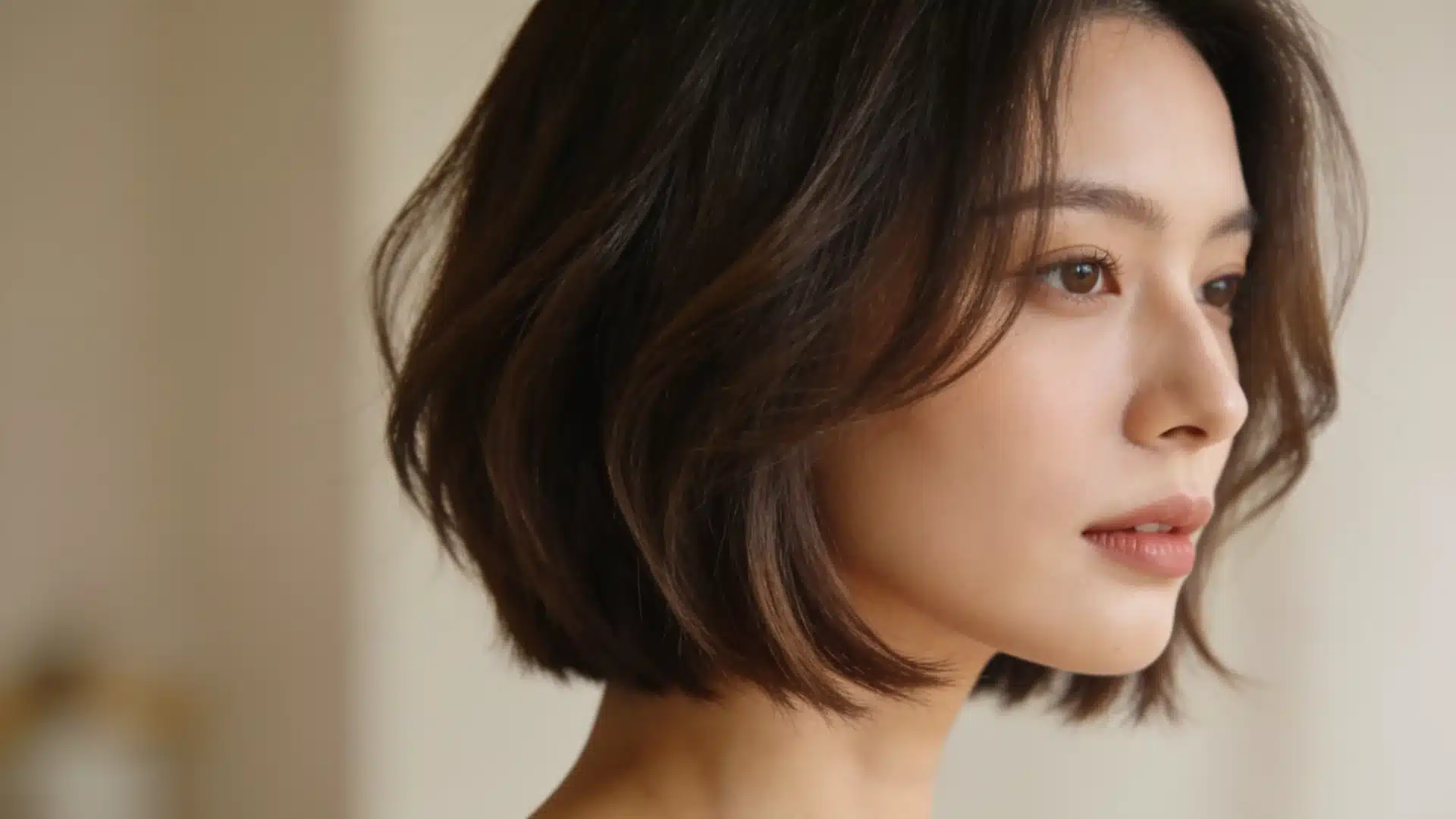
The bob is one of the most reliably flattering haircuts for oblong faces and has been for decades.
A layered bob typically falls between the chin and the shoulders, and the layers create width and volume right where they’re needed most, near the cheekbones and jaw.
The layers add movement so the cut doesn’t sit flat against the face, which would only make the face look longer.
For straight or fine hair, a layered bob is particularly good because the cut does the volume work without needing much daily effort.
Ask your stylist for layers starting at chin level and blending toward the shoulders. Worn with a slight wave or bend, it frames the face cleanly.
2. Curtain Bangs with Layers
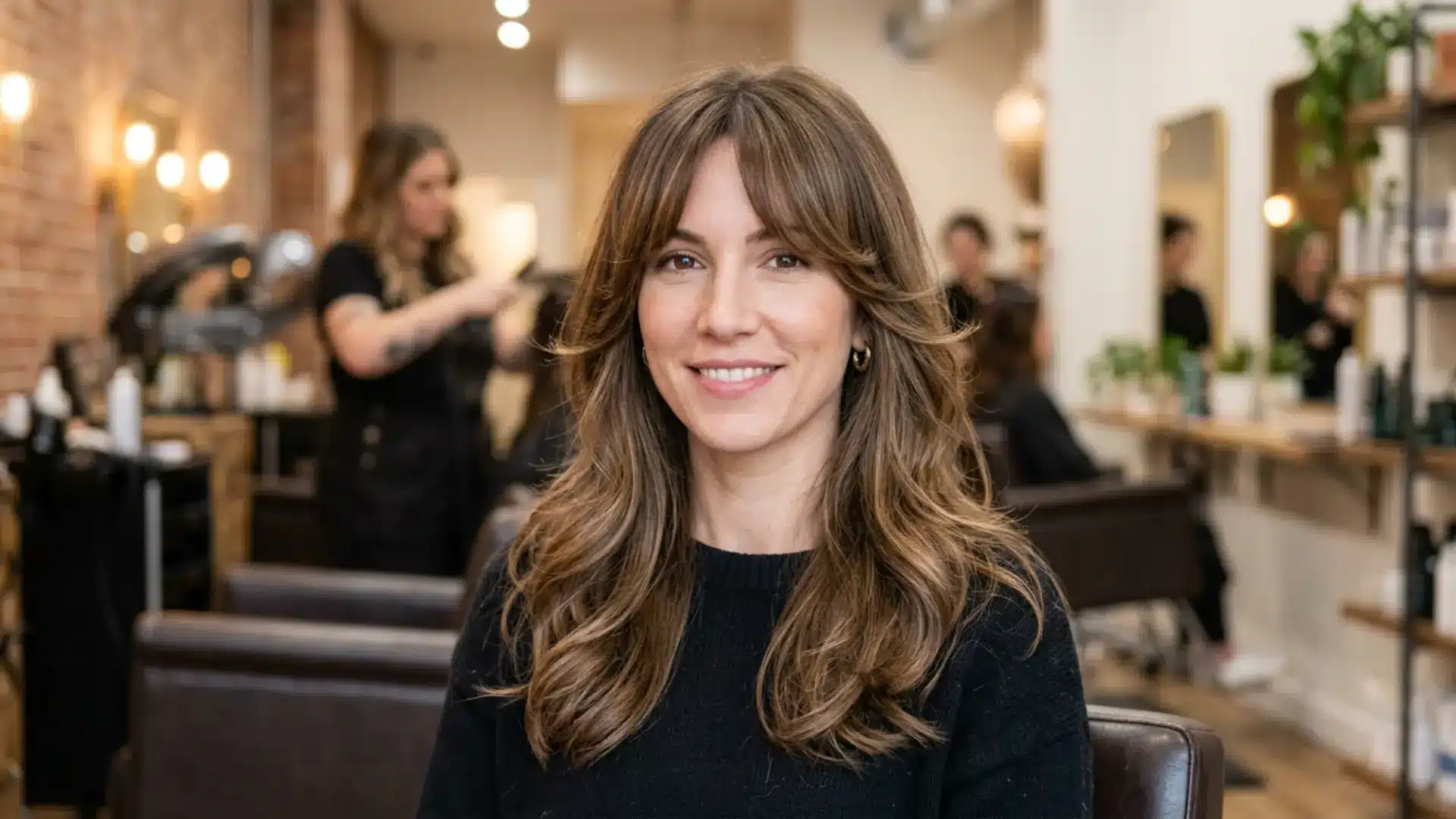
Curtain bangs are one of the most effective fringe options for oblong faces.
They’re cut slightly shorter at the center of the forehead and gradually lengthen toward the cheekbones, which places a horizontal line right across the upper face and visually shortens the face length.
For an oblong face specifically, the center section should be kept slightly denser to maximize the horizontal effect.
Curtain bangs also have the practical advantage of growing out gracefully.
As they get longer, they blend into face-framing layers, so there’s no awkward in-between stage.
They work with most lengths, from a lob down to longer hair, making them one of the most flexible options on this list.
3. Blunt Lob (Long Bob with Blunt Ends)
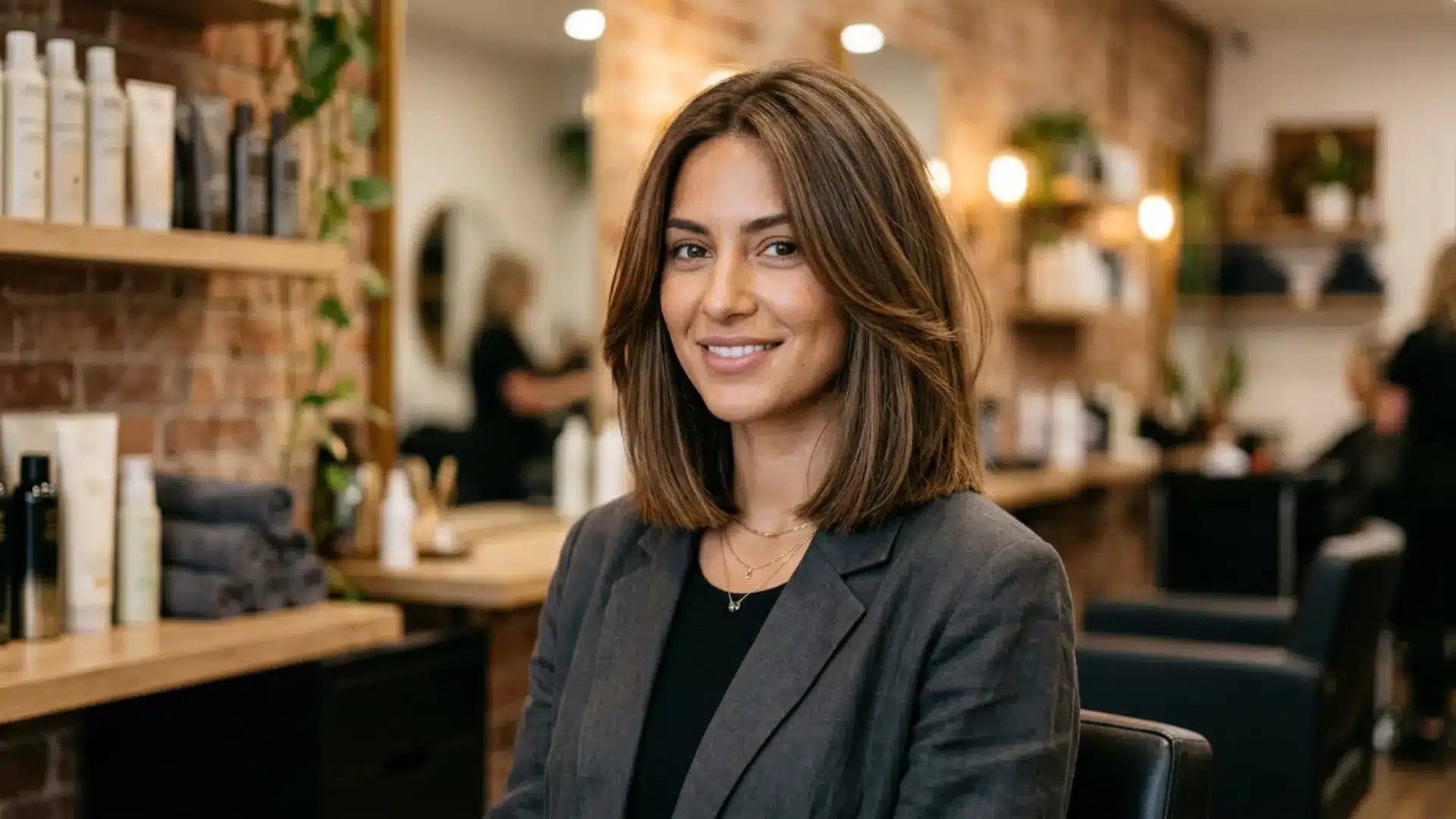
A lob landing anywhere from the collarbone to just above the shoulders is a strong choice here.
The blunt cut at the ends creates a defined horizontal line that draws the eye across the face rather than down it.
Volume at the sides is what seals the deal: blow-dried out or styled with a wide-barrel curling iron, a lob creates exactly the kind of width that balances an oblong face.
The types of layers you choose inside the lab matter. Shorter layers sitting near cheekbone level add width in the right place.
Very long waterfall layers that start too low can have the opposite effect, so ask your stylist to keep the face-framing pieces around cheekbone length.
4. Curly or Wavy Shag

If you have naturally curly or wavy hair, the shag is probably the best cut for an oblong face.
The shag’s defining feature is layers at multiple lengths, which create volume in all directions and break up the face’s vertical line naturally.
Curls especially carry volume at the sides without any extra styling effort, making an already wide silhouette even more pronounced.
The result is a face that looks proportionally fuller without any tricks.
A curly shag also tends to suit the oblong face better than it would suit a round face, where the extra volume could be too much. Here, the width is exactly what you’re after.
5. Side Part with Face-Framing Layers
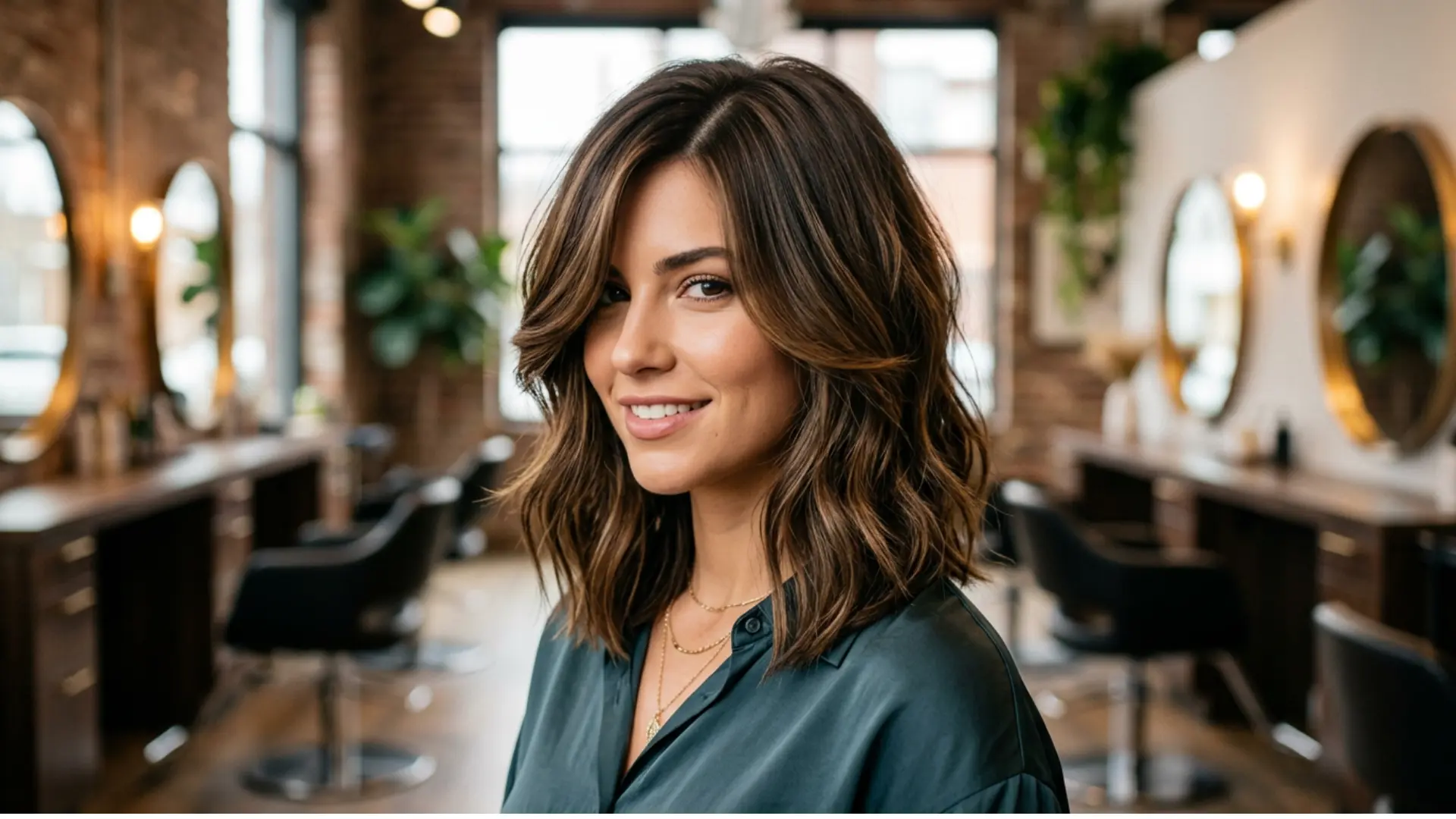
A deep side part works because it’s inherently asymmetrical.
Breaking the face’s symmetry at the hairline draws the eye horizontally, interrupting the long vertical line that a center part on an oblong face would reinforce.
Pair the side part with face-framing layers that brush the cheekbones, and you’ve added width at the precise point where the face needs it.
This style works on medium to long lengths and suits straight, wavy, or lightly layered hair.
It’s low-maintenance enough to be one of the most practical options here, too.
6. Short Pixie with Texture
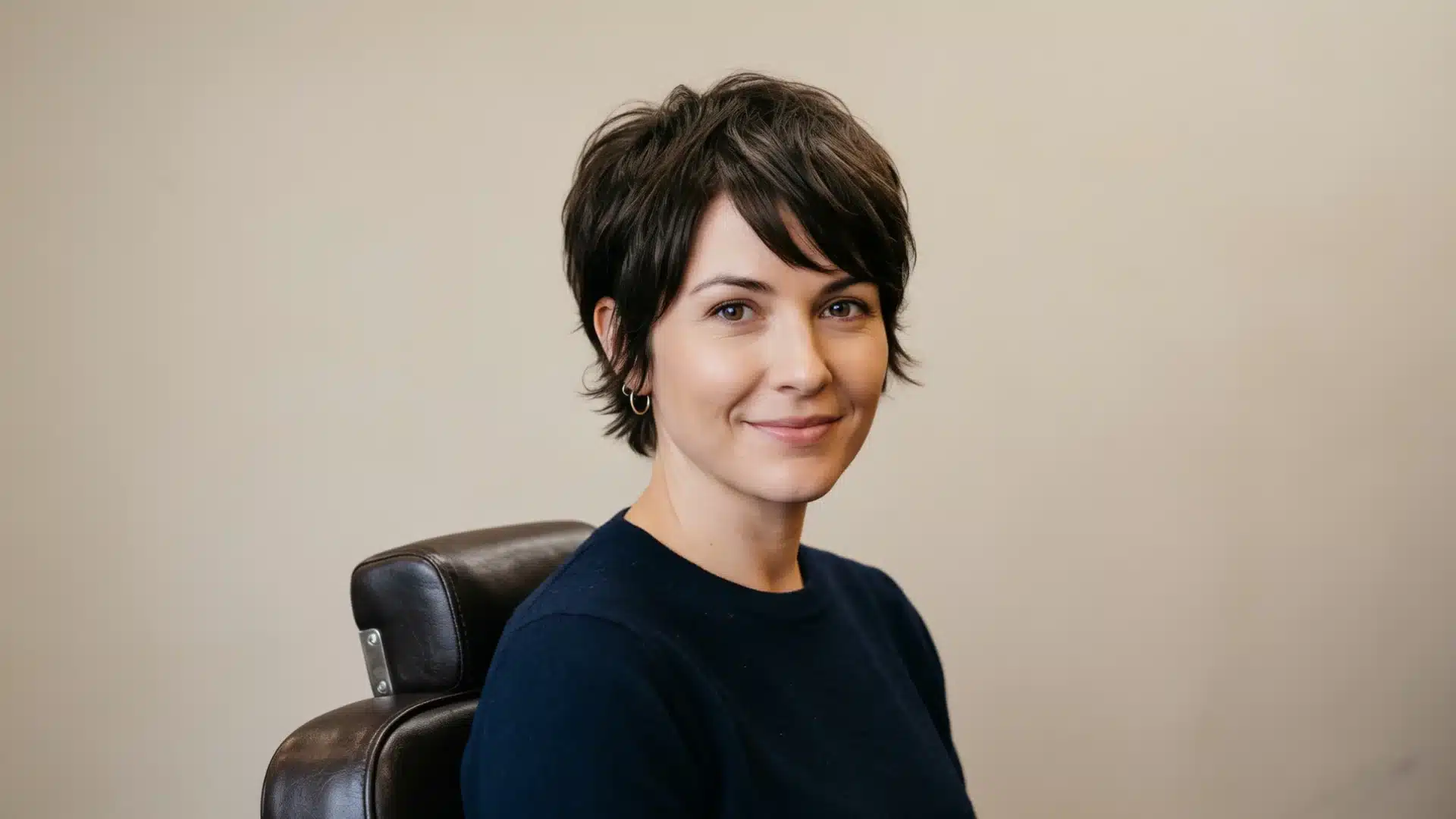
A textured pixie may not be the first thing that comes to mind, but it works well on oblong faces when the sides carry some volume.
The key is to keep the sides from being cut too short and close: you want fullness at the temples and cheekbones, not a cut that exposes the sides of the face.
Textured pieces at the top, styled forward or to the side, rather than straight up, keep the focus horizontal.
For anyone considering shorter hair, the pixie with texture is worth discussing with your stylist.
It’s bold, but it suits the oblong shape more naturally than most people expect.
Best Haircuts for Men with Oblong Faces
Working in barbering, the face shapes that get the most mismatched cuts are usually oblong ones. Men tend to ask for height, which makes the face look longer. The styles below do the opposite.
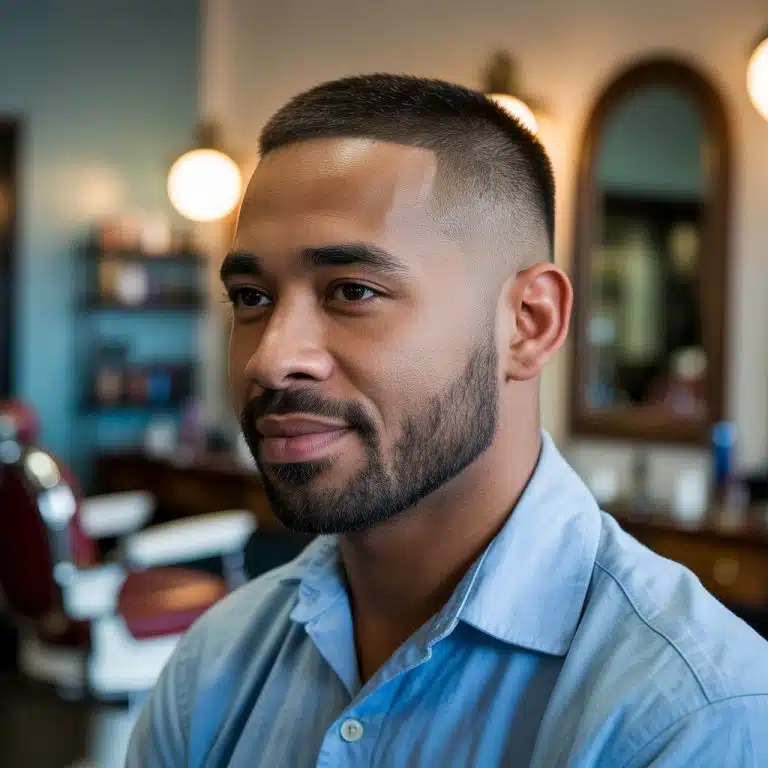
7. Textured Crop with Low Fade
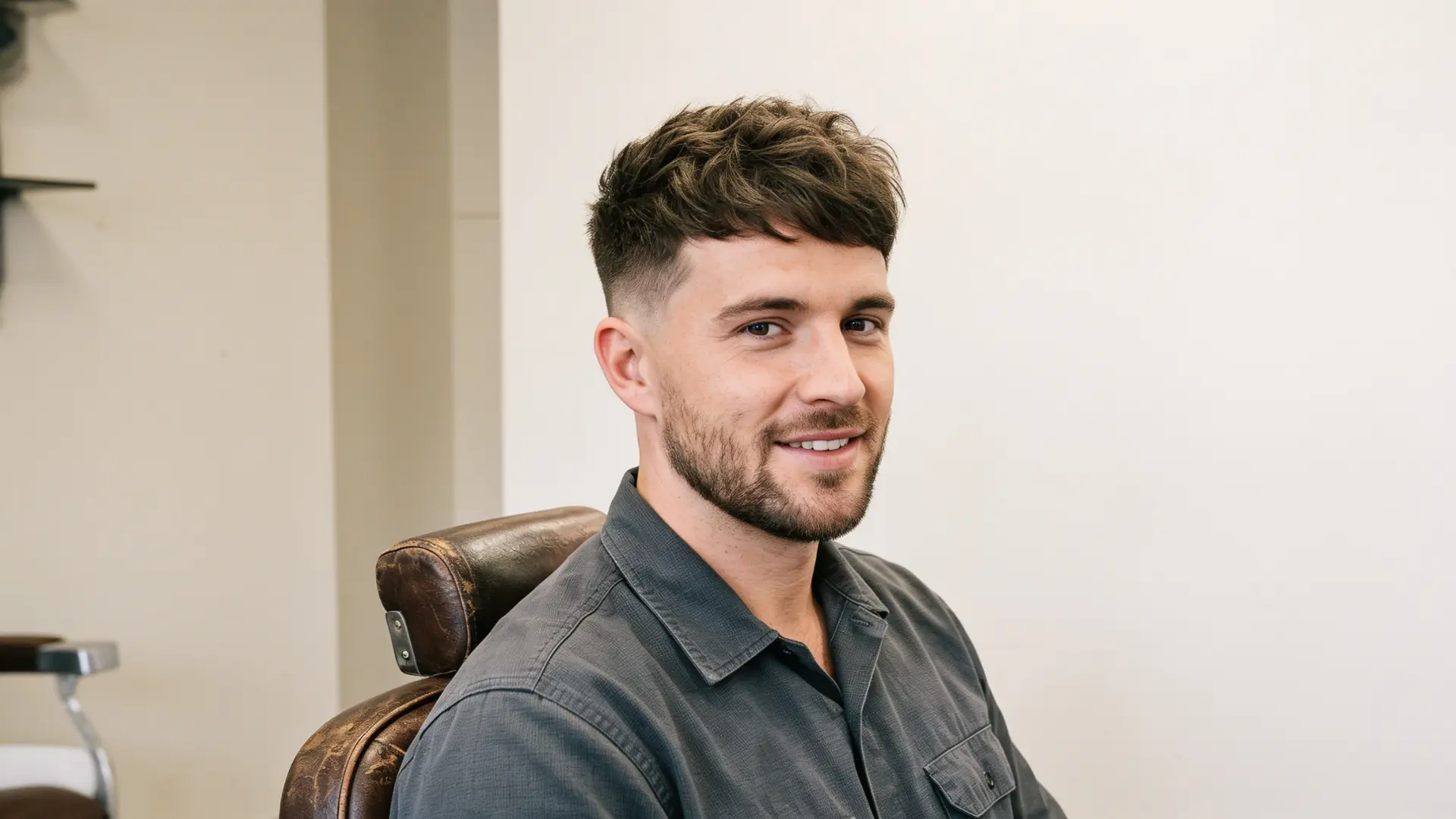
The textured crop is one of the strongest cuts for men with an oblong face.
The top section is styled forward rather than up, which immediately reduces the face’s height.
A horizontal fringe across the forehead, even a short one, works the same way curtain bangs do for women: it creates a visual break that shortens the perceived face length.
The low or mid fade on the sides leaves enough hair to keep width in the silhouette without removing it entirely.
A textured powder or matte clay gives the top section the separation it needs. The goal is a slight forward sweep, not a flat, slicked-down look.
8. Caesar Cut
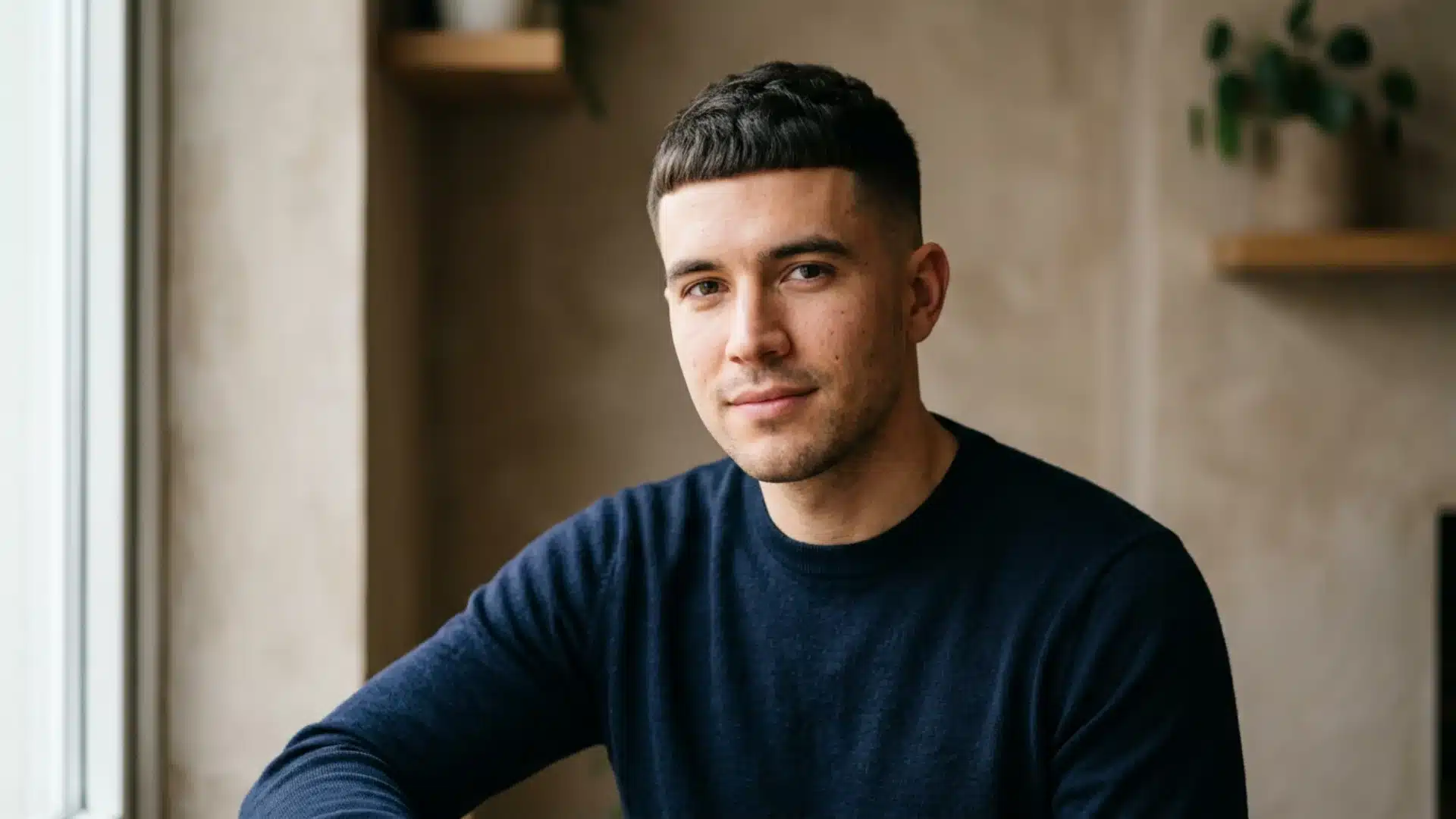
The Caesar cut has a blunt, horizontal fringe and short sides. It’s one of the most direct ways to add a horizontal line to an oblong face.
The fringe doesn’t need to be long or heavy; even a light, forward-combed fringe sitting just above the eyebrows will register as a width cue.
The sides can be left slightly fuller than you might usually take them to keep the overall silhouette from going too narrow.
It’s a clean, low-effort style that suits most hair types. Straight or slightly wavy hair holds the shape well.
9. Side Part with Medium Length

A medium-length side part adds width through two mechanisms at once: the volume on the longer side sweeps across the face horizontally, and the parting itself breaks the symmetry of the face.
For the oblong face, keeping the top between two and three inches long works better than cropping it short or letting it grow long enough to add vertical height.
Side-swept styling is the goal, not backward. This works across a range of professional and casual settings and is compatible with most hair textures.
It’s also one of the styles that ages well and doesn’t need frequent trims to maintain its shape.
10. French Crop
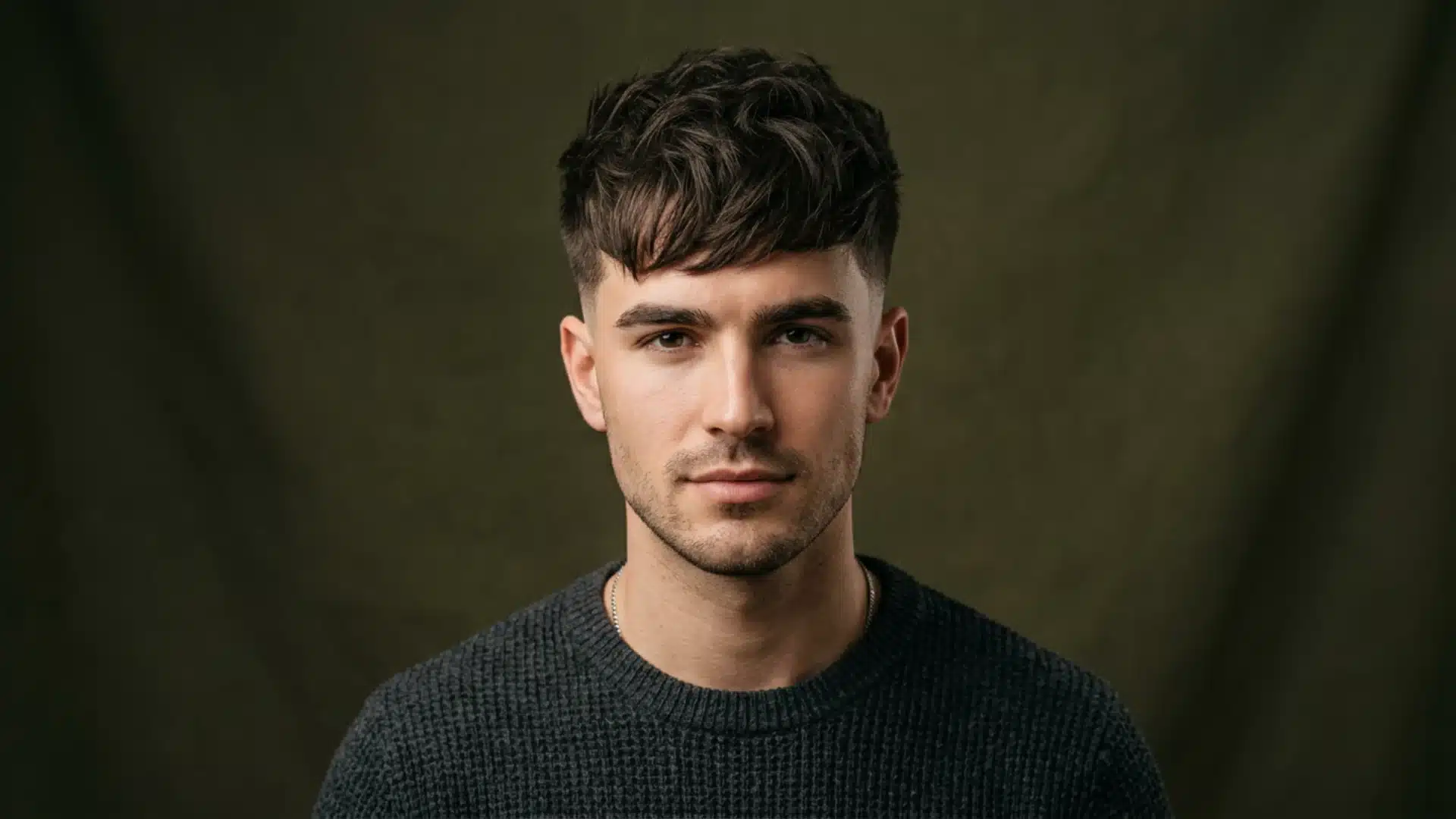
The French crop sits close to the textured crop in concept but leans more structured.
It typically has a slightly longer fringe, cleaner sides, and a more deliberate horizontal line across the forehead. For an oblong face, that horizontal fringe is the most important feature.
Ask your barber to keep it sitting across the forehead rather than pushed to one side, so the width effect is as strong as possible.
There’s more variety in men’s haircut options than most people think, and the French crop sits at the intersection of classic and current.
11. Disconnected Undercut with Textured Top
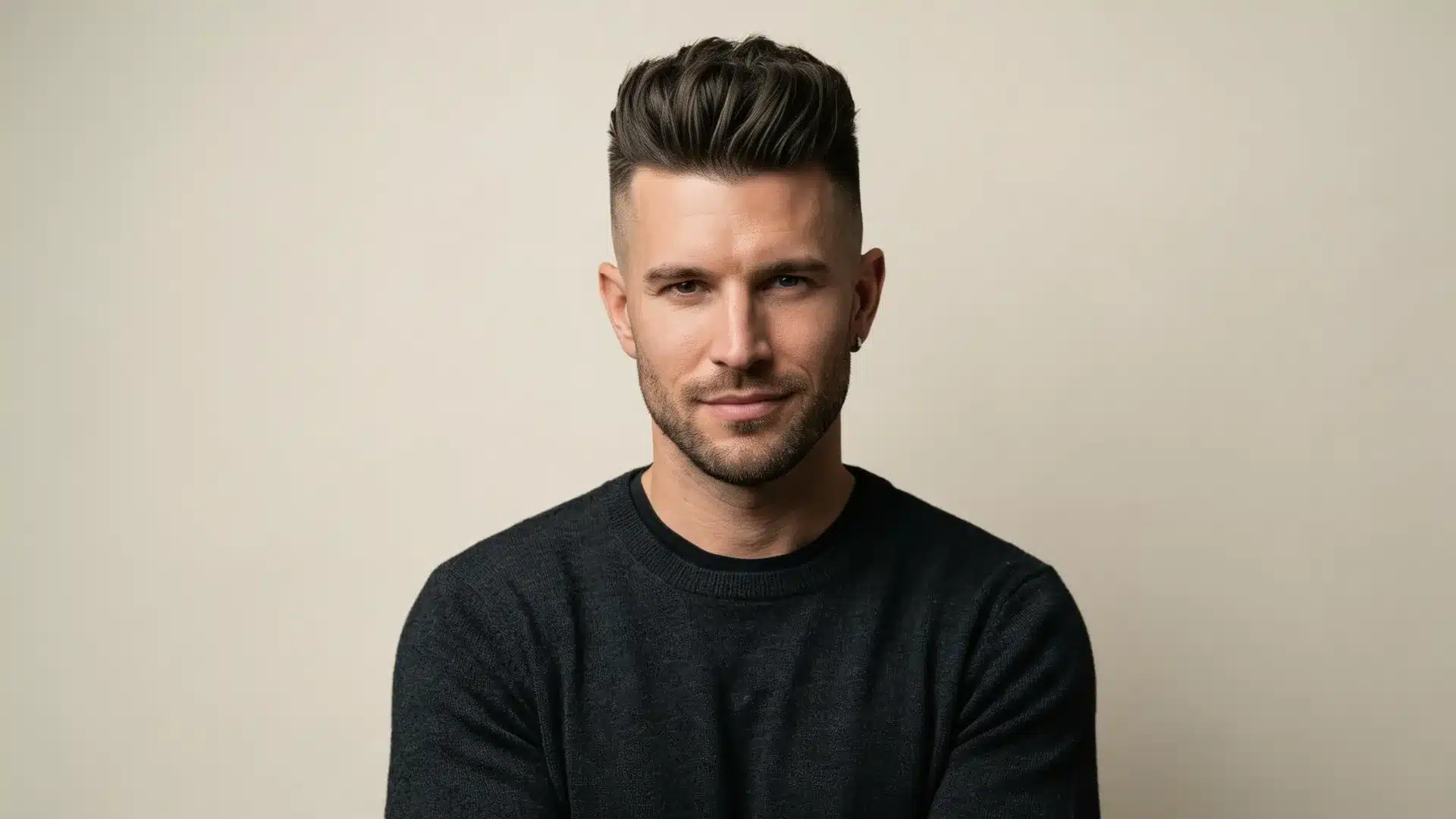
The disconnected undercut separates the top section from the shorter sides with a visible line rather than a fade.
Done right for an oblong face, the top section should carry width at the sides: styled with some lateral volume rather than pushed straight up.
The texture of the top section matters here. If it’s styled flat, the cut can read as narrow; if it’s given some side-to-side movement, it balances the face well.
This is a more fashion-forward option than the side part or French crop, but it suits most hair types and gives a barber a clear brief to work from.
12. Low Fade with a Side Sweep
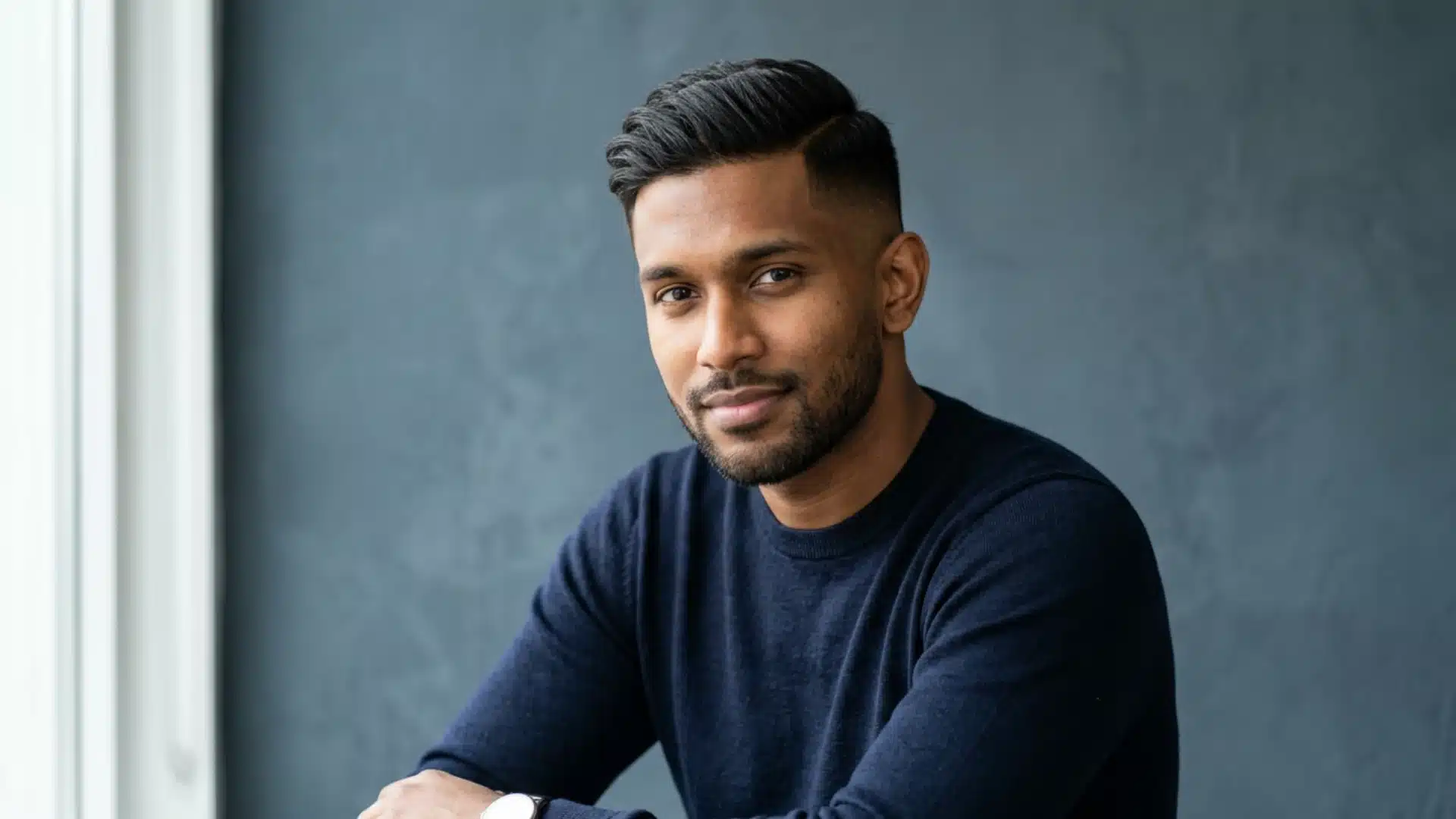
A well-executed low fade keeps hair at the sides long enough to maintain width while cleaning up the neckline and temples.
Paired with a side-swept top, the result is a structured look that adds horizontal direction to the face without any volume on top.
Low fades are more forgiving than mid or high fades for oblong faces because they don’t expose too much of the sides.
Understanding the fade haircut types available makes it easier to brief your barber with precision. For thicker hair, a low taper works just as well and tends to last longer between cuts.
13. Bro Flow or Curtain Haircut

Longer hair on men works for oblong faces when it’s styled to fall around the face rather than straight down.
The bro flow and curtain haircuts both involve parting medium-to-long hair near the center and letting it fall naturally to either side, creating face-framing volume at the cheeks.
The hair naturally adds width at the sides of the face, which is exactly what you’re looking for. This style suits oval and oblong faces particularly well.
The cool haircuts for men section covers styling approaches for the curtain cut across different hair textures, if you want a closer look at length and product options.
How to Talk to Your Stylist or Barber
The gap between the cut you want and the cut you get is usually a briefing problem, not a skill problem. Most stylists and barbers can execute any style on this list; they just need to know what you’re working toward and why. Here’s how to explain it clearly.
For Women
Lead with your face shape and the goal: “I have an oblong face, so I want to add width rather than length. Can we focus on volume at the cheekbones?” Then name the specific style and add one or two details:
- Layered bob: “Layers starting at chin level, blending toward the shoulders. I want volume and movement near the jaw, not flat ends.”
- Curtain bangs: “Curtain bangs, slightly shorter at the center and longer toward the cheekbones. Keep the center section a bit denser.”
- Blunt lob: “Collarbone length, blunt ends. Face-framing pieces at cheekbone height, not long waterfall layers.”
- Shag: “Shag cut with layers at multiple lengths. I want volume at the sides. Can we avoid taking too much off the crown?”
For Men
Barbers respond best to three clear inputs: top length, fade height, and styling direction. Add the face shape context, and most barbers will adjust instinctively:
- Textured crop: “Textured crop, choppy on top, low or mid fade. I want the fringe to sit forward, I have an oblong face, so I’m trying to avoid height.”
- Caesar: “Caesar cut, blunt fringe just above the eyebrows, sides slightly fuller than a standard crop. Straight-across fringe, not swept.”
- Side part: “Medium side part, about two to three inches on top. Side-swept, not back. Low fade or taper, I want to keep the width on the sides.”
- Curtain cut: “Curtain haircut, center part, medium length. I want it to fall around the face rather than straight down.”
Always bring a reference photo alongside the verbal brief. It removes ambiguity on length and fade height, which are the two things most likely to get misread from a description alone.
Low-Maintenance vs Polished: Picks by Lifestyle
Not every oblong-friendly cut suits every routine. Some styles hold their shape for weeks between trims; others need a barber visit every three weeks and ten minutes of product work each morning. Here’s how the options split by lifestyle.
Low-Maintenance Picks
These styles hold their shape well between trims and need minimal daily effort:
- Side part with layers (women): Grows out cleanly, works air-dried or blow-dried, no fringe to maintain.
- Curtain bangs (women): Grow out gracefully into face-framing layers, no awkward in-between stage.
- Caesar cut (men): Clean and consistent, needs a trim every four to six weeks, minimal daily product.
- Bro flow/curtain cut (men): Once the length is established, it needs little daily work, a light sea salt spray, and it’s done.
Polished, High-Effort Picks
These styles look sharp when maintained but need more regular upkeep:
- Blunt lob (women): Blunt ends telegraph growth quickly; plan for a trim every six to eight weeks to keep the horizontal line clean.
- Textured pixie (women): Sides need regular trimming to stay full rather than growing out unevenly.
- Textured crop with low fade (men): Fades grow out fast, every three to four weeks, and keep the sides crisp.
- Disconnected undercut (men): The visible disconnection line needs a barber to stay intentional; overgrowth blurs it quickly.
What to Avoid for Oblong Faces
Some cuts actively make an oblong face look longer. Worth knowing before your next appointment:
- Tall pompadours or quiffs: Volume stacked straight up adds to the face’s vertical height. This makes the face read even longer.
- High skin fades: Removing hair from the sides reduces the face’s width, making the length more obvious.
- Straight center parts on long hair: A clean center part draws the eye straight down the middle of the face with no horizontal interruption.
- Very long, unstyled hair: Without layers or width-building elements, long hair falling straight down frames the face as a vertical column.
- Slicked-back styles: Pulling all the hair away from the face removes any width-building coverage, exposing the full length of the face.
Conclusion
For oblong face shapes, the key is choosing styles that add width rather than height.
Whether it’s a curtain fringe, layered bob, side-swept style, or textured shag, the goal is to create balance and draw attention horizontally.
Often, small changes, like adding a fringe, lowering a fade, or bringing layers higher, can make a haircut far more flattering.
The best cut is one that works with your natural features, not against them.
What haircut has worked best for your oblong face shape? Share your experience in the comments; we’d love to hear what worked for you.
Frequently Asked Questions
Does an Oblong Face Look Good with Long Hair?
Long hair can suit an oblong face if it has layers, face-framing pieces, or a side part to add width. Straight, flat hair without these features can make the face appear longer.
What’s the Difference Between an Oblong and an Oval Face Shape?
Oval faces are slightly longer than they are wide, with balanced proportions and softly curved features. Oblong faces are noticeably longer, with straighter sides and a more rectangular appearance. Simply put, oval faces are balanced, while oblong faces appear longer and narrower.
Should Men with Oblong Faces Grow a Beard?
A beard can help balance an oblong face by adding width to the jawline. A full, rounded beard works best, while long or pointed beards can make the face appear even longer.
Can a Pixie Cut Work on an Oblong Face?
Yes, as long as the sides aren’t cut too short. A pixie with volume at the temples and textured layers styled forward or to the side adds width and helps balance an oblong face shape.