If your hair feels flatter than it used to, or you’ve noticed your ponytail seems thinner than it once was, you’re far from alone.
Learning how to make hair look fuller doesn’t require a complete haircare overhaul, just the right combination of products, a flattering cut, and a few styling habits that actually work with your hair type instead of against it. In my chair, the clients who see the biggest change are almost never the ones who buy the most products.
They’re the ones who fix one or two habits and stick with them. By the end, you’ll have a clear, realistic plan for making your hair look fuller starting with your very next wash.
Why Does Hair Look Thin in the First Place?
Hair can look thin because of changes in either strand thickness or hair density. Strand thickness refers to the width of each individual hair, while density means the number of hairs growing across the scalp area.
Genetics, age, hormones, and overall hair health influence both factors. Someone can have fine strands but a lot of hair, while another person may have thicker strands but fewer hairs.
Understanding the difference helps set realistic expectations because styling products, haircuts, and techniques can improve the appearance of fullness, but they cannot change natural hair structure.
The tips ahead focus on creating more visible volume and body rather than altering your genetic hair characteristics.
Ways to Make Hair Look Fuller
Once you understand your hair, these tricks and habits are the fastest way to see real results. MedlinePlus notes that thickness naturally declines with age. NIH research also points to nutrition as a smaller factor.
1. Blow-Dry with Roots Lifted
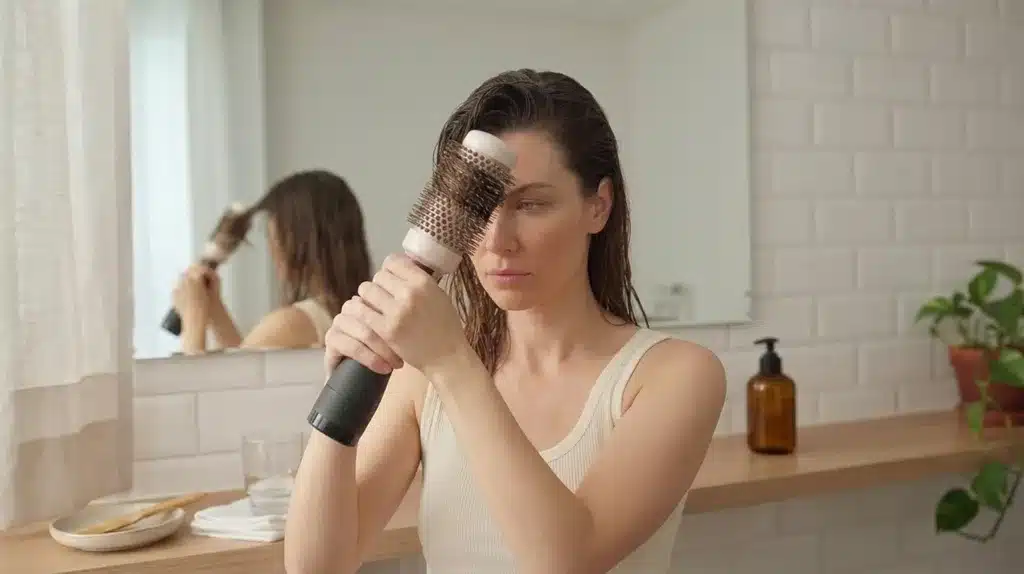
Blasting air straight onto your scalp presses hair flat, while angling it underneath and up lifts hair away from the scalp and creates natural-looking volume that lasts through the day.
Flipping your head upside down for the first minute of drying can amplify this effect before you style the rest of your hair.
Styling trick: Angle your blow dryer underneath the roots and direct the airflow upward instead of down.
2. Finish Styling with a Round Brush

A round brush used at the end of your blow-dry routine creates lift and shape that a flat paddle brush simply can’t replicate, especially once your hair is about 80 percent dry.
Working section by section around your head gives you enough control to shape without frizzing.
Styling trick: Wrap small sections around a round brush at the roots and hold before releasing.
3. Backcomb (Tease) at the Crown

Backcombing, also known as teasing, is a classic technique for building height where you need it most, creating a soft, tangled base underneath that can also help mask patches where you’ve noticed more shedding than usual.
Smooth the top layer over the teased section afterward for a natural finish that still holds volume throughout the day.
Styling trick: Hold small sections at the crown straight up and comb downward in short strokes.
4. Switch Your Part Occasionally

Hair parted the same way for years trains itself to lay flat in that exact spot day after day.
Switching sides, even temporarily, lifts hair out of its usual fall and creates an instant, noticeable boost in visible volume, one of the easiest, completely free changes you can make to your routine.
Styling trick: Move your part to the opposite side, even just for a day or two.
5. Try Hot Rollers or a Diffuser

Hot rollers create long-lasting volume without the heat damage that comes from daily blow-drying and flat-ironing.
Roll sections at the roots for the biggest lift, and let them cool fully before removing them so the style holds. A diffuser attachment achieves a similar effect on naturally wavy or curly hair.
Styling trick: Roll sections at the roots and let them cool completely before removing.
6. Trim Every 6 to 8 Weeks

Split ends make hair look stringy and thin, especially where damage accumulates over time near the ends.
Regular trims keep ends healthy and prevent breakage from traveling further up the shaft, which helps your overall style hold its shape. Even removing half an inch makes a noticeable difference in how thick hair looks.
Styling trick: Book a trim every six to eight weeks, even while you’re growing your hair out.
7. Skip Heavy, Deep-Conditioning Formulas

Deeply moisturizing conditioners work wonders for coarse or damaged hair, but they can weigh down fine or thin hair considerably over time.
Lightweight, volumizing formulas keep hair soft and manageable without sacrificing lift, and checking the ingredient list, which brands must disclose under current FDA cosmetic regulations, helps you spot heavier oils before buying.
Styling trick: Apply richer conditioners only from mid-length to ends, never directly at the roots.
8. Protect Hair Overnight with a Silk Pillowcase

Cotton creates friction overnight that can leave hair flattened, tangled, and prone to static by the time you wake up.
A silk or satin pillowcase reduces that friction significantly, helping your style hold its shape and volume longer between washes throughout the week, and it’s a genuinely easy swap to make.
Styling trick: Swap your regular cotton pillowcase for a silk or satin one before bed.
9. Use a Cool Shot to Set Your Style

Most hair dryers have a cool shot button specifically for this purpose, and using it locks your style in place once you’ve finished shaping each section.
Heat leaves the hair shaft more flexible, while cool air helps it hold its new shape, meaning your volume lasts longer through the day instead of falling within the hour.
Styling trick: Finish blow-drying with a burst of cool air instead of ending on heat.
10. Add Waves or Curls for Texture

Pin-straight hair naturally lays flatter against the scalp, while waves and curls create gaps and texture that read as fuller and more voluminous.
You don’t need tight ringlets for this to work; even loose, undone waves add noticeably more body than straight strands ever could.
Styling trick: Use a curling iron or wand on one-inch sections, alternating the curl direction.
11. Try Root Touch-Up Powder for Extra Coverage

These powders are designed to match your hair color and cling to individual strands at the root, instantly minimizing the appearance of visible scalp or thinning spots.
They work especially well combined with other volumizing techniques, and a little goes a long way, so start with a small amount before adding more.
Styling trick: Dust a small amount of root touch-up powder directly onto visible scalp at the part.
12. Avoid Touching or Overbrushing Throughout the Day

Constant touching transfers oils from your hands onto your strands, weighing hair down and flattening any volume you built earlier in the day.
Similarly, brushing too often smooths out the texture that’s actually creating the fuller look in the first place, so less handling genuinely helps here.
Styling trick: Resist running your hands through freshly styled hair or brushing it repeatedly.
13. Sleep in a Loose Braid for Overnight Texture

This overnight technique creates soft, natural waves without any heat damage, and those waves translate directly into extra volume once you shake the braid out.
It works especially well paired with a silk pillowcase, since you get the texture benefit without the frizz that cotton fibers can cause overnight.
Styling trick: Braid damp or dry hair loosely before bed and remove it in the morning.
Best Products to Make Hair Look Fuller
Beyond technique, the right products genuinely make a measurable difference in how full your hair looks day to day.
| Product | What It Does | How to Use |
|---|---|---|
| Volumizing Shampoo | Lightweight, non-stripping formula that won’t weigh hair down | Use in place of your regular shampoo on wash days |
| Clarifying Shampoo | Removes product buildup and residue that flattens hair over time | Use once a month as a deep-clean reset |
| Root-Lift Mousse | Adds hold and lift right at the roots before styling | Apply to damp roots before blow-drying |
| Texturizing or Dry Shampoo Spray | Adds grip and texture that helps volume last longer | Spray onto roots and mid-lengths before or between washes |
Reading the ingredient list on any of these before buying helps you spot heavier oils or silicones that could work against your volume goals.
Hairstyles That Make Thin Hair Look Thicker
The right cut can do a surprising amount of the work for you before a single product or styling tool gets involved. A cut chosen to hide thin ends will always outperform a product routine trying to fake fullness on top of the wrong shape.
- Blunt Bob: a clean, one-length cut at or above the shoulders removes thin, wispy ends and makes hair appear noticeably denser throughout
- Layered Lob: strategic layers add movement and body without removing so much length that ends look thin and stringy
- Curtain Bangs: face-framing pieces add visual width and softness around the face, distracting from thinner areas near the temples
- Textured Pixie: a short, textured cut works with fine hair’s natural tendency to lay flat rather than fighting against it
- Beach Waves: loose, tousled waves add texture and dimension that straight, flat hair simply doesn’t have on its own
Talk to your stylist about which of these best suits your face shape and hair texture before committing to a cut, since the wrong length can work against the volume you’re trying to create.
Do Toppers or Extensions Make Hair Look Fuller Instantly?
Yes. When strand-level volume from products and technique isn’t enough, clip-in extensions or a hair topper add visible thickness in minutes, without waiting for a haircut to grow out or a routine to build results over weeks.
Clip-in wefts work best along the crown and part line, the exact areas where thinning tends to show first. A topper covers a broader section and suits anyone dealing with more noticeable thinning at the part or crown rather than just fine ends.
Either option is temporary and removable, which makes it a low-commitment way to test whether more visible fullness is worth pursuing through a longer-term route like extensions worn daily.
Common Mistakes That Make Hair Look Thinner
A few everyday habits can quietly undo all the progress from the tips above.
| Mistake | Fix |
|---|---|
| Overwashing hair daily | Stretch washes to every other day to avoid stripping natural oils that support the body |
| Using heavy styling products near the roots | Apply richer products only from mid-length down, keeping roots light |
| Brushing hair too aggressively when wet | Use a wide-tooth comb on wet hair to prevent breakage and thinning ends |
| Skipping regular trims | Book trims every 6 to 8 weeks to prevent split ends from traveling upward |
| Parting hair the same way every day | Rotate your part occasionally to prevent hair from training itself flat |
Fixing even one or two of these habits often makes a bigger difference than adding a brand new product to your routine.
How to Build a Fuller Hair Routine
Pulling everything above into one simple weekly rhythm is what actually makes it stick.
- Start with a volumizing shampoo and lightweight conditioner on wash days, saving richer formulas for just the ends
- Apply root-lift mousse to damp roots before blow-drying with your head flipped upside down for the first minute
- Finish with a round brush at the roots, or reach for hot rollers when you want longer-lasting hold
- Touch up midday or between washes with a texturizing or dry shampoo spray at the roots
- Rotate your part every so often and sleep on silk or satin to protect the shape overnight
- Keep trims on a 6- to 8-week schedule, and save clarifying shampoo for a once-a-month reset
Following this routine consistently for a few weeks is the easiest way to see which combination of tips works best for your specific hair.
Final Thoughts
Making your hair look fuller really comes down to layering a few smart habits together rather than relying on any single trick.
The right haircut gives you a strong foundation, lightweight volumizing products keep hair from being weighed down, and simple styling techniques like root lift and switching your part add the finishing touch.
None of this changes your hair’s actual density overnight, but consistency across these small changes adds up to a noticeably fuller look within just a few washes.
Pick two or three tips from this list to start with this week, and let a stylist weigh in on your cut before you add anything else to the routine.
Frequently Asked Questions
Can Certain Foods Help Hair Look Fuller?
Yes, foods rich in protein, iron, and biotin support healthy hair growth, though most people already get enough of these nutrients through a balanced diet without needing supplements.
Does Weather Affect How Full Hair Looks?
Yes, humidity can weigh hair down or cause frizz that flattens volume, while dry winter air can create static that makes hair look thinner and more prone to flyaways.
Is It Better to Apply Volumizing Product on Wet or Dry Hair?
Damp hair generally works best for root-lift mousse and volumizing sprays, since the product distributes more evenly and sets properly as your hair dries afterward.
Can Overwashing Make Hair Look Thinner?
Yes, washing too frequently can strip natural oils that give hair body and texture, ironically making it look flatter and thinner rather than cleaner.