Have you ever wondered if a laser treatment feels as intimidating as it sounds? Laser hair removal pain is one of the top questions clients ask before their very first appointment, and the honest answer rarely matches the fear.
In my treatment room, first-timers brace for something sharp and leave surprised by how quick and manageable each pulse feels.
The sensation sits closer to a rubber band snap than a real sting, though it shifts depending on the area, hair thickness, and your own skin’s sensitivity.
Here’s where laser hair removal actually lands on the pain scale, what changes from session to session, and which body areas call for a little extra patience.
Is Laser Hair Removal Painful or Not?
No, laser hair removal is generally not considered highly painful, but some level of discomfort is normal during the session.
Most people describe the sensation as quick rubber band-like snaps, warmth, tingling, or mild stinging rather than intense pain.
The experience can vary depending on the treatment area, hair thickness, skin sensitivity, and individual comfort level.
Modern laser devices often include cooling systems that help calm the skin and make the process more comfortable. For first-time users, the sensation may feel unfamiliar, but most sessions are manageable with proper preparation and communication with the provider.
In my chair, I ask new clients to rate each pulse out loud, and most land around a three before we even finish the first pass.
How Much Does It Hurt on a Pain Scale?
On a 0 to 10 pain scale, most people rate laser hair removal somewhere between a 2 and a 4, which puts it closer to mild annoyance than to real pain.
That number holds fairly steady across a session; once a client calls out their first rating, the rest of the appointment rarely surprises them.
Sensitive zones like the bikini line and upper lip tend to sit at the higher end of that range, while thicker-skinned areas barely register past a two.
The rating also drops with each future visit. Hair regrowth gets finer over time, so the laser has less pigment to lock onto and generates less heat with every pulse
My longest-standing clients barely notice their fifth appointment compared to their first; the sting fades before the results even finish layering in.
What Laser Hair Removal Feels Like During and After Treatment?
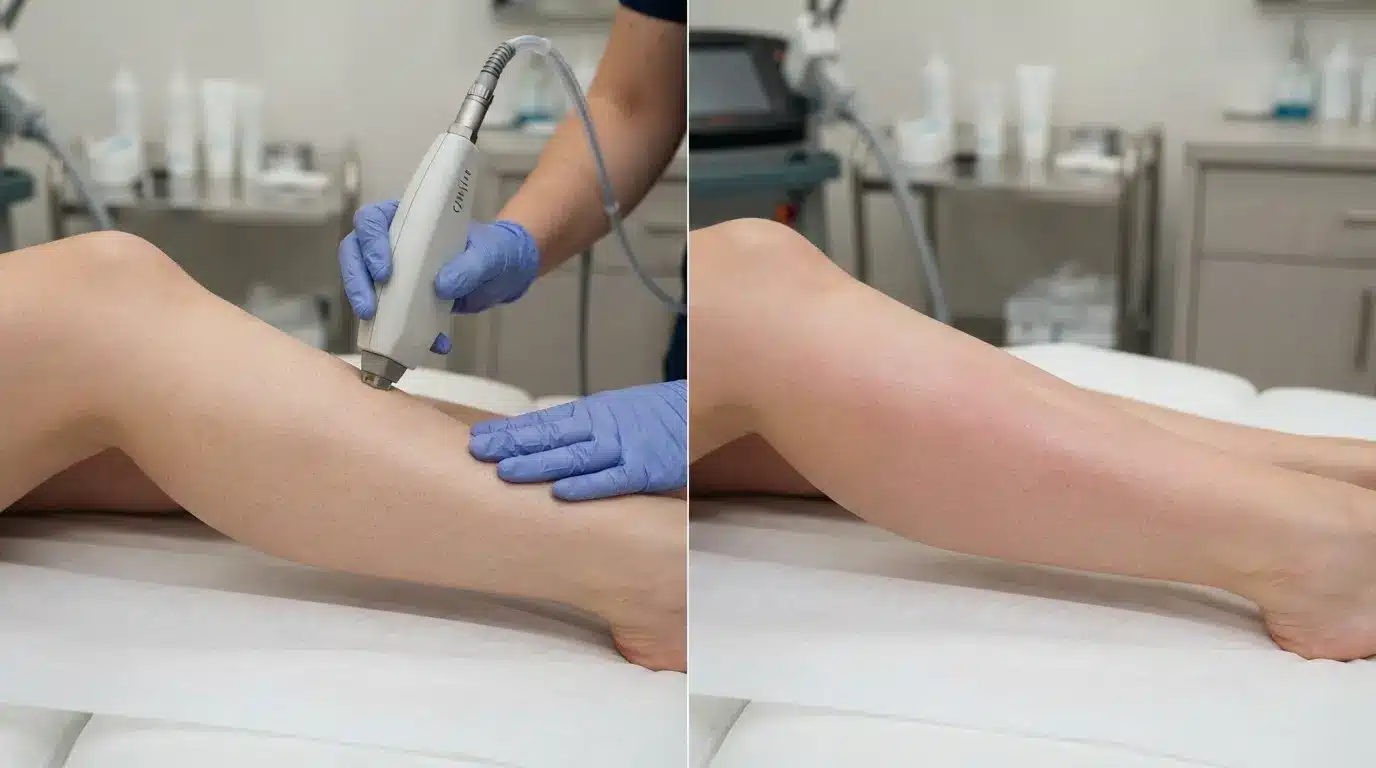
Laser hair removal creates a unique sensation as light energy targets follicles beneath the skin surface. Knowing what to expect during and right after treatment makes the sensation far less startling the first time it happens.
1. The Sensation During Laser Pulses
- During treatment, most people feel a quick snapping sensation that feels similar to a rubber band lightly touching the skin.
- The laser can create a warm or tingling feeling as energy reaches the hair follicles during each treatment pulse.
- Each pulse causes brief discomfort instead of continuous pain, making the overall session manageable for most users.
- The sensation depends on hair thickness, treatment area, skin sensitivity, and laser settings selected by the provider.
The same quick zap shows up in other laser treatments, like removing a stubborn skin tag, since the sensation comes from heat rather than the target itself.
2. The Skin Response After Treatment
- After the session, temporary redness may appear as the skin reacts to laser energy around the treated follicles.
- Some users notice mild swelling around follicles, especially in areas with thicker hair or increased skin sensitivity.
- The treated area may feel warm, tender, or slightly sensitive for a short time after the procedure.
- Proper aftercare helps calm the skin and support recovery while reducing unnecessary irritation.
3. The Difference Between First and Later Sessions
- The first session may feel stronger because more active hair follicles are treated when hair growth is usually denser.
- Areas with coarse or thick hair may absorb more laser energy, creating a more noticeable sensation during early appointments.
- Later sessions may feel easier as hair growth becomes finer and less dense after multiple treatments.
- Comfort levels can change over time based on personal sensitivity, treatment progress, and the area being treated.
Understanding the sensations before and after laser hair removal helps users feel prepared. While experiences vary, proper care and realistic expectations support a comfortable treatment journey.
Laser Hair Removal Pain Levels by Body Area
Laser hair removal comfort levels vary across different body areas because each region has unique skin thickness, nerve sensitivity, and hair density.
Some areas feel like a quick pinch, while others feel closer to a mild sting, so it helps to know what to expect before you book.
Treatment Area | Comfort Level | Why It Feels Different |
|---|---|---|
Upper lip | Moderate | The skin is thinner and has more nerve endings, making the snapping sensation more noticeable. |
Underarms | Moderate to high | Sensitive skin and dense hair growth can make laser pulses feel stronger in this area. |
Legs | Low to moderate | The skin is generally thicker, so most sessions feel milder here than elsewhere. |
Arms | Low | Less sensitive skin and lighter hair growth often make this area easier to tolerate. |
Bikini area | Moderate to high | This sensitive region has thinner skin and denser hair, which can increase discomfort. |
Pain levels differ from person to person and may depend on hair thickness, skin sensitivity, laser settings, and individual tolerance.
My most sensitive clients still choose to treat their bikini line because a few intense minutes each session beats years of ingrown hairs from waxing.
Factors that Influence Laser Hair Removal Discomfort
Several factors can affect how laser hair removal feels during a session. I’ve watched two clients on the exact same treatment area rate their pain completely differently, which is why I don’t assume tolerance from one visit predicts the next.
- Hair thickness and density: Coarser and denser hair may absorb more laser energy, creating a stronger sensation.
- Treatment location: Sensitive areas with thinner skin or more nerve endings may feel more intense.
- Individual pain tolerance: Everyone experiences discomfort differently based on personal sensitivity levels.
- Laser type and settings: The device and energy settings can influence the level of sensation during treatment.
- Cooling technology: Built-in cooling systems help reduce heat and improve comfort during laser pulses.
- Skin preparation: Proper preparation before the appointment can support a smoother and more comfortable experience.
- Your state going in: Hydration, rest, and stress levels on the day of your appointment can shift how sensitive your skin feels, so a calm, well-rested visit tends to go easier than a rushed one.
The level of discomfort varies for every person. The same lidocaine-based numbing creams show up well beyond hair removal, including when easing sensitive tattoo removal sessions.
Who Should Delay or Skip a Session?
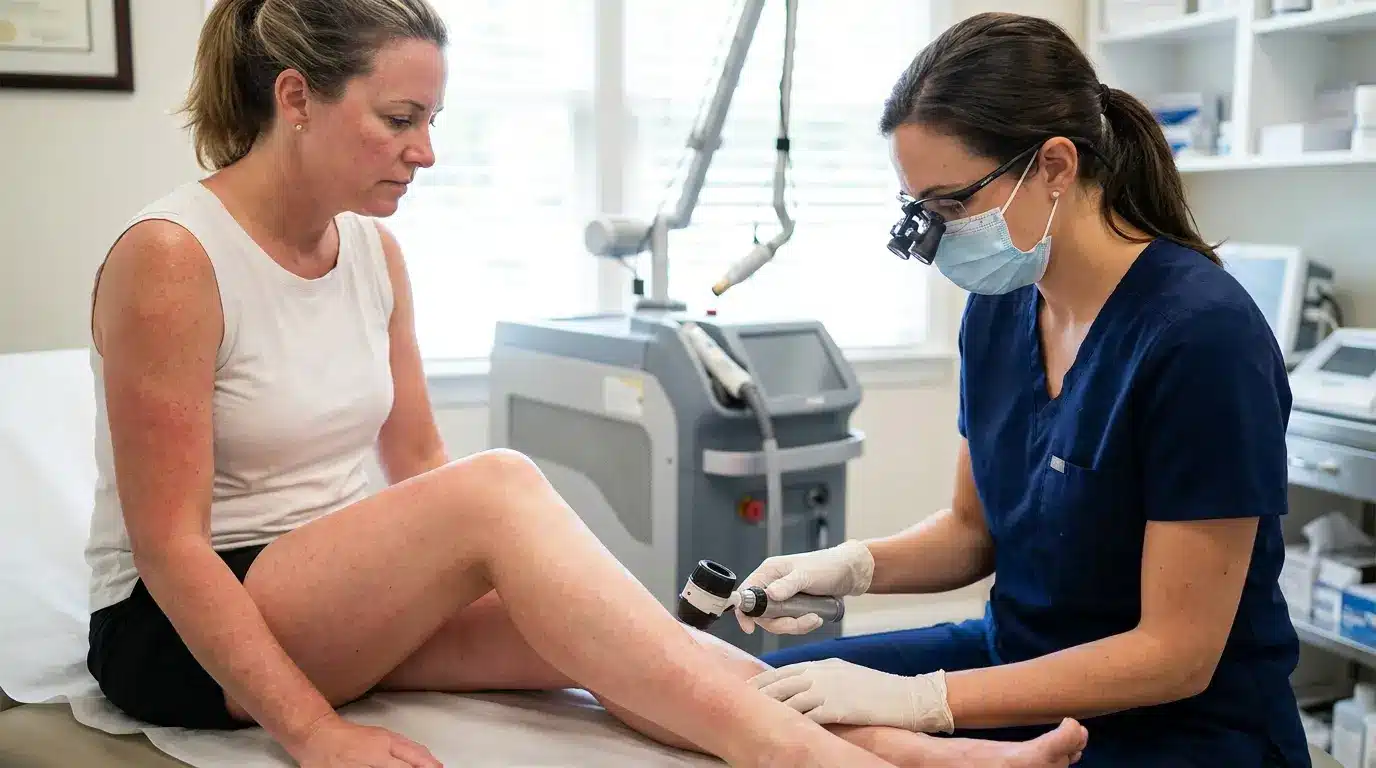
Certain conditions call for a pause before booking, since treating the wrong skin at the wrong time can turn ordinary discomfort into an actual burn risk.
- Active sunburn or a recent tan, since overheated melanin absorbs more laser energy than intended.
- Retinoid or isotretinoin use within the past six months, which leaves skin more reactive to heat.
- Active cold sores, rashes, or infections on the treatment area, which laser energy can aggravate.
- Certain photosensitivity or autoimmune skin conditions that make heat exposure riskier than usual.
According to the American Academy of Dermatology, discussing current medications and recent sun exposure with your provider before every session helps catch these issues early.
Laser Hair Removal Compared with Other Hair Removal Methods
Different hair removal methods create different sensations and offer varying results. Comparing them can help users understand why laser hair removal feels different from traditional options.
Method | Sensation | Result Duration |
|---|---|---|
Shaving | Minimal discomfort and removes hair only from the skin surface. | Short-term results, usually lasting a few days. |
Waxing | Pulling sensation as hair is removed from the root. | Results last several weeks before regrowth. |
Threading | Repeated pulling sensation while removing individual hairs. | Results usually last several weeks. |
Laser Hair Removal | Heat pulses, mild snapping, or tingling as follicles are targeted. | Long-term hair reduction after multiple sessions. |
Each method has its own experience and benefits. Laser hair removal focuses on reducing hair growth over time, while traditional methods mainly provide temporary removal.
Light-based alternatives like IPL create a similar sensation and can leave skin looking flushed and warm afterward, though the technology behind each targets hair differently.
Ways to Make Laser Hair Removal More Comfortable
A few preparation steps can make laser hair removal sessions noticeably more comfortable.
- Choose a qualified provider with experience adjusting laser settings for your skin type, hair growth, and comfort needs.
- Ask about cooling systems used during treatment, since built-in cooling can reduce heat sensations on sensitive areas.
- Ask about a topical numbing cream. Applied about 20 to 30 minutes before your session, a numbing cream can dull the snapping sensation on spots like the bikini line or upper lip. Not every clinic supplies or allows one, so ask ahead of time.
- Follow pre-treatment instructions, such as shaving the area when advised, so the laser works effectively and the session stays comfortable.
- Avoid sun exposure before sessions, since recently tanned or sun-sensitive skin can become more reactive during treatment.
- Communicate sensitivity concerns with your provider before and during the session so they can adjust the settings in real time.
I tell clients to expect a warm flick rather than a burn, and most say their second session already feels easier once they know the rhythm of the pulses.
How Many Sessions Will You Need?
Most treatment plans run six to eight sessions spaced four to six weeks apart, timed to catch hair as it cycles back into its active growth phase.
Coarse, dark hair on the legs or underarms often responds faster than finer hair on the face, which can need a session or two more to fully clear.
I schedule a touch-up around the six-month mark for most clients, since a few stray hairs almost always resurface even after a full course.
What Reddit Users Say About Laser Hair Removal Feel
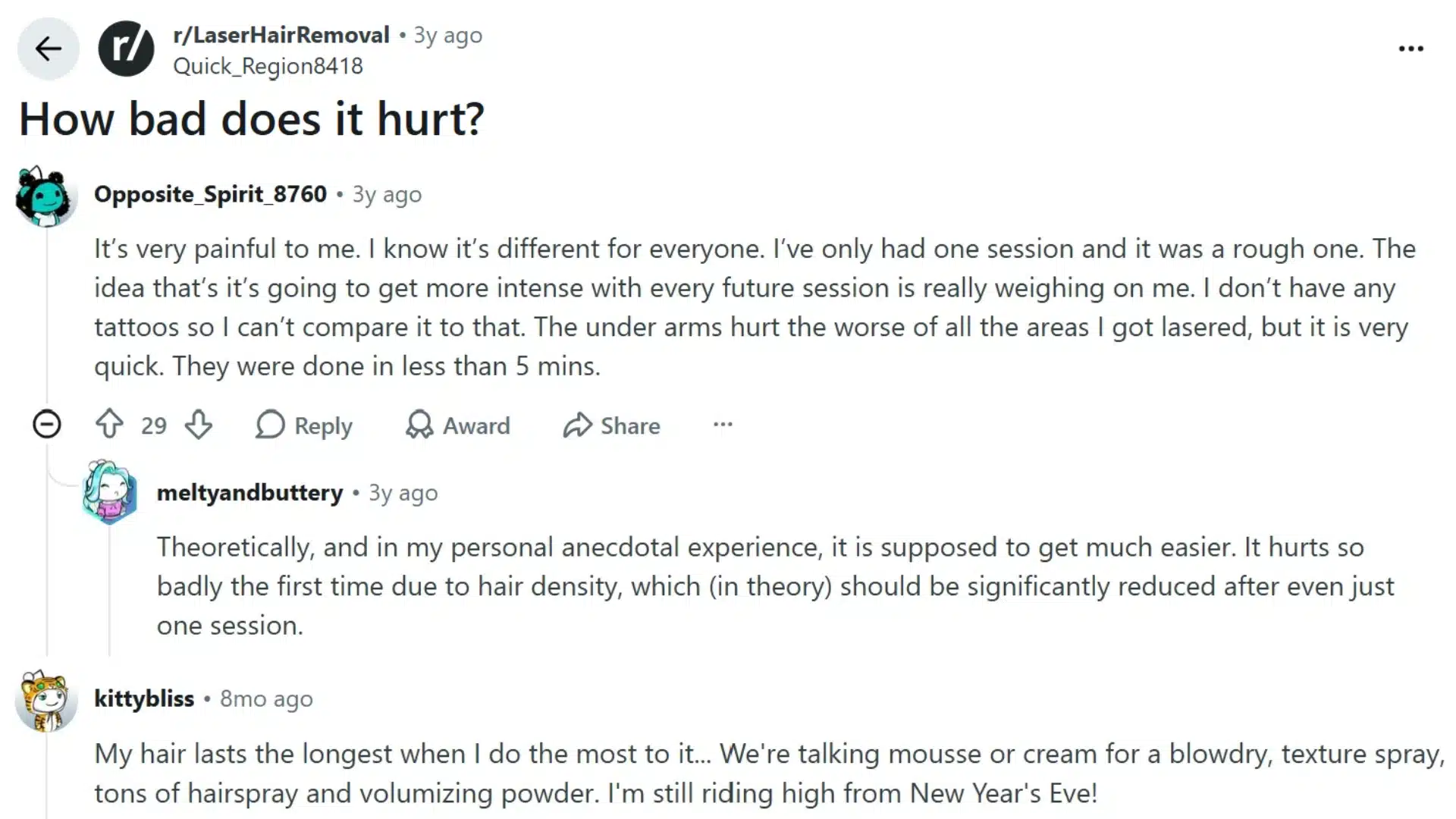
Reddit users discussing laser hair removal often describe the treatment sensation as quick snapping, mild stinging, warmth, or small bursts of discomfort rather than constant pain.
Many users mention that the feeling changes depending on the treatment area, hair thickness, and personal sensitivity.
Areas like the underarms and bikini region are commonly described as more intense due to thinner skin and denser hair growth, while areas like the arms or legs may feel more manageable.
Some users also share that later sessions can become easier as hair growth reduces over time. These shared experiences highlight how different each person’s laser hair removal journey can be.
Possible Side Effects After Laser Hair Removal
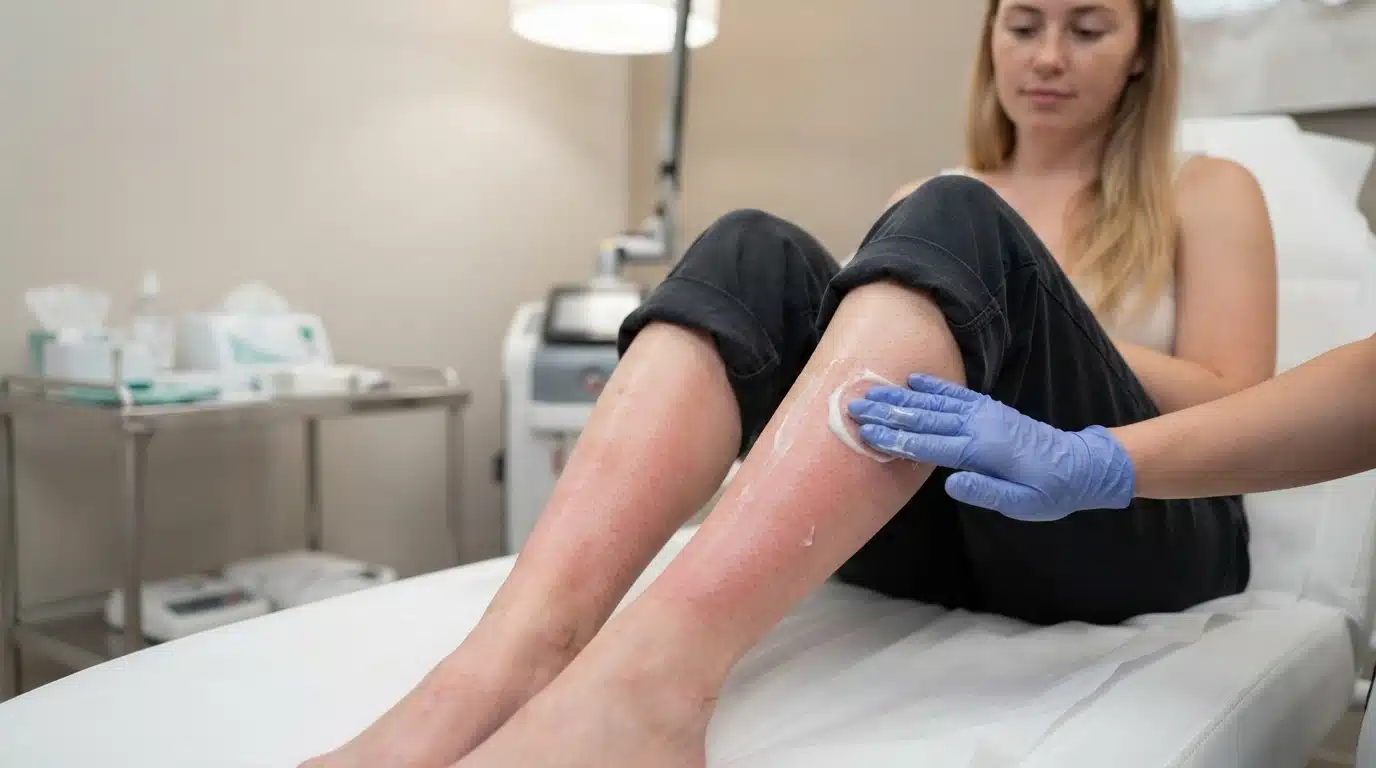
Laser hair removal is generally considered safe, and any skin reaction that follows is usually mild and short-lived.
Redness and mild swelling typically fade within a few hours to a day; on more sensitive areas like the bikini line, it can linger up to 48 hours.
Follow your provider’s aftercare instructions, use cool compresses and fragrance-free lotion, and skip harsh actives like retinol for a few days to support smooth recovery.
Reach out to your provider if you notice blistering, excessive swelling, or pain that doesn’t ease within a day or two. These go beyond a typical reaction and are worth a quick check-in rather than waiting it out.
Note: Skin responses vary between individuals, so follow expert aftercare advice and monitor any changes after your session.
Preparing for Your First Laser Hair Removal Session
A little preparation before your appointment can help make the laser hair removal process smoother, more comfortable, and easier to manage.
- Shave the treatment area if advised before your session.
- Avoid tanning before treatment to protect your skin.
- Discuss medications and skin concerns with your provider beforehand.
- Understand the expected session timeline and treatment steps.
- Follow aftercare instructions after completing your appointment.
I ask every new client to walk me through their skincare and medications before we start, since that conversation changes my settings more than anything else on this list.
Laser Hair Removal Safety and Long-Term Expectations
Understanding safety and realistic outcomes can help users make informed decisions before starting laser hair removal treatments.
- General safety information: Laser hair removal is considered a safe cosmetic procedure when performed correctly with suitable equipment and proper care.
- Importance of trained professionals: Choosing an experienced provider helps ensure correct laser settings, safer treatment, and better skin protection.
- Permanent reduction vs. complete removal: Laser treatment usually provides long-term hair reduction rather than guaranteeing complete, permanent removal of every hair.
- Factors affecting results: Hair color, skin type, treatment area, hormones, and the number of sessions can influence overall results.
Realistic expectations and professional guidance can help users achieve safer, more satisfying laser hair removal outcomes.
Final Thoughts
Laser hair removal pain rarely matches the fear that walks in the door with first-time clients. During a typical session, discomfort usually stays in the mild-to-moderate range and eases with each visit as regrowth thins out.
Where it lands on the pain scale depends mostly on the treatment area, your skin’s sensitivity, and whether a numbing cream or cooling tip is part of the plan.
Areas like the bikini line and upper lip ask for a little more patience than legs or arms, but neither comes close to unbearable.
If you’re weighing a first appointment, talk through your specific concerns with a licensed provider beforehand. Have you tried it yourself? Share how your session actually felt in the comments below.
Frequently Asked Questions
Does Laser Hair Removal Work Better on Dark Hair?
Laser hair removal generally works best when there’s strong contrast between hair and skin color, since the laser targets pigment in the follicle. Nd:YAG lasers are built specifically to treat darker skin tones more safely, so ask your provider which device they use if this applies to you.
How Long Does a Laser Hair Removal Session Take?
Session time depends on the treatment area: a few minutes for the upper lip, 15 to 20 minutes for underarms, and up to an hour for full legs.
Can You Exercise After Laser Hair Removal?
Avoid intense workouts for about 24 to 48 hours after treatment, since sweat and heat can increase skin sensitivity or irritation in treated areas.
Is Laser Hair Removal Safe During Pregnancy?
Most providers recommend waiting until after pregnancy. It’s not because of a proven risk, but because there isn’t enough safety research on hormonal shifts and laser treatment yet. It’s a simple case of better safe than sorry.
What Happens if You Skip a Session in The Middle of Treatment?
Skipping a session isn’t the end of the world, but spacing out too long can let hair cycle back into a resting phase, meaning the next appointment may need to treat regrowth from scratch. Try to stay within a week or two of your provider’s recommended schedule when you can.