Face piercings can change a face faster than a new haircut. One small stud, hoop, or barbell can sharpen a feature, soften an expression, or make the whole face feel more intentional.
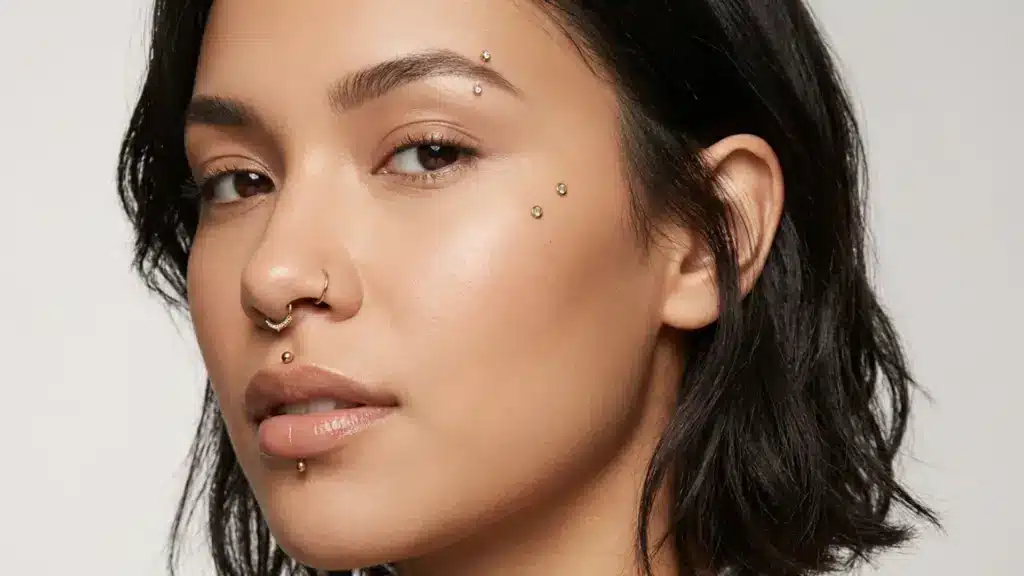
I noticed this on a facial client with a Medusa piercing. The tiny flat-back stud above her upper lip was so precise that it pulled attention to her mouth without looking loud.
That is the power of good placement. From nostril and septum piercings to labret, eyebrow, bridge, cheek, and medusa styles, each one sits differently and heals differently.
This blog breaks down face piercings by zone, jewelry, healing, placement, and face shape so you can choose a look that actually suits you.
What are Face Piercings?
Face piercings are a type of body modification that involves placing jewelry through pierced openings in different areas of the face.
Popular placements include the nose, lips, eyebrows, cheeks, and bridge. Each piercing creates a different look and works with specific jewelry styles, such as studs, hoops, curved barbells, or flat-back labrets.
Some placements are subtle and easy to style, while others make a stronger visual statement. Healing times vary depending on the location, with some piercings healing in a few months and others taking much longer.
Face piercings express personal style and can highlight facial features. The best placement depends on anatomy, lifestyle, and aftercare.
Most Popular Nose Piercing Ideas for Face Piercings
The nose is the most common entry point into face piercings, and for good reason. The options range from very subtle to genuinely bold, so there’s a wide spectrum of commitment levels within a single zone.
1. Nostril Piercing
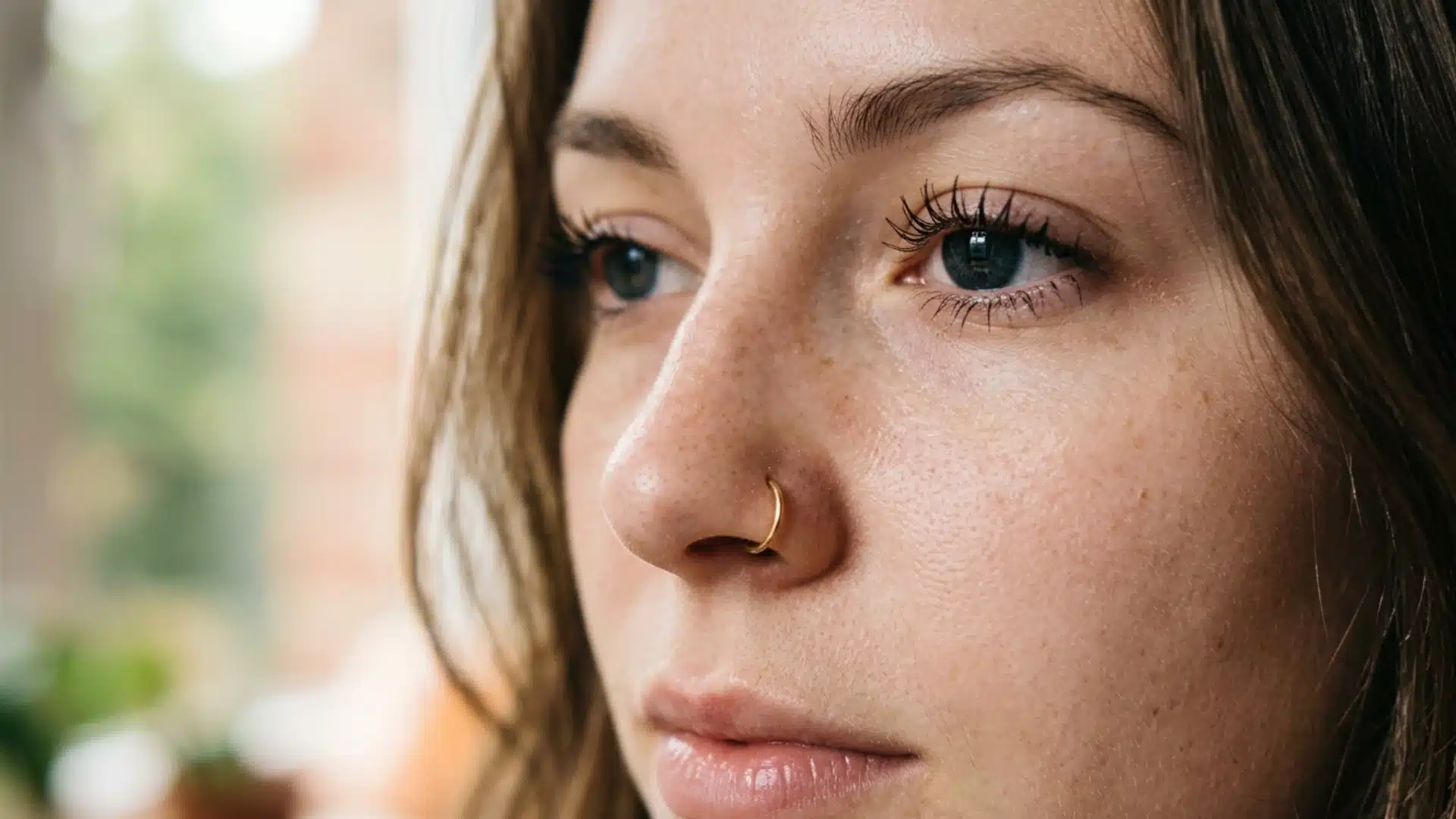
The classic nose piercing passes through one or both sides of the nostril and works with nearly every jewelry style, including studs, hoops, and screw-fit rings.
It remains the most popular choice for a reason. Because the tissue in this area is relatively soft and thin, pain levels are usually mild compared to many other facial piercings.
Healing typically takes between 2 and 4 months with proper aftercare. Its versatility makes it easy to match different aesthetics, from subtle everyday wear to more noticeable statement jewelry.
2. High Nostril Piercing
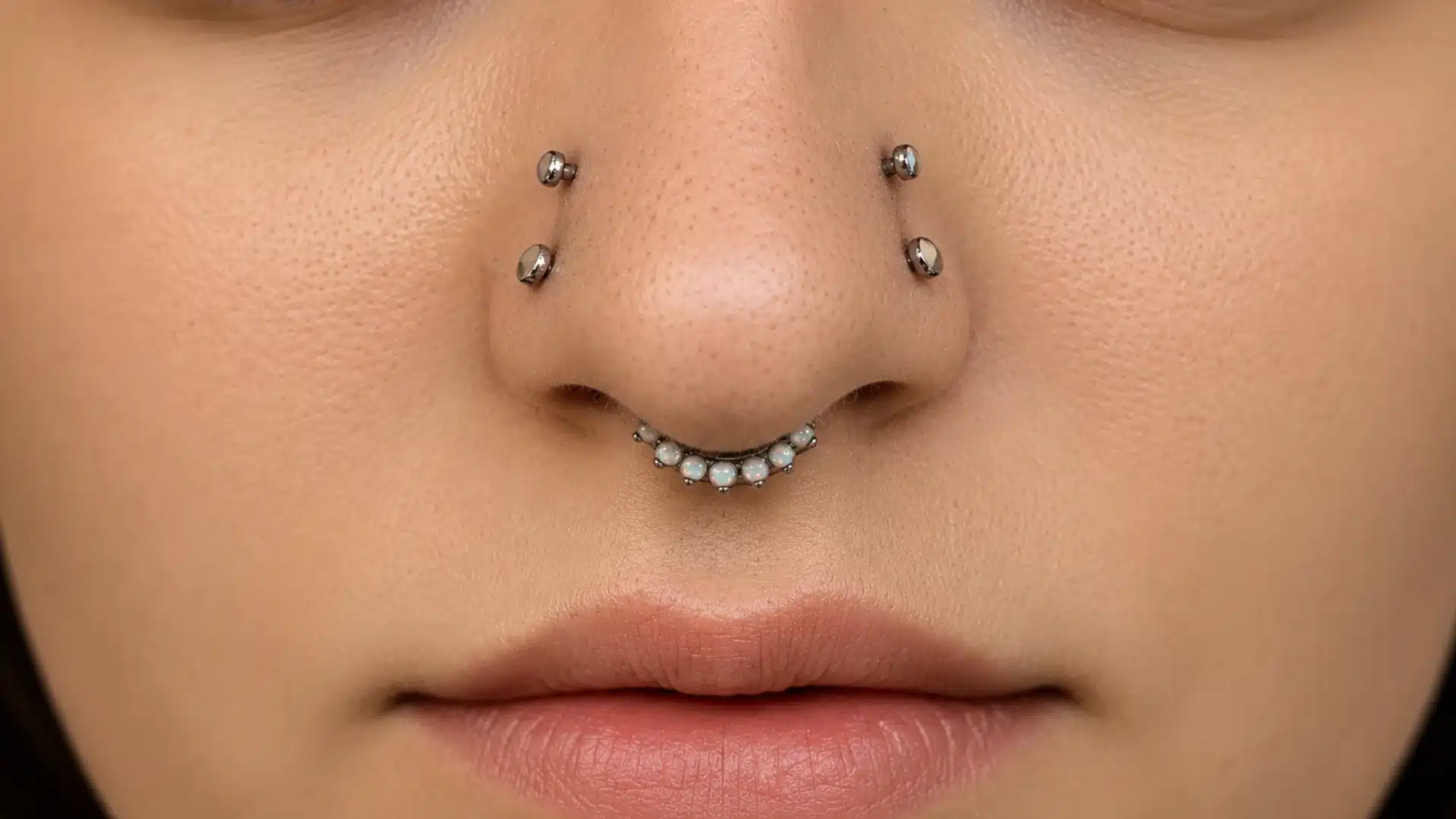
A high nostril piercing sits farther up the nasal wall, closer to the nasal bone than a traditional nostril piercing.
This elevated placement creates a distinct look that immediately stands out while still maintaining a clean appearance. Many people choose it because it feels more intentional and unique than a standard nose piercing.
Healing generally takes around 2 to 4 months, though cleaning can require extra attention due to the location. Small studs are the most common jewelry choice, helping emphasize the piercing’s sleek and refined placement.
3. Septum Piercing
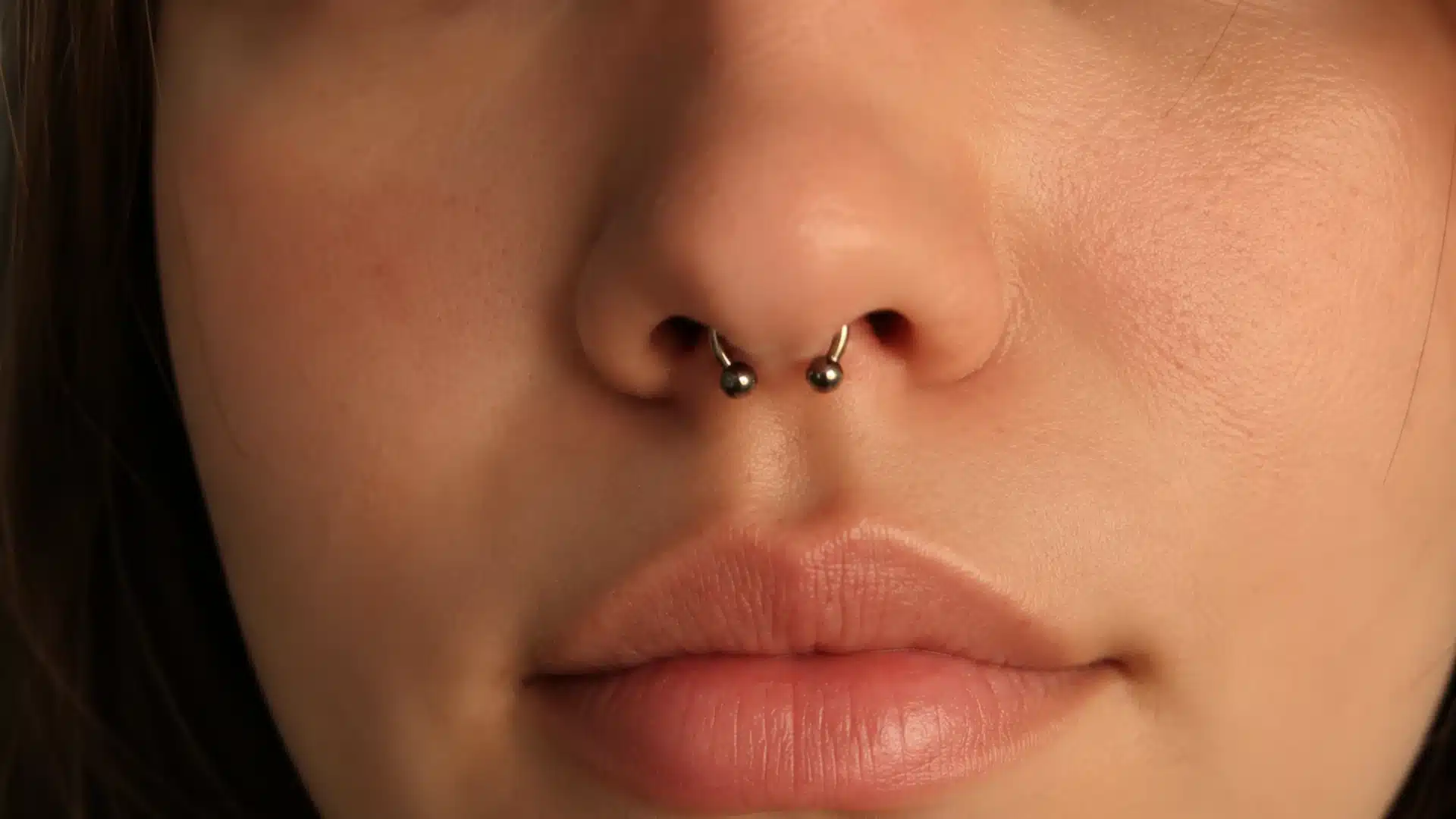
A septum piercing passes through the soft tissue between the nostrils, commonly known as the piercer’s “sweet spot.”
When correctly placed, it avoids the cartilage entirely, which often makes the procedure less painful than many expect.
One of its biggest advantages is flexibility, since horseshoe rings and circular barbells can be flipped up inside the nose when needed.
This makes it easy to conceal in professional or formal environments. Healing usually takes 6 to 8 weeks, making it one of the quicker-healing nose piercing options available today.
4. Bridge Piercing
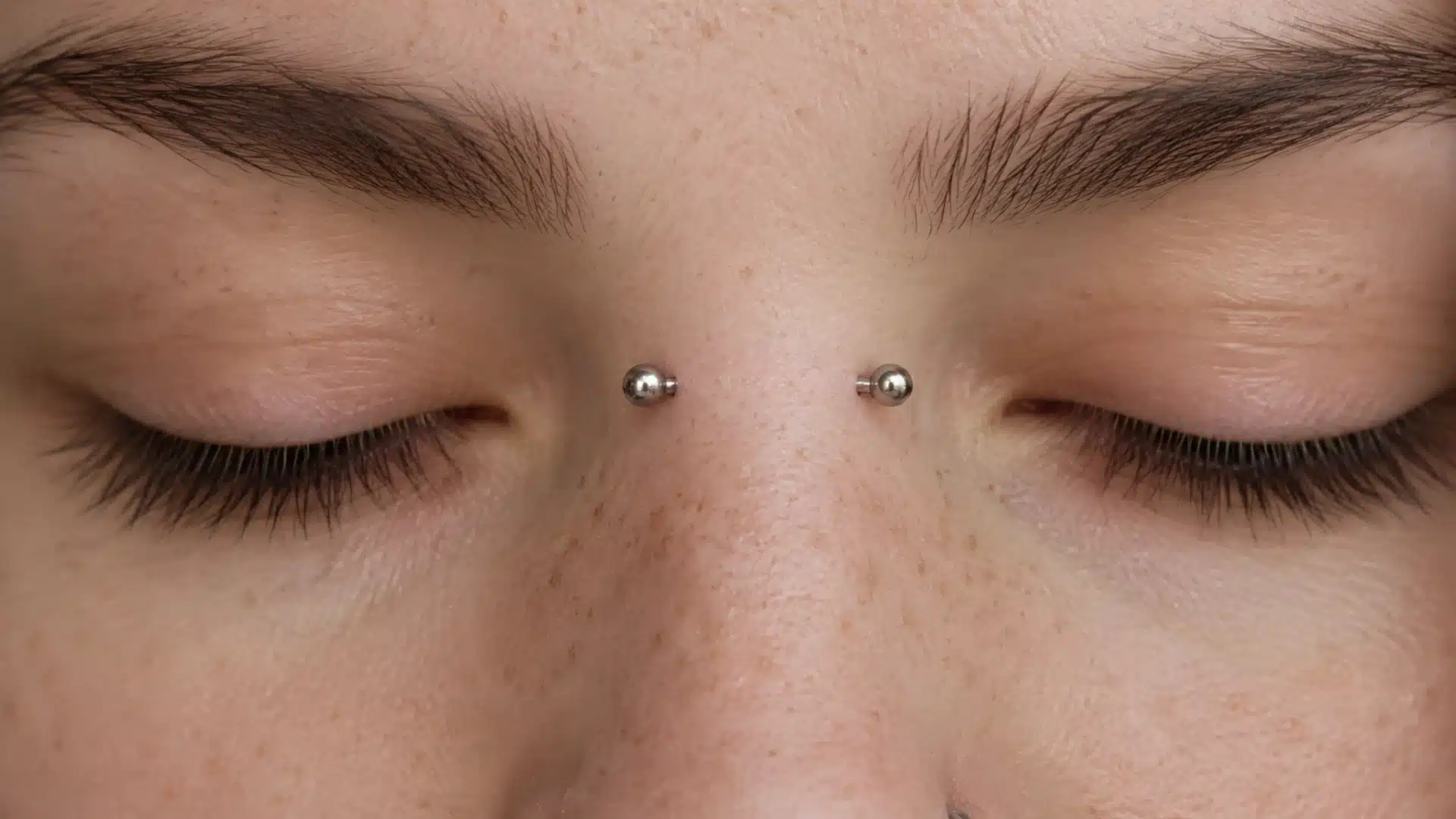
A bridge piercing is a surface piercing positioned horizontally across the bridge of the nose between the eyes.
Typically fitted with a straight or curved barbell, it creates a striking visual effect without requiring large jewelry.
Its placement draws immediate attention and can dramatically change facial aesthetics. Since it is a surface-piercing rather than a deep-tissue one, migration and rejection risks are higher. Healing generally takes 8 to 12 weeks.
Careful aftercare and an experienced piercer are especially important for maintaining long-term placement and appearance.
5. Rhino Piercing
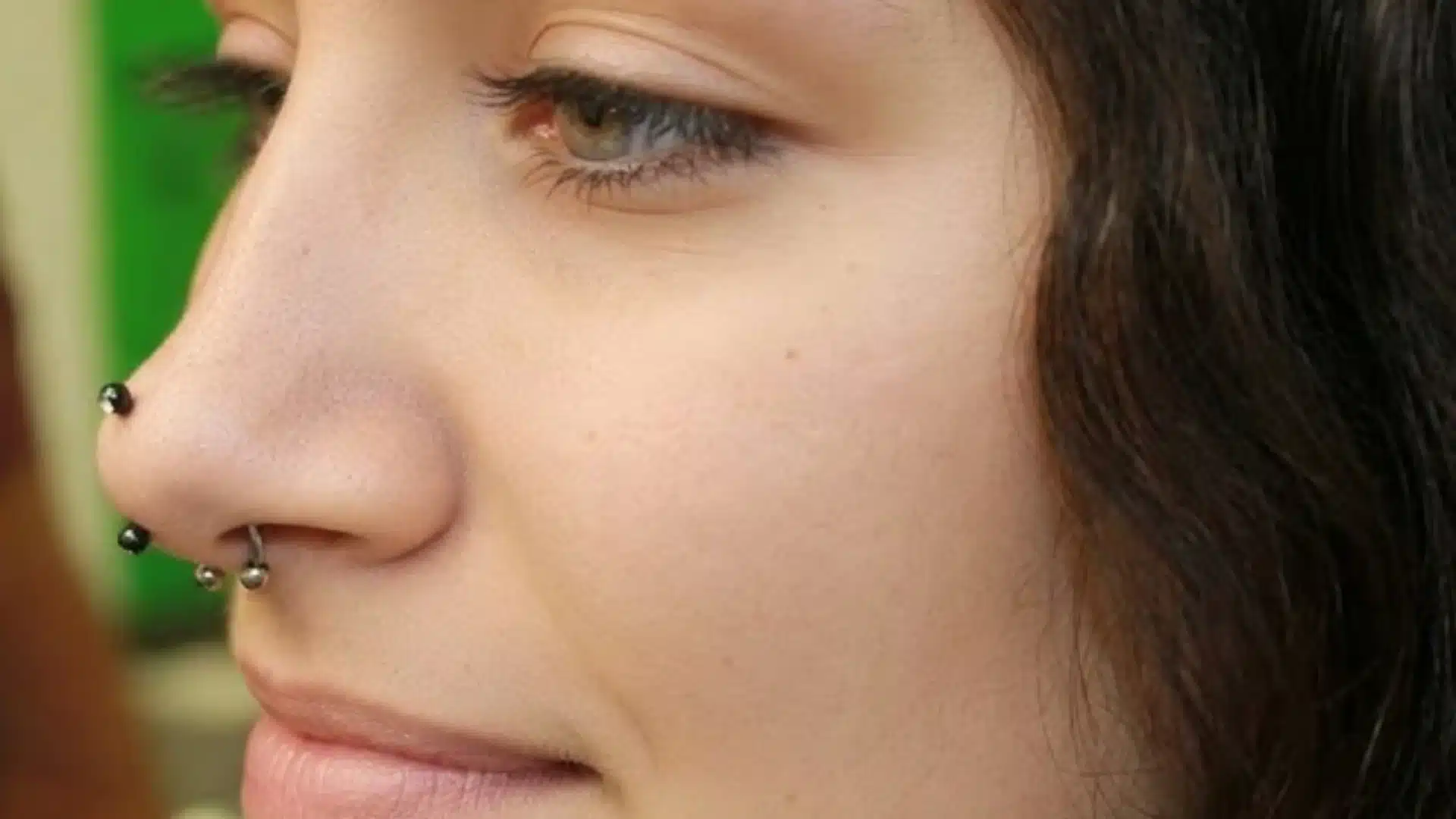
A rhino piercing runs vertically through the tip of the nose, with one end of the jewelry visible above the tip and the other below.
It is among the rarest nose-piercing styles and stands out for its unusual orientation. Since the piercing passes through a cartilage-heavy area, discomfort is typically greater than with a standard nostril piercing.
Healing usually requires 6 to 9 months, depending on individual factors and aftercare habits. Most people choose a rhino piercing specifically for its bold, unconventional look and strong visual presence.
Lip and Philtrum Piercing Ideas for a Standout Look
Lip and philtrum piercings can change your whole look fast, adding sharp detail, symmetry, and personality without needing heavy jewelry or dramatic styling.
6. Medusa Piercing
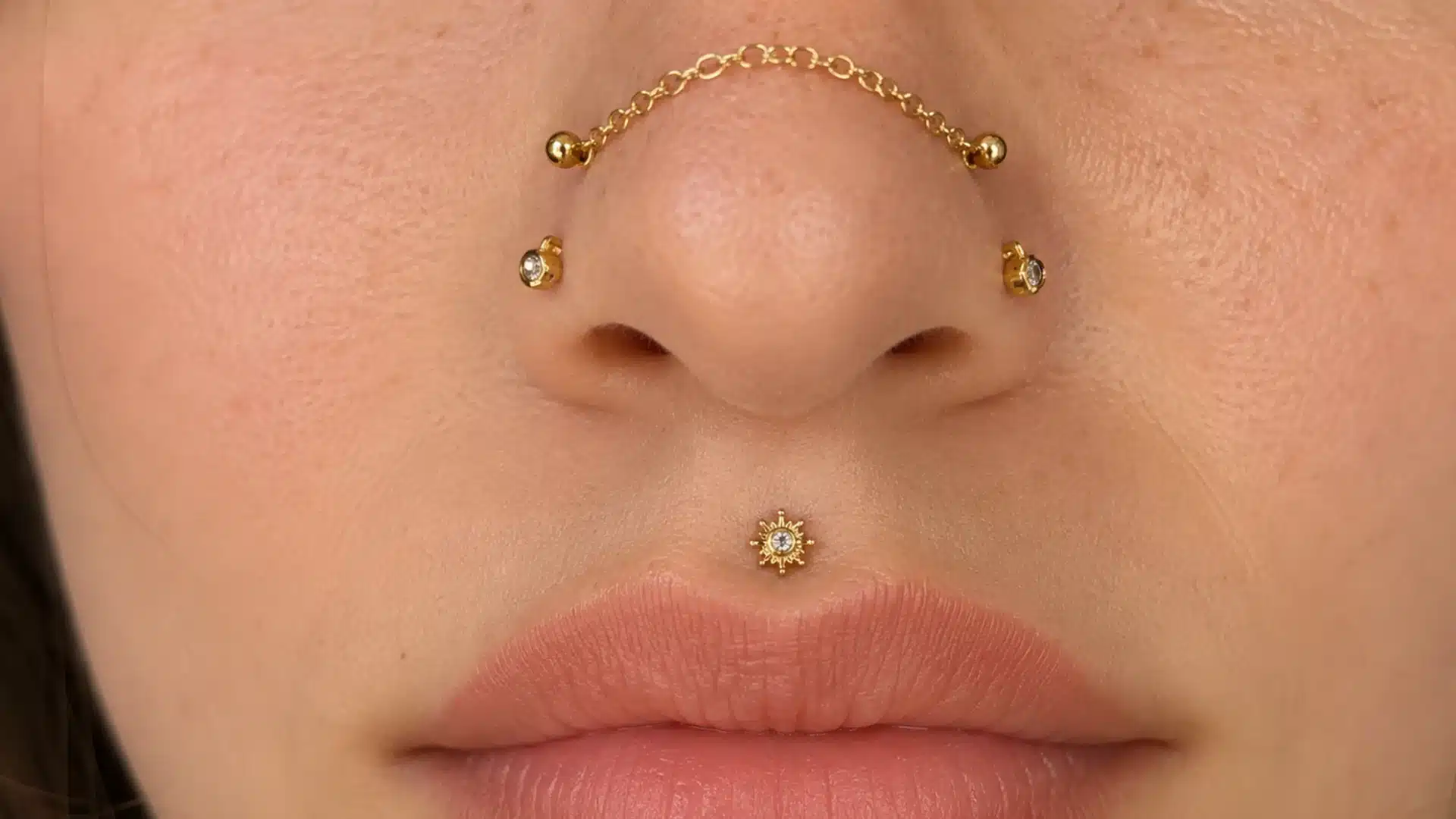
A Medusa piercing sits in the philtrum, the small vertical groove above the upper lip.
It uses a flat-back labret stud, with the bead centered on the face for a clean, balanced look. Because the placement is symmetrical, it naturally draws attention to the mouth without requiring large jewelry.
It suits most face shapes and works especially well for people who want a piercing that feels minimal in size but still strong in placement. The result is sharp, refined, and easy to style.
7. Monroe Piercing
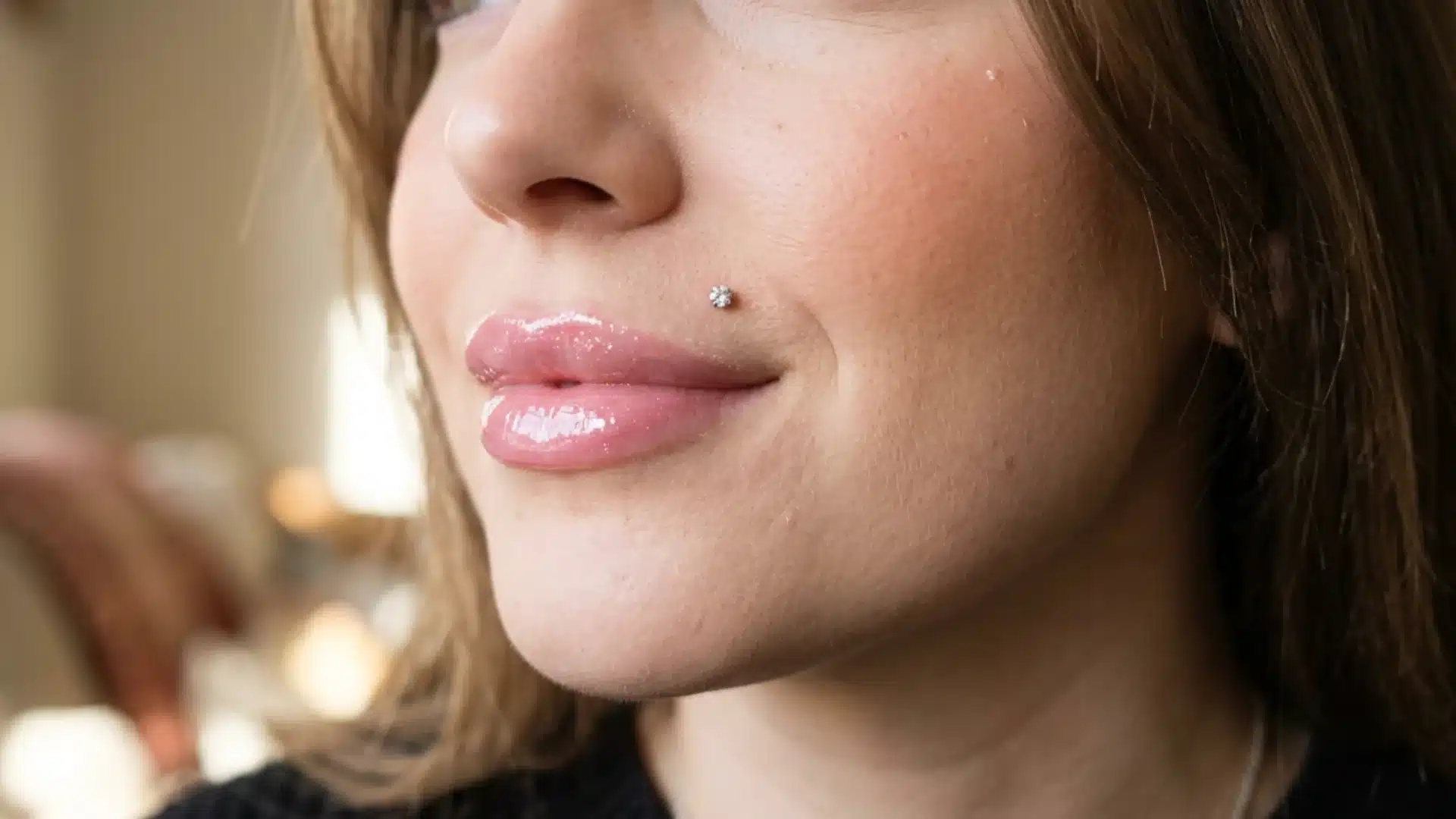
A Monroe piercing sits above the upper lip on the left side, resembling a beauty mark.
It gets its name from Marilyn Monroe’s famous mole, which gives the style a vintage, glamorous reference point. A flat-back stud is the usual jewelry choice, keeping the look small but noticeable. Healing generally takes 8 to 12 weeks.
Since the placement is off-center, it adds asymmetry to the face and pairs well with a single nostril piercing on the opposite side.
8. Madonna Piercing

The Madonna piercing is the Monroe’s mirror image, placed above the right side of the upper lip to mimic a beauty mark.
It offers the same elegant look but with a slightly subtler, vintage-inspired feel. Some people pair a Monroe and a Madonna piercing together, creating the popular angel bites style.
Jewelry options are nearly identical, typically featuring a small stud that sits close to the skin. Healing time is also similar, usually taking several months with proper aftercare and maintenance.
9. Labret Piercing
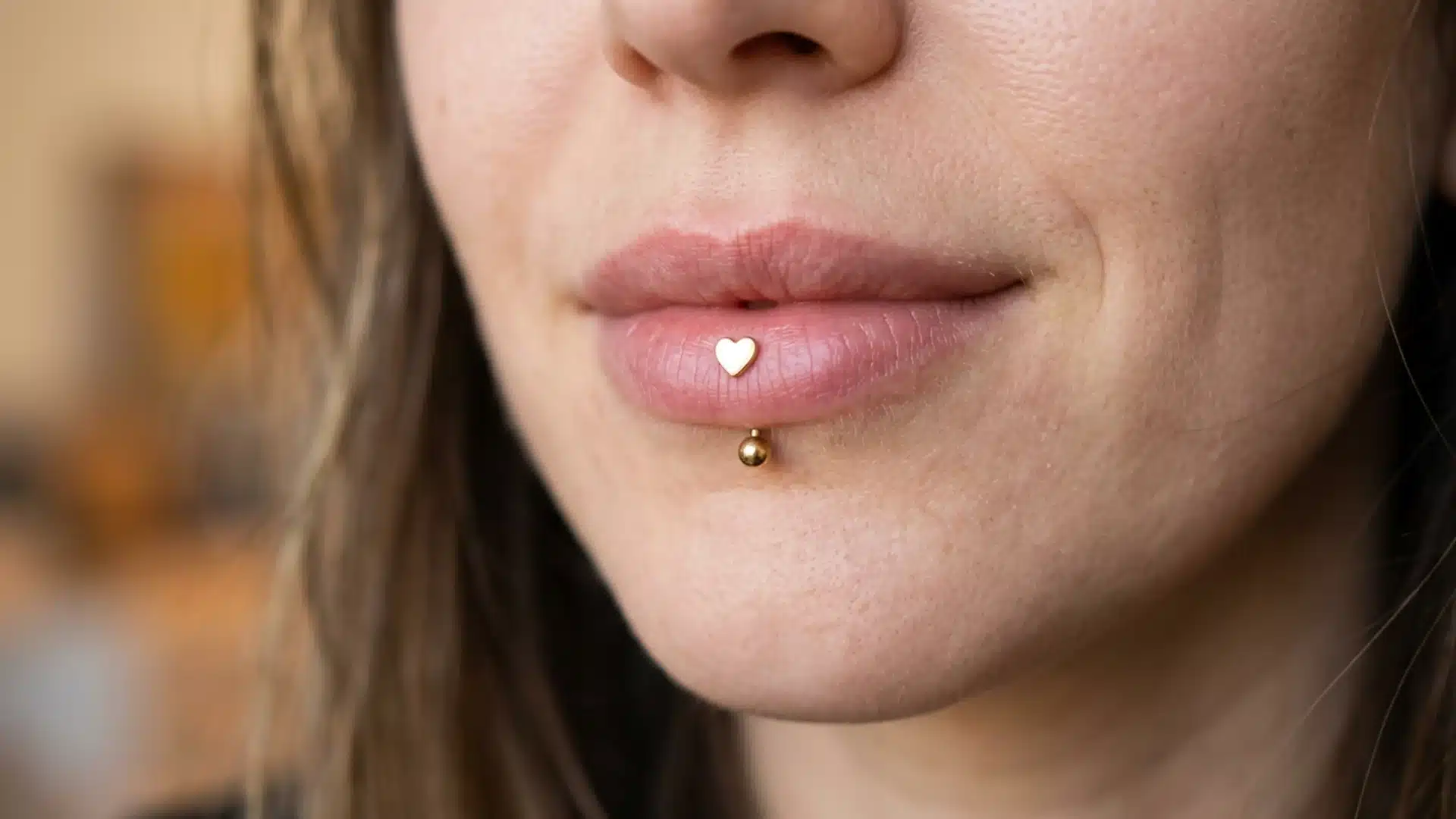
A labret piercing is placed below the center of the lower lip, just above the chin.
It usually uses a flat-back stud, which sits flush inside the mouth for a cleaner feel. A vertical labret is a different version, using a curved barbell that passes through the lip and shows one bead above and one below.
Healing usually takes 6 to 8 weeks. The standard labret is popular because it looks centered, compact, and polished without taking over the lower face.
10. Angel Bites
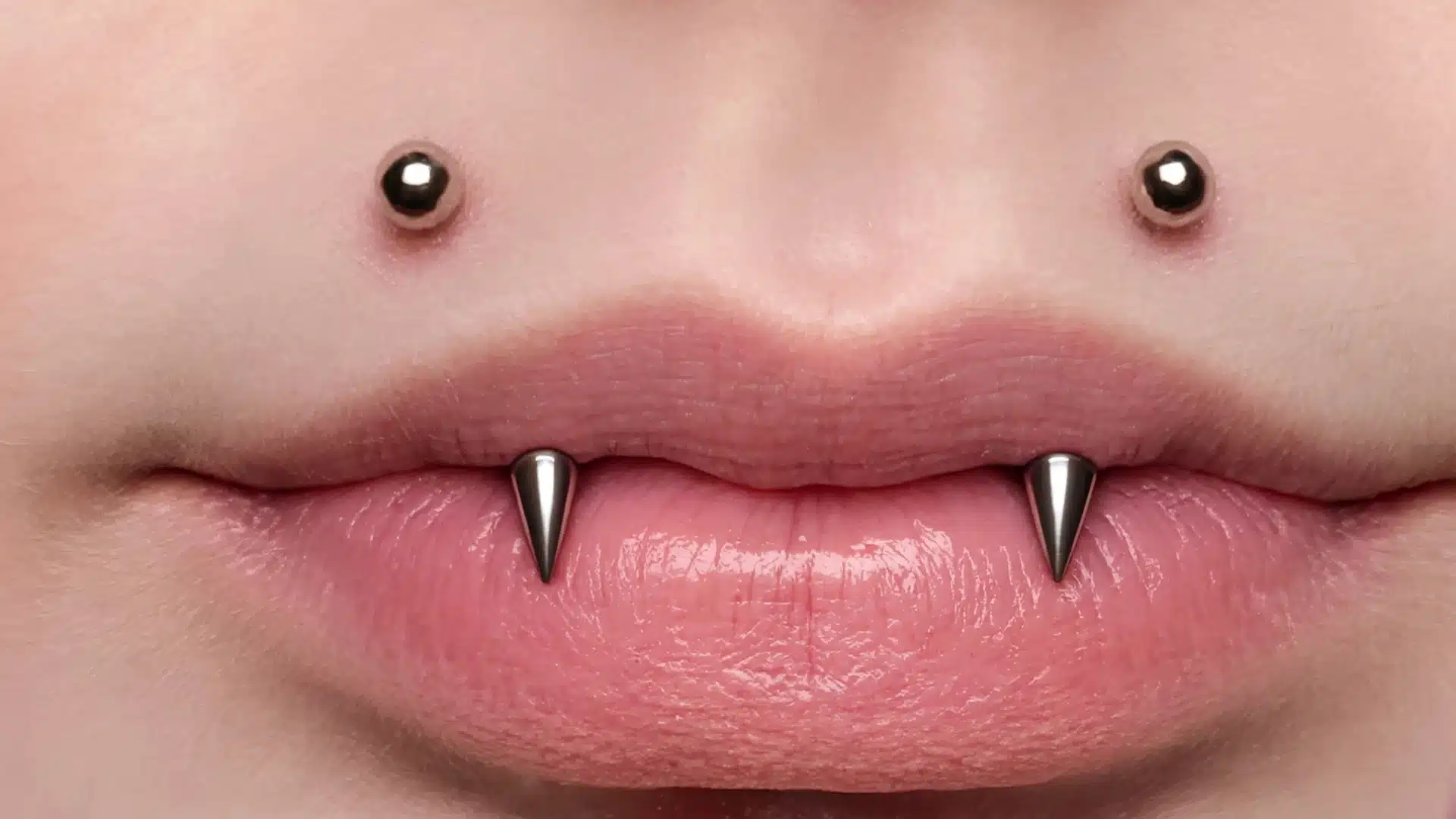
Angel bites consist of two piercings positioned above the upper lip, one on each side.
They are essentially a pair of Monroe piercings worn together, creating a symmetrical look that immediately draws attention to the upper lip.
The balanced placement is what makes this style stand out, so many people prefer simple studs that keep the focus on the symmetry.
Healing typically takes around 8 to 12 weeks, although swelling and individual aftercare habits can affect recovery time. Consistent cleaning and avoiding irritation are key to achieving the best healing results.
11. Snake Bites
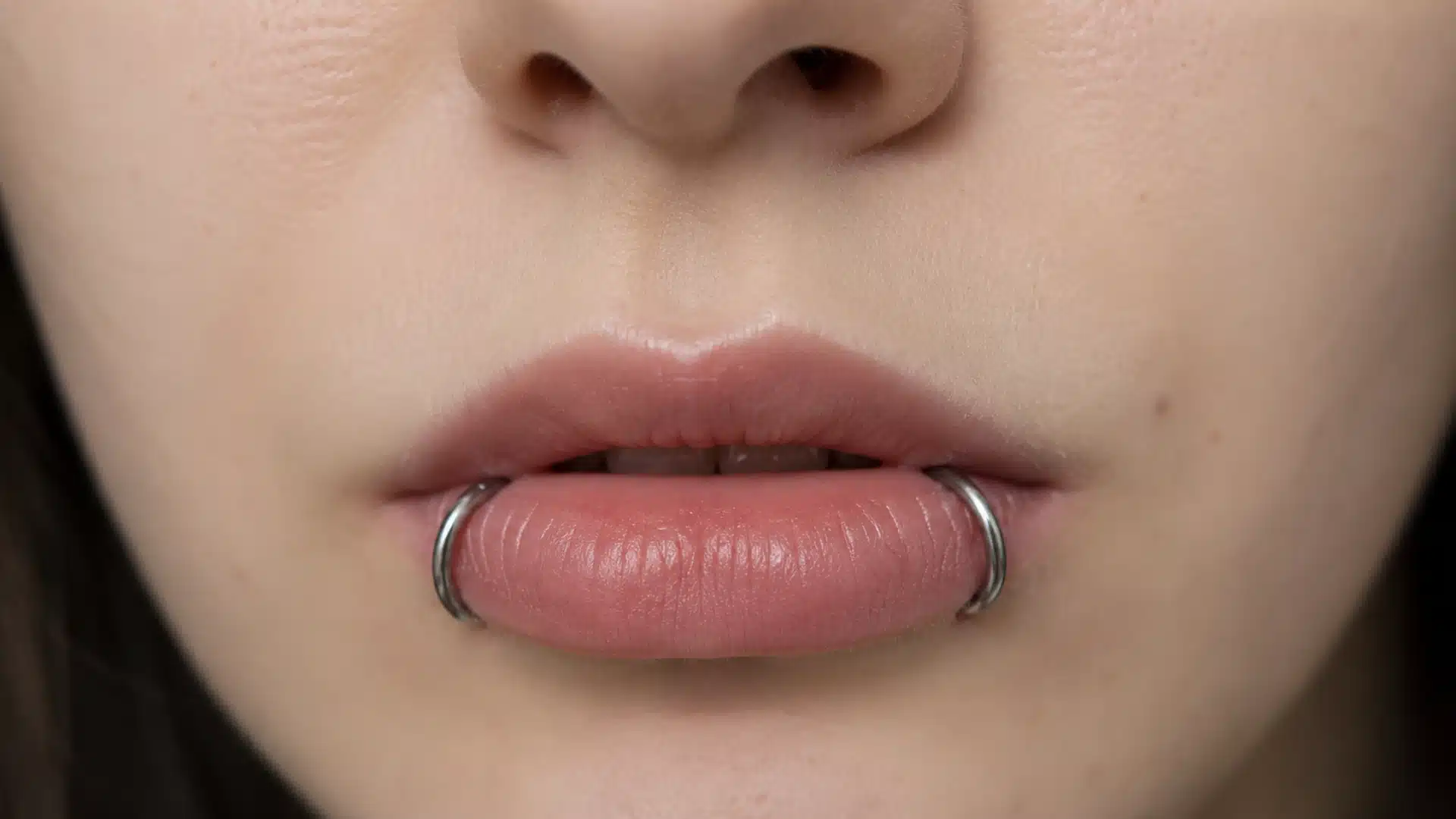
Snake bites are two piercings placed symmetrically on either side of the lower lip.
They can be worn with flat-back studs for a cleaner look or rings for a stronger, more noticeable style.
For anyone wanting to understand how the skin can react during healing, it helps to know the difference between normal tissue response and a true keloid.
It’s helpful to understand the difference between piercing bumps and keloids before getting a piercing.
Best Eyebrow Piercing Ideas for Face Piercings
Best eyebrow piercing ideas for face piercings include classic brow, vertical, horizontal, and anti-eyebrow styles that enhance facial features, add edge, and suit different aesthetics when placed and healed with care.
12. Eyebrow piercing
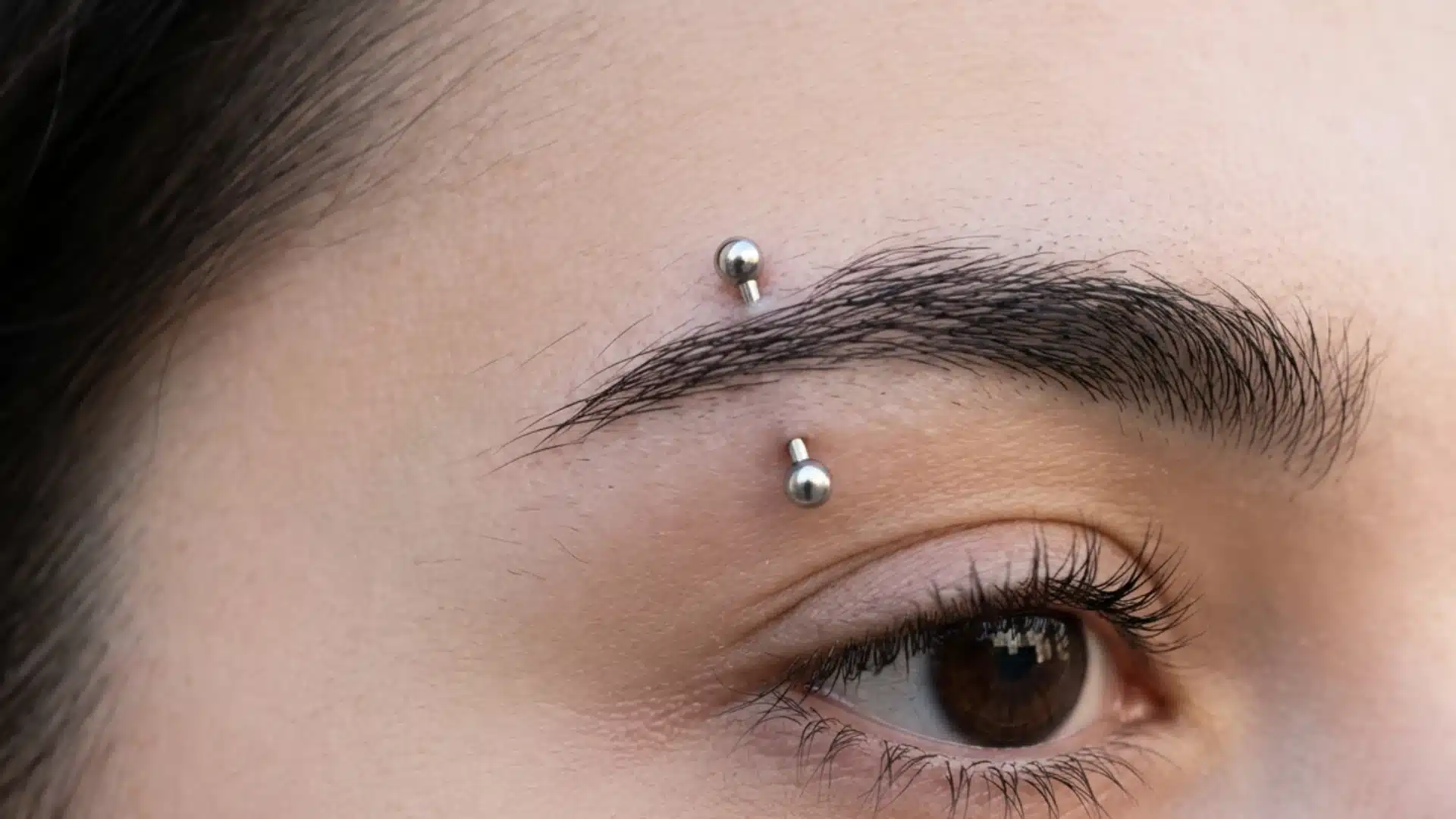
An eyebrow piercing is a surface piercing placed at the outer edge of the brow, usually fitted with a curved barbell.
Healing takes roughly 6 to 9 months, though the surface may look healed well before the tissue underneath is fully settled. Because it’s surface-piercing, migration is common over time, particularly if the wearer is active or the placement is shallow.
Jewelry gauge and initial placement angle are critical factors; this is one piercing where cutting corners on the piercer is a mistake.
13. Anti-Eyebrow Piercing
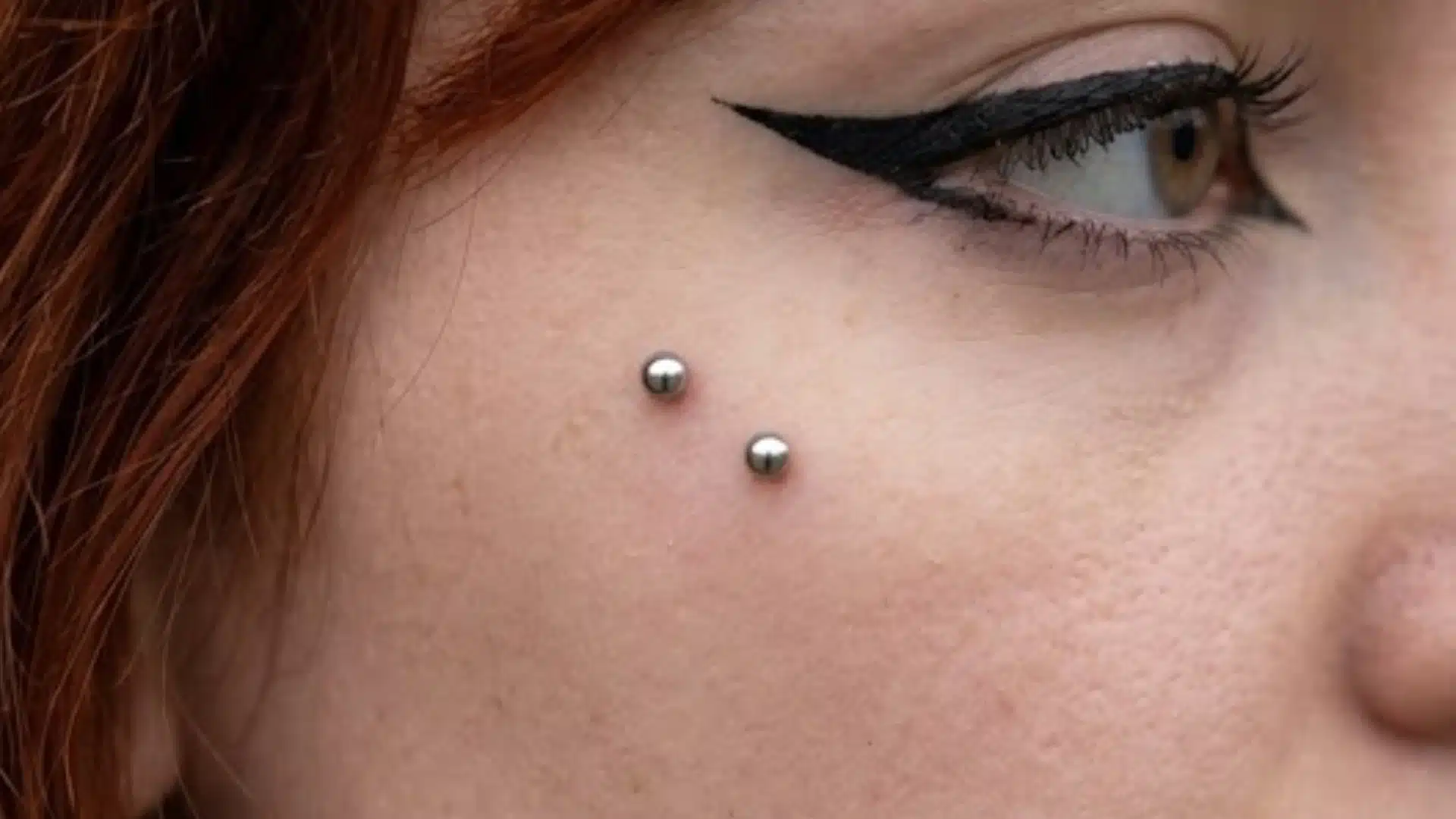
An anti-eyebrow piercing sits below the eye, along the upper cheekbone.
It’s a surface piercing that creates a lifted, angular detail near the eye without piercing the cheek tissue, unlike a standard cheek piercing.
Healing usually takes 6 to 12 weeks at the surface, but rejection and migration are possible because the jewelry sits close to the skin. It works best when an experienced piercer performs careful anatomical checks before placement.
Cheek and Dermal Piercings
Cheek and dermal piercings require careful placement, patience during healing, and strict aftercare, as both can easily irritate or shift over time.
14. Cheek Piercing
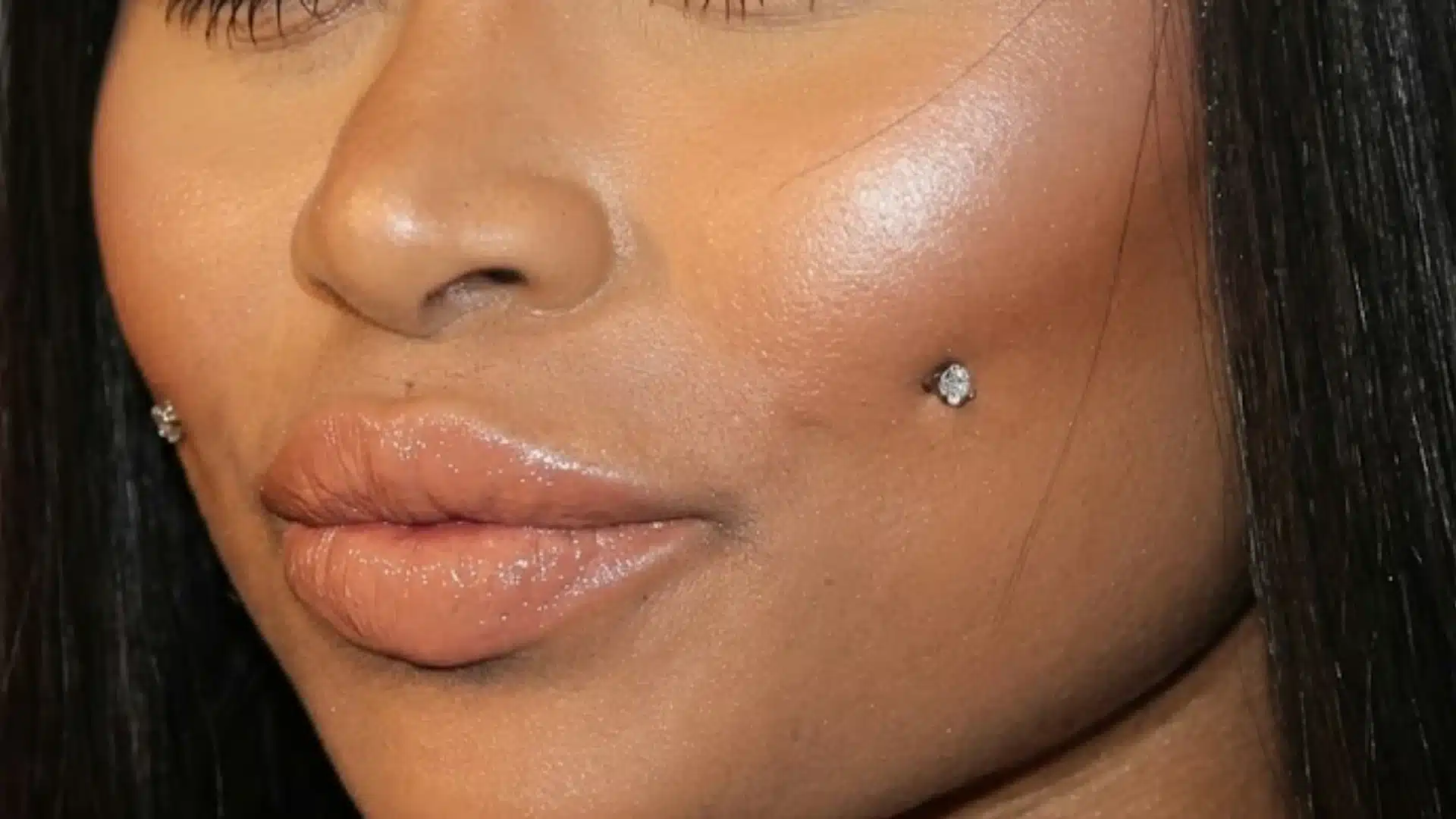
Cheek piercings pass through cheek tissue to create a dimpled look.
Because they go through muscle, healing is more demanding, often needing longer starter jewelry for swelling and later downsizing as tissue settles over time.
Healing takes 8 to 12 weeks, though the surrounding tissue can stay sensitive for months. Flat-back labret studs are standard.
Because of the placement, cheek piercings can have some minor scarring if removed, so it’s worth thinking through the long-term commitment.
15. Dermal Piercing
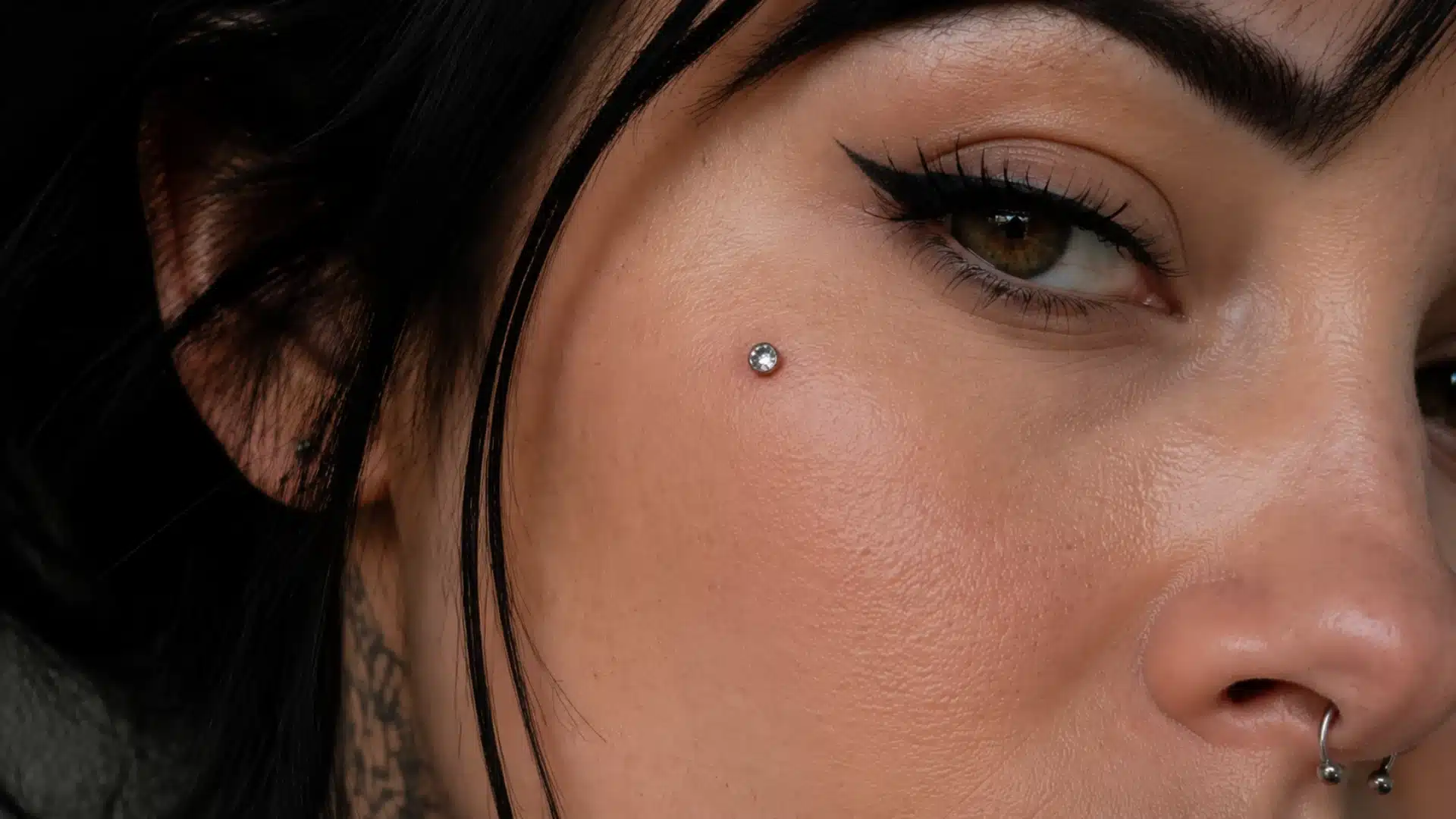
A dermal piercing is a single-point body piercing that sits flat against the skin rather than passing completely through it.
A small anchor is placed beneath the skin, while decorative jewelry remains visible on the surface.
Common placement areas include the cheekbones, chest, lower back, and neck. While visually striking, dermal piercings require careful aftercare and carry a higher risk of rejection than traditional piercings.
Face Piercing Inspo by Aesthetic
If you’re searching for face piercing ideas to match a vibe rather than just a placement, here’s how popular styles break down by aesthetic.
| Style | Description |
|---|---|
| Clean girl / minimal | Single nostril stud, subtle, no stacking. |
| Y2K revival | Eyebrow, Monroe, small hoops, nostalgic look. |
| Punk / grunge | Snake bites, septum, bridge, heavier rings. |
| Soft / alternative | Symmetrical small studs like medusa or angel bites. |
| Maximalist / stacked | Multiple piercings across face, layered over time. |
Piercing Combinations Worth Trying
Some of the best-looking face piercings are less about a single placement and more about how two or three work together. A few combinations that actually hold up:
- Nostril + septum: The most versatile pairing. The nostril stud grounds the look; the septum ring (or horseshoe flipped up) adds depth. Works across aesthetics from minimal to bold depending on jewelry size.
- Medusa + nostril: The medusa centers the face; a nostril stud on one side keeps it from feeling too symmetrical. This is currently one of the more popular pairings on visual platforms.
- Monroe + opposite nostril: Off-center on both sides, which creates balance through asymmetry rather than mirroring. Small studs only; rings would compete.
- Bridge + septum: Both placements sit on or near the nose, so they interact closely. This works best with minimal jewelry on both: thin barbells, not bold rings.
- Snake bites + high nostril: A lower-face anchor with upper detail. These are in different visual zones, so they don’t compete. Healing them together is not recommended; space them by at least 4 to 6 weeks.
How to Choose the Right Face Piercing for Your Face Shape
Placement decisions don’t have to be purely aesthetic research. Your bone structure gives you a natural starting point.
| Face Shape | Best Piercings | Why It Works |
|---|---|---|
| Oval | Bridge, Septum, Nostril, Lip | A balanced face suits most placements |
| Round | Bridge, Eyebrow | Adds height and length |
| Square | Septum, Nostril | Softens strong angles |
| Heart | Labret, Snake Bites | Balances a wider forehead |
| Diamond | Cheek, Anti-Eyebrow | Highlights cheekbones |
Keep in mind that these are starting points, not rules. The face shape table helps you narrow options; your anatomy, skin, and personal tolerance for healing time should make the final call
Face Piercing Aftercare Tips for Faster Healing
A new face piercing is an open wound. The Association of Professional Piercers recommends using sterile wound wash containing only 0.9% sodium chloride. Avoid contact lens saline, nasal sprays, or formulas with additives.
The association no longer recommends mixing your own sea salt solution at home, since homemade mixes are frequently too concentrated and can over-dry the piercing. It recommends the following:
- Wash hands: Clean your hands thoroughly before touching or cleaning the piercing.
- Spray saline: Use sterile saline as needed; apply with clean gauze if direct spraying feels awkward.
- Pat dry: Dry with clean disposable gauze or a cotton swab, never a cloth towel.
- Avoid makeup: Keep it away from new piercings, surface anchors, and dermals while they heal.
If you’re dealing with any skin sensitivity around the piercing site, the same principles that apply to skin healing after body art are relevant: keep it clean, keep it simple, and let the tissue do its job.
Disclaimer: This section contains general wound-care guidance for informational purposes only. Consult a licensed professional piercer or healthcare provider for advice specific to your piercing
Conclusion
The best face piercing is the one you’ve actually thought through: the placement, the healing timeline, the jewelry material, and whether it suits your face rather than just your mood on a Thursday.
There’s no wrong choice in this list, but there are choices that need more patience (rhino, anti-eyebrow, dermal) versus ones that are relatively forgiving for first-timers (nostril, septum).
Spend a week considering the placement before booking. Hold a small stud near the spot, take a photo, and choose the one that still feels right after a few days have passed.
Which face piercing are you considering? Drop it in the comments, and I’ll share what I know about that specific placement.
Frequently Asked Questions
Can I Get Multiple Face Piercings Done at the Same Session?
Most piercers allow two piercings per session. More can slow healing, increase irritation, and stress your body. Space extras by 4 to 6 weeks.
What Jewelry Material is Safest for a New Face Piercing?
Choose implant-grade titanium, solid 14k or 18k gold, or ASTM F138 implant-grade steel. Avoid acrylic, plated metals, and nickel-containing jewelry for fresh piercings.
How Do I Know if My Face Piercing is Infected vs. Just Healing Normally?
Mild redness, swelling, and pale discharge can be normal. Increasing pain, heat, yellow or green discharge, or fever may mean infection. Ask your piercer.