Ever noticed how hair feels a little drier, rougher, or harder to manage after frequent straightening or curling? That’s usually heat doing its work a bit too aggressively.
Skipping heat styling gives strands a chance to stay closer to their natural strength and shine while still allowing plenty of stylish looks through gentler methods.
The good news is that hair doesn’t actually need high temperatures to look good. It’s a simple switch that can make hair feel healthier, softer, and more manageable over time.
This blog covers different heatless hairstyles that are easy to try at home, work for various hair types, and help create everything from quick everyday looks to more polished styles without relying on any heat tools.
What is a Heatless Hairstyle?
A heatless hairstyle is a way to style your hair without using heat-based tools like straighteners, curling irons, or blow-dryers.
Instead, it uses simple methods such as braiding, twisting, pinning, and buns, as well as accessories like headbands and clips, to shape the hair naturally.
These styles often set while your hair air-dries or while you sleep, helping you achieve waves, curls, or structured looks without exposing your strands to heat damage.
Heatless hairstyles are popular because they help maintain healthier hair by reducing breakage, dryness, and split ends while still offering versatile styling options for everyday wear.
Why Skipping Heat Styling is Good for Hair Health
Skipping heat styling helps reduce damage, breakage, and dryness, keeping your hair stronger, smoother, and healthier over time.
- Less cuticle damage: Heat lifts and weakens the outer layer of hair, making strands rough and fragile over time.
- Reduced breakage: Lower heat exposure means fewer weak points along the hair shaft, so hair snaps less easily.
- Better moisture retention: Heat tools strip natural moisture, while heatless styling helps hair stay hydrated longer.
- Stronger elasticity: Hair retains more of its natural keratin structure, so it bends rather than breaks.
- Fewer split ends: Frequent heat styling is a major trigger for split ends, and heatless methods help reduce them.
- Improved shine: Smoother cuticles reflect light more evenly, giving hair a healthier, more natural shine.
- Lower long-term damage buildup: Heat damage is cumulative, so skipping it helps prevent gradual weakening.
- Healthier scalp balance: Less heat means less drying of the scalp, which can reduce irritation and excess oil rebound.
Heatless Hairstyles for Every Occasion
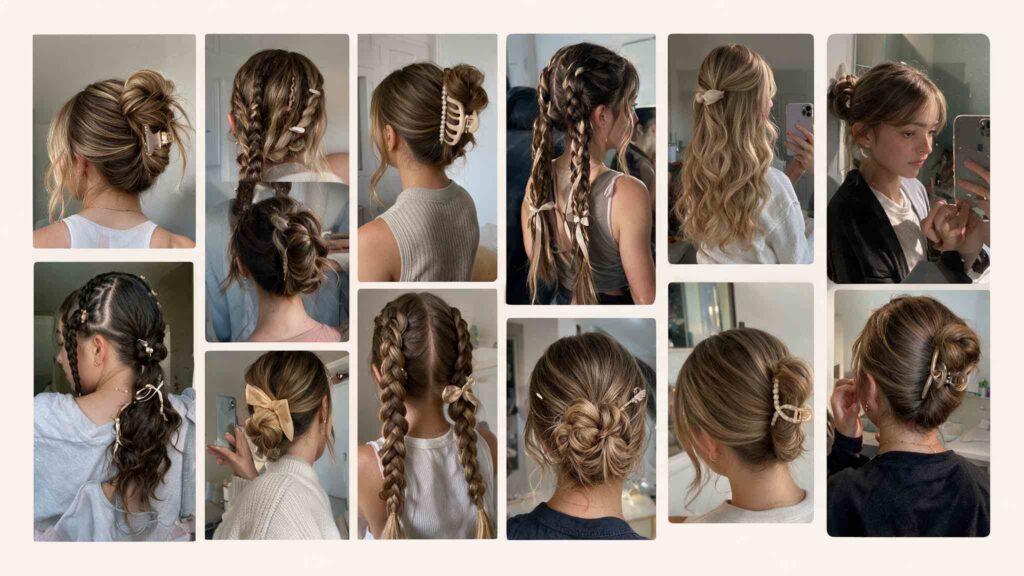
From casual mornings to more dressed-up moments, there’s a heatless hairstyle that fits every situation without needing hot tools or extra effort.
1. Claw Clip Twist
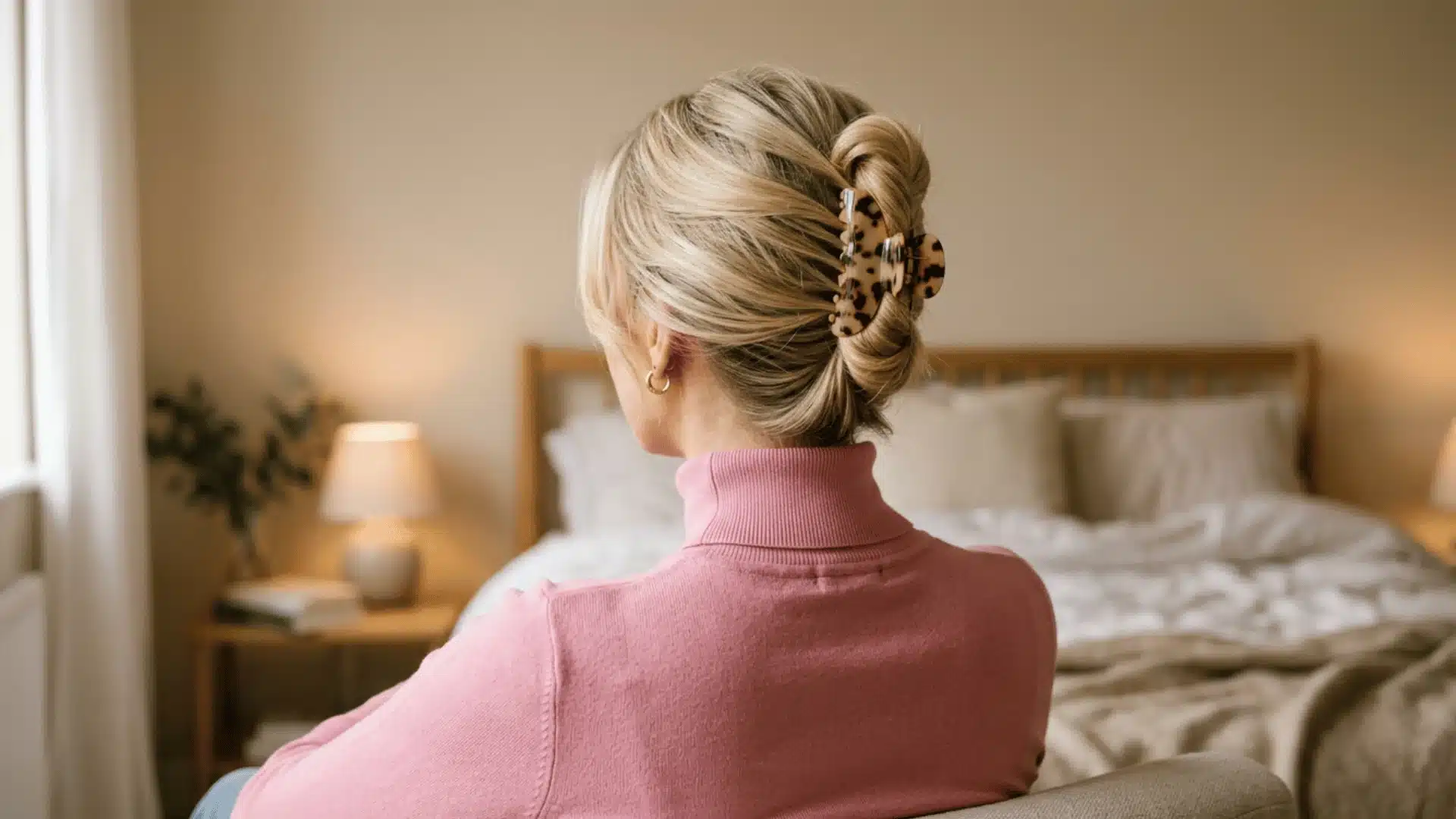
This is the style that turned up everywhere once people realized a claw clip could do actual work. Gather your hair loosely at the nape, twist it once or twice, then secure the clip through the fold.
The hair fans out slightly at the back in a way that reads as intentional rather than rushed. It works on medium to long hair, takes under a minute, and holds better than most updos.
This style works especially well when there is a bit of natural texture in the hair, as freshly washed strands may slip out more easily.
2. Low Bun
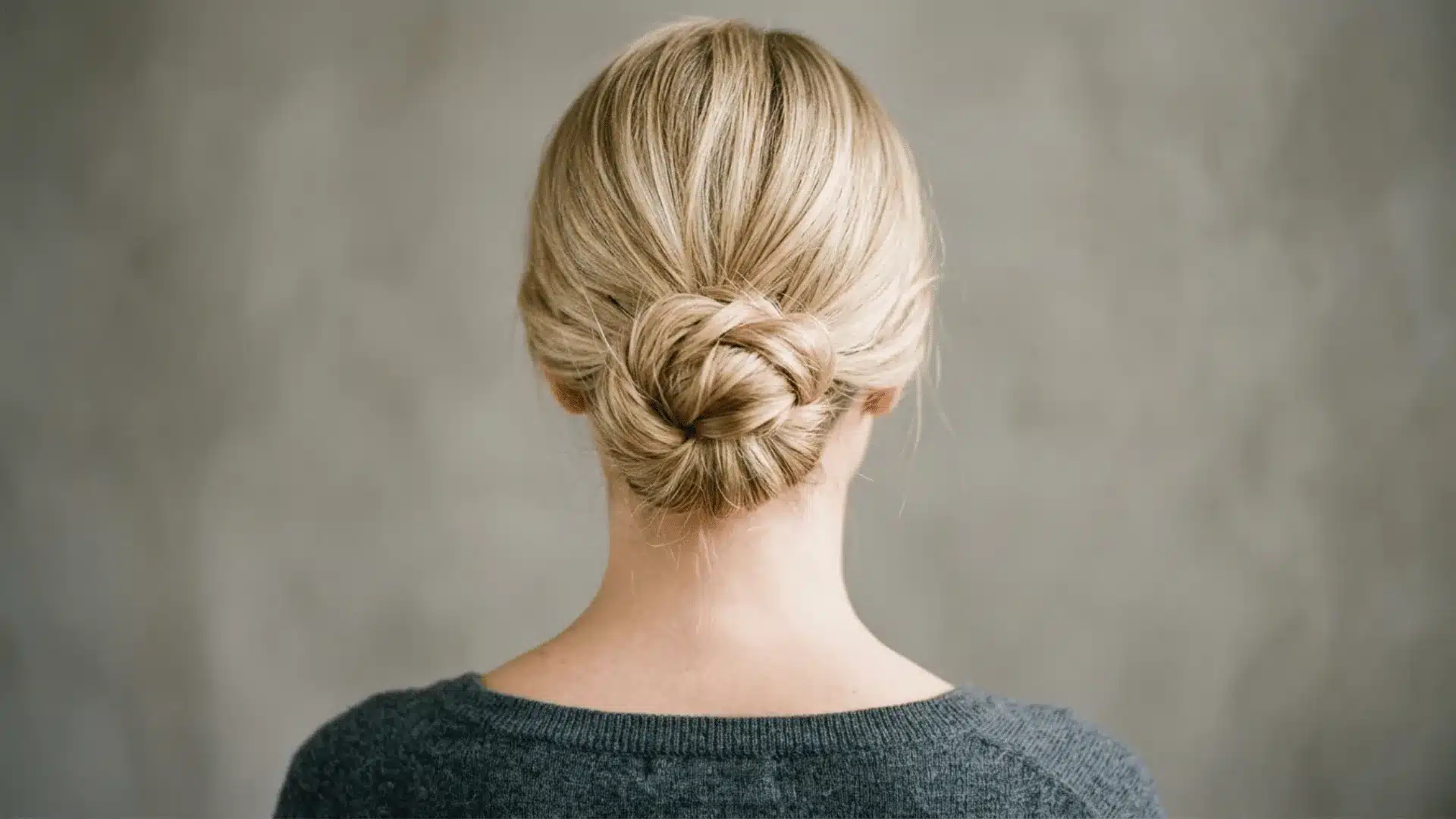
A simple low bun is underrated precisely because it looks like you tried just enough. Pull hair into a low ponytail, twist the length around the base, and pin the tail end under the bun.
For volume, loosen a few strands at the top after pinning. Thicker hair benefits from a second pin or a jaw clip over the bun to keep it from loosening by noon.
This style becomes more secure when the bun is pinned in a crisscross pattern rather than in a single direction, especially for medium-to-thick hair that tends to slip out of standard buns.
3. High Ponytail
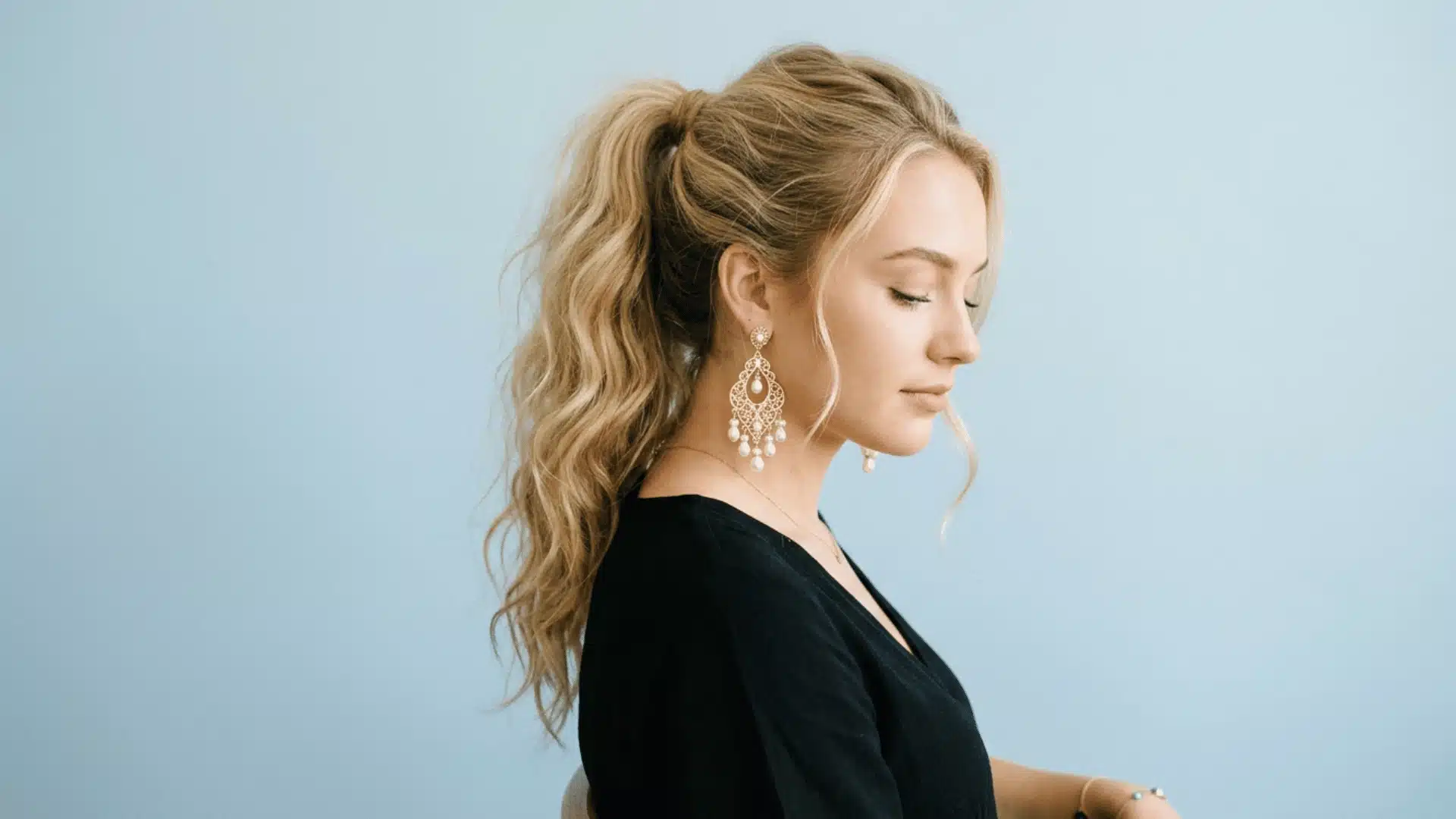
If you’re working with naturally oily roots or second-day hair, a clean high ponytail is the fastest fix. Brush back, secure high, and wrap a small section of hair around the elastic to cover it.
The trick to keeping it from drooping is to add two bobby pins inside the elastic, angling them toward the crown. It is worth learning that one move.
Using a soft boar-bristle brush while gathering the hair helps create a sleeker finish and reduces bumps at the crown, especially for straight or fine hair types.
4. Half-Up, Half-Down
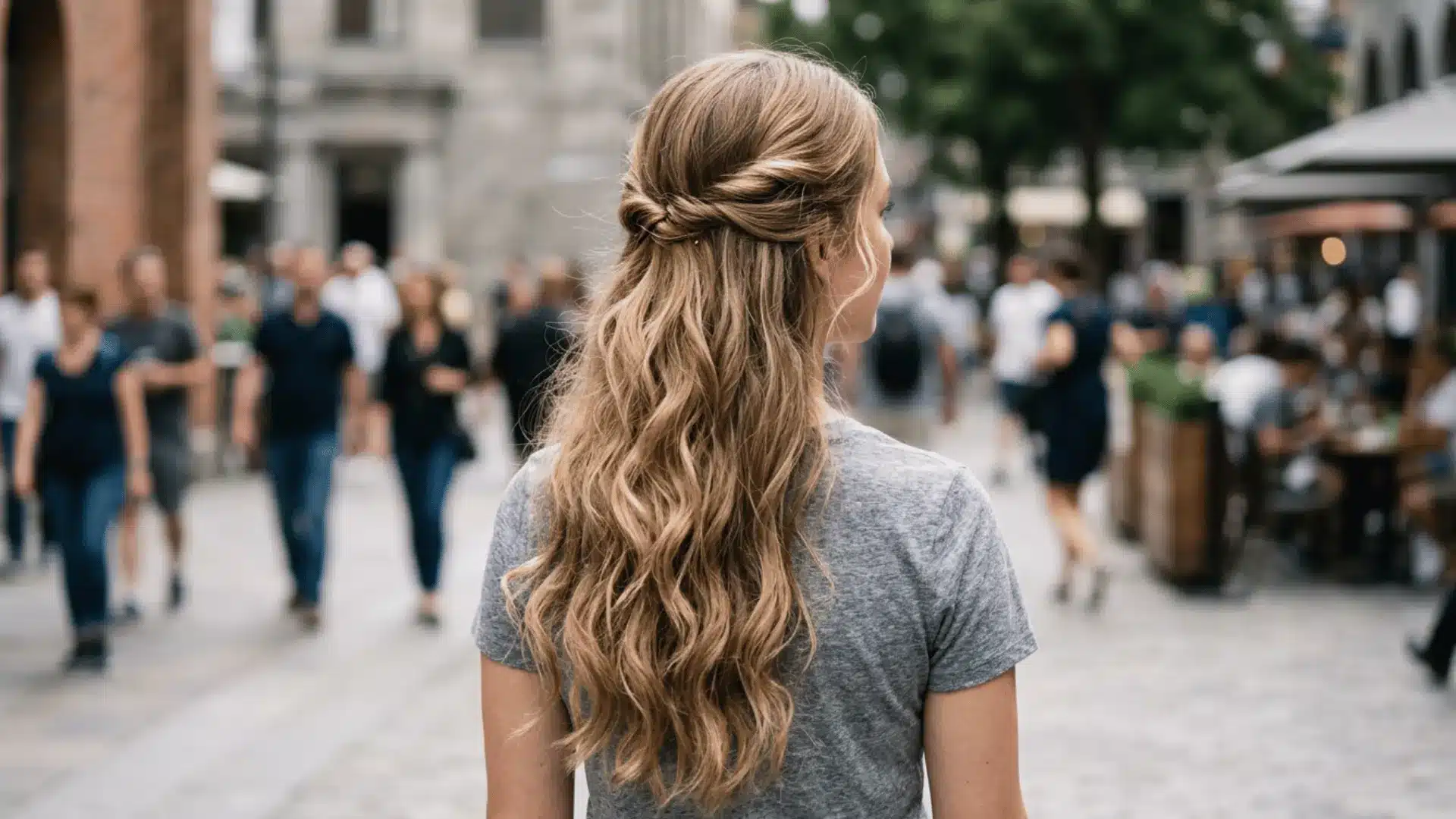
This works across hair lengths and textures. Take the top section of hair from roughly ear to ear, gather it at the crown, and secure with a clip or thin elastic.
The result keeps hair out of your face without the commitment of a full updo. Add a ribbon or bow around the elastic for something that reads as more considered.
Light teasing at the crown before securing the top section adds subtle volume and prevents the style from falling flat during long wear.
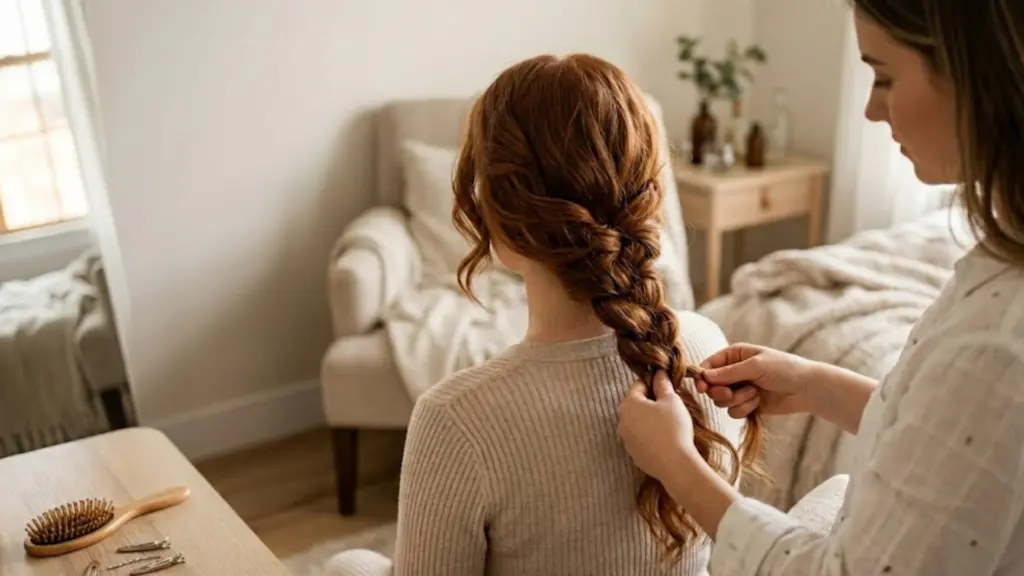
5. French Braid
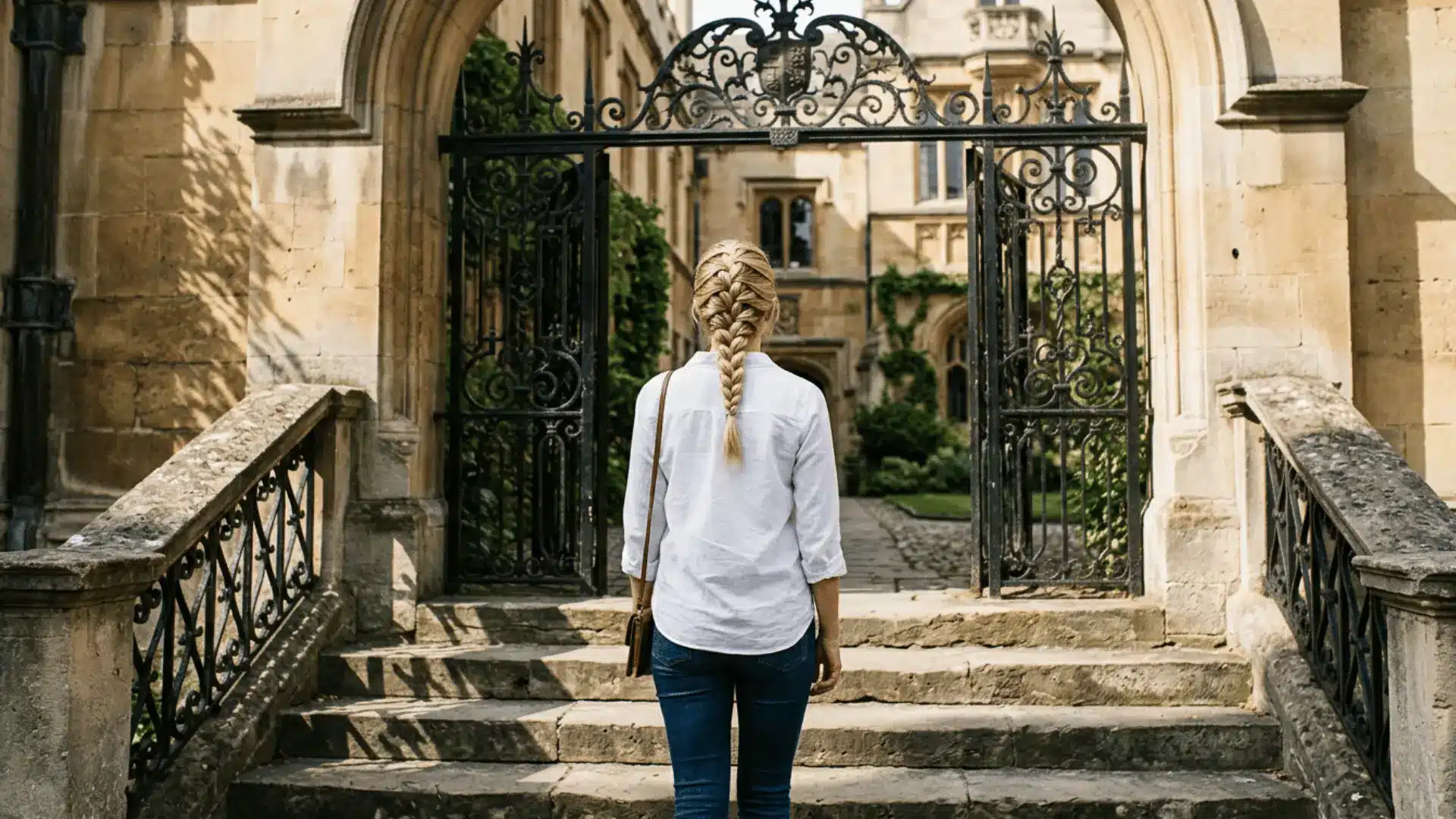
A French braid is a heatless hairstyle that doubles as a prep style. Wear it through the day, take it out before bed, and the next morning, your hair has soft, crinkled waves with no effort.
The braid itself starts at the crown, adding small sections of hair from each side as you work downward. It takes practice to do it on your own hair, but once you have it, the return is high.
Keeping even tension throughout the braid ensures more uniform waves the next day, while inconsistent pulling can create uneven texture.
6. Dutch Braid
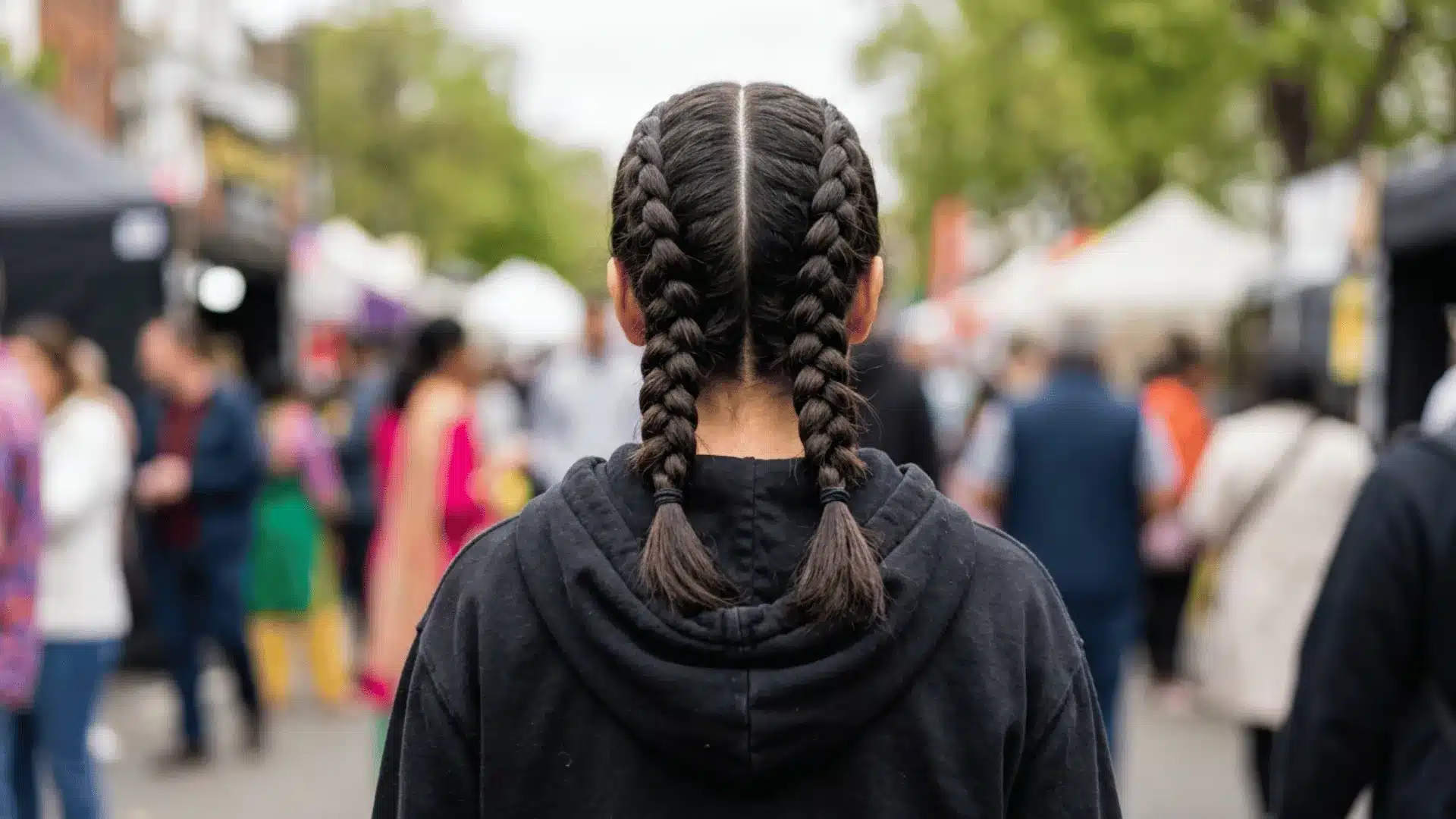
Where a French braid sits flat against the head with sections crossing over, a Dutch braid crosses sections under, pushing the braid outward and making it appear raised.
The technique is identical except for the direction of each cross. A Dutch braid reads more editorial and holds texture better on slippery straight hair than a standard three-strand braid.
Loosening the braid slightly after securing it gives a fuller, more voluminous effect without disturbing the structure or causing frizz.
7. Fishtail Braid

Divide hair into two sections instead of three. Pull a thin strand from the outer edge of the left section and cross it to the right. Then pull a thin strand from the outer edge of the right section and cross it to the left. Repeat.
The fishtail takes longer than a standard braid but produces a woven texture that looks complex without being difficult once you find the rhythm.
Starting the braid lower on the head creates a more relaxed, bohemian finish that works better for casual wear than tightly woven versions.
8. Space Buns
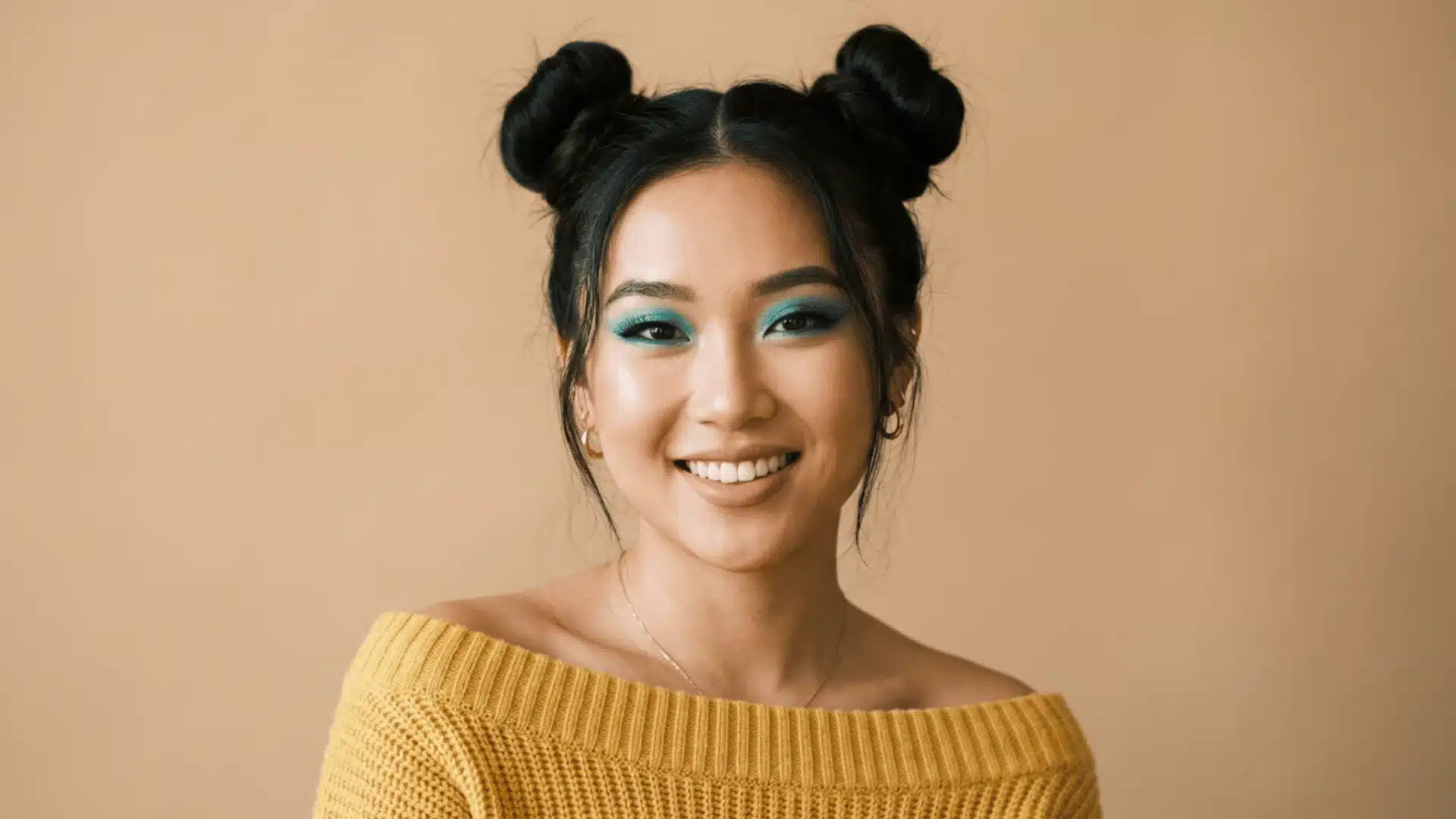
Take two equal sections and pile each into a small bun high on the head, one on each side. Secure with elastic bands and tuck the ends. This is one of the most misread styles in terms of context.
It works for festivals, creative workplaces, weekend errands, and casual evenings. It does not need to be reserved for a specific age or occasion.
Pulling a few strands loose around the face softens the look and prevents it from appearing overly structured or rigid.
9. Boxer Braids (Two Dutch Braids)
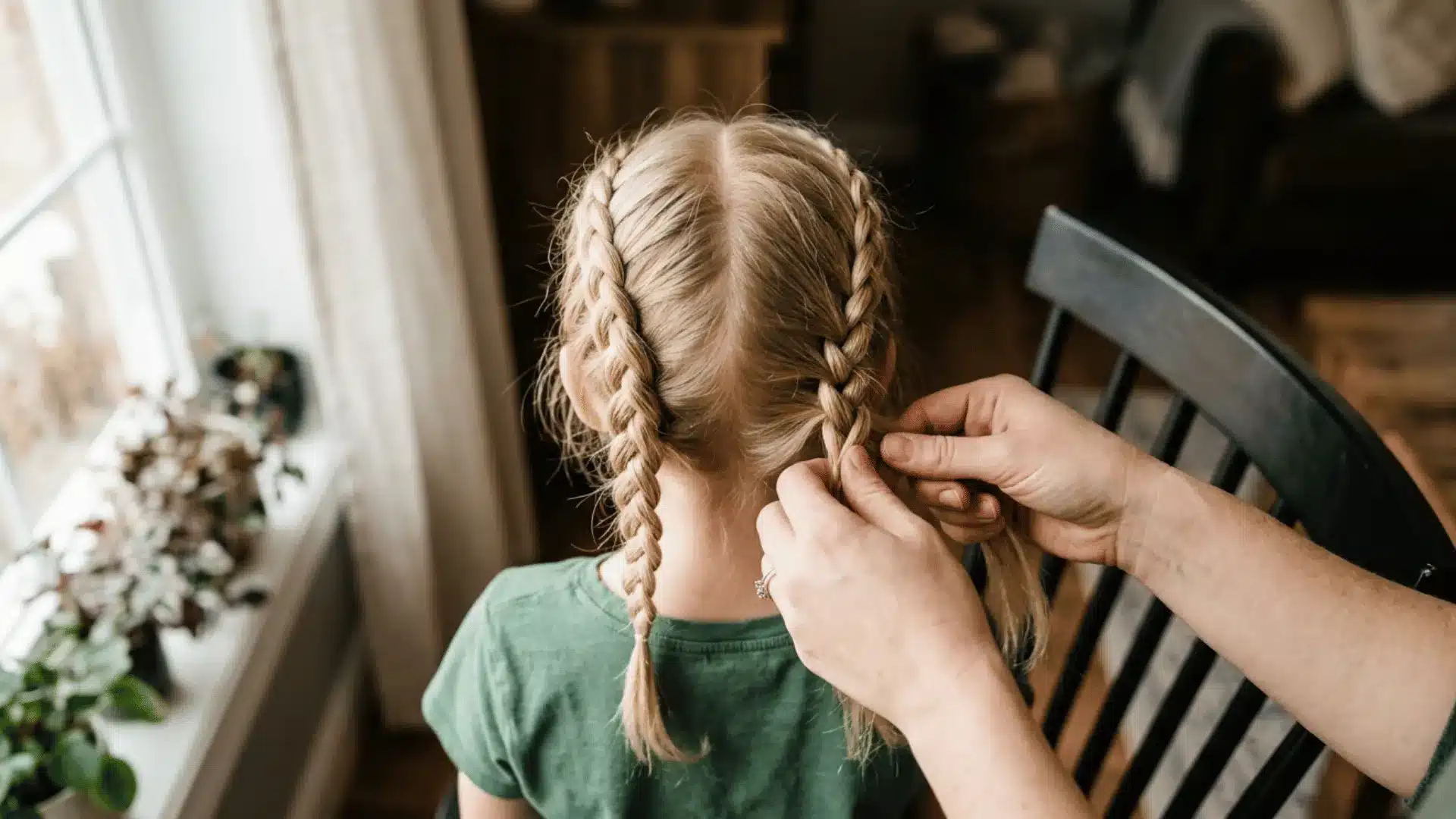
Start two Dutch braids simultaneously, one on each side, from the front hairline down to the nape. Secure each with a small elastic. The result is neat and athletic and stays put under a cap or helmet if you’re heading to the gym.
Worn down and loose at the ends, the same style reads more casual and street-ready. The versatility is the point.
Applying a lightweight styling cream before braiding helps control frizz and keeps sections smooth, especially for thicker or coarser hair.
10. Crown Braid
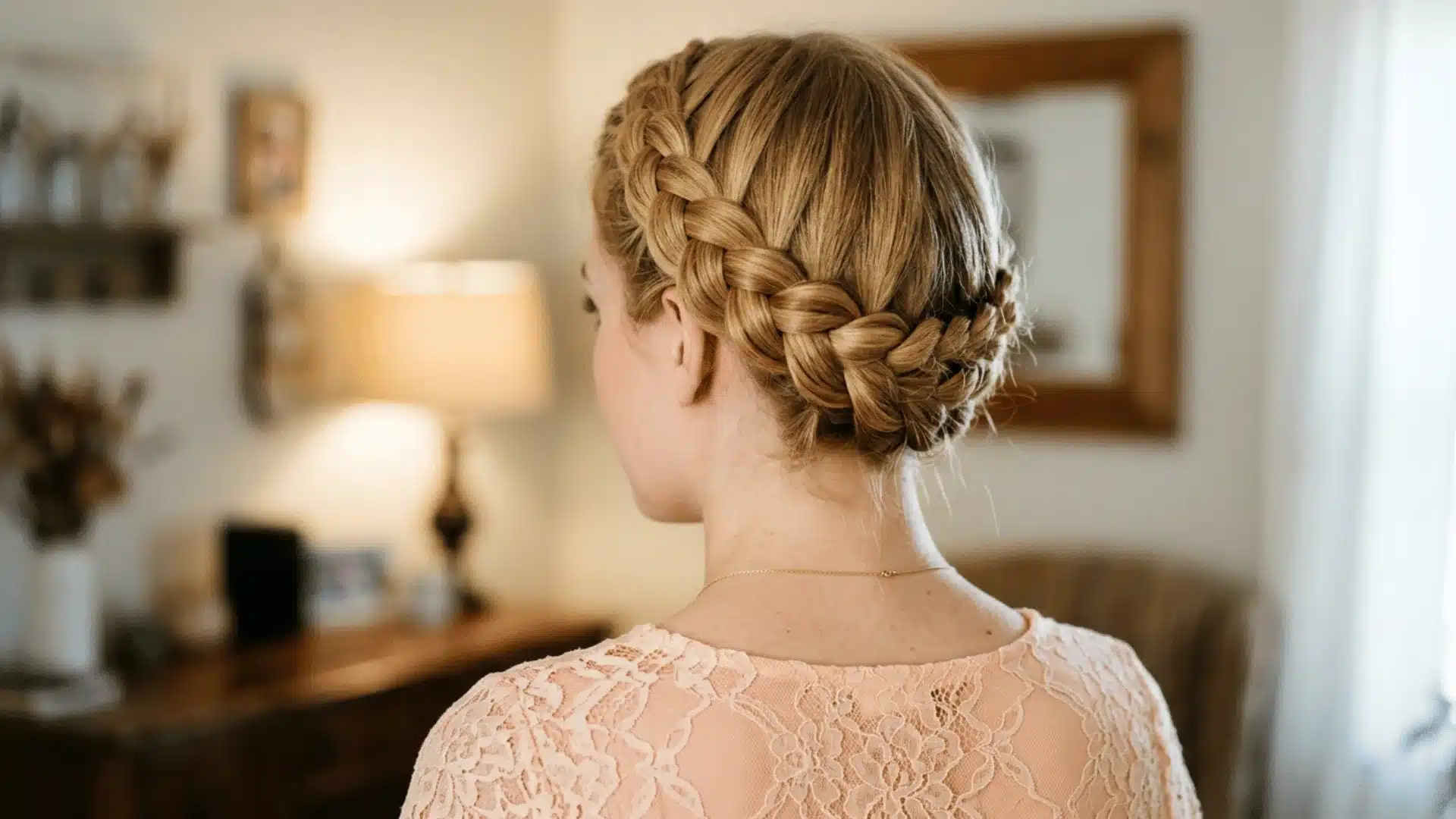
Separate hair into two sections and braid each side loosely. Pin one braid across the top of your head, then bring the second braid across in the opposite direction and pin it so the ends tuck under the first.
The crown braid is one of the heatless hairstyles that photographs well because the braid appears continuous, as though it wraps the whole head in a single motion. It is steadier than it looks.
Securing the braids with hidden pins underneath rather than on top improves stability and gives a cleaner, seamless finish.
11. Headband Curls (Overnight Method)
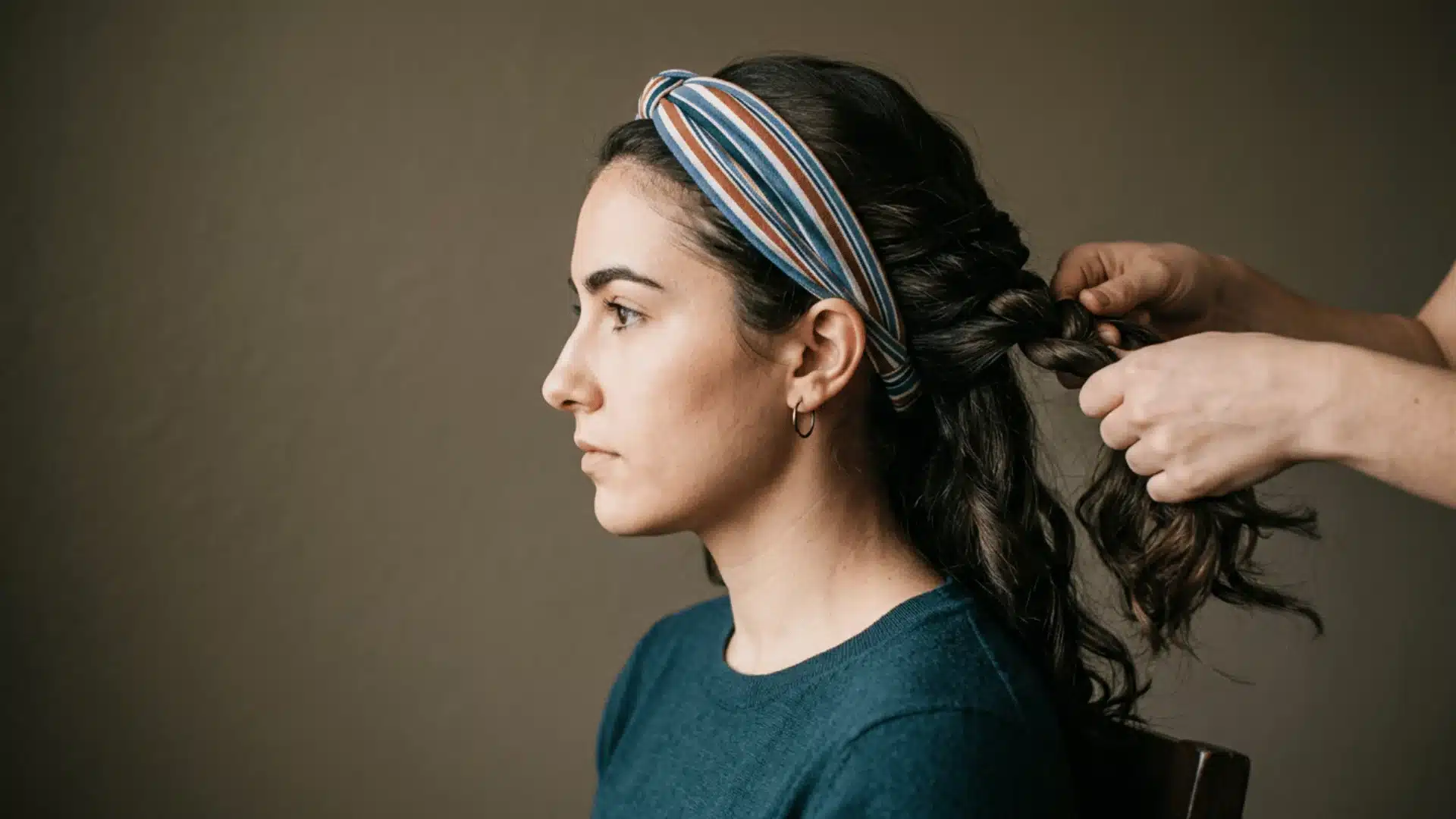
Place a fabric headband over the crown of your head. Working with slightly damp hair, take small sections and wrap them around the band, tucking each end under as you go. Sleep on it. Gently unwrap and separate the curls with your fingers in the morning, not with a brush.
The curl-retention benefits of overnight methods are well documented, and this one requires nothing more than a headband and patience.
Allowing the hair to fully dry before removing the headband is key, as even slight dampness can cause curls to drop within hours.
12. Bantu Knots
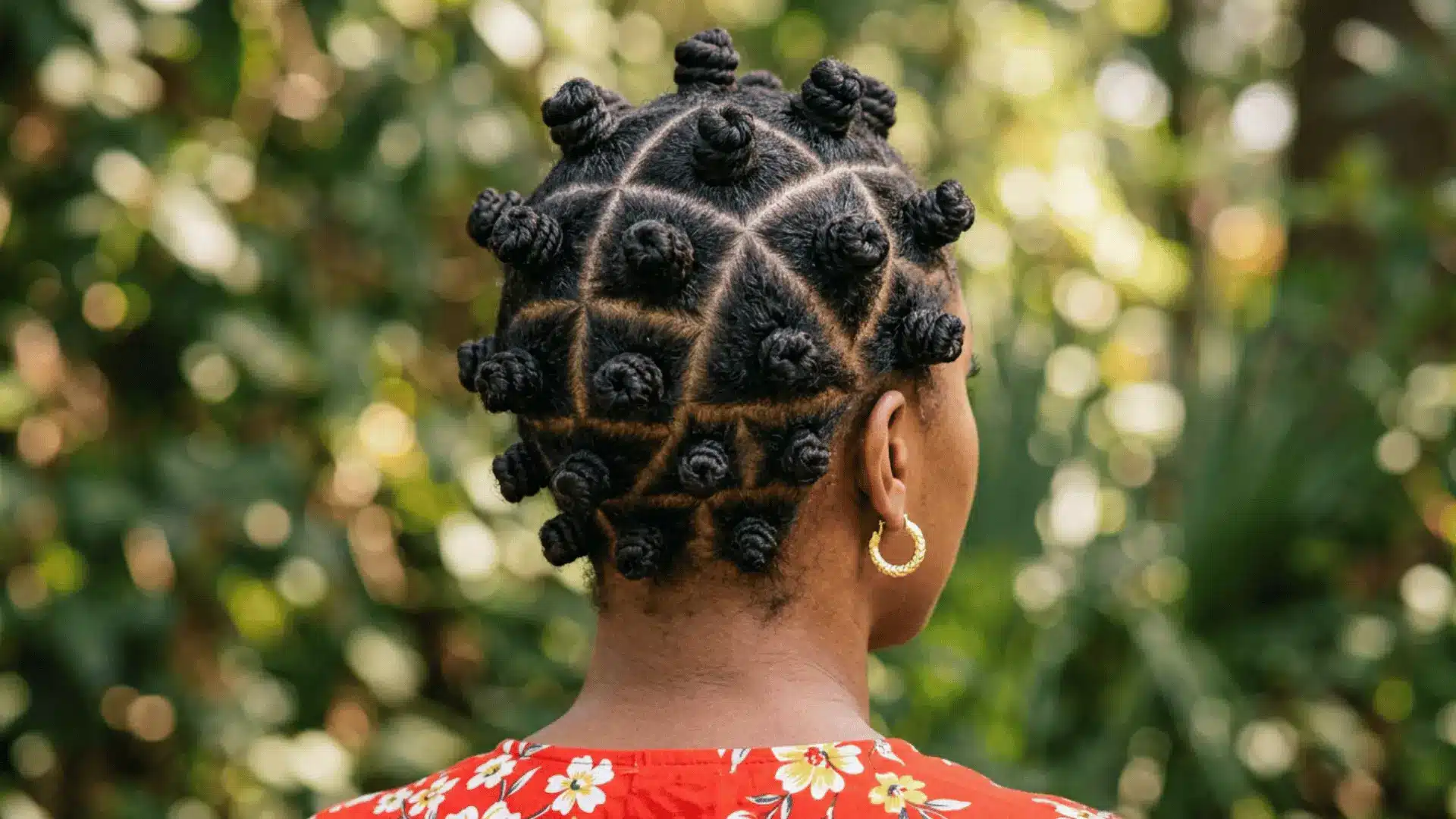
Section damp hair into parts of whatever size you prefer. Smaller sections produce tighter curls when unraveled; larger sections give a looser wave.
Twist each section tightly from root to tip, then coil it against the scalp and tuck the end under. Let it set fully before unraveling. Worn as-is, Bantu knots are a complete look; unraveled the next day, they release into defined curls.
Applying a light leave-in conditioner before twisting helps define curls and reduces frizz when the knots are taken down.
13. Mini Braids with Open Hair
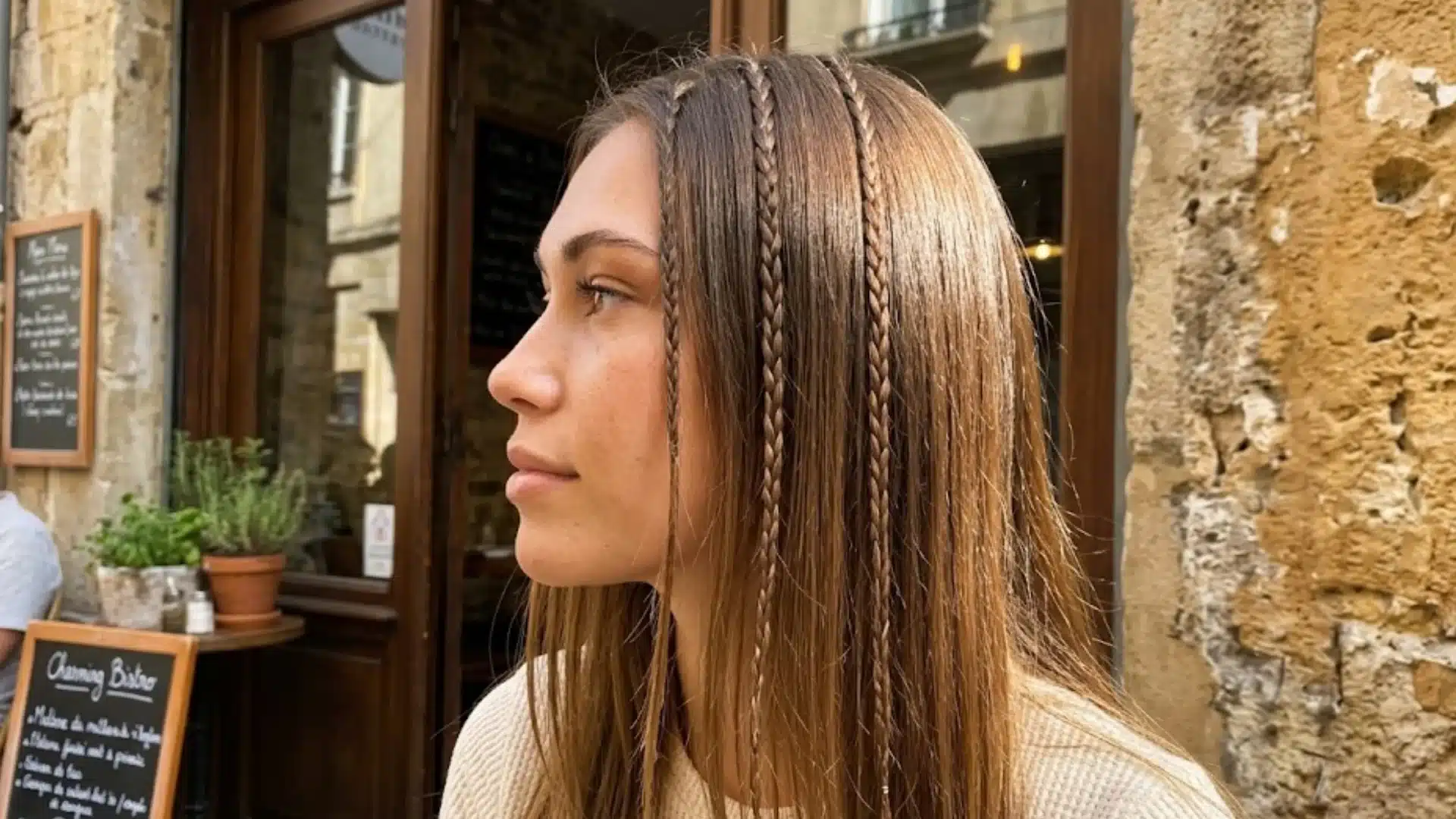
Mini braids with open hair bring a simple style that feels relaxed yet put together. A few thin braids are added to loose hair, creating extra texture without much effort.
This look works well for casual outings, coffee dates, festivals, or everyday wear. It suits straight, wavy, and lightly textured hair.
Small accessories like beads or clips can add more personality, while the open hair keeps the style soft and natural.
14. Rope Twist Braid
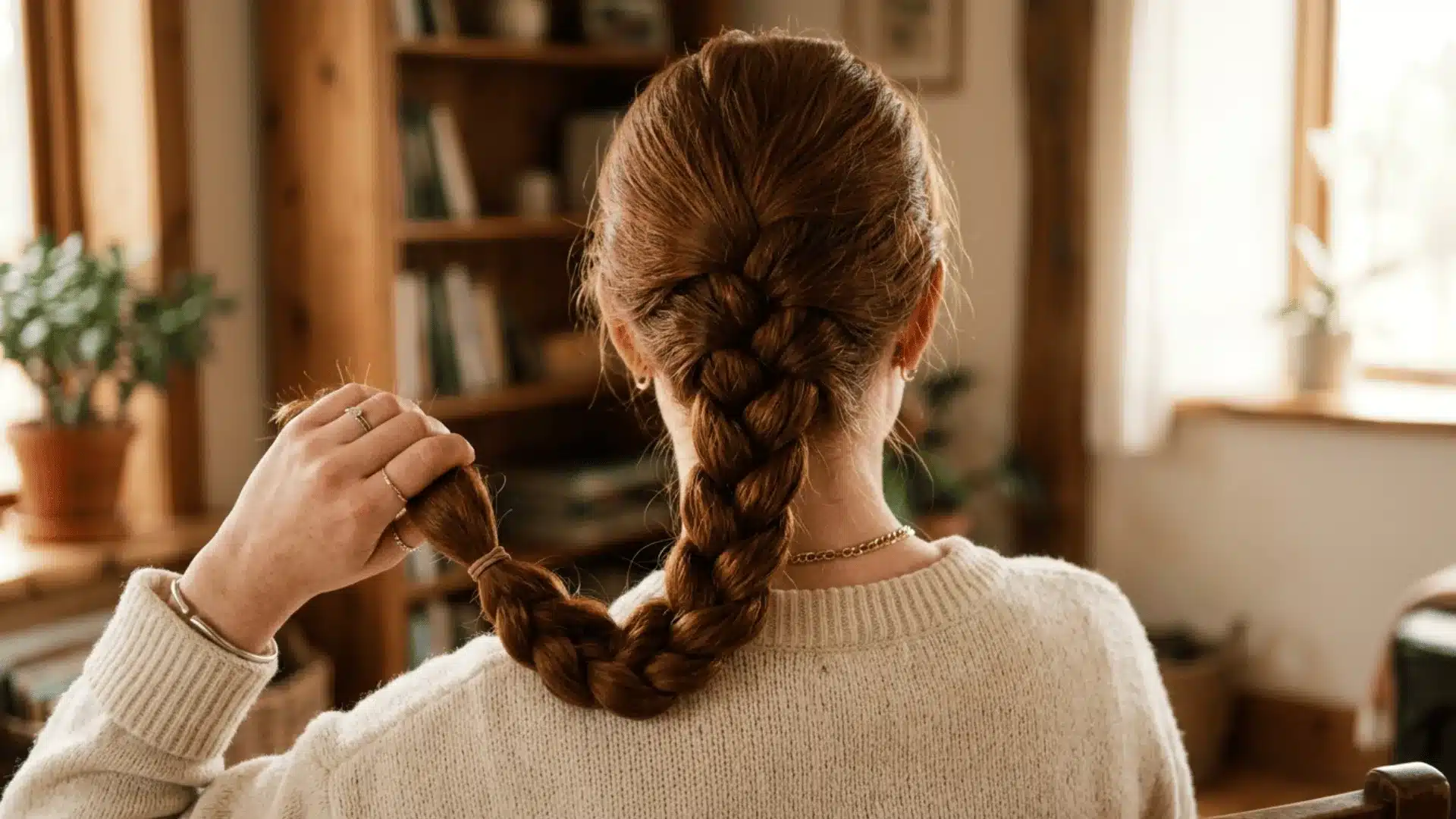
Take two sections of hair and twist each section individually in one direction, then twist both sections around each other in the opposite direction.
It creates a rope-like pattern that holds without any pinning. It works as a full ponytail, a half-up style, or two sections worn down. The key detail is keeping consistent tension throughout. Loose twists unravel faster.
Starting with slightly damp hair helps the rope twist set more firmly and maintain its shape for longer periods without frizz.
15. Messy Bun with Claw Clip
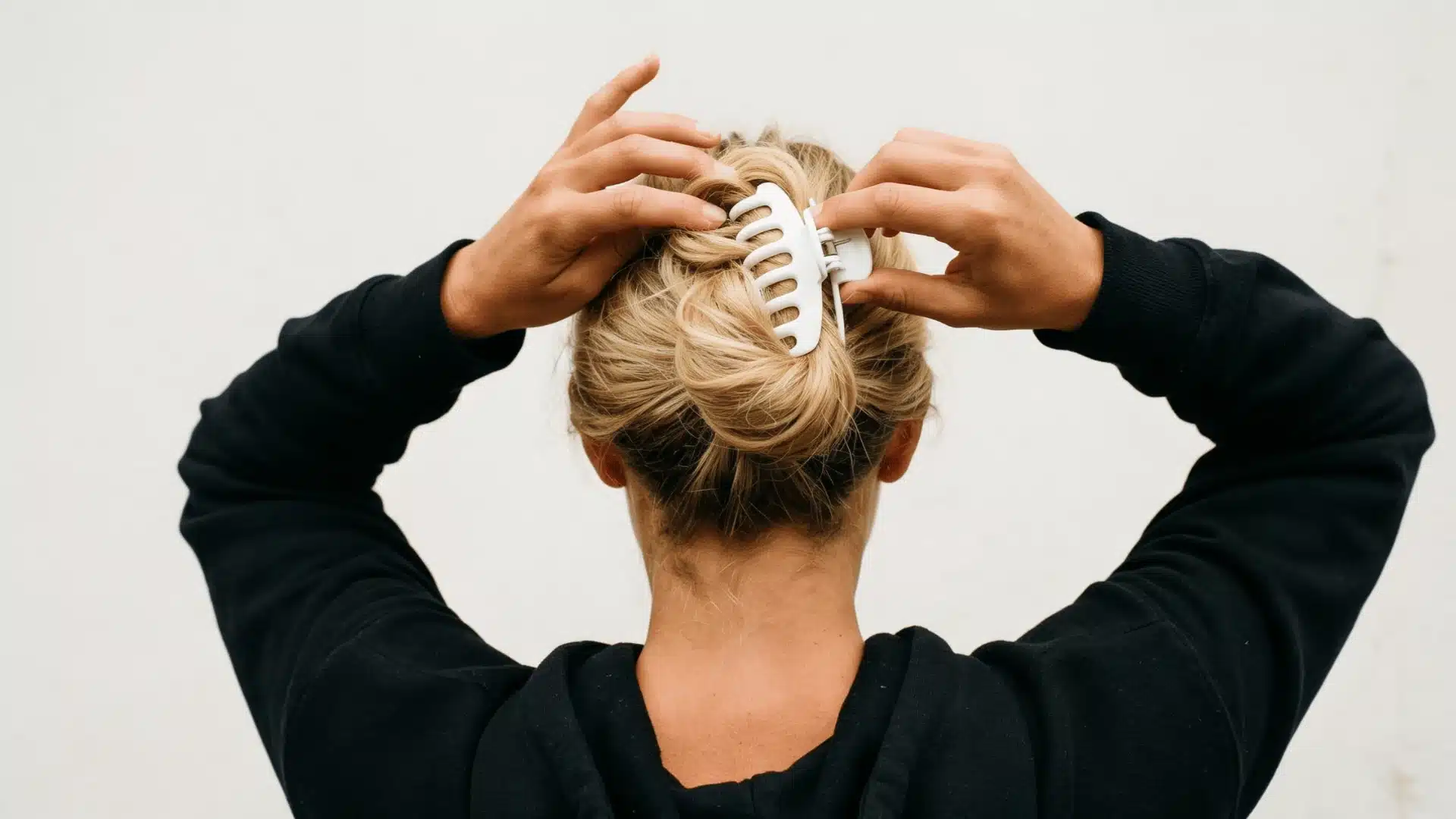
Flip your head forward and gather hair at the crown. Twist the gathered section loosely and clip it into a large claw clip without fully securing all the ends. A few loose pieces are part of the style.
This works best on hair that is not freshly washed, with a little natural texture or product from the day before.
Letting a few strands fall naturally around the face enhances softness and prevents the bun from looking overly structured or stiff.
16. Scarf Updo
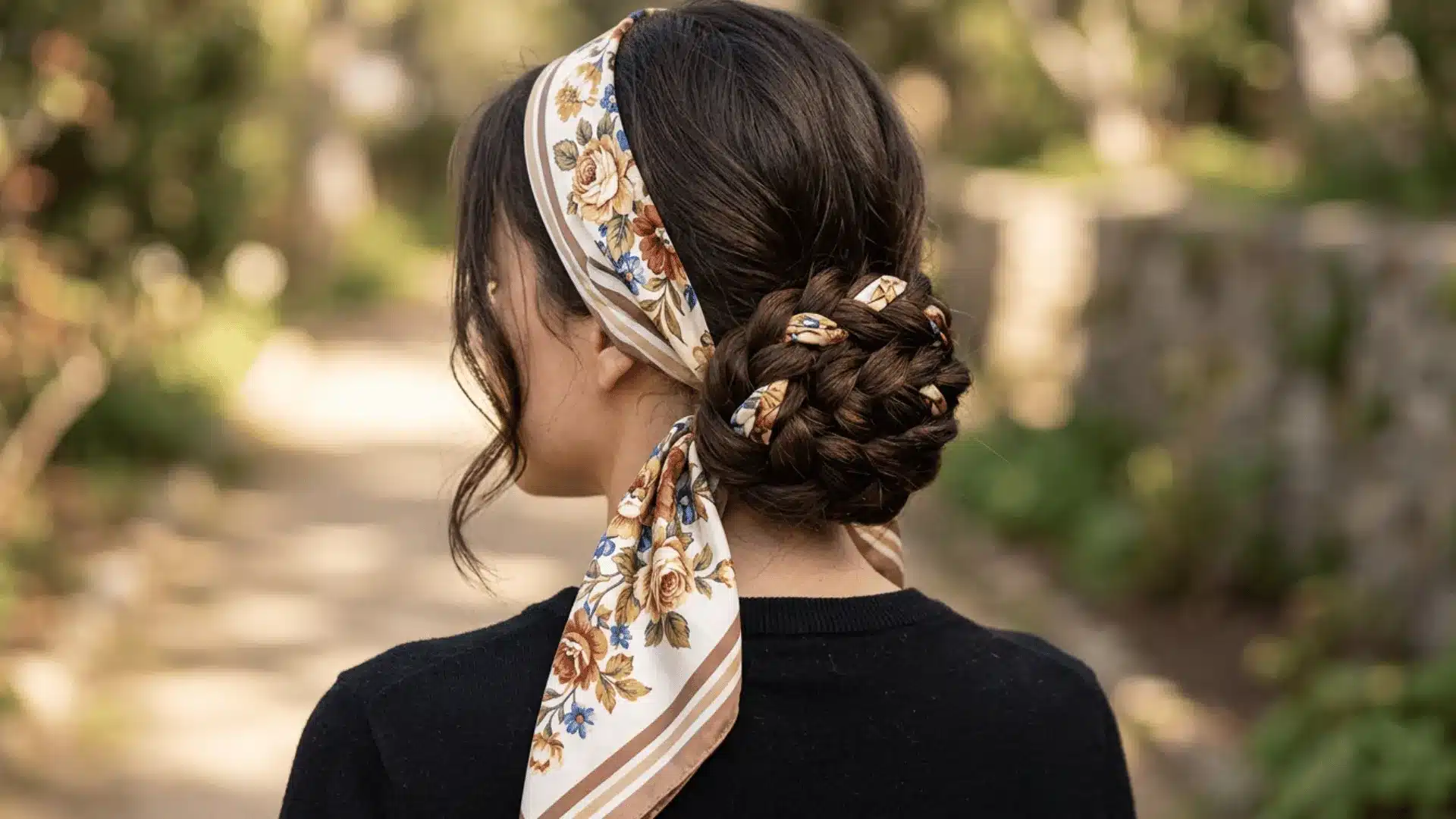
Take a silk or cotton scarf and fold it into a long band. Tie it around your head, knotting it at the top. Then tuck sections of hair into the scarf itself, wrapping and folding until the whole look is neat.
This is one of the heatless hairstyles that can be casual or formal, depending on the scarf you choose. A solid silk scarf reads polished; a patterned bandana reads casual. The method is the same either way.
Choosing a slightly textured scarf instead of a slippery one helps keep hair secure and prevents strands from sliding out during wear.
17. Twisted Half-Up with Bobby Pins
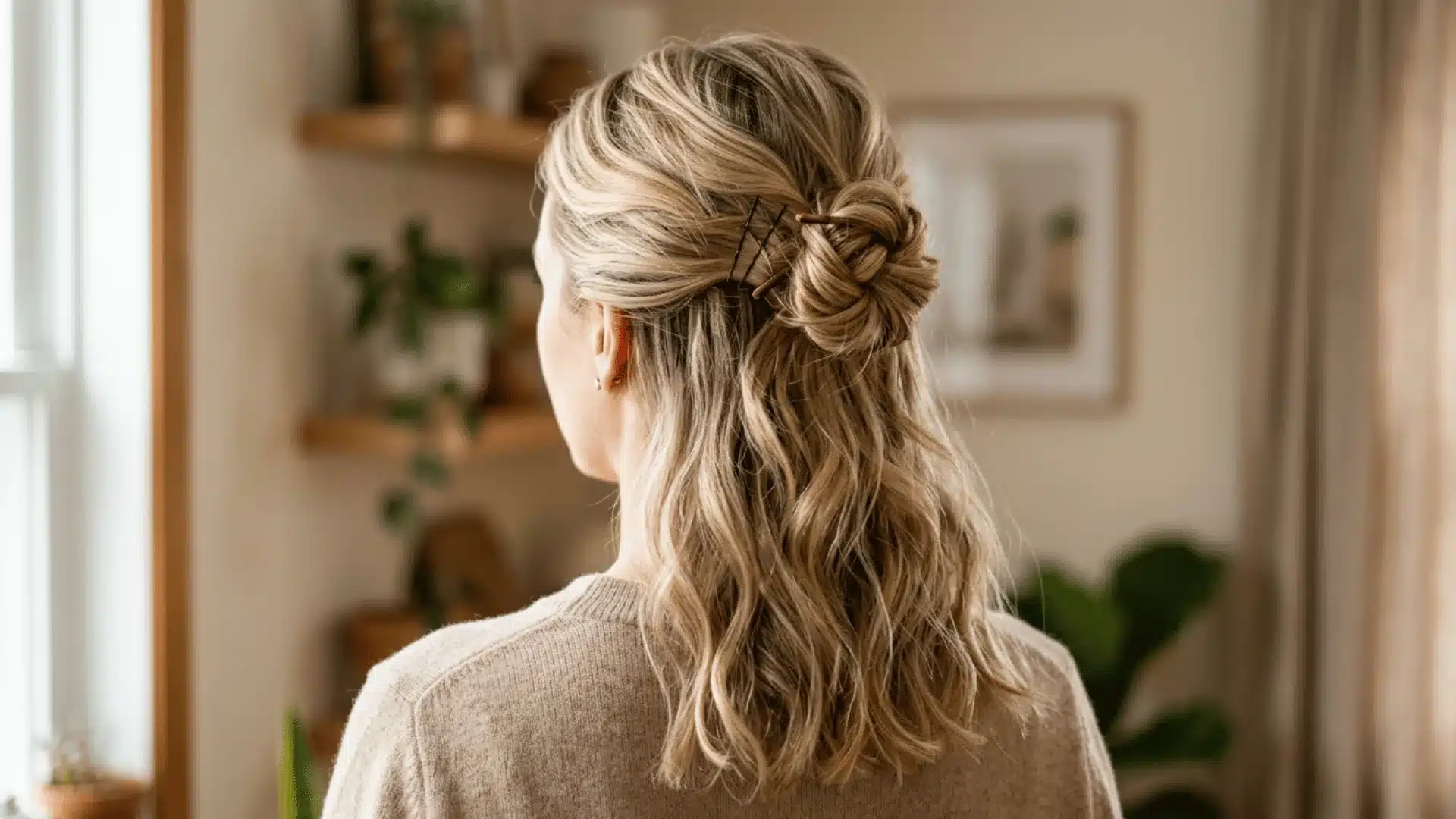
Take a section of hair from one side of your face and twist it away from the face, continuing the twist toward the back of the head. Pin it in place with two or three bobby pins facing downward for grip.
Repeat on the other side, tucking the second twist under or alongside the first. If you like, pull a few face-framing strands loose at the front.
Crossing the pins in an X-shape instead of placing them straight improves hold and keeps the twists secure for longer wear, reducing the risk of slipping.
Common Mistakes to Avoid While Styling
Avoiding a few simple styling errors can make heatless hairstyles last longer, look neater, and reduce unnecessary damage or frizz throughout the day.
- Too-tight styling: Pulling hair too tightly can lead to breakage, scalp tension, and flat-looking styles instead of soft, natural volume.
- Skipping prep: Styling completely dry or unprepared hair often results in a weak hold, frizz, and styles that fall apart quickly.
- Overusing product: Applying too much gel, cream, or oil can weigh hair down and make heatless styles look greasy or limp.
- Wrong section size: Using sections that are too large or uneven can stop curls and braids from forming properly and evenly.
- Poor pin placement: Incorrectly placed bobby pins can loosen styles quickly and reduce overall hold throughout the day.
- Using harsh elastics: Regular rubber bands can cause breakage and leave dents, making the style less smooth and more damaging.
- Touching too much: Constantly adjusting or running fingers through the hair breaks the style pattern and increases frizz.
Which Heatless Style Works Best for Your Hair Type?
Not every style suits every texture, and matching the method to your hair saves time.
| Hair type | Best heatless hairstyles |
|---|---|
| Fine, straight | High ponytail, French braid, pin curls, half-up, half-down |
| Thick, straight | Dutch braid, rope twist, low bun, claw clip twist |
| Wavy | Messy bun, headband curls, fishtail braid, scarf updo |
| Curly | Bantu knots, crown braid, space buns, twisted half-up |
| Coily | Bantu knots, box braids, rope twists, scarf updo |
Research published in PubMed Central shows that repeated heat exposure, including blow-drying, can lift the hair cuticle, reduce moisture, weaken hair strength, and cause protein loss from the hair shaft.
Small Tips that Make Heatless Styles Hold Longer
With the right prep, tools, and technique, styles stay neater, reduce frizz, and hold their shape much longer without heat.
- Slightly damp hair: Work with slightly damp hair for styles that rely on waves or curls, since bone-dry strands do not hold their shape as well.
- Pre-style product: Apply a small amount of lightweight gel or curl cream before styling to help strands set and stay in place longer.
- Correct pinning: Use bobby pins with the wavy side facing the scalp, as this improves grip and keeps styles more secure.
- Better elastics: Choose spiral ties, fabric bands, or satin scrunchies to reduce breakage and improve hold without pulling hair.
- Night protection: Sleep on a satin pillowcase or keep hair in a loose braid to reduce friction and preserve the style overnight.
Understanding how to wash hair properly on the days before a pin curl set helps the style hold longer.
Conclusion
Heatless hairstyles are not a compromise. They are, in most cases, a better default. They help maintain healthier hair over time while still offering a wide range of stylish and versatile looks.
The styles here cover everything from a one-minute fix on a slow morning to an overnight curl method that does the work while you sleep.
Your hair holds up better, breaks less, and needs fewer treatments to recover from damage it never sustained. Start with one or two that fit your routine and texture, then build from there.
If you try one of these this week, I’d like to know how it held up. Drop your go-to in the comments.
Frequently Asked Questions
Can I Do Heatless Hairstyles on Color-Treated or Chemically Processed Hair?
Yes, and it’s actually recommended. Chemically treated hair is more fragile than virgin hair, so skipping heat reduces the risk of further breakage. Stick to looser styles and avoid tight tension at the roots.
How Do I Keep Flyaways Under Control with Heatless Styles?
A light-hold edge gel or a small amount of hairspray applied with a soft toothbrush tames flyaways without stiffening the rest of the style. Avoid applying product directly to the bulk of the hair.
Do Heatless Hairstyles Work on Very Short Hair?
Most braids and buns require at least shoulder-length hair, but shorter hair works well with pin curls, twisted half-ups, and accessory-based styles like headbands and clips. Claw clips can also work on bobs.
How Often Should I Change Up My Heatless Style to Keep Hair Healthy?
Rotating styles every one to two days prevents tension from building up at the same points along the hair shaft. Wearing the same style daily, even a gentle one, can cause gradual stress at the anchor points over time.