Ever caught yourself reapplying lip balm for the fifth time before lunch, and your lips still feel like sandpaper? You’re not doing anything wrong; you’re probably just missing a step.
Most people treat chapped lips with balm alone, when the real fix needs a little more than that: prepping the skin first, then sealing it in the right way.
This guide walks through exactly how to get rid of chapped lips fast, what’s actually causing yours, which products are worth keeping around, and the small habits quietly working against you.
By the end, you’ll have a routine that actually holds up past the first hour.
How to Get Rid of Chapped Lips Fast
If you need relief right now, stop lip licking, biting, and picking. Switch to a plain, fragrance-free lip balm or thick ointment and apply it several times throughout the day and before bed.
For very dry or cracked lips, dermatologists recommend thicker ointments such as white petroleum jelly because they hold water in the skin longer than many waxes or oils. Staying hydrated and using a humidifier in dry rooms can also help.
One important change: don’t scrub badly chapped lips before applying ointment. When the skin barrier is already cracked or sore, pulling or rubbing away flakes can create more irritation. Instead, soften the lips gently and focus on protecting them while they heal.
What Causes Chapped Lips
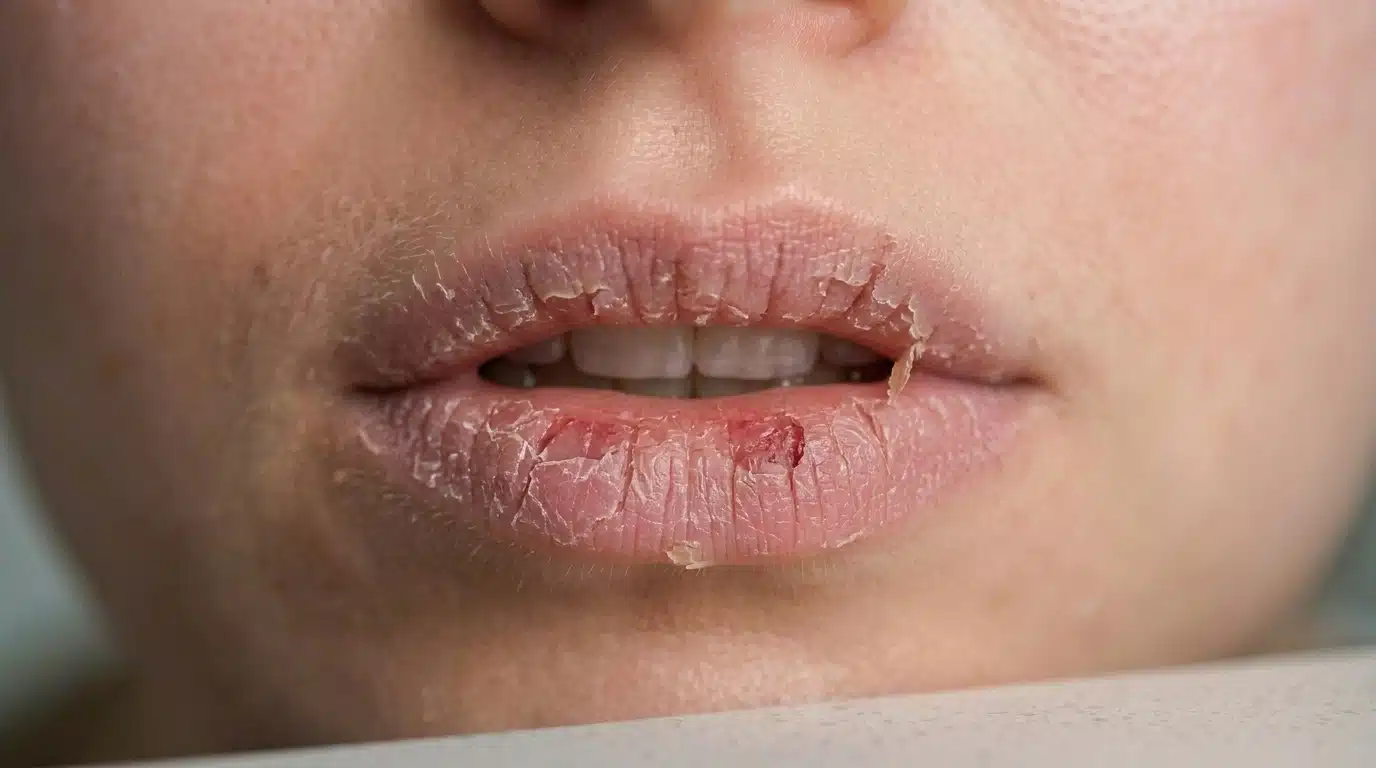
Unlike much of the skin on your face, your lips don’t have sebaceous oil glands that continuously supply protective oils. That leaves them more exposed to moisture loss and environmental irritation.
| Cause | How It Dries Lips |
|---|---|
| Cold, wind, sun, or dry air | Increase moisture loss and irritation |
| Lip licking or mouth breathing | Saliva and airflow dry lips faster |
| Irritating products | Fragrance, flavors, menthol, and camphor can trigger irritation |
| Medications | Retinoids and some other drugs can cause dryness |
| Dehydration | Low fluid intake may contribute to dry lips |
| Nutritional deficiencies | Certain deficiencies may contribute to persistent cheilitis |
Most cases come from a mix of environmental exposure and small daily habits, while persistent or recurring symptoms are more likely linked to irritation, products, medications, or underlying health factors.
The Step-by-Step Fix for Chapped Lips
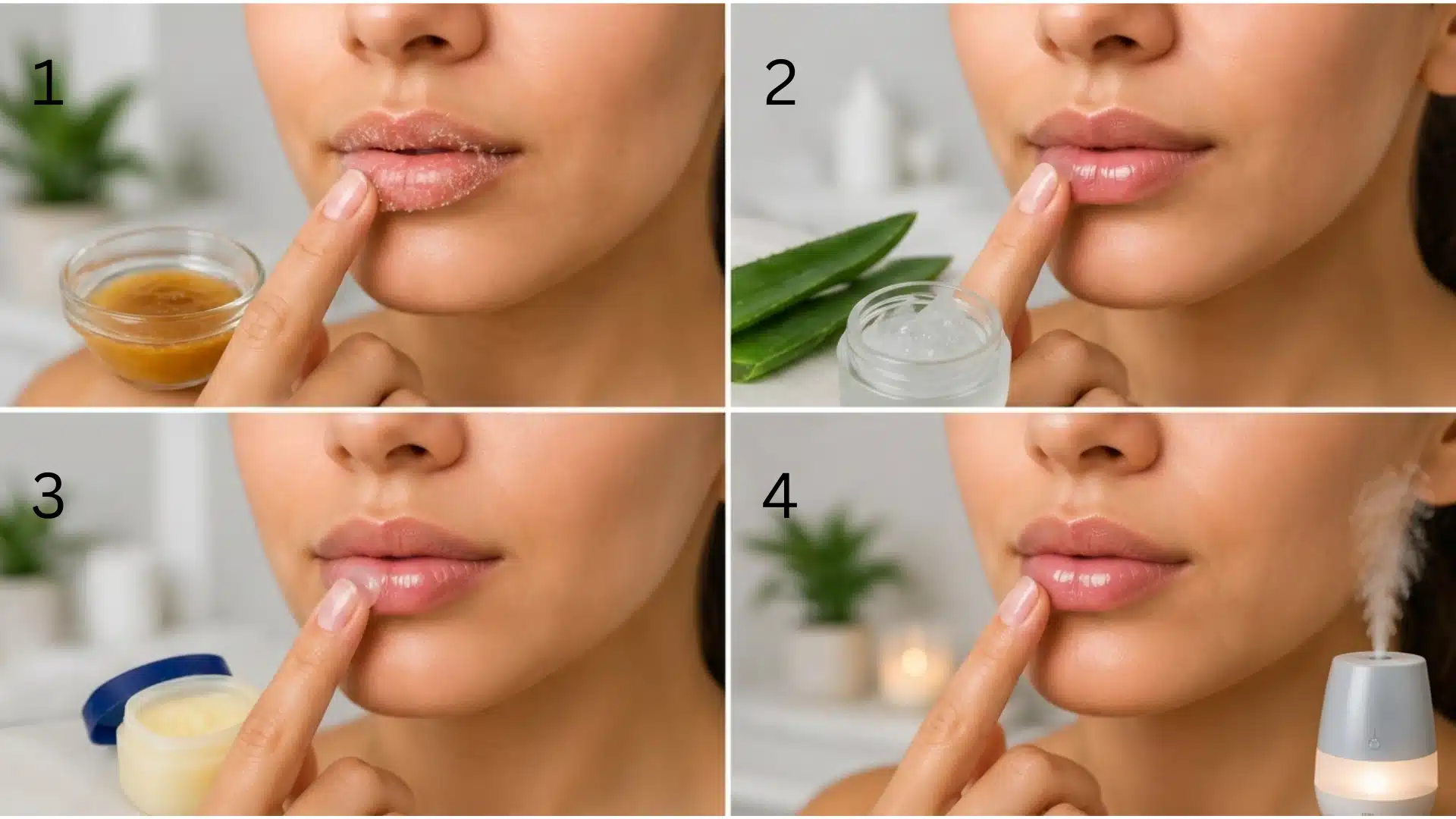
You don’t need a complicated lip routine. The goal is to avoid further damage, add moisture with a lip-safe product, and then keep that moisture from escaping.
Step 1: Exfoliate Dead Skin Gently
Start here to clear away the flaky layer sitting on top, so nothing you apply afterward goes to waste.
- Mix a small amount of sugar with honey or olive oil.
- Rub over lips in soft circles for about 30 seconds, then rinse with lukewarm water
- Skip this step if lips are actively bleeding or cracked open
- Prefer something gentler? A damp, soft washcloth pressed over lips works too, just less intensely
- Do this once, not daily; over-exfoliating is a common reason dryness sticks around
Once skin feels smoother, move straight to hydration.
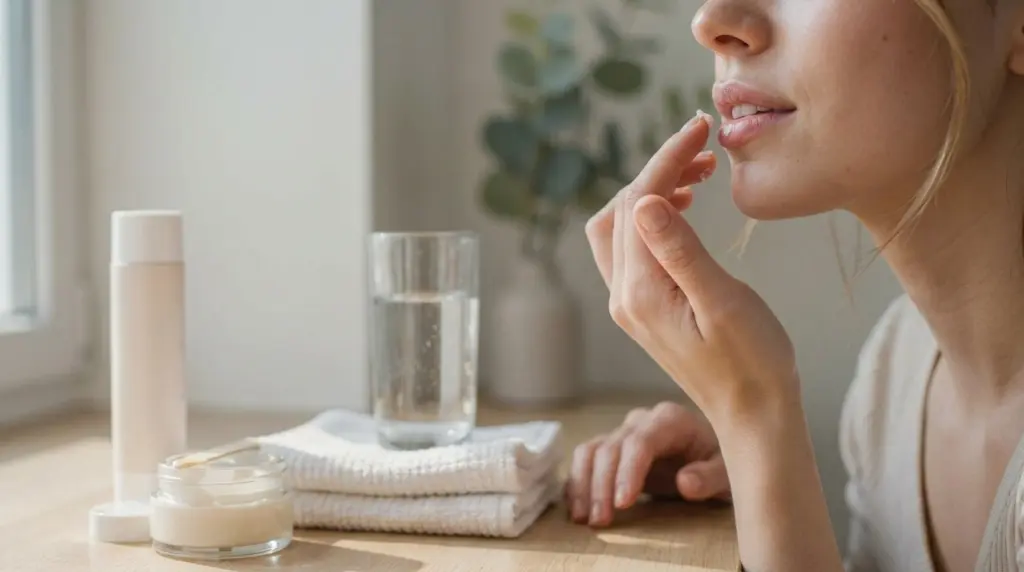
Step 2: Apply a Hydrating Layer First
This is the step most people skip, and it’s why balm alone doesn’t seem to work.
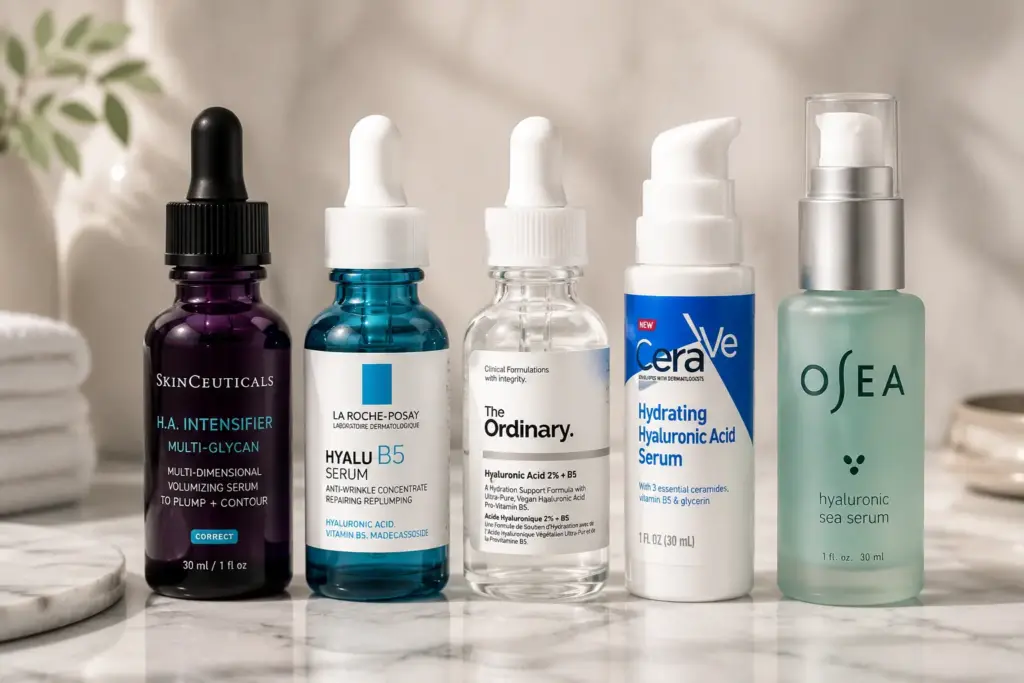
- Use aloe vera gel, glycerin, or a hyaluronic acid serum right after exfoliating.
- These pull water into the skin instead of just sitting on the surface
- Skipping this step is a big reason balm alone feels likeit’ss not working
- A thin layer is enough; you’re prepping the skin, not soaking it
Give it a minute to sink in before sealing it.
Step 3: Seal Moisture with an Ointment
This locks in everything you just applied so it doesn’t evaporate.
- Once the hydrating layer sinks in, lock it in with a thick, plain ointment
- Plain petroleum jelly, shea butter, or Aquaphor all form a barrier that keeps water in
- Avoid menthol, camphor, or added fragrance, even if it feels tingly at first
- That tingle is usually mild irritation, not healing
- This hydrate-then-seal combo is the part most routines are missing
This combo is usually what finally gets results.
Step 4: Repeat Before Bed for Best Results
Nighttime is when lips do most of their repair work, so don’t skip this pass. Keep it up nightly until lips feel fully healed.
- Apply a slightly thicker layer of ointment before sleep
- Run a humidifier if your room tends to be dry
- Try “slugging”, a generous coat of petroleum jelly left on overnight, for faster results.
- Stick with this four-step sequence for three to five days, and most mild-to-moderate chapping clears up on its own.
During the day, add one more layer of protection: use a non-irritating SPF 30 or higher lip balm whenever you’ll be outdoors.
Best Products for Chapped Lips
Not every lip product performs the same job. Instead of judging a balm by flavor, texture, or packaging, look at the ingredients and what your lips need right now.
| Product Type | Ingredients To Look For | Best Used For |
| Thick ointments | Petrolatum, white petroleum jelly, mineral oil | Very dry or cracked lips and nighttime use |
| Moisturizing balms | Ceramides, dimethicone, glycerin, castor seed oil, shea butter | Everyday moisture support |
| SPF lip balms | Zinc oxide or titanium dioxide with SPF 30+ | Outdoor daytime protection |
| Simple fragrance-free products | Short ingredient lists without strong flavors or fragrance | Sensitive or easily irritated lips |
When your lips are badly chapped, a simple fragrance-free ointment usually makes more sense than a heavily flavored, tinted, or “medicated-feeling” balm.
What Home Remedies Actually Help Chapped Lips?
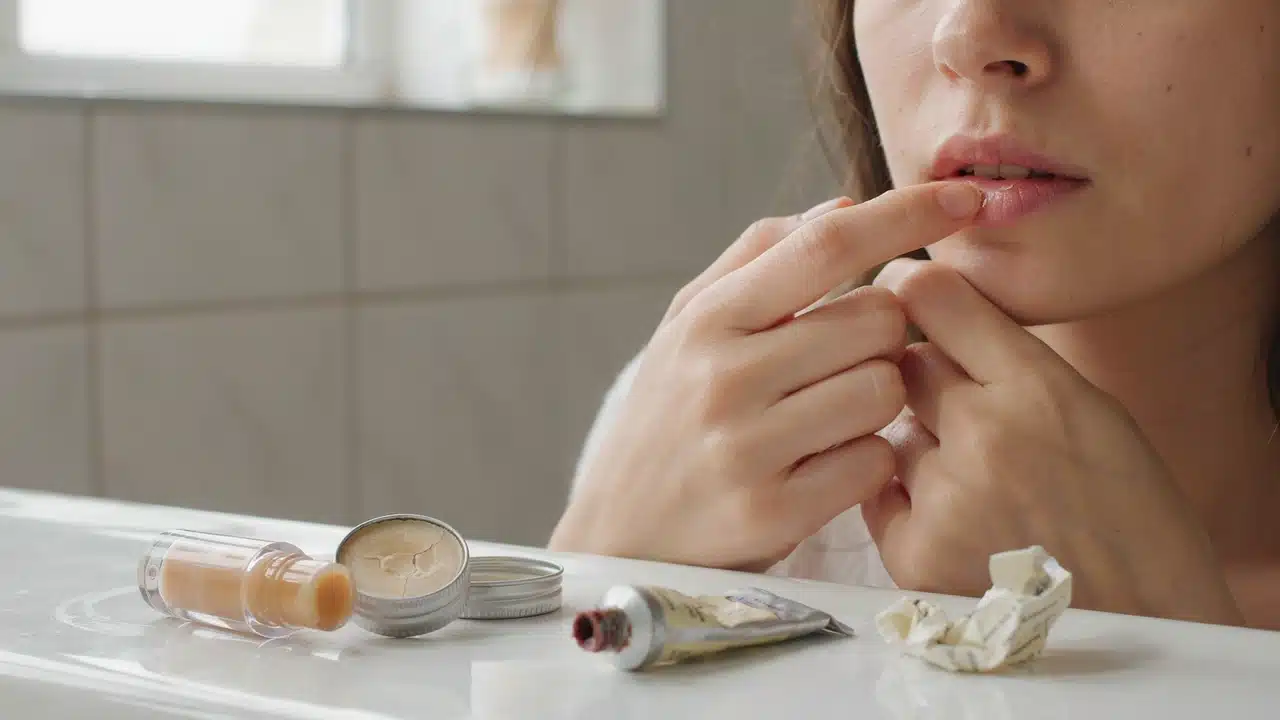
Home care works best when it supports the same basic goals as a good lip balm: reduce irritation, limit moisture loss, and protect the lips while they recover.
Plain petroleum jelly is one of the easiest at-home options because it forms a barrier over the skin without requiring a long ingredient list. Apply it whenever your lips feel dry and again before bed.
A humidifier can help when indoor heating, air conditioning, or naturally dry weather is contributing to the problem. It can be especially useful at night for people who tend to breathe through their mouths.
Adequate fluids matter if you are dehydrated, but drinking extra water alone won’t correct every case of chapped lips. You still need to protect the surface of the lips and remove ongoing irritants.
Be more cautious with DIY treatments such as sugar scrubs, lemon juice, baking soda, or heavily fragranced oils. Irritated lips generally benefit more from a simple routine than from repeatedly trying new ingredients.
Why Do My Chapped Lips Keep Coming Back?
If your lips improve for a few days and then become dry again, the problem may be less about the balm and more about an ongoing trigger.
Repeated lip licking is one common reason. So are cold weather, wind, low indoor humidity, and regular sun exposure. A product you use every day can also be responsible. Lip balm, lipstick, toothpaste, or another product around your mouth may contain an ingredient your skin does not tolerate well.
Medication can matter too. Chapped lips are common while taking isotretinoin and may require ongoing lip care rather than a one-time treatment.
If the problem consistently returns despite a simple, non-irritating routine, it becomes more important to consider contact cheilitis, eczema, angular cheilitis, or another cause instead of endlessly changing balms.
Daily Routine to Prevent Dryness
Morning and night call for different care, since one focuses on protection and the other on repair.
| Morning | Night |
|---|---|
| Apply an SPF lip balm before heading outside, even on cloudy days | Remove any lipstick or tinted balm completely before bed |
| Drink a glass of water shortly after waking up | Apply a thick, plain ointment as the last step of your routine |
| Avoid hot coffee or tea sipped directly against dry, cracked skin | Run a humidifier if your bedroom air tends to be dry |
| Reapply balm after eating or drinking, since food and liquids wipe it away | Keep a glass of water nearby in case you wake up thirsty |
| Skip matte or long-wear lipsticks until lips have fully healed | Avoid falling asleep with your mouth open when possible |
Treating both halves of the day the same is a common reason one gets neglected; keep them separate, even if it feels like extra steps at first.
When to See a Doctor
Most chapped lips clear up within a week or two of consistent care, so it’s worth paying attention if yours don’t.
Cracking that keeps bleeding, splits at the corners of your mouth, or shows swelling and redness beyond the lip line can point to something other than simple dryness, including angular cheilitis or an allergic reaction to a product you’re using regularly.
Clusters of small blisters, tingling before a breakout, or pain that feels different from typical dryness may signal a cold sore rather than chapping, which needs a different kind of treatment entirely.
Ongoing dryness that never fully resolves, especially alongside fatigue or a diet low in iron and B vitamins, is also worth mentioning to a doctor, as it can occasionally indicate a deficiency rather than a skincare issue.
Final Thoughts
Most chapped lips aren’t a mystery once you look closely; a small habit or a mismatched product is usually behind it, and that’s often all it takes to get rid of chapped lips for good.
Consistency matters more than any single product, so give it a few full days before judging. Watch how your lips respond, not just how they feel in the moment, since relief can be temporary while real healing takes longer.
If things stall out past a couple of weeks, mention it to a doctor instead of reaching for another balm and looking for more self-care tips. Check out our other guides.
Frequently Asked Questions
Is “Lip Balm Addiction” a Real Thing?
Not medically, but constant reapplication can create a habit loop. Balms with mild irritants make lips feel dry faster once they wear off, so it’s the product, not true dependency.
Can Chapped Lips Spread to Someone Else?
Chapped lips themselves aren’t contagious. However, a cold sore mistaken for dryness can spread through kissing or sharing lip products, so it’s worth telling the two apart.
Is It Okay to Wear Lipstick While Lips Are Chapped?
Cream or hydrating formulas are fine occasionally, but matte and long-wear lipsticks pull moisture out and can worsen peeling, so it’s best to skip them until lips heal.
Why Do Lips Get Worse on Flights or in Air Conditioning?
Cabin and AC air have very low humidity, which pulls moisture from skin faster than usual. Lips dry out especially fast since they can’t produce their own oil to compensate.