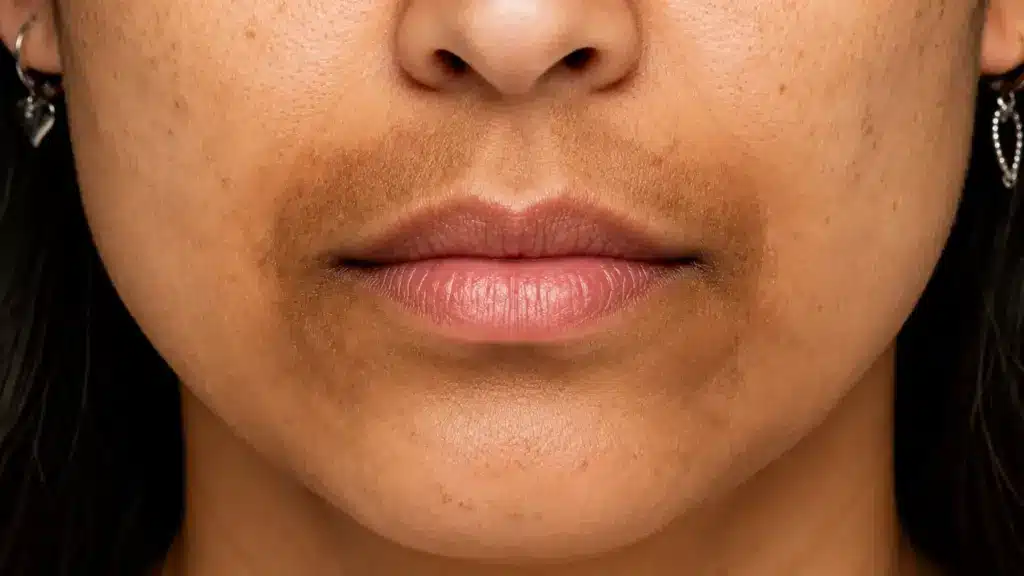
Hyperpigmentation around the mouth happens when extra melanin builds up in the skin around your lips. It can show as a brown or grey shadow, small dark spots, or deeper patches near the upper lip, chin, or mouth corners.
Common triggers include sun exposure, hormonal shifts, breakouts, dryness, and repeated irritation. I first noticed mine when I was outdoors a lot and barely applying SPF around my lower face. It came in slowly, and by the time I noticed, the discoloration had settled.
That taught me how reactive this area can be, and how much patience it takes. Patch test first, track what changes, and adjust before your skin gets irritated.
It is not harmful, but it can be stubborn. With steady care, the right ingredients, and daily sun protection, you can fade it without overworking your skin.
What Does Discoloration Around the Mouth Actually Look Like?
Discoloration around the mouth is often called perioral hyperpigmentation. It means the skin around the lips looks darker than the rest of the face.
It can show up in different ways. Some people notice a soft shadow above the upper lip, almost like a faint mustache. Others see brown patches near the mouth corners, chin, or below the lower lip.
On deeper skin tones, the discoloration may appear grey or blue-grey rather than brown. It can appear as a few small spots, or it can spread into a larger shadow around the mouth.
This is more common in medium to deep skin tones because pigment-producing cells can be more reactive. Lighter skin can still get it, too, but the contrast may be less noticeable.
The main thing is to treat this area gently. Strong products can make the darkness worse, especially if they irritate the skin.
Why Does Hyperpigmentation Around the Mouth Happen?
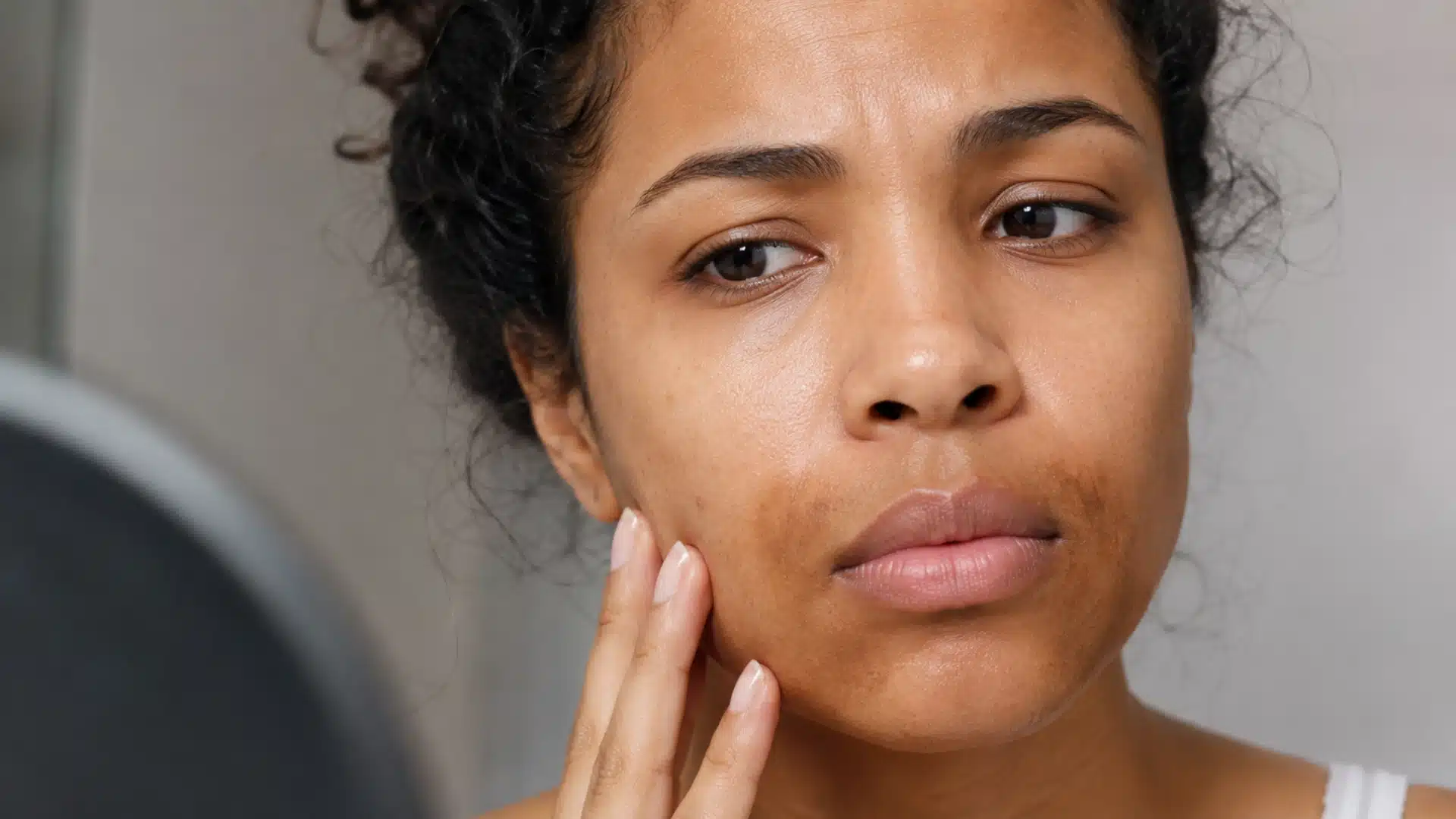
Perioral hyperpigmentation usually does not result from a single trigger. It often builds slowly when sun, irritation, hormones, or genetics overlap.
- Sun Exposure: The skin around the mouth is exposed to UV rays every day. If SPF is missed, melanin can build up, making the area darken faster than it fades.
- Hormonal Shifts: Hormones can trigger pigmentation around the upper lip and chin. Melasma often appears in these areas, and pregnancy, birth control pills, or hormonal medications can make it worse.
- Post-Inflammatory Hyperpigmentation: Breakouts, waxing, threading, cuts, harsh products, or repeated lip licking can irritate the area and leave dark marks as the skin heals.
- Medications: Some medications can raise the risk of facial hyperpigmentation, including doxycycline, antimalarials, tricyclic antidepressants, and some hormone therapies. Tell your doctor if your skin changes after starting a new medication.
- Nutritional Deficiencies: Low vitamin B12 or vitamin D levels may be linked to pigment changes. If discoloration is accompanied by fatigue, weakness, tingling, or sudden skin changes, ask a doctor about a blood test.
- Genetics and Skin Tone: Some skin tones have more reactive pigment cells. This is common in South Asian, Latina, Middle Eastern, and Black skin tones, and fading can take longer when genetics plays a role.
Note: This discoloration is usually cosmetic. But if it appears suddenly, spreads fast, changes color, or comes with other symptoms, check with a dermatologist before using treatments.
Ingredients That Help Discoloration Around the Mouth
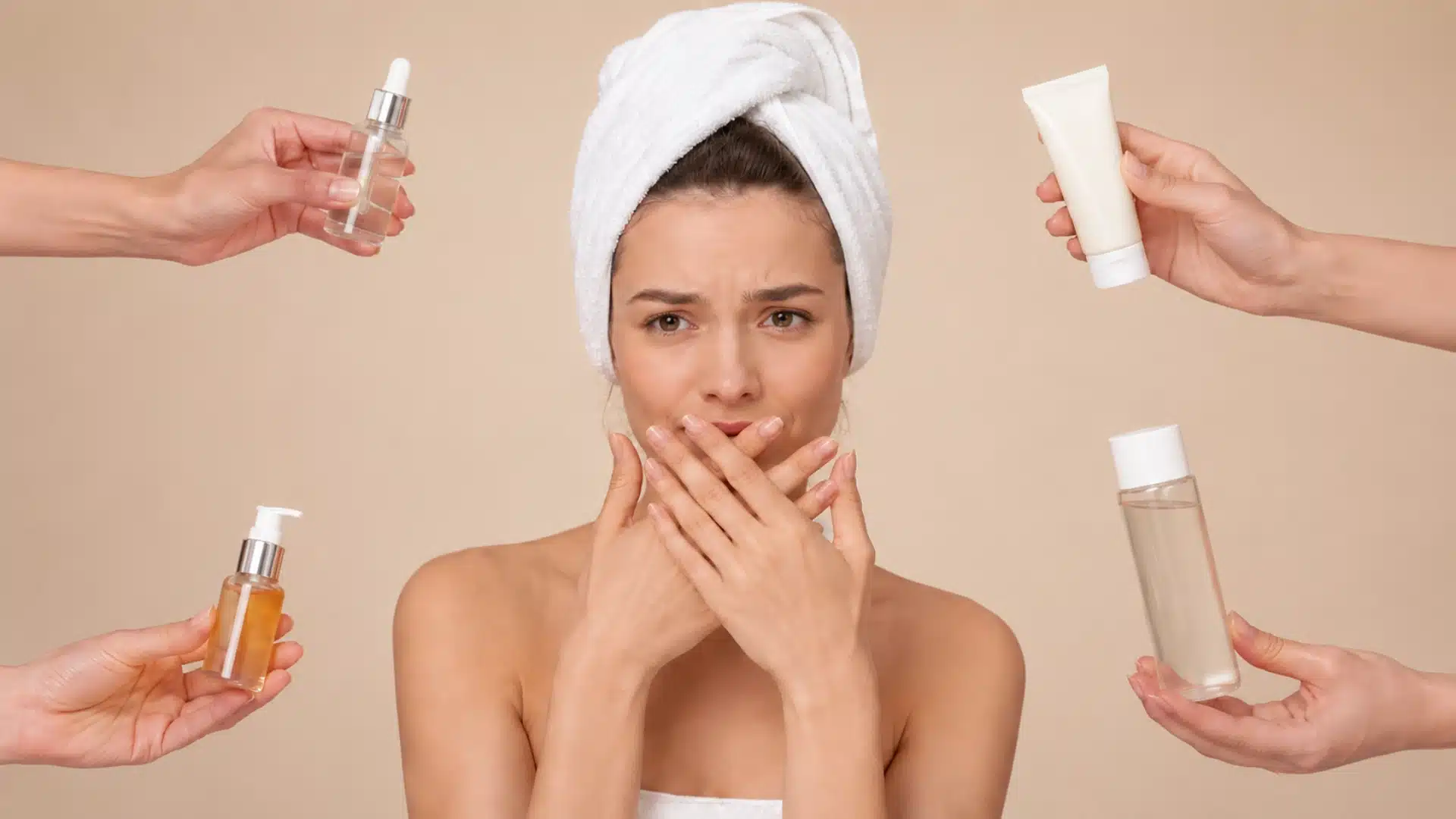
The skin around the mouth is thin and easily irritated. That is why strong actives can backfire here, even if they work well on your forehead or cheeks. Start gently. Patch test first. Then build slowly so you fade the discoloration without making the skin more reactive.
1. Niacinamide or Vitamin B3
This is one of the gentlest brightening ingredients. It helps reduce the appearance of dark patches by slowing the movement of pigment into skin cells.
It also helps reduce inflammation, which is important because irritation can worsen mouth discoloration. A concentration of 4 to 10 percent works well for most skin types.
2. Azelaic Acid
This brightening, anti-inflammatory ingredient is often a good fit for perioral pigmentation. It is usually less irritating than stronger acids and can also help with post-breakout marks around the mouth.
3. Vitamin C or L-Ascorbic Acid
Vitamin C helps brighten skin by slowing an enzyme involved in melanin production. It can work well, but the formula matters.
Some vitamin C serums can sting around the mouth. Start with a lower strength, around 5 to 10 percent, and use it on alternate days at first.
4. Low-Strength Glycolic Acid
An AHA that helps speed up cell turnover. This can move pigmented cells toward the surface, allowing them to fade more evenly.
Around the mouth, start with a 5-7% wash or toner a few times a week. Avoid strong peels or high percentages near the lip line unless your skin already tolerates them well.
5. Licorice Root Extract
This is a gentle brightening ingredient that helps slow tyrosinase, the enzyme involved in melanin production. It is usually well tolerated and pairs well with niacinamide.
6. Kojic Acid
Kojic acid also helps slow tyrosinase. It is derived from fermented rice and can be useful for medium to deep skin tones.
It is gentler than many harsh bleaching-style treatments, which can sometimes trigger rebound pigmentation if they irritate the skin.
Note: Avoid mixing retinol with AHAs. Do not use strong vitamin C with glycolic acid around the mouth. If skin stings, burns, tightens, or peels, stop actives and use a simple routine. Patch test first, and see a dermatologist for sensitive skin or ongoing irritation.
For extra support, a sensitive skin facial options guide can help you choose gentler treatments that work alongside your at-home routine.
Building a Routine That Fades Perioral Hyperpigmentation
Fading perioral hyperpigmentation is less about buying expensive products and more about staying consistent. A simple routine done every day will usually work better than a crowded routine you only follow when your skin feels bad.
1. Morning Routine: Protect and Prevent New Pigment
- Start with a gentle, fragrance-free cleanser. Keep the area around your mouth calm, and do not scrub.
- Next, apply a niacinamide serum. Three to four drops are enough for the whole face. Around the mouth, pat it gently rather than rub.
- Follow with a lightweight moisturizer that supports the skin barrier. This helps reduce dryness and irritation, both of which can worsen pigmentation.
- Finish with sunscreen. This is the most important step in the routine. Without SPF, the brightening work you do at night can get undone during the day.
- Use a broad-spectrum SPF 30 or higher every morning, even on cloudy days. Reapply every 2 hours when you are outdoors.
If melasma is part of the issue, use a tinted mineral sunscreen with iron oxides because it helps block UV rays and visible light, both of which can make the darkness worse.
2. Evening Routine: Treat Without Irritating
- Start with a cleansing balm or oil if you wear SPF or makeup, double-cleanse at night. Then follow with a gentle water-based cleanser.
- After cleansing, use one treatment step. Do not layer several activities at once.
- Azelaic acid is a good evening option because it can help with discoloration and inflammation without making your skin more sun-sensitive.
- If you are using glycolic acid, keep it to 2 or 3 nights a week. Do not use it every night, especially around the mouth.
- Finish with a barrier-supportive moisturizer. This helps keep the area calm while your treatment is in progress.
When is Your Skin Ready for Retinol?

Retinol can help fade pigmentation by speeding up skin cell turnover, but I would not start with it around the mouth.
This area gets irritated fast. I learned that reactive skin needs a slower hand, especially after seeing how chlorine, sun, and strong products can upset the barrier.
Start with a cleanser, moisturizer, SPF, and one gentle brightening ingredient. Once your skin feels calm for a few weeks, add retinol only 2 nights a week.
Do not use it on the same night as glycolic acid. Apply moisturizer afterward to reduce dryness.
If the area burns, peels, stings, or looks darker, pause retinol and simplify your routine.
When You’ll Start Seeing Results?
Most people start to notice a visible shift after 8 to 12 weeks of steady care.
Deeper or older pigmentation can take 6 months or longer. That does not mean your routine is failing. It usually means the pigment is deeper, the trigger is still active, or your skin needs more time to renew.
The best routine is one your skin can tolerate. If the area starts burning, peeling, or darkening, pause the actives and go back to cleanser, moisturizer, and SPF until it calms down.
Common Mistakes to Avoid
The right products can help, but small daily habits can slow your progress. These mistakes often irritate the skin around the mouth, making discoloration harder to fade.
- Picking or scratching spots near the mouth: This adds fresh inflammation and can restart the post-inflammatory hyperpigmentation cycle.
- Layering too many actives too soon: Niacinamide, azelaic acid, glycolic acid, retinol, and vitamin C can all be useful, but not all at once. Add one product at a time so you know what your skin can handle.
- Skipping SPF indoors: Sunlight and visible light can still reach your skin through windows. If pigmentation is your concern, you need to use sunscreen daily.
- Using fragranced lip balms or irritating toothpaste: These can spread onto the skin around the mouth, causing low-level irritation over time.
- Over-exfoliation: Exfoliating too much weakens the skin barrier. Around the mouth, this can make discoloration appear darker rather than lighter.
What Do Users Have to Say About Hyperpigmentation Around the Mouth
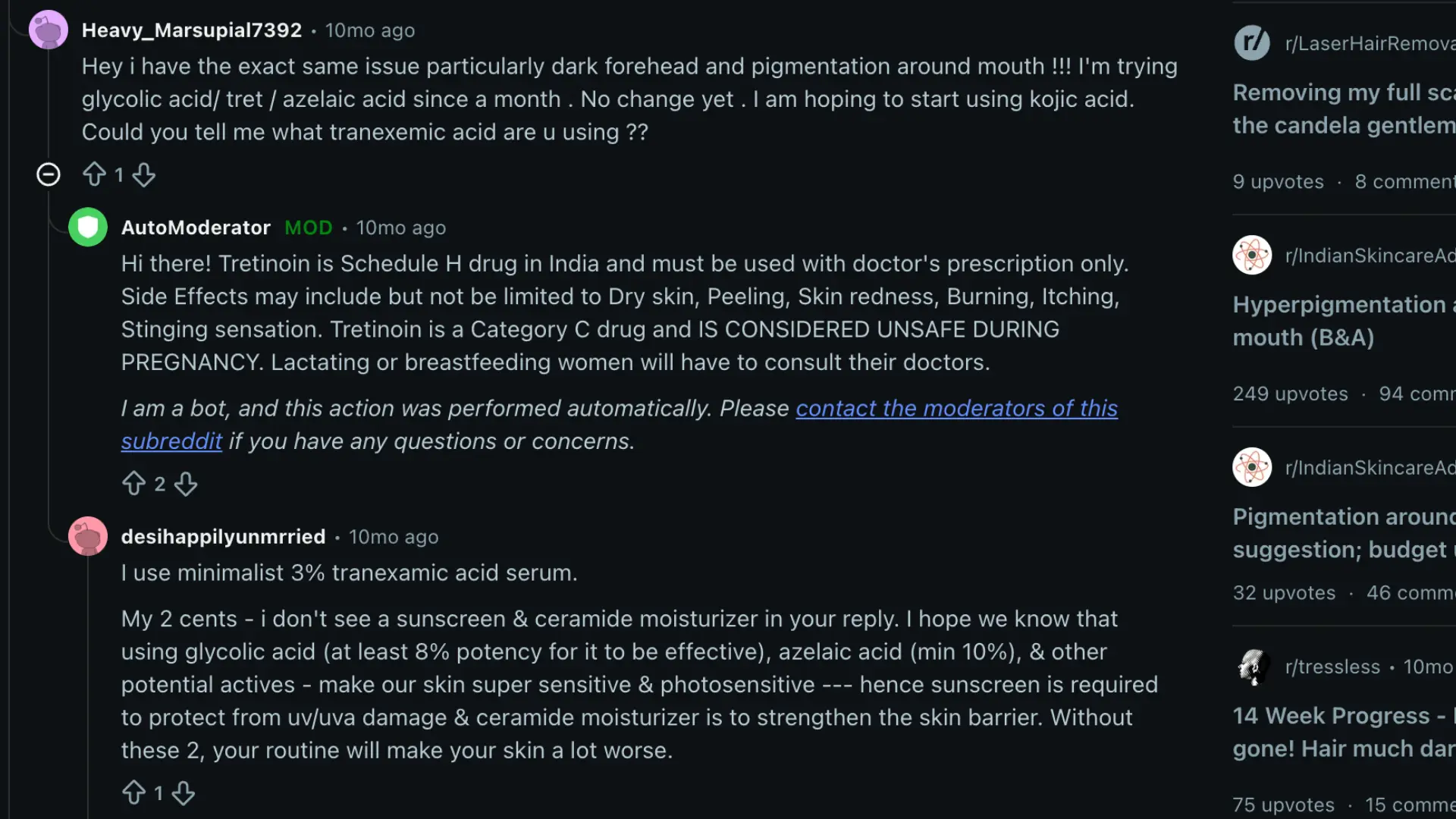
In the thread, Reddit users share struggles with dark forehead patches and pigmentation around the mouth.
One person said glycolic acid, tretinoin, and azelaic acid had not shown results after a month, so they were considering kojic acid and asking about tranexamic acid.
Another user replied that they use Minimalist 3% tranexamic acid serum. The key advice was not just about adding more actives but also about protecting the skin barrier.
Members stressed that strong ingredients can make skin sensitive to sunlight, so sunscreen and a ceramide moisturizer are important. Without them, the routine may worsen pigmentation rather than improve it.
When to Consider Professional Treatment
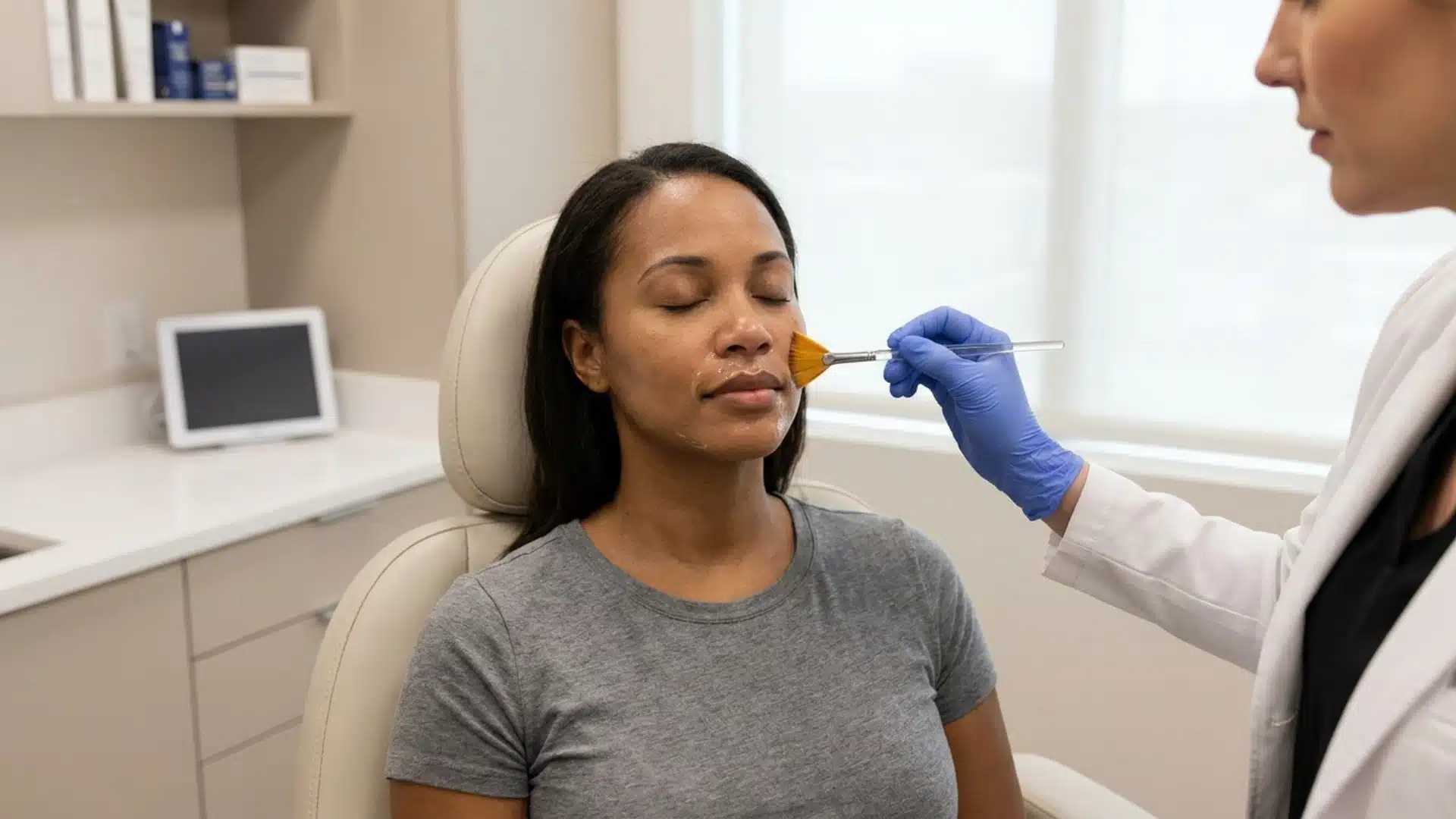
If your routine has not helped after 3 to 4 months, it may be time to see a professional.
This is especially worth considering if the darkness is linked to melasma. Hormonal pigmentation can be stubborn, and over-the-counter skincare may not be enough on its own.
Common professional options include:
- Chemical peels: Glycolic or lactic acid peels can help lift pigmented surface skin more evenly than at-home exfoliation. They usually work best as a series, spaced a few weeks apart.
- IPL, or intense pulsed light: IPL can help with flat, sun-triggered pigmentation, especially on fair to medium skin tones. It uses light pulses to target extra pigment, and most people need more than one session.
- Pico laser: Pico lasers use very short pulses to break up pigment with less heat than older laser types. They may be an option for some deeper skin tones, but the provider’s experience matters.
- Prescription topicals: A dermatologist may prescribe tretinoin, hydroquinone, or a custom blend for stubborn pigmentation. These are stronger than regular skincare products and should be used with guidance.
A quick note for deeper skin tones: not every in-clinic treatment is safe for every skin tone. Some lasers can trigger more pigmentation in melanin-rich skin, leaving the area darker than before.
Before booking a laser or light treatment, look for a board-certified dermatologist who has experience treating skin of color.
For a broader look at how dermatologists handle pigment-related concerns on the face, the professional skin removal options post explains the clinical process in more detail.
What Results Really Look Like
The honest answer is that perioral hyperpigmentation does not fade in 2 weeks.
No single product works for everyone. No routine can erase stubborn discoloration overnight. What usually works is finding your triggers, protecting the area every day, and giving your skin enough time to respond. The small wins count too.
A shadow that looks a little lighter. Skin that feels less irritated. A routine that finally feels easy to follow. Those are signs that your skin is moving in the right direction.
The goal is not perfect skin. The goal is calmer, steadier skin that feels like yours again.
Start with one step. Apply SPF around the mouth every morning, or add one gentle brightening ingredient like niacinamide. That is enough to begin.
Conclusion
Hyperpigmentation around the mouth fades best with three things: daily sun protection, gentle brightening ingredients, and a routine your skin can handle.
This area is sensitive, so harsh products can make the darkness worse. Start by identifying your likely trigger, such as sun exposure, hormonal changes, breakouts, dryness, or irritation. Then treat it slowly and consistently.
Professional treatments can help if at-home care is not enough. But they work best when you already have a strong daily base: cleanser, moisturizer, SPF, and the right treatment ingredient.
If this helped you understand what is happening around your mouth, share it with someone who has been looking for answers. And if one ingredient or routine step helped you, drop it in the comments. I read everyone.
Frequently Asked Questions
Can Hyperpigmentation Around the Mouth Be Permanent?
Usually, no. Most cases can fade with consistent care. But deep melasma or genetic pigmentation may take longer and may need professional treatment.
Is It Safe to Use Retinol Near the Mouth?
Yes, but be careful. The skin around the mouth is thin and easily irritated. Start with a low strength, use it 1 to 2 nights a week, and apply moisturizer to reduce dryness.
Can Drinking More Water or Changing My Diet Help?
Diet and water will not directly fade existing pigmentation. But they can support your skin barrier and reduce inflammation. If you suspect low vitamin B12 or vitamin D, ask your doctor about a blood test.
Can Toothpaste Make Discoloration Around the Mouth Worse?
Yes, it can. Some toothpastes contain ingredients that may irritate the skin around the mouth. If the darkness sits close to your lip line, try a gentler, fragrance-free toothpaste and see if the irritation improves.