Dull skin, rough texture, and moisturizers that sit on the surface instead of being absorbed are often the same problem. Dead cells have built up and aren’t clearing fast enough.
Exfoliating regularly helps move that process along, and the ingredients that do it best are often the simplest ones.
Sugar from your kitchen shelf. Oats from the pantry. Yogurt that was already in the fridge. A natural exfoliant doesn’t require a long ingredient list or a high price point to work well on skin.
I’ve worked with clients who had smooth, calm skin and very modest routines, and exfoliation was nearly always the step that made the difference. They were not aggressive or regular. They were just consistent with the right ingredient for their skin type.
This post covers what natural exfoliation actually does, which ingredients suit which skin, and how to make a homemade face scrub that holds up in real use.
What is a Natural Exfoliant, and Why Your Skin Needs One?
Your skin runs on a renewal cycle of roughly 28 to 30 days, according to research published by Healthline .
New cells form in the deeper layers and migrate upward, pushing old cells toward the surface, where they eventually shed.
When you’re young, that process runs on schedule. With age, it slows. Dead cells accumulate on the surface, skin looks dull, texture becomes uneven, and even a good moisturizer starts feeling like it’s sitting on top rather than absorbing.
Exfoliation helps clear dead skin cell buildup. The American Academy of Dermatology notes that exfoliation removes dead skin cells from the outer layer, and some people find it improves skin appearance.”
Natural exfoliants do that work using grain, mineral, and enzyme-based ingredients without synthetic chemicals.
I’ve seen this firsthand with clients who had smooth, clear skin and very simple routines. Often, the difference was consistent exfoliation once a week with something gentle.
Types of Natural Exfoliants
Different skin types respond better to different exfoliant textures, so use this table as a quick guide before choosing a recipe.
| Skin type | Best type | Why it fits |
|---|---|---|
| Sensitive or reactive | Enzyme-based | No friction; dissolves rather than scrubs |
| Dry or flaky | Physical, fine-grained | Buffs away surface dryness, pairs well with moisturizing bases |
| Oily or acne-prone | Physical or enzyme | Unclogs pores, helps manage excess oil |
| Normal or combination | Either | Adapt to what you have on hand |
Physical exfoliants use fine particles to manually buff away dead cells. Sugar crystals, ground oats, sea salt, and coffee grounds all fall into this category.
They work on contact and deliver fast results. The trade-off is that coarser grains can be irritating, particularly on facial skin, so matching the grain size to the area you’re exfoliating matters.
Enzyme-based exfoliants use proteins from fruit to break down the bonds holding dead cells in place.
Papain from papaya, bromelain from pineapple, and lactic acid from yogurt are the most common examples. Because enzyme exfoliants don’t require scrubbing, they tend to be a better fit for sensitive or reactive skin.
The Best Natural Exfoliants by Skin Type
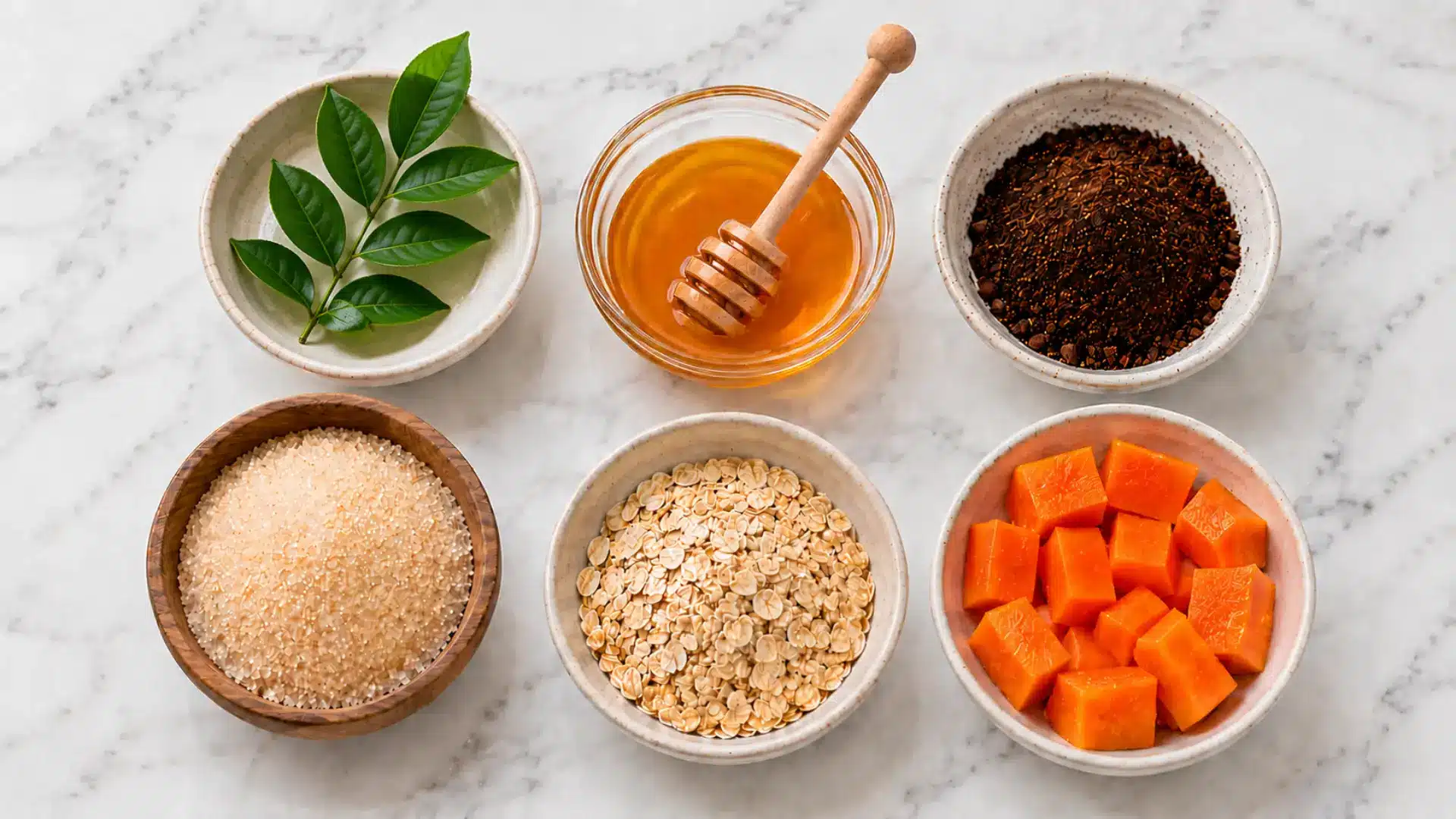
Different skin types need different exfoliants, since the wrong texture can leave skin irritated instead of smooth.
1. For Dry Skin: Sugar, Honey, and Oatmeal
Fine sugar is one of the gentler physical options for dry skin. Its crystals are small enough not to cause micro-tears, and sugar dissolves during rinsing without leaving residue.
Raw honey works well as a scrub base because it pulls moisture into the skin while the sugar buffs away dead cells.
Colloidal oatmeal adds a soothing layer, as its beta-glucan content forms a light film on the skin that holds hydration in after exfoliating.
2. For Oily and Acne-Prone Skin: Coffee Grounds and Fine Sugar
Coffee grounds are a reliable option for oily skin. Caffeic acid has antioxidant properties, and the texture does a thorough job of clearing buildup from pores.
For the body, a simple mix of coffee grounds and a carrier oil works well.
On the face, fine brown sugar mixed with a lightweight oil like jojoba is a more controlled choice, as it exfoliates without stripping the skin of what it needs to stay balanced.
Coarse sea salt comes up often in natural exfoliant guides. It works well for the body, particularly on elbows and feet.
On the face, though, the grain is usually too rough, especially around the nose and chin, where skin tends to be thinner.
3. For Sensitive Skin: Papaya Enzyme and Yogurt
Papaya is one of the gentler tools available for reactive skin. The papain enzyme breaks down surface cells without requiring friction, making it far more manageable for skin that reacts to most physical scrubs.
Plain yogurt works in a similar way through its lactic acid content, dissolving dead cells gradually with a low irritation risk.
For anyone managing sensitivity alongside other skin concerns, the guide to facials for sensitive skin covers both at-home and professional approaches worth exploring.
Note: if you have active rosacea, eczema, or inflammatory acne, check with a dermatologist before adding any exfoliant to your routine. Even gentle, enzyme-based options can aggravate compromised skin.
How to Make a Homemade Face Scrub
A homemade face scrub doesn’t need many ingredients to be effective. Three or four components are usually enough, and most of what you need is probably already in your kitchen.
| Skin type | Mix | Use | Frequency |
|---|---|---|---|
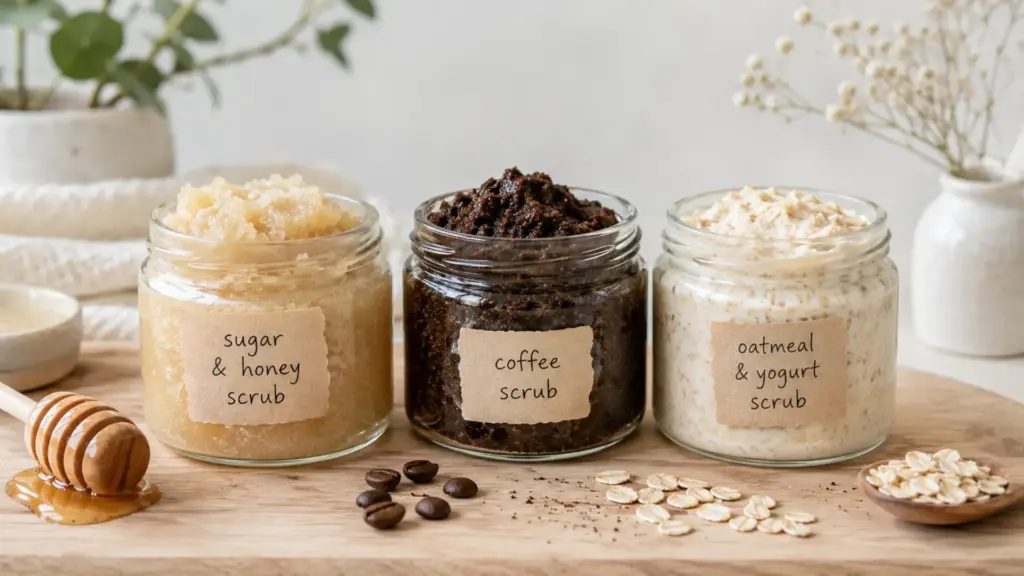
| Dry skin | Fine sugar, raw honey, coconut oil | Massage on damp skin for 60 seconds, rinse, then moisturize. | 1 to 2 times weekly |
| Oily or combination skin | Coffee, brown sugar, jojoba oil | Massage for 1 to 2 minutes, avoiding the eyes, rinse well. | 1 to 2 times weekly |
| Sensitive skin | Fine oats, plain yogurt, and honey | Leave on clean skin for 5 minutes, then rinse gently. | Once weekly to start |
The oatmeal version was the one I kept coming back to after testing all three. My skin felt settled afterward, not stripped. No redness, no tightness. It became a regular part of how I wind down at the end of the week.
How to Use a Natural Exfoliant the Right Way?
Natural exfoliants work best when you use light pressure, limit frequency, and moisturize right after rinsing.
- Exfoliate on damp skin after cleansing. Wet skin offers less resistance and lowers the risk of irritation.
- Use small, gentle circular motions. The texture does the work; pressing harder doesn’t help.
- Rinse with cool or lukewarm water.
- Moisturize immediately after. Freshly exfoliated skin absorbs products well, making this a good time for a nourishing cream or facial oil.
- Apply SPF the following morning. Exfoliated skin has a thinner surface layer and is more susceptible to UV damage.
- Exfoliate 2 to 3 times a week for most skin types and once a week for sensitive skin.
Signs You May Be Over-Exfoliating
If your skin starts reacting after exfoliation, do not push through it. These signs usually mean your skin barrier needs a break, so pause exfoliation for a few days and focus on gentle cleansing, moisturizer, and SPF.
- Tight or red skin: Your skin feels tight, warm, or looks red shortly after exfoliating.
- Stinging products: Lightweight products that normally absorb easily start to sting or burn.
- Rough dryness: Your skin feels rough, flaky, or dry a day or two after exfoliating.
- More breakouts: Breakouts increase instead of calming down after a few sessions.
- Shiny but uncomfortable skin: Your skin looks shiny, but it feels raw, tight, or irritated instead of hydrated.
If any of these appear, take a full week off exfoliating and focus on plain hydration. Most cases of over-exfoliation recover quickly with rest and a simple barrier-supporting moisturizer.
Common Mistakes to Avoid when Exfoliating at Home
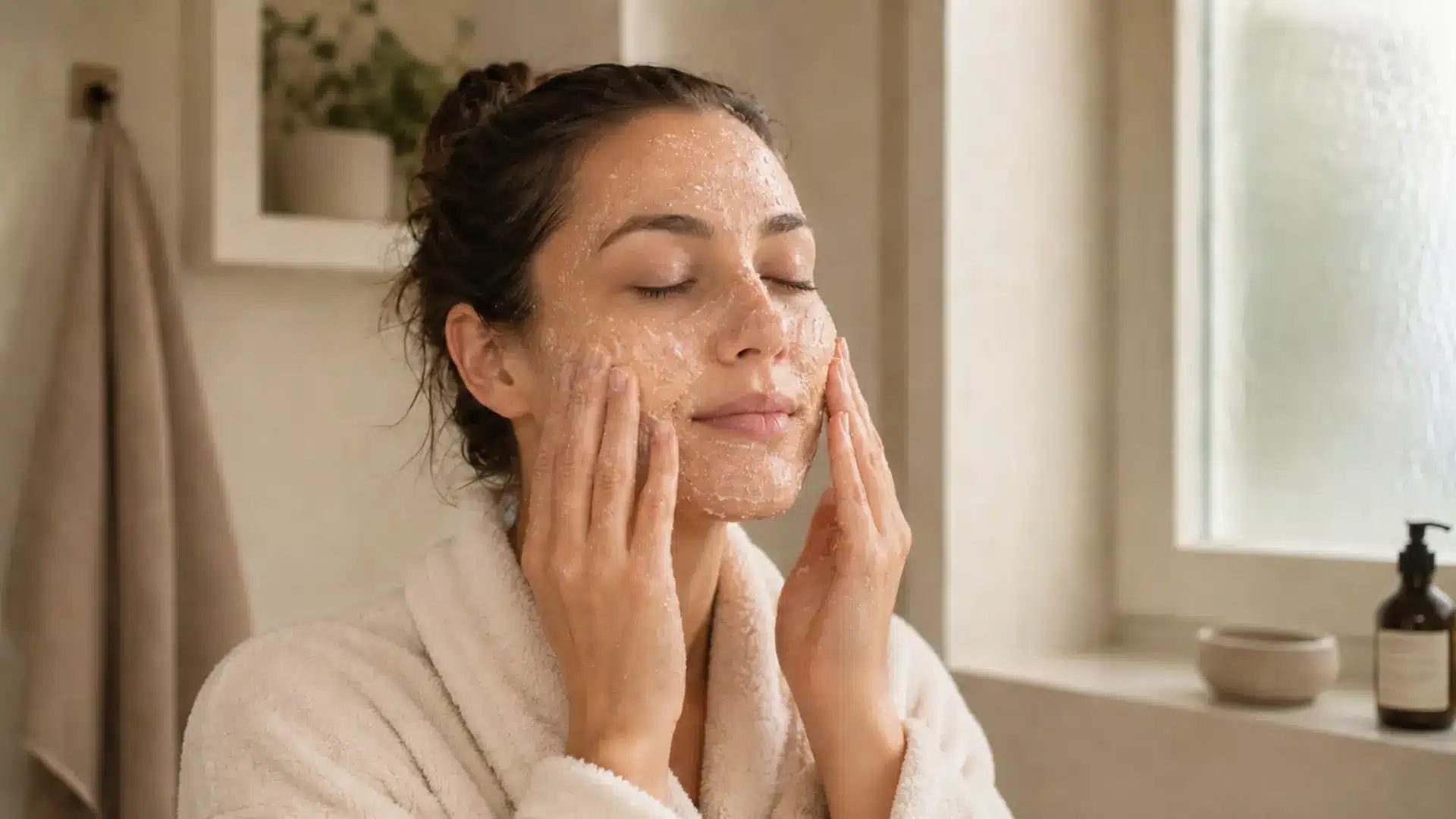
Most exfoliation mistakes come from using rough textures, scrubbing too hard, or skipping the skin-safety steps that prevent irritation.
- Coarse sea salt on the face: Using coarse sea salt on your face can create small abrasions, especially around the nose and jaw, so save it for body use.
- Sunburned or broken skin: Exfoliating over sunburned or broken skin can worsen irritation, so pause until your skin has completely healed.
- Skipping SPF after exfoliation: Freshly exfoliated skin can burn more easily, so apply sunscreen the following morning.
- Making too much scrub at once: This can lead to spoilage, especially if the recipe contains yogurt, fresh fruit, or dairy.
- Skipping a patch test: Skipping a patch test can increase the risk of irritation, so test new recipes on your inner wrist and wait 24 hours before using them on your face.
- Scrubbing too hard: Applying too much pressure can leave skin red and irritated, so let the texture do the work.
Conclusion
Natural exfoliation is one of the more straightforward steps in any skin routine, and it doesn’t need to be expensive or elaborate.
A tablespoon of sugar. A little honey. Some oats you already have. These are small, regular habits that over time make a visible difference to how skin looks and how well it responds to everything else you put on it.
Start with one recipe this week. Use it once. Pay attention to how your skin feels 24 hours later. That observation alone will tell you more than any ingredient list.
If you have a natural exfoliant you keep coming back to, drop it in the comments. I’d love to know what’s working for other people.
Frequently Asked Questions
Can I Use a Natural Exfoliant on My Body as Well as My Face?
Yes, but choose carefully. Use coarse salt or coffee on the body. For the face, pick gentle sugar, oatmeal, yogurt, or papaya.
How Long Does a Homemade Face Scrub Keep in the Fridge?
Sugar and oil scrubs can last for two weeks. Fruit, yogurt, or dairy scrubs need refrigeration and should be used within 5 to 7 days.
Should I Exfoliate Before or After Cleansing?
Exfoliate after cleansing. Clean skin lets the scrub work better. Apply it to damp skin, rinse gently, then continue with moisturizer or serum.
Are Natural Exfoliants Safe During Pregnancy?
Sugar and oatmeal scrubs are usually safe. Use caution with papaya-based options, and ask a healthcare provider before trying new skincare ingredients.