You know the moment. Your hair looks fine in one mirror, then turns rough, puffy, or shapeless the second you step into brighter light.
It is annoying because nothing feels clearly wrong, yet something clearly is not sitting right.
Frizz has a way of disguising itself. Sometimes there are flyaways around the crown. Sometimes it shows up as collapsing waves, dry ends, or volume that appears in all the wrong places.
That is why so many people confuse it with damage, dryness, or simply a bad hair day.
Before you change your shampoo, blame the weather, or cut your hair out of frustration, it helps to understand what you are actually seeing.
Once frizz becomes recognizable, your routine starts making far more sense every day.
What Really Causes Frizzy Hair?
The hair cuticle is the outermost layer of each strand, arranged like overlapping roof shingles. When those shingles lie flat, the surface is smooth, and light reflects evenly.
When they lift, the strands become rough, moisture escapes, and the strands move away from the main pattern.
These are the conditions that lift the cuticle and push the hair toward frizz:
- Humidity: Hair absorbs moisture from the air, swells, and separates.
- Heat styling: Hot tools can weaken the cuticle and make strands rougher.
- Rough towel-drying: Friction lifts the cuticle, creating flyaways. The steps you follow, from water temperature to how you rinse, can either protect the cuticle or quietly work against it.
- Over-brushing: Brushing too hard disrupts the pattern and increases static.
- Chemical treatments: Bleach, color, and relaxers can leave hair more porous.
- Dryness: Dry strands lift more easily and lose shape more easily.
- Fabric friction: Sleeping on cotton pillowcases can roughen the cuticle overnight. Switching to a smoother fabric makes a noticeable difference by morning.
- Harsh ingredients: Sulfates like sodium lauryl sulfate and drying alcohols like isopropyl alcohol can strip moisture from thin, wavy hair over time, making the cuticle harder to keep flat.
Thin, wavy hair reacts faster because fine strands have less protection. A small cuticle lift that barely registers on thick hair can visibly disrupt a 2A or 2B wave pattern.
What Frizzy Hair Actually Looks Like?
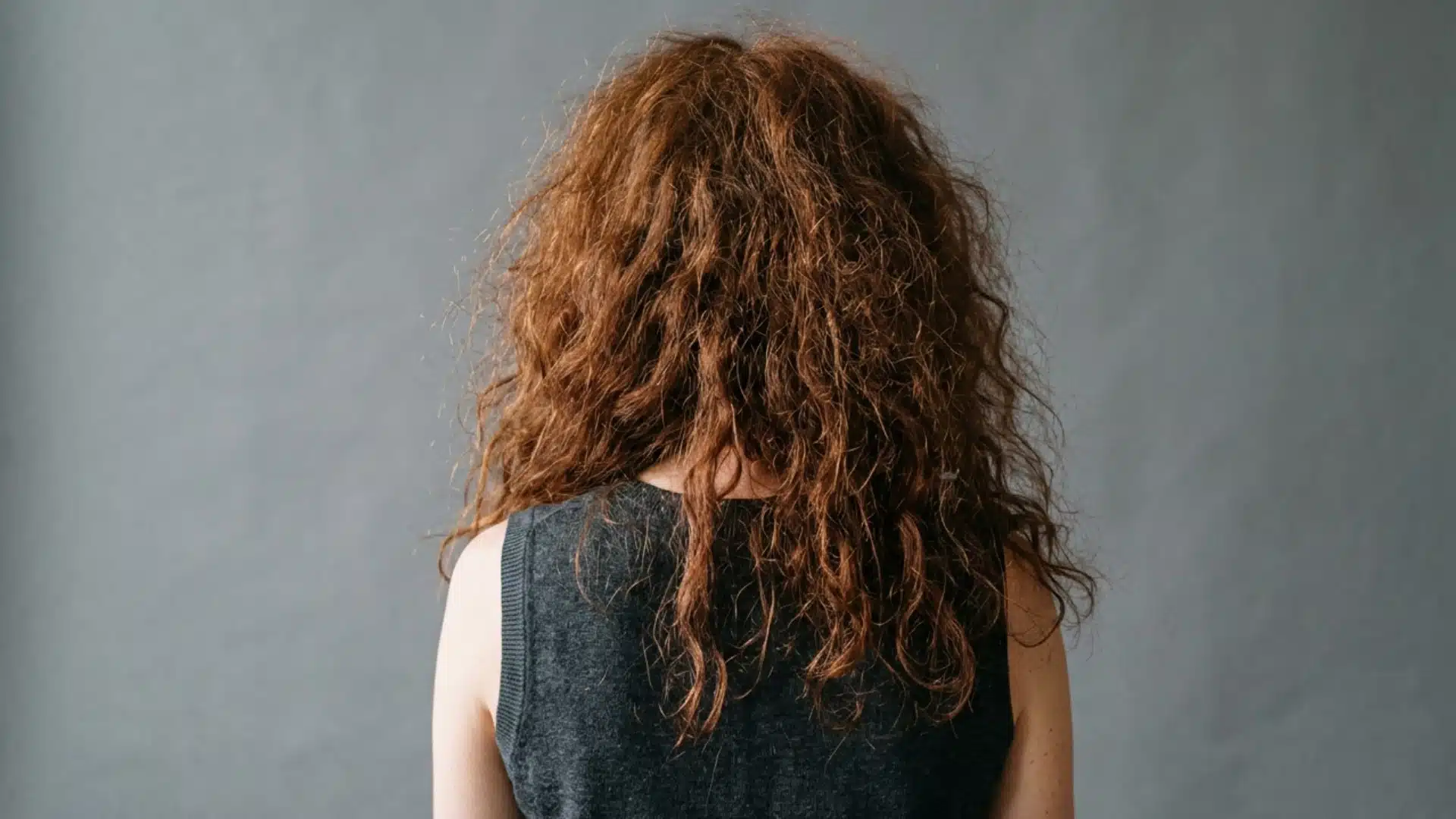
Frizzy hair usually starts with the cuticle. When it lifts, the surface becomes rough, light scatters, and strands begin to move away from the main hair pattern. Visually, frizz can show up as:
- Halo: Short, lifted strands around the crown or hairline.
- Definition loss: Waves, curls, or straight sections losing shape and blurring at the edges.
- Puffiness: Hair looking wider or fuller than usual, especially at the ends.
- Dullness: A rough surface that still looks dry after conditioning because the cuticle is scattering light rather than reflecting it.
- Uneven direction: Strands pointing in different ways with no clear pattern.
- Undefined texture: Hair that looks like it needs something, but the specific problem is hard to name.
One thing worth separating out: fluffy hair and frizzy hair are not the same thing.
Fluffy hair usually means a larger, voluminous look that some people find desirable, often from density or texture rather than a cuticle problem. Frizzy hair is a cuticle issue.
A lifted cuticle on fine waves makes the hair look interrupted rather than simply full. The clearest signal is the pattern: healthy hair holds a shape. Frizzy hair looks interrupted.
How Frizz Shows up on Thin Wavy Hair?

These are the clearest physical signs of frizz. On thin, wavy hair, they can be subtle, so it helps to know what each one looks and feels like.
1. Brittle Hair
Brittle hair is one of the first signs of frizz, as the strand feels rough rather than smooth. When you run your fingers from root to tip, the surface may feel uneven, coarse, or weak.
Healthy hair usually bends without snapping, but frizzy hair can feel fragile and dry along the shaft.
On thin, wavy hair, brittleness often shows up as tiny lifted pieces that never settle back into the natural wave pattern, especially near the ends and crown area.
2. Dryness
Dryness and frizz often show up together because raised cuticles let moisture escape from the strand.
The hair may feel soft right after conditioning, then become rough, airy, or straw-like soon after it dries.
On thin, wavy hair, dryness can cause waves to collapse rather than form clean bends, leaving the hair looking flat at the roots and fuzzy at the ends by midday, even after careful styling that morning.
3. Breakage
Breakage becomes more common when frizz weakens the hair surface.
Raised cuticles make strands more prone to damage when brushing, detangling, sleeping, or when your hair is touched too often.
Instead of shedding from the root, broken hairs appear as short, uneven pieces along the part, crown, hairline, or ends.
On thin, wavy hair, breakage can look like persistent flyaways that no product smooths down, no matter how much you use during styling.
4. Dullness
Dullness is a reliable sign of frizz because a rough cuticle does not reflect light evenly. Healthy hair has a smoother surface, so shine looks consistent from root to end.
Frizzy hair scatters light, making it appear matte or lifeless even after washing.
On thin, wavy hair, dullness tends to make the wave pattern look weaker too, because the surface texture and the shape problem compound each other.
5. Too Many Tangles
Too many tangles can signal frizz, as raised cuticles catch on nearby strands. Instead of sliding apart, the hair grips and knots, and becomes harder to comb through.
Tangles often build up around the mid-lengths and ends, where hair is older and more fragile.
On thin, wavy hair, even small knots can disrupt the wave clump, making the whole section look messy or shapeless after drying.
How Porosity Connects to Frizz on Thin Wavy Hair?
Porosity describes how open or closed the cuticle layer is, and it determines how well your hair holds onto moisture.
On thin, wavy hair, porosity is one of the most overlooked reasons frizz keeps coming back despite trying multiple products.
1. High Porosity and Frizz on Thin Wavy Hair
High porosity is a major reason thin, wavy hair stays frizzy. When the cuticle is raised, hair absorbs water and products quickly but loses moisture just as fast. This makes fine 2A or 2B waves harder to control.
- Hair turns dry, rough, puffy, and harder to define
- Flyaways show even after styling
- Ends look ragged or fuzzy by midday
- Heat styling, coloring, chemicals, rough handling, and genetics can increase porosity
Moisture loss is the main issue, so sealing the cuticle matters. Lightweight leave-ins and small amounts of oil can help reduce frizz without weighing down thin waves.
2. Low to Medium Porosity on Thin Wavy Hair
Low-porosity hair has tight cuticles, so moisture and products struggle to penetrate. This can leave thin, wavy hair greasy at the roots but dry from the mid-lengths to the ends.
Products may sit on the surface and cause build-up, which makes waves struggle to form or hold shape. Frizz often comes more from static, buildup, or protein overload than humidity.
Medium porosity hair absorbs and retains moisture more evenly, making frizz easier to manage.
3. Why Thin Wavy Hair Shows Frizz Faster
Thin, wavy hair shows porosity problems quickly because fine strands have less structure to hold moisture. Even a small lift in the cuticle can disturb the wave pattern and create visible flyaways.
- Raised cuticles make fine waves look fuzzy and uneven
- Moisture imbalance causes waves to lose shape faster
- Thin strands show frizz more clearly than thicker hair
- Wrong products can cause buildup, dryness, or flat roots
Understanding porosity helps you choose products that match how your hair absorbs and holds moisture, rather than guessing and starting over every few months.
What Frizzy Hair Looks Like on Different Hair Types?

Wavy and curly hair behave differently in how they absorb moisture and lose definition, which is part of why frizz can look so different on two people with similar curl patterns.
1. Straight Hair
On straight hair, frizz often appears as surface roughness rather than a major change in shape. The crown, hairline, and ends may look puffy, static-prone, or flyaway-prone after styling.
Because straight hair has a clear pattern, even small lifted pieces stand out quickly.
Readers with this texture, especially those with 1C straight hair characteristics, often notice surface frizz before it becomes pronounced or harder to control.
2. Thin Wavy Hair (2A and 2B)
This is where frizz is most often misread, because it may not create dramatic volume.
On 2A hair, the wave pattern is already loose, so frizz simply flattens it further, leaving the hair stuck between straight and wavy.
On 2B hair, the wave is slightly more defined but still prone to the same collapse at the ends.
Fine flyaways sit above the surface, making the style look unfinished rather than obviously frizzy. The ends lose shape first, while the roots stay limp.
This kind of frizz is regularly blamed on bad styling or dryness rather than on cuticle behavior.
3. Thick Wavy or Curly Hair
On thick, wavy, or curly hair, frizz tends to be more visible because the hair already has natural volume. The overall shape gets wider, while curls or waves lose definition in the outer layers first.
Instead of clean clumps, strands begin separating into a soft, uneven cloud.
The cuticle behavior that drives this is also why wavy and curly hair respond differently to the same products and moisture levels.
4. Coily or Tightly Curled Hair
On coily or tightly curled hair, frizz can appear as a soft halo around the main curl pattern.
Coils may separate, stretch, or lose some of their spring, especially near the ends or the outer layers. The hair can still look full, but the definition becomes harder to see.
Frizz may also exaggerate shrinkage, making the hair appear shorter than it really is. Moisture loss and rough handling can make this texture look cloudier, drier, or less shaped.
How to Do a Simple Frizz Check at Home?

You do not need a salon visit to spot frizz. Start with clean hair and little product so oils, creams, or styling residue do not mask your natural texture.
- The single-strand test: Hold one strand from the mid-section in natural light and run your fingers from root to tip. Bumps, roughness, or a gritty feeling indicate a lifted cuticle.
- The porosity float test: Place one clean, product-free strand in room-temperature water for two to four minutes. A strand that sinks quickly signals high porosity and an easily lifted cuticle.
- The wet hair test: After washing, squeeze out excess water without rubbing, and watch whether your waves hold their shape or dry fuzzy, flat, and shapeless.
- The morning check: Look at your hair before touching it after sleeping. If it is noticeably frizzier than when you went to bed, overnight friction from your pillowcase is likely the cause.
When I’m checking a client’s texture for the first time, I always start with the wet hair test.
It removes styling variables and shows you exactly how the natural wave behaves before anything else gets involved. It takes two minutes and tells you more than most products claim to fix.
Is Frizzy Hair Actually Damaged?
Frizz and damage can look similar, but they are not always the same.
Frizz can come from hair structure, particularly in high-porosity or thin, wavy hair, where the cuticle lifts quickly in humidity, even when the strand itself is structurally intact.
Weather-related frizz is often temporary. If your hair looks smooth in dry air but expands noticeably on humid days, damage may not be the main issue.
Damage-related frizz usually comes from bleaching, chemical treatments, frequent heat styling, rough brushing, or tight elastics.
It tends to appear worse at the ends and comes with split ends, breakage, and rough texture that does not improve after conditioning.
If frizz appears with thinning or heavy shedding, consider health, nutrition, hormones, and repeated friction from hats or tight styles over time as well. Those are signs that something beyond the cuticle may be involved.
What the Community is Telling About Frizzy Hair?
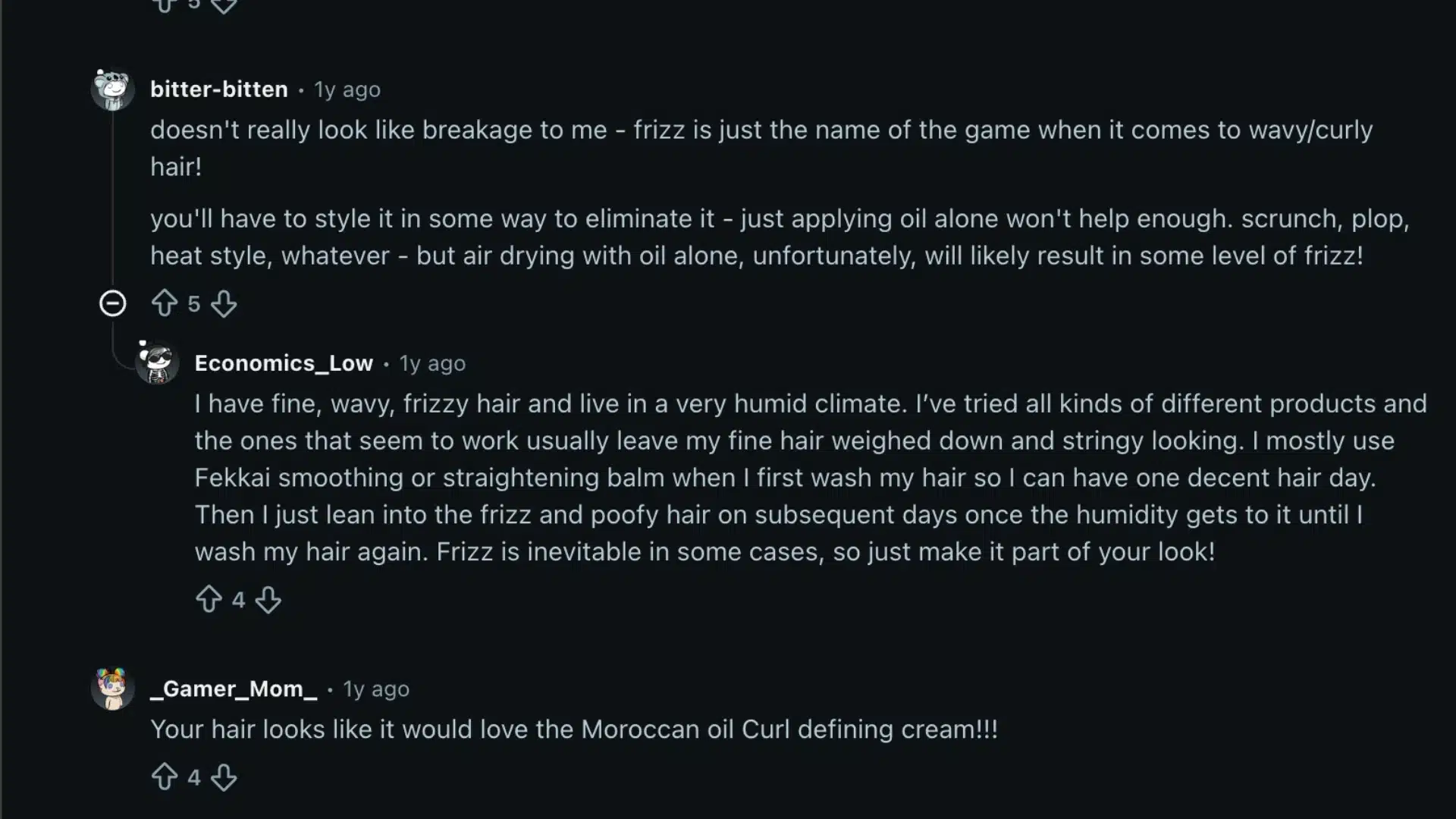
Reddit users generally agreed that frizz is common with wavy and curly hair, especially when it air-dries without proper styling. The main point was that oil alone usually will not fix frizz.
Most comments suggested working with soaking-wet hair, adding moisture and hold, gently scrunching, and drying with a cotton T-shirt instead of a towel.
People also recommended deep conditioning, smoothing treatments, satin bonnets, and loose braids to reduce overnight friction.
Overall, the comments suggest frizz control depends on moisture, hold, gentle drying, and sleep protection, though some frizz may still remain in humid weather or naturally textured hair.
The shared takeaway is simple: manage the texture instead of fighting it, and avoid habits that rough up strands daily.
Some frizz may still remain in humid weather or on naturally high-porosity hair, and that is not a failure.
Frizzy Hair vs Healthy Hair: What’s the Difference?
This comparison helps when you are not sure whether your hair is frizzy or just showing its natural texture. The signs are usually consistent across hair types.
| Feature | Frizzy Hair | Healthy Hair |
|---|---|---|
| Surface Texture | Rough, Coarse, or Snaggy | Smooth, with Strands Lying Flat |
| Shine | Dull with Little Light Reflection | Reflects Light Evenly |
| Definition | Blurry, Shapeless, or Undefined | Clear Pattern with Clean Edges |
| Humidity Response | Swells, Expands, and Loses Shape Quickly | Holds Shape in Most Conditions |
| Feel | Dry, Brittle, or Weak at the Ends | Soft with Some Elasticity |
| Tangling | Knots Easily and Resists Detangling | Tangles Release with Less Tension |
| Strand Behavior | Strands Move Separately | Strands Move Together |
On thin wavy hair, the main difference is wave definition, not volume. Healthy thin wavy hair has bends that hold their shape and a smoother surface with fewer flyaways.
Frizzy thin wavy hair loses the wave pattern first: the bends flatten, the surface looks rough, and the hair starts to look shapeless.
Conclusion
Frizz gets easier to manage when you stop guessing and start reading what your hair is showing you. Puffiness, flyaways, dullness, tangles, broken waves, and fuzzy ends are all clues.
They can point to moisture loss, friction, buildup, damage, or a cuticle that lifts more easily than usual.
Start small. Look at when frizz appears, how your hair feels after washing, and what changes by morning. Try adjusting one habit at a time instead of changing your whole routine overnight.
Which type of frizz shows up most for you: puffiness, flyaways, dry ends, broken waves, or overnight frizz? Share it in the comments so others can compare what helped.
Frequently Asked Questions
Can Frizzy Hair Be Healthy?
Yes. Frizz is not automatically a sign of damage. Some hair types naturally have cuticles that lift more easily, especially in humidity.
This is common in high-porosity hair and thin, wavy hair. Healthy frizz usually changes with the weather.
Damaged frizz often comes with breakage, split ends, rough ends, and brittleness that does not improve with conditioning.
Does Humidity Always Make Frizz Worse?
Humidity is the most common trigger, but it is not the only one. Hair can also frizz from friction, heat, dryness, or rough handling. If the cuticle is already lifted, frizz can show up even in dry weather.
Humid air makes hair swell with extra moisture. Dry air can cause static frizz by pulling moisture out of hair.
What is the Difference Between Frizzy and Coarse Hair?
Coarse hair means the individual strand is naturally thick. Frizzy hair means the cuticle is lifted. You can have coarse hair that is smooth. You can also have fine hair that is very frizzy.
The difference matters because coarse hair is a hair type. Frizz is a cuticle and moisture issue.
How is Frizz Different on 2A Vs 2B Wavy Hair?
On 2A hair, the wave is loose enough that frizz simply flattens the pattern, making the hair look almost straight but fuzzy.
On 2B hair, the wave has more definition, so frizz shows up as separated strands along the mid-length and ends rather than full collapse.
Both types benefit from lighter hold products and low-friction drying techniques.