Everyone knows the harms of plastic and yet most of us cannot part with our faithful polybag.I hope this tutorial will make you ditch the polybag for a more eco-friendly alternative which you can create in less than 5 minutes.
This bag is made using the ancient Japanese art of Furoshiki, which uses a simple square of silk or nylon cloth for wrapping and carrying just about anything.Since Furoshiki uses silk or nylon, the knots are not only durable but easy to untie too.
So have fun this World Environment Day with this easy Do It Yourself.
What You’ll Need
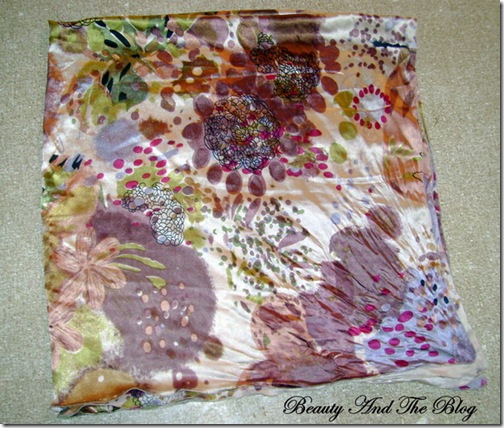
- A square scarf or a dupatta folded in half or any stray square piece of cloth preferably silk/nylon/satin.The bigger the dimensions the bigger the finished bag will be. I’m using my granny’s silk scarf.
- Knot tying abilities
Lay the scarf with the right side facing down on a flat surface.
Step 2 :
Secure each corner of the scarf with a knot leaving a 3 inch tail.You will end up with something like this.


Step 3 :
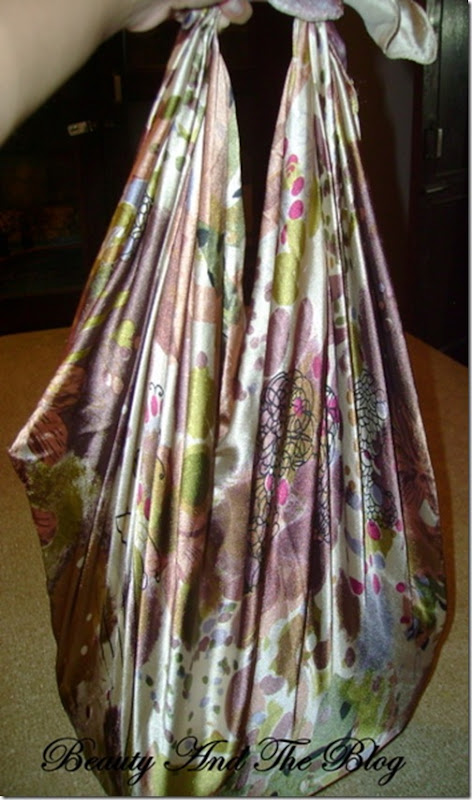
Take knots A and B and secure them together with a double knot using the 3 inch tail.The tighter the knots, the more secure your bag will be.


1st Knot

2nd Knot
Step 4 :
Repeat with knots C and D and voila your eco-friendly no sew bag is ready.The corners which have been knotted together will act as the handles of your bag.


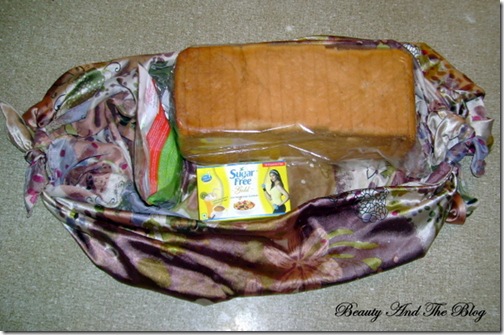
I went grocery shopping just so I could fill up my bag

Here are some facts to encourage you to ditch the plastic:
- Between 500 billion and 1 trillion plastic bags are used worldwide each year.
- Approximately 60 - 100 million barrels of oil are required to make the world’s plastic bags each year.
- Most plastic bags take over 400 years to biodegrade. Some figures indicate that plastic bags could take over 1000 years to break down. (I guess nobody will live long enough to find out!). This means not one plastic bag has ever naturally biodegraded.
- Thousands of marine animals and more than 1 million birds die each year as a result of plastic pollution.
- The United Nations Environment Programme estimates that there are 46,000 pieces of plastic litter floating in every square mile of ocean.
- Plastic bags are often mistakenly ingested by animals, clogging their intestines which results in death by starvation. Other animals or birds become entangled in plastic bags and drown or can’t fly as a result.
- Even when they photo-degrade in landfill, the plastic from single-use bags never goes away, and toxic particles can enter the food chain when they are ingested by unsuspecting animals.
- Greenpeace says that at least 267 marine species are known to have suffered from getting entangled in or ingesting marine debris. Nearly 90% of that debris is plastic.
- Americans consume more than 10 billion paper bags per year. Approximately 14 million trees are cut down every year for paper bag production.
- Most of the pulp used for paper shopping bags is virgin pulp, as it is considered stronger.
- Paper production requires hundreds of thousands of gallons of water as well as toxic chemicals like sulphurous acid, which can lead to acid rain and water pollution.

 17 Comments